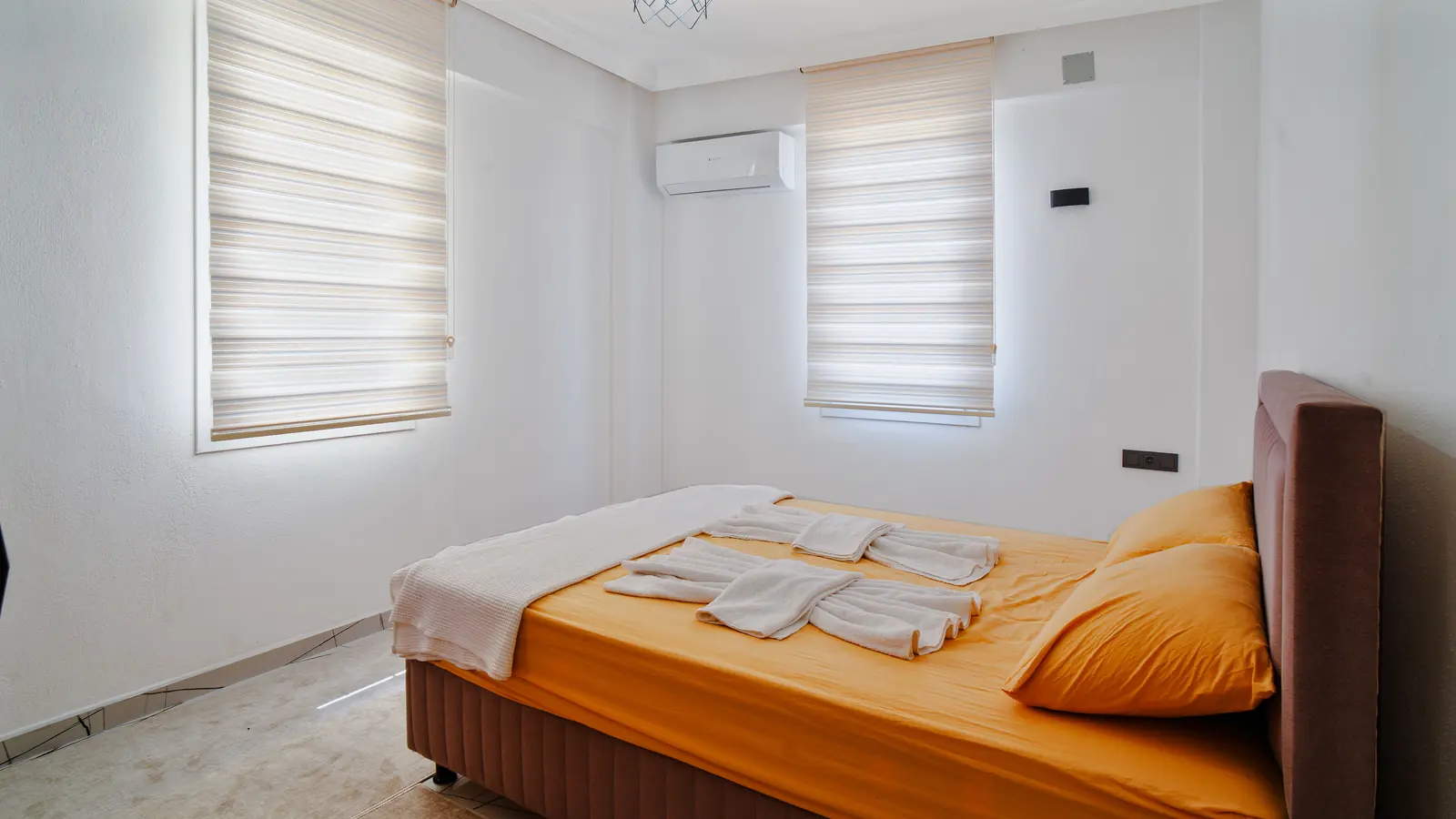
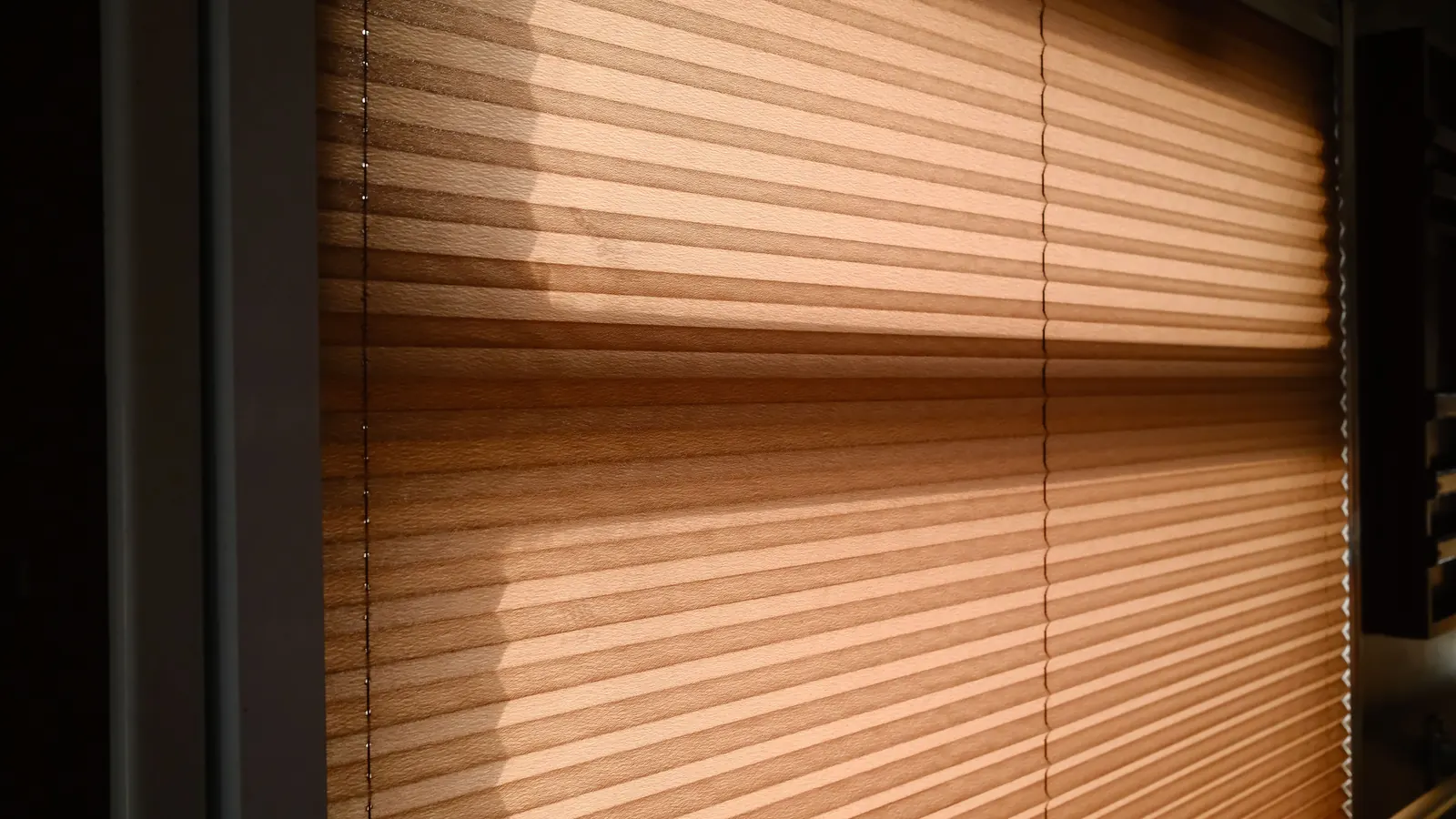
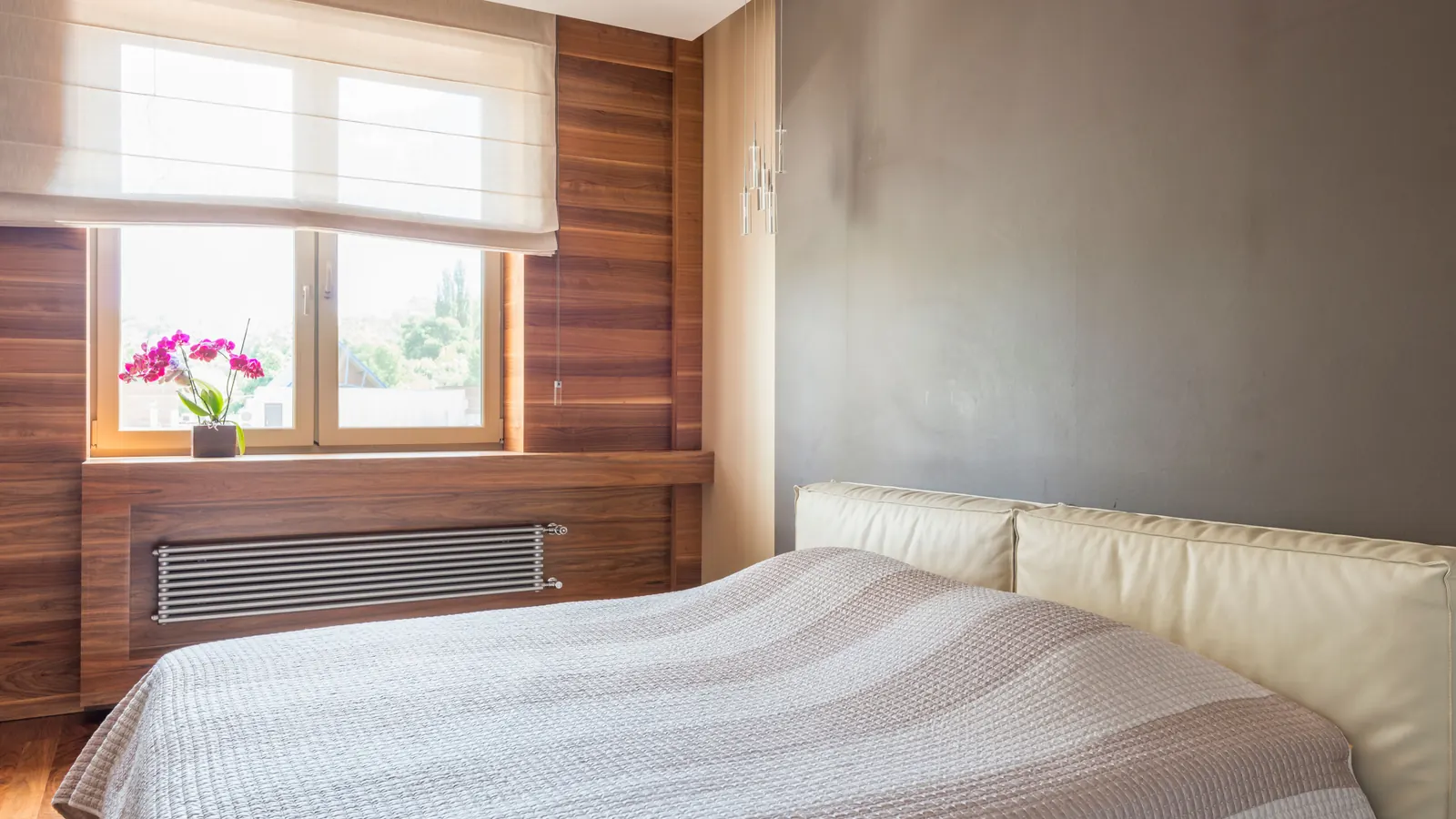
Bedroom Curtains: What to Look For Before You Buy
Bedroom curtains have a daytime job and a night job. Settle privacy and light first, then use color, pattern and layers so the window belongs to the room.
By DecoraMintPublished 5-minute readMore in Blinds & Shades
In this guide
The most common bedroom curtain mistake is buying for one moment of the day. Panels picked for a dreamy morning glow leave you on show once the lamps go on at night; heavy blackout drapes chosen for sleep make the room feel shut in by noon. A bedroom curtain has a daytime job and a night job, so settle how much light and privacy you need at each, and only then play with color, pattern and layers to make the window belong to the room.
Which light are you fighting?
Lie on the bed for a minute and look at the window. Is it sunrise that wakes you, a streetlight that glows all night, or simply a bright room you want to soften? Those call for different answers, and not every bedroom needs the darkest possible fabric.
- Softer daylight: an unlined or lightly lined light-filtering panel. Check privacy after dark with the lights on.
- Control from morning to evening: a sheer layer and an opaque layer on separate rods or tracks, each drawing on its own.
- Real darkness: a blackout fabric or lining, plus coverage beyond the edges of the window.
- Pure decoration: stationary side panels that frame a shade doing the actual work.
Color tells you nothing about darkness. A pale curtain with a blackout lining can block more light than a deep navy panel with none, and a sheer, however pretty, is not evening privacy. The IKEA light-filtering curtain category is a good illustration of panels designed to let some sun in; read the specific product description for what each one actually does.
Fabric sets the mood
Fabric does more to the feel of a bedroom than almost any other choice at the window, because it is a big soft surface catching the light all day.
Linen and linen blends fall in relaxed, slightly rumpled folds and glow when the sun hits them, which suits a calm, airy room. Cotton is crisper and more tailored. Velvet absorbs light and gives deep, shadowy folds, so a velvet curtain makes a room feel enclosed and cocooning at night, and it can overwhelm a small room in a strong color. Sheers in voile or gauze blur the view and turn hard daylight into a soft, even wash.
Look at any fabric gathered as well as flat. Folds create shadow, so a curtain looks darker hanging than its swatch suggests, and a lining changes how the light comes through: a lined linen panel loses some of that backlit glow but gains weight and drape.
Tonal, contrasting or patterned
Blend with tonal panels
Curtains close to the wall color quiet the window and let the bed or a favorite rug take the attention. Match lightness and undertone more than the exact color: warm cream walls with warm oatmeal curtains melt together, while a cool gray panel on the same wall stands out. Seller color names such as sage or oatmeal are not standardized, so judge samples against your wall in your own light.
Frame it with contrast
A deeper or contrasting curtain draws a strong outline around the window. It works best when the bedding and big furniture are quiet, so the curtain is the room’s one bold textile. Echo the color once more, in a cushion or a thread of the rug, and leave it there. Contrast does not have to make a small bedroom feel smaller, but think about how much curtain stays visible when open and whether it crowds a nightstand.
Let a pattern lead
A large-scale print becomes the focal point; a small all-over pattern reads as texture from across the room. If the bedding is already busy, try a plain curtain first. If you combine prints, share one color between them and vary the scale. In a child’s room, choose curtains that will still work after the illustrated duvet has been replaced.
Layering
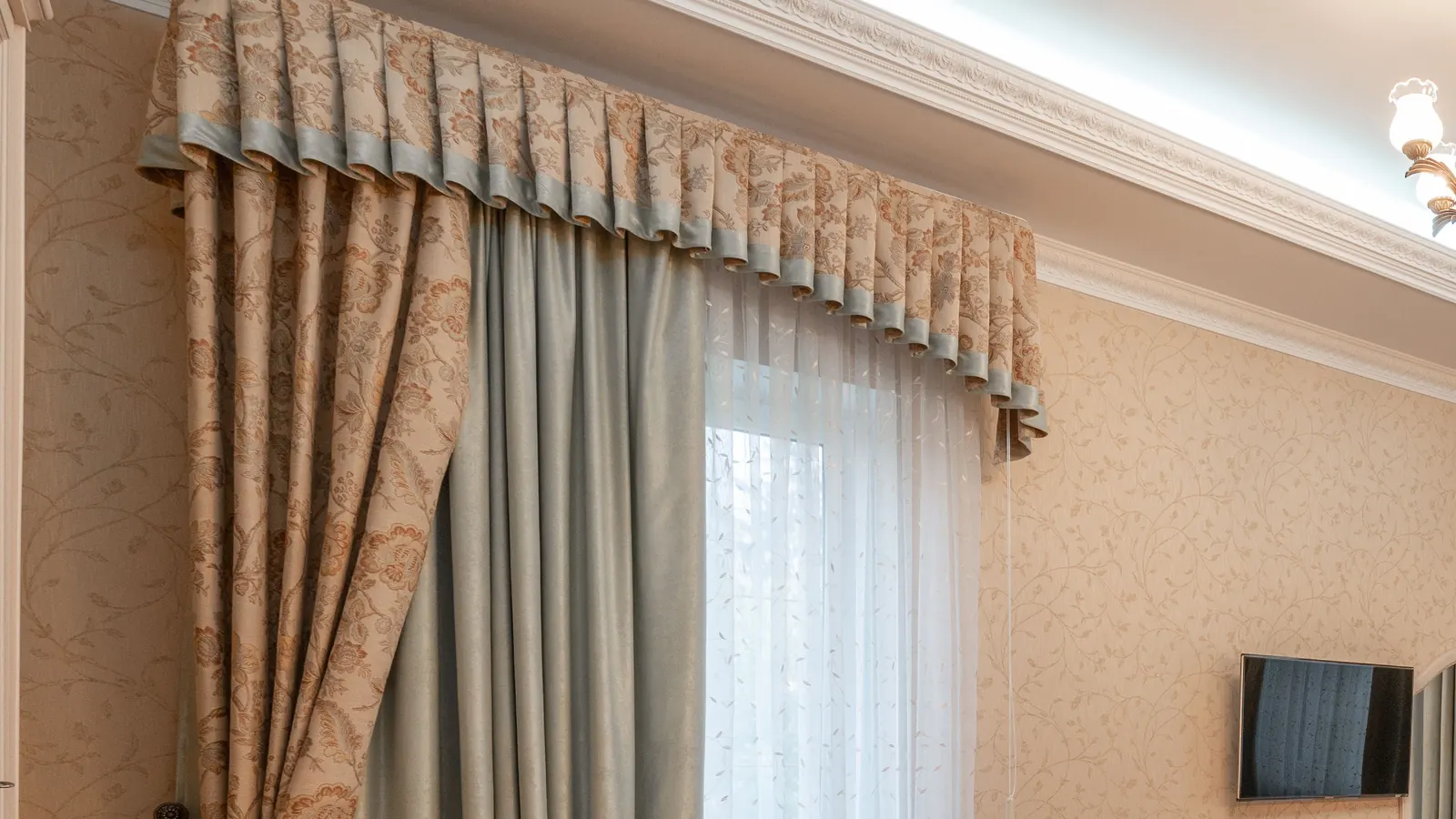
Layers are how a bedroom curtain handles both jobs gracefully. A sheer inner panel softens daylight and keeps passers-by from looking straight in; an outer lined or blackout curtain closes over it at night. A traditional room might add a patterned outer panel over a quiet inner one; a minimal room might pair a plain roller shade with linen side panels that rarely move.
Each layer needs its own hardware and somewhere to stack when open. Double rods vary in bracket projection and weight capacity, so check that the one you choose suits both fabric weights and clears window handles and nearby furniture.
Fullness changes the feel
How much fabric you hang matters as much as which fabric. Generous panels fall in deep, soft folds that catch light and shadow, and even closed they look relaxed and finished. Skimpy panels pulled flat across the window read as stretched and a little bare, and they show every crease. Listings may quote one panel or a pair, so check which before you count. If the bedroom has to be truly dark, a shade inside the frame with curtains drawn over it does more than a heavier fabric, because the edges are where a closed curtain lets light through.
Length
Floor-length panels draw the eye up and make the ceiling feel taller; hanging the rod higher and wider than the frame adds to that effect. Sill or apron length is the practical choice over a radiator, a desk or a built-in bench, and nothing should block a heater or vent beyond what its maker allows.
Measure from the point the heading actually hangs from, since rings, hooks and rod pockets each start at a different height, and check the drop at several points because floors are rarely level. A slight break on the floor looks relaxed and tailored; a deep puddle of fabric is a styling choice best kept for curtains you rarely open, since it collects dust and drags.
Warmth claims
Heavy or thermal curtains can make a bedroom feel cozier near a cold window, but the label alone tells you nothing measurable. The Building America Solution Center’s window-attachment guide recommends choosing coverings by your actual goal and relevant performance ratings. Ask for evidence that applies to the exact curtain, and remember that no curtain repairs a drafty window.
Daily use, care and cords
Choose a heading and rod combination that lets the panels slide easily past the brackets; a curtain that snags every evening will end up half-closed. Read the care label for the finished curtain, including lining and trim, since a washable face fabric can hide a lining or trim that cannot go in the machine. Large lined panels are heavy wet, so plan how you will dry and rehang them.
Curtains on a plain rod usually have no cords, but a draw cord on a traverse rod, cord tiebacks or a corded blind behind the panels still do. Where young children sleep or play, the CPSC’s advice is to go cordless and keep the bed and any climbable furniture away from the window.
Before ordering, confirm the panel count, finished size, lining, heading and whether hardware is included, and check returns on custom or altered panels. Bring the sample into the bedroom and make the final call with the bedding and walls in view, by daylight and by lamplight.