Bedroom Window Treatments: Compare Shades, Blinds and Layers
A street-facing bedroom and one flooded with morning light need different window treatments. Four common situations, the layers that solve them and how to measure for the result.
By DecoraMintPublished 7-minute readMore in Blinds & Shades
In this guide
We may earn a commission from links on this page, at no extra cost to you. Affiliate disclosure
A bedroom window is asked to do contradictory things: let daylight in, keep the street out and go dark when you want to sleep. What wakes you up, and who can see in, will pick the window treatment for you: a bedroom on a busy street needs daytime privacy that still lets light in, one that catches the sunrise needs darkness (which means dealing with light around the edges as well as through the fabric), and one that doubles as an office needs control over glare at the desk.
Read each window
Look at the window from the bed, from where you dress and from the desk if there is one. Notice whether unwanted light comes through the fabric, around the edges or through an uncovered top pane. Daytime and evening privacy are separate questions: a fabric that hides you on a bright afternoon can reveal a lot once the lamps are on at night.
For each window, decide when it needs covering and whether you want a view or daylight while it is covered. Consider whether you can reach the controls without moving furniture, whether the window opens inward, tilts or slides, and whether a headboard, desk or radiator sits in the way. Two windows in one bedroom can share a look and still need different sizes or operation.
Shades, blinds and curtains in a bedroom
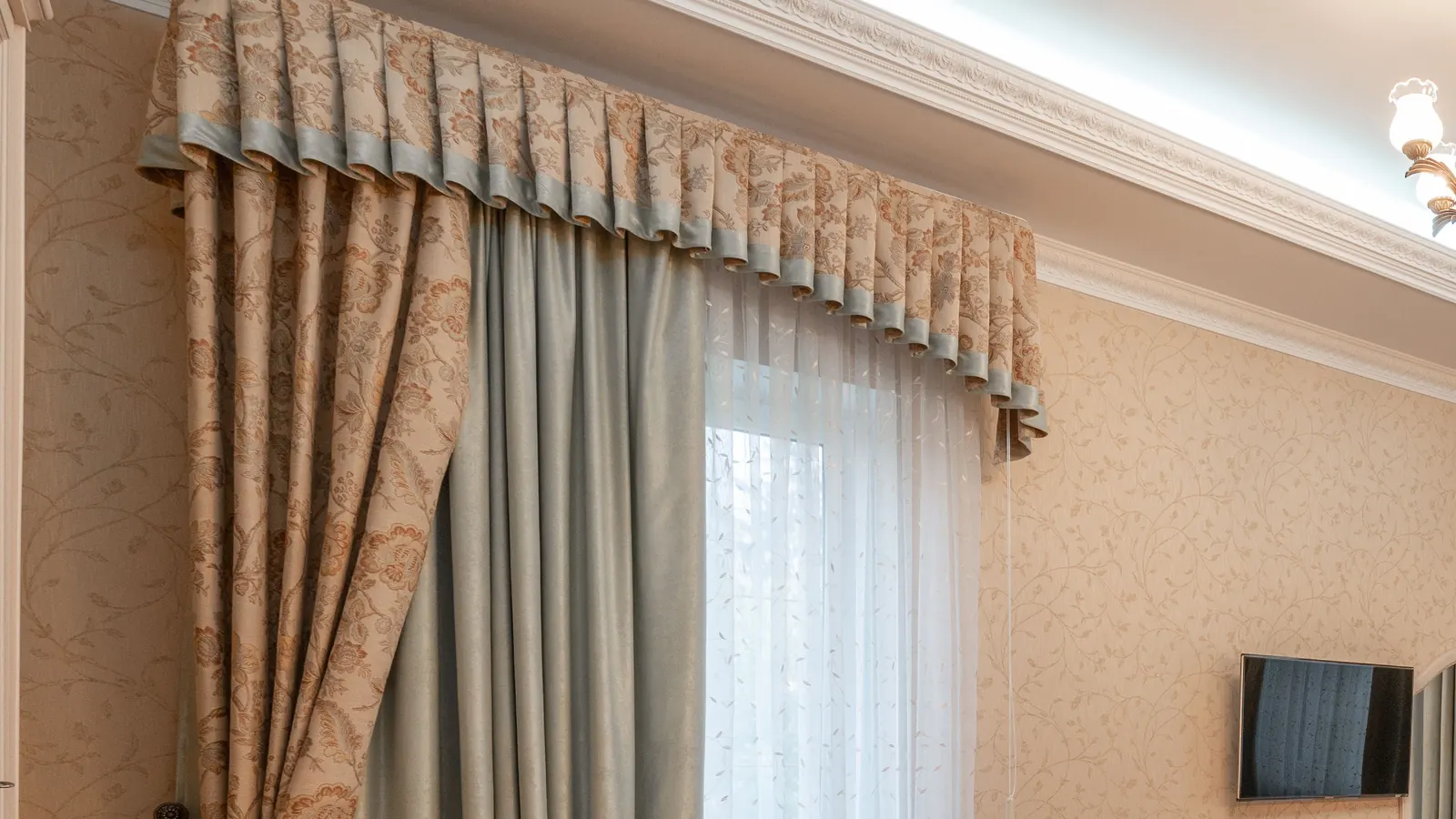
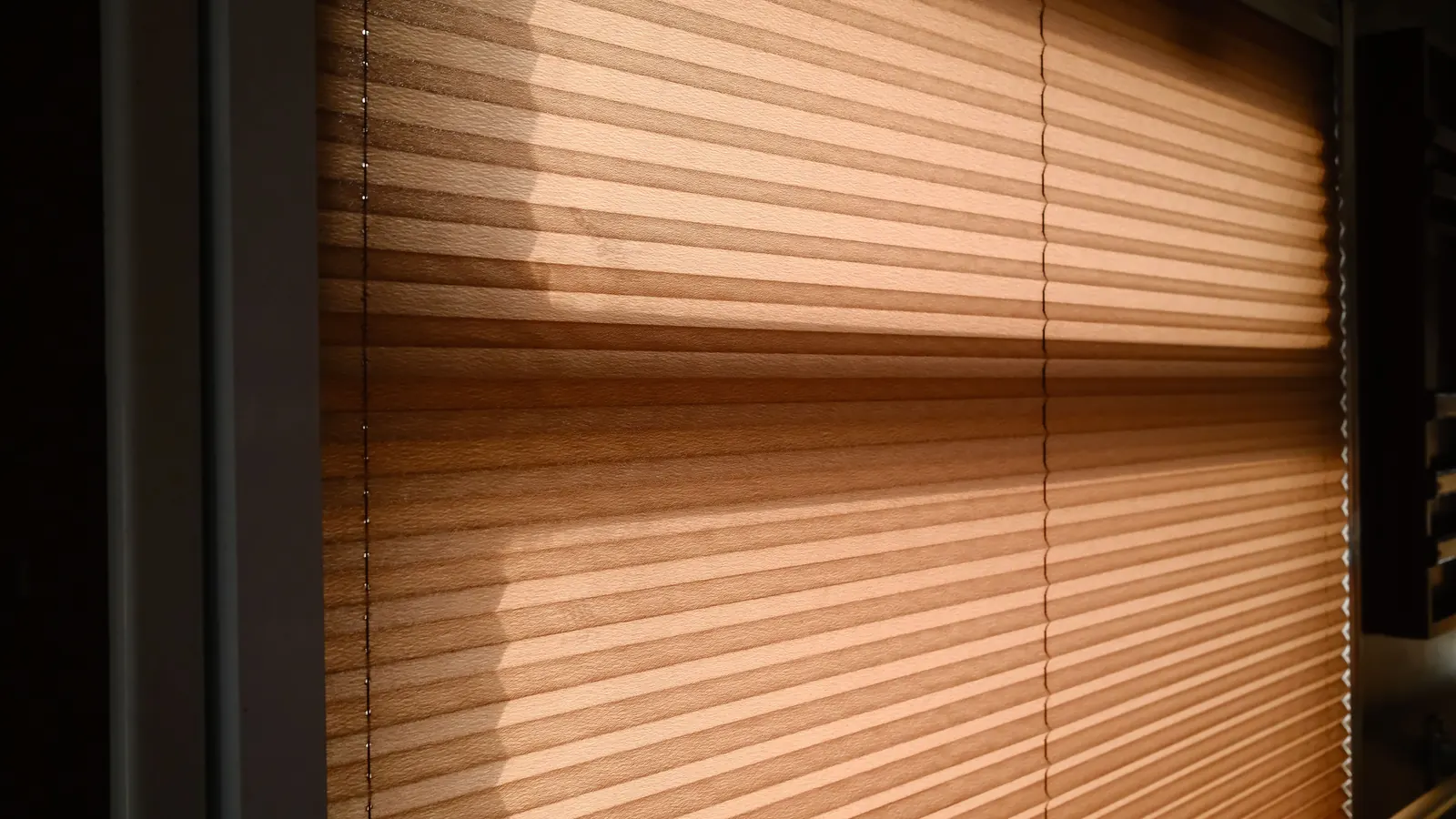
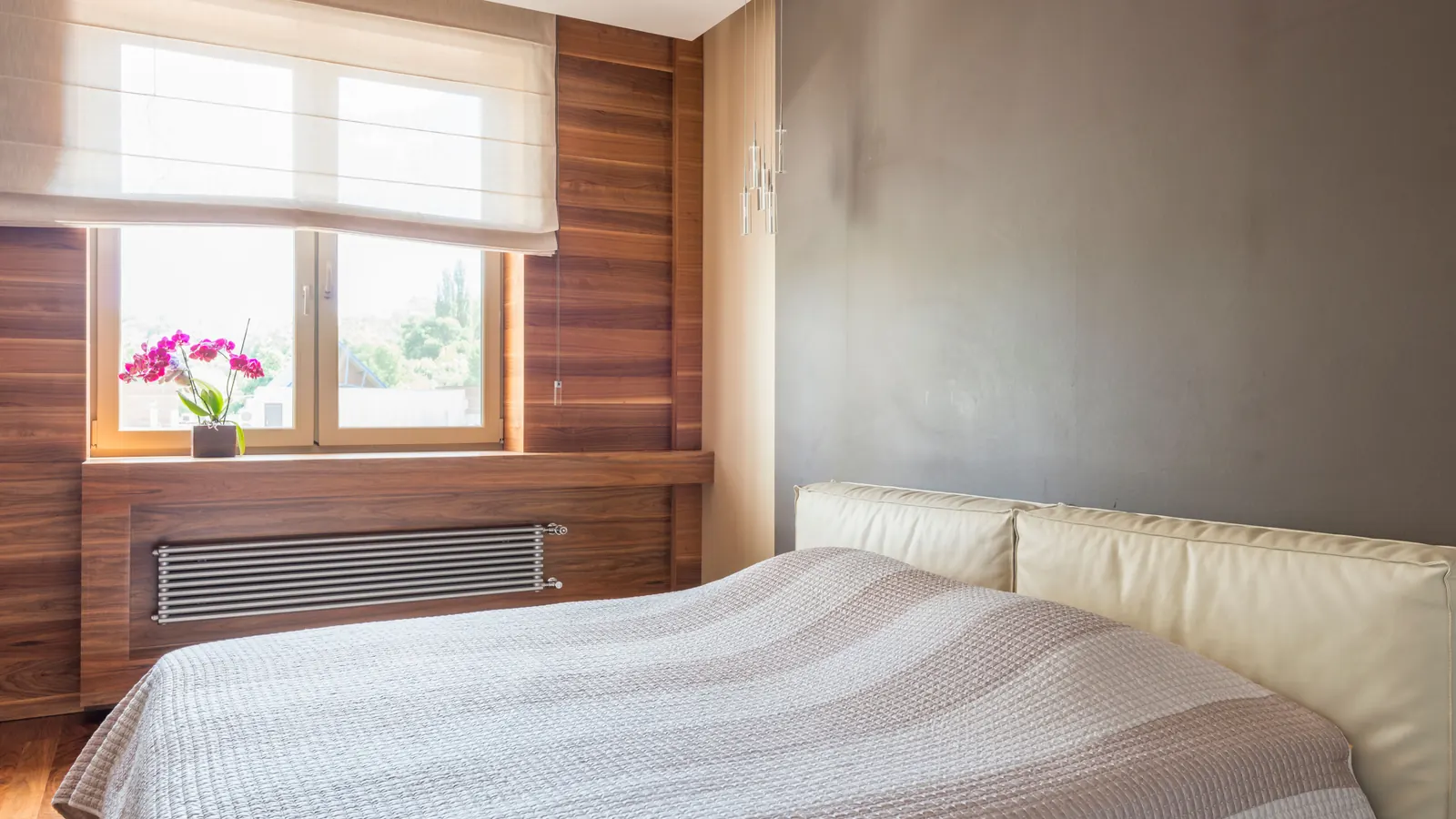
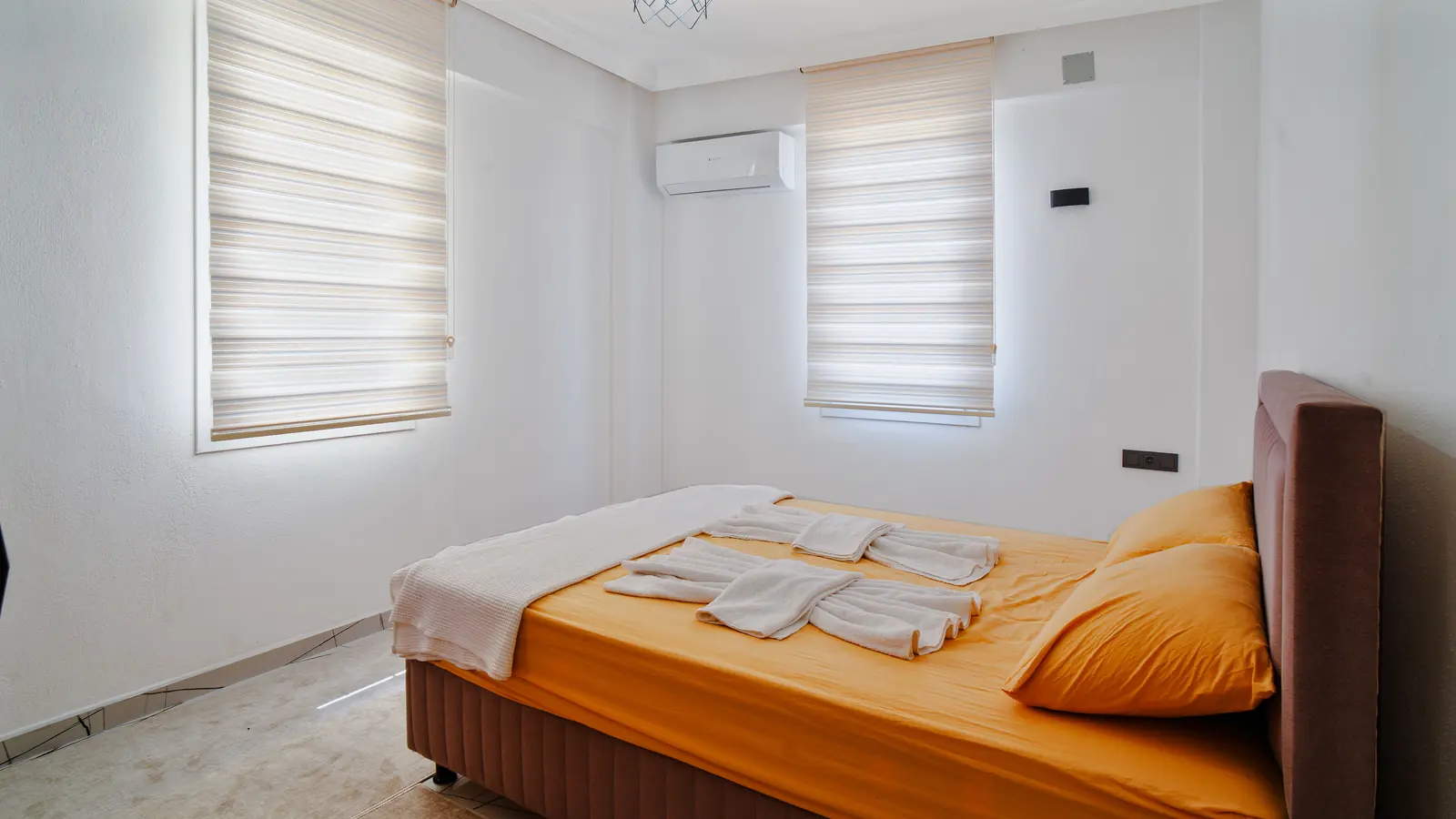
A roller shade gives a clean, minimal plane of fabric, with edge gaps and the space for the roll as the details to watch. A cellular shade has soft pleats and insulating cells, with options like top-down operation. Roman shades fall in tailored folds and leave room for pattern, but the folds take depth when raised. Slatted blinds tilt for fine light control and need dusting. Curtains give texture, height and a frame for the window, and need room to stack open. A shade plus curtains gives you one practical layer and one decorative one, as long as there is space between them.
Two roller shades can have completely different fabrics, so compare the specific configuration.
A bedroom on the street
The goal is daylight without being watched. A top-down/bottom-up shade lets you lower the top for light and sky while the bottom covers the sight line from the sidewalk. Make sure the model you pick offers both directions; some shades lower from the bottom only. Taller buildings, steps or a slope can still see in at other angles. At night, close it fully and test that closed arrangement after dark.
What the closed shade does after dark depends on the fabric, not the rails. Fully lowered with a bedside lamp on, a light-filtering fabric becomes a glowing panel that can still show movement to the sidewalk, and it lets the first sun onto the pillow. If curtains close over the window every night, light filtering keeps the daytime glow soft and the curtain handles the dark. If the shade is the only layer, blackout fabric covers the evening and the sunrise with one treatment.
Strong morning light on the bed
First find where the light gets in. Gaps beside a shade let light past even an opaque fabric. Some systems offer side channels or other components that close the edges, so look at what the maker describes for the complete system.
At dawn on an east window, an edge gap shows as a bright vertical line down each side of an otherwise dark rectangle, right at eye level from the pillow. How bright depends on its width, and some size tables print it: mounted in the recess, Persilux’s cordless blackout roller leaves about 0.40 inch per side, its 1.5-inch cellulars about 0.08. The roller page answers its wider gap with optional side channels wrapped in the shade fabric, which Persilux says block light leaking around both sides; confirm they are offered with the control you pick. The top-down/bottom-up cellular above starts with the narrower gap in either fabric, without an add-on.
An outside mount can overlap the frame more than an inside mount, but it projects into the room, so look at the wall, trim and bracket instructions. Curtains over a shade can catch more of the edge light, depending on their coverage and rod. That combination is worth trying, and it is the cheaper test: if the curtains you already own hang wider than the frame, close them over the current shade for a week of mornings before buying anything. Total darkness depends on how well the edges close. Keep the window openable for ventilation.
A bedroom with a desk
One person may want daylight at the desk while another wants the bed area dim, and treatments that operate separately on separate windows help. Look at the screen from your chair at the times you work; turning the desk can fix glare better than closing everything.
If you are considering motorized shades, find out how they are powered or charged, what controls them and what happens if the app or remote is unavailable. Motors use different hubs and wireless standards, even within one brand.
For the Eve Motionblinds top-down/bottom-up cellular, the answers are written on Persilux’s product page: a battery recharged over USB-C, control by phone, voice, remote or a light tug, and Matter over Thread, which the page says keeps control local without a cloud connection. Linking it to Apple Home, Google Home or Alexa still requires a smart-home hub that works as a Thread border router, the page adds, and Eve shades start at 25 inches wide. The tug answers the last question above: if the phone is flat or the hub is down, the shade still moves by hand. The motor earns its cost only at a window you cannot reach easily or want on a schedule; at a desk-side window within arm’s length, the cordless version moves the same rails by hand.
A headboard or nightstand by the window
Measure the space the treatment needs while operating. Roman folds, a blind’s stack or gathered curtains can hit furniture. Stand where you would reach the control: if you have to climb across the bed or shift a nightstand every day, choose a different mount or a control on the other side, as the product allows.
Never block a window that is an emergency exit or crowd a heater with fabric. In a child’s room, the CPSC recommends cordless window coverings where young children are present and keeping beds, cribs, furniture and toys away from window-covering cords. A cordless label is a good start for safety, and cord placement still needs a second look.
Fabric and operation are separate choices
Persilux’s Custom Top Down Bottom Up Cellular Shades listing, the street-window shade above, shows why. The same product name comes in separate blackout and light-filtering color options, so the fabric you click matters more than the color alone. We have not measured its performance or confirmed current stock, so use the maker’s fabric, operation, dimensions and installation instructions when you order.
The retailer link below opens a broader blinds-and-shades collection; compare individual models by name and configuration.
Measuring
Inside and outside mounts measure from different points. Recess depth, window handles, trim and bracket position all affect what fits, so use the current instructions for your exact model before placing a custom order. Keep your measured opening and the ordered size as separate numbers, and ask whether the factory makes any deduction and whether the quoted width is the whole assembly or the fabric. Measure every window on its own, even a matching pair.
Which layer is the star
Decide which element carries the look. A plain shade can do the work while a quiet curtain picks up the bedding color, or a patterned Roman shade can carry the room alone. Against a wall of white paint, pale linen curtains hung high and wide add height; with deep-colored bedding, a neutral shade lets the bed take the lead. Letting every layer compete makes a bedroom feel busy, and a bedroom feels best calm.
Read the care instructions for the finished treatment, since the assembled shade may be cared for differently from its fabric. Allow for taking it down over a wide bed. For more ideas, see the bedroom hub and window-treatment guides.
Retailers to browse
Compare colors, sizes, materials and return details on the retailer’s current listings.
- Browse blinds and shades at Persilux
Persilux
Opens Persilux’s blinds and shades collection, not a single product.