Blackout Cellular Shades: How Dark They Get, Cell Sizes and Mounting
How blackout cellular (honeycomb) shades block light and insulate, single vs double cells, cell sizes, light gaps, top-down bottom-up options and how to measure.
By DecoraMintPublished 6-minute readMore in Blinds & Shades
In this guide
We may earn a commission from links on this page, at no extra cost to you. Affiliate disclosure
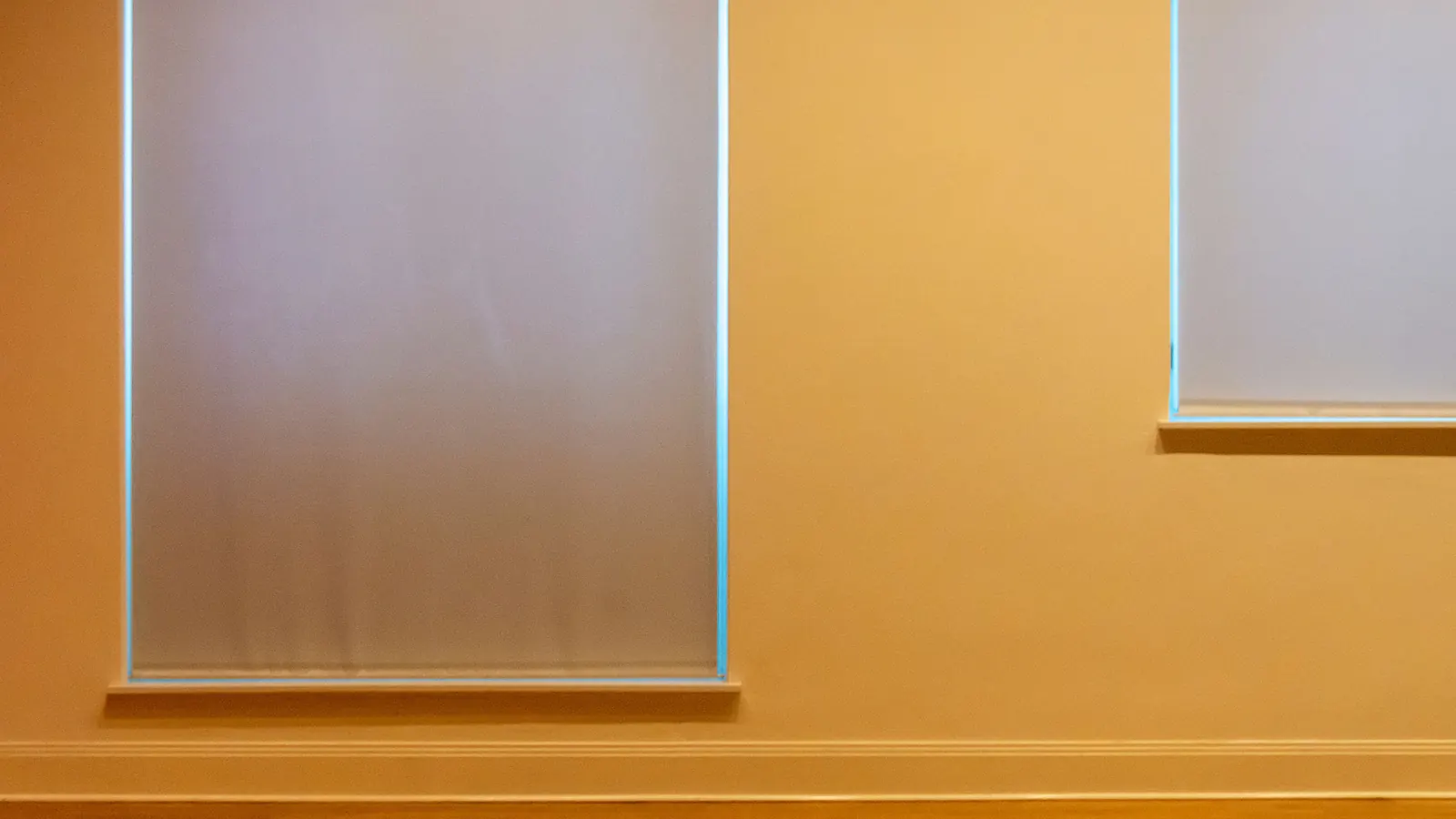
A blackout roller shade usually leaves a slim slit of daylight down each side; a blackout cellular shade usually leaves a smaller one, because the pleated body sits closer to the frame and the opaque lining runs through every cell. That difference is why cellular is the usual answer for a bedroom that has to be dim, and why it still will not make the room a darkroom.
Where the light still gets in
The lining stops light passing through the fabric. The rest comes around it:
- At the sides, through the clearance the shade needs to travel up and down.
- Above the headrail, where the top of the shade meets the frame or wall.
- Through cord holes, on corded designs.
- Along the bottom, if the sill is out of level.
Retailer size tables put numbers on the opening claim: Persilux lists 0.08 inch of side clearance for its 1.5-inch blackout cellulars and 0.40 to 0.43 inch for its cordless blackout rollers. “Blackout” therefore describes the fabric, and the finished room depends on the mount. An outside mount that overlaps the opening cuts the side and top leaks most. Side channels help further, and a curtain hung over the shade closes whatever is left. Room-darkening fabric is a step down: it blocks most light and lets a glow through, a sensible middle ground for a living room or home office where you still want to see the daylight.
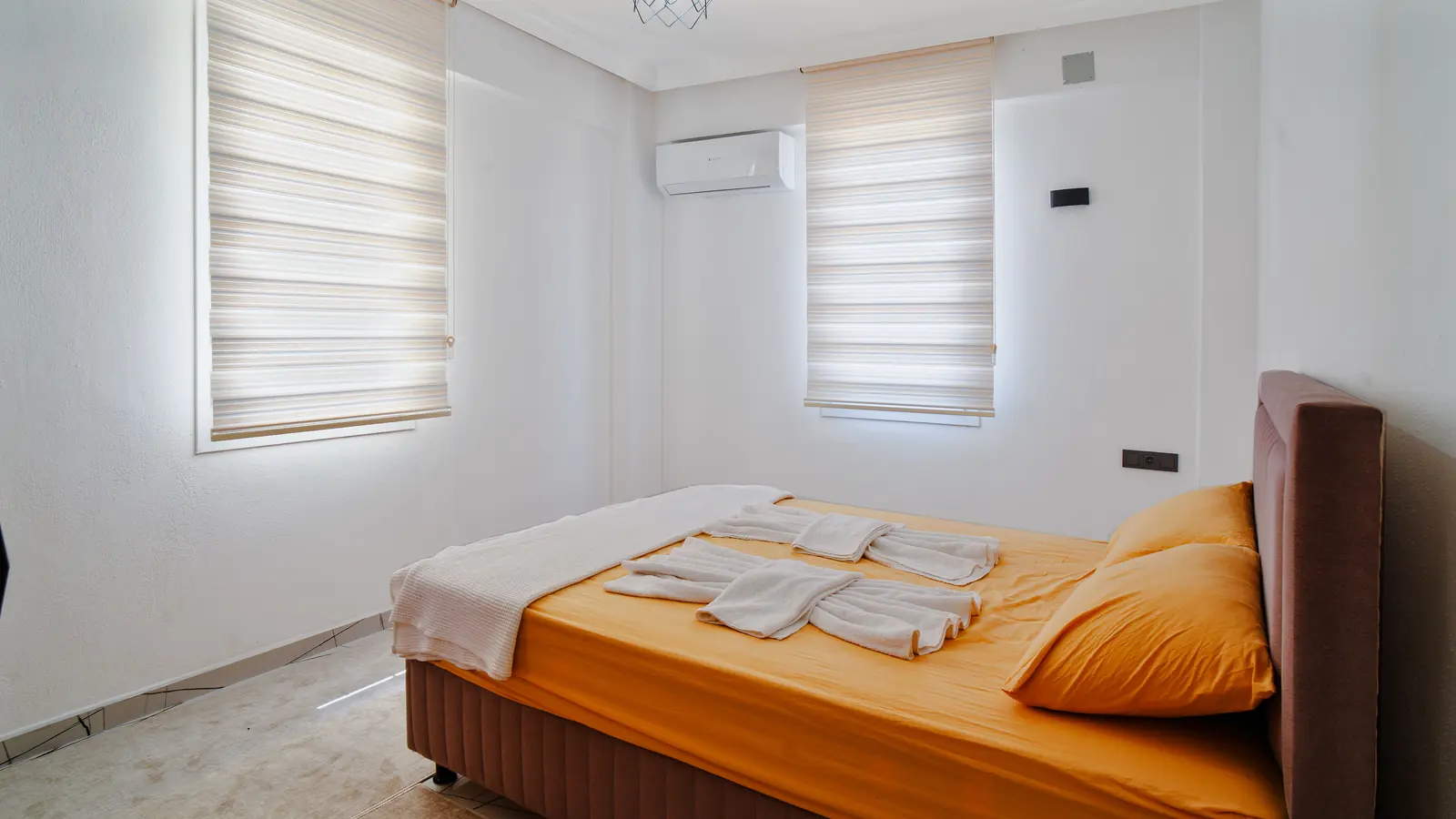
In a bedroom, a white or pale gray blackout cellular shade on an outside mount, hung a few inches wider than the trim, makes the window recede into the wall. The pleats catch the lamp at night as a narrow ribbed band, and the folds stack tight at the top by day, so the glass reads as open and uncluttered. A darker shade against a pale wall draws the eye to the window, which can look deliberate in a dark-painted room but heavy in a small one. In most bedrooms the lighter shade is the safer call, with the curtains carrying the color. The rails matter too: a silver headrail and bottom bar draw two metal lines across a white window.
Insulation, and what cell size changes
The air in the cells slows heat moving through the glass, which is why the Department of Energy lists cellular shades among the window attachments worth considering (Energy Saver: Energy Efficient Window Coverings). How much you gain depends on the fit and on lowering the shade on cold nights and hot afternoons.
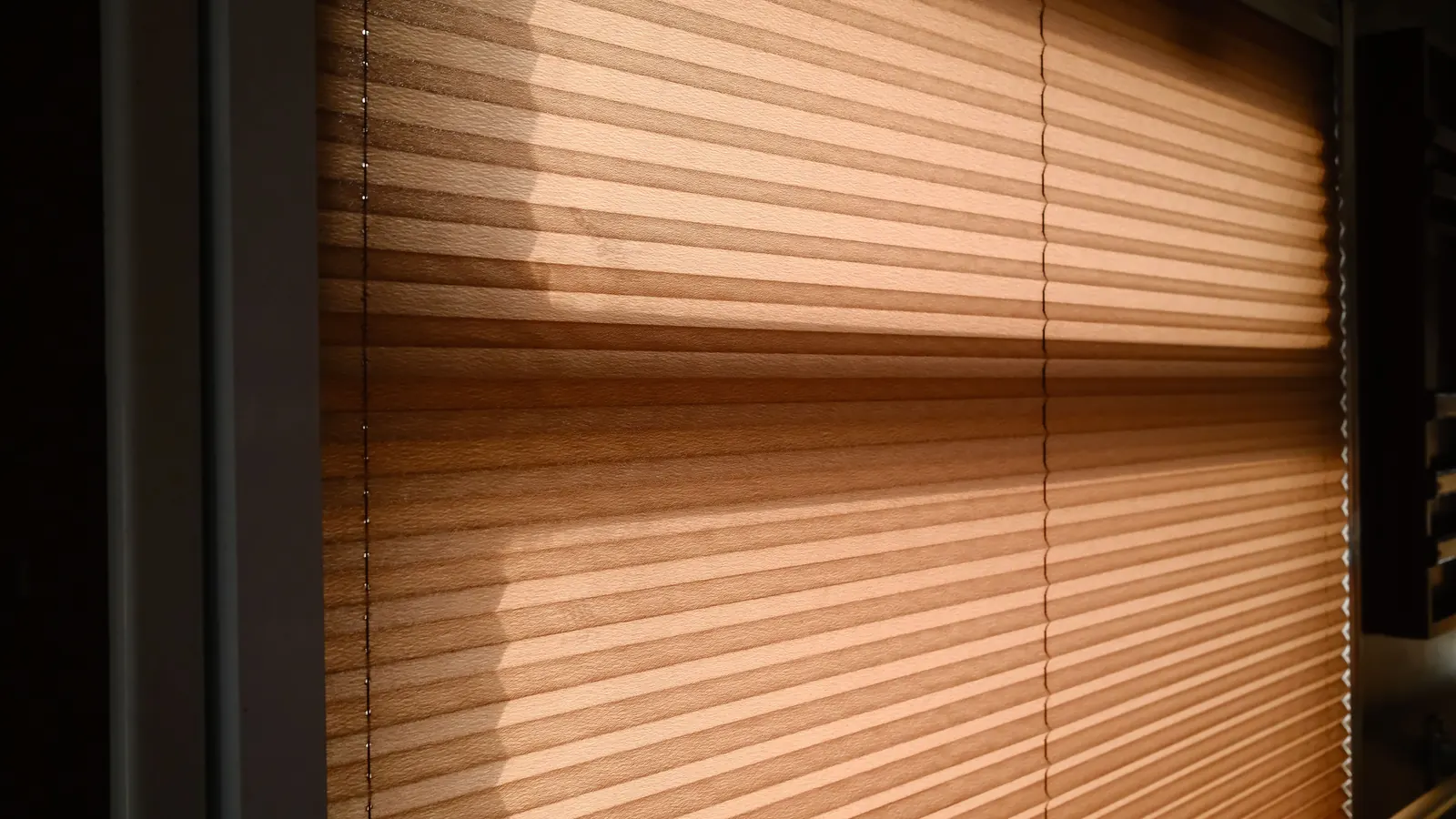
Single cell means one layer of pockets, double cell means two. Cell size, the height of each pleat, is a separate choice. Bali’s cellular range lists 9/16-inch single cell, 1/2-inch double cell, 3/4-inch single cell and 1 1/4-inch single cell, so a smaller pleat can come with more layers and the pleat size alone does not tell you the construction. A 3/4-inch cell is larger than a 9/16-inch cell (12/16 against 9/16). Small cells look fine-grained and tidy on a narrow window; bigger ones suit a wide expanse of glass. Hold both samples against the frame at your normal viewing distance, choose the scale you prefer, then compare the specifications that matter for fit: minimum mounting depth, the depth needed to recess the headrail fully, and the stack height when the shade is raised, for the same width and lift.
Lift styles
A bottom-up shade rises from the sill like any other. Persilux’s Bottom Up Only Blackout Cellular Blinds are this type, with a cordless spring lift and aluminum rails, in white, cream, light grey, dark grey or brown. They share one size table with the eco-friendly shade above (up to 104 inches wide and 94 inches tall cordless), so the choice comes down to palette, plus the color-matched rails and recyclable-material claim of the eco-friendly shade; if the rail line matters, ask the retailer what color this one’s rails are. A top-down bottom-up shade also lowers from the top, so the lower half can stay covered for privacy while daylight comes in above, a good fit for a street-facing living room and of little use in a bedroom you want dark.
Cords are the part to settle first in a child’s room. CPSC says cordless coverings are the only way to remove the strangulation hazard, and the Window Covering Safety Council recommends them for homes with infants and young children, with cribs, beds and climbable furniture kept away from windows. The federal custom-cord rule was vacated in September 2023, and the industry standard ANSI/WCMA A100.1-2022 applies to custom products made from June 1, 2024. For a cellular shade, choose a cordless or motorized lift and follow the installation instructions. Look for accessible inner cords too, because a cordless lift can still have some inside the shade, and a top-down bottom-up version should have no cord reaching the second rail.
Inside or outside, and how to measure
An inside mount looks neat but leaves those side gaps, and the frame must be deep enough for the headrail. An outside mount covers the frame and overlaps the opening, which blocks more light and rescues a shallow frame. If drilling is out of the question, see no-drill blinds and shades for how those headrails hold and where they stop. Persilux’s No Drill No Tools 1” Aperture Cellular Shades go up without screws (the page names both an adhesive bracket and a pressure fit, so ask which) and come in blackout, but in that fabric they stop at 78 inches wide, and their 1-inch cells make a finer rib than the 1.5-inch shades; past that width, the drilled 1.5-inch versions, listed to 104 inches, are the route.
For an inside mount, measure the width at the top, middle and bottom and give the narrowest, then the height at the left, middle and right and give the longest. The retailer normally makes the small deduction for clearance. For an outside mount, add about 2 to 3 inches on each side and above the opening for better light control. Bali’s measuring guide shows the required depth changing with the control type, so use the current guide for the exact product and do not carry a number over from another model.
Custom shades are made to order and may not be returnable, so confirm the return policy and a fabric sample before you order. Dust with a vacuum brush or a hair dryer on cool, and spot-clean gently; water can get into the cells and damage the lining.
Cellular or roller for a dark room
Roller shades suit a minimal, flat look and roll up very compactly, and cordless roller shades are the simpler choice for a plain window. Cellular gives smaller edge gaps, more insulation and a soft pleated face. For every shade type side by side, read how to choose window shades.
The Persilux shades listed here
Persilux is an advertiser, the links are affiliate links and we may earn a commission, and the picks are described from its listings rather than tested by us. The two 1.5-inch shades are both bottom-up blackout shades for a bedroom; the no-drill 1-inch one is for a rental frame you cannot drill.
The picks
Availability updates from the retailer feed. Where our copy of a price is out of date, the retailer’s site shows the current one.

Custom blackout in eco-friendly materials
Custom Eco-Friendly Blackout Cellular Shades (1.5" cell)
Made to measure with 1.5-inch cells and described with 100% shading and privacy. The description calls the materials environmentally friendly, and the product page lists white, grey, beige, brown and black.

Bedroom blackout that raises from the bottom
Bottom Up Only Blackout Cellular Blinds (1.5" cell)
A 1.5-inch-cell blackout shade with a cordless lift. It rises from the sill only, so the top of the window cannot be opened for daylight; Persilux pitches it as dark enough for daytime naps.

No-drill cordless option for rentals
No Drill No Tools 1" Aperture Cellular Shades
A no-drill, no-tools shade with smaller 1-inch cells and a cordless lift. It comes in light-filtering and blackout versions, each in ten colors; the blackout version is listed up to 78 inches wide.
Retailers to browse
Compare colors, sizes, materials and return details on the retailer’s current listings.
- Browse blinds and shades at Persilux
Persilux
Opens Persilux’s blinds and shades collection, not a single product.