No-Drill Blinds and Shades: How They Mount, What Fits and What to Check
How no-drill blinds stay up without screws (tension, clamp and adhesive mounts), which windows they suit, their limits on size and light gaps, and how to measure.
By DecoraMintPublished 8-minute readMore in Blinds & Shades
In this guide
We may earn a commission from links on this page, at no extra cost to you. Affiliate disclosure
The usual reason a no-drill blind fails is the window frame, which cannot hold the headrail. The headrail needs flat, firm, parallel sides, enough depth and a width within the maker’s limit. If the opening passes those checks, a no-drill shade is a fast, damage-free way to cover a rental window. If it fails, no style will rescue it.
The four ways they stay up
“No-drill” covers several mounting methods, and listings often do not say which one is used.
| Method | How it holds | Suits | Weak point |
|---|---|---|---|
| Tension headrail | Springs or adjustable ends press outward against the sides of the frame | Inside mounts in square, solid frames | Needs frame depth and firm sides; can slip if the frame flexes |
| Clamp or hook brackets | Grip or hook over the top of the frame or sash | Casement and tilt windows, frames with a lip | Must match the frame profile; may stop the window closing fully |
| Adhesive brackets or strips | Bonded to frame or wall | Light shades on smooth, clean surfaces | Heat and humidity weaken adhesive; removal can lift paint |
| Magnetic brackets | Magnets hold to steel | Steel doors and frames | Only works on ferrous metal |
Persilux describes its range as using a “No-Drill Headrail” with no screws, drills, adhesives or wall damage. Its product pages go further than the feed: each prints a size table with a maximum width and gives a minimum inside-mount depth, and they call the headrail tension-mounted, held by a spring system that clips into the window frame. Several of the same pages also mention brackets made with a high-strength adhesive, which sits oddly with “no adhesives”, so on a painted frame ask which applies before ordering. What no page gives is a weight capacity, or how much the headrail can hold before it slips, and that is the figure to ask for on a wide window.
Limits by maker
There is no universal weight or width limit, and the figures vary. One Canadian retailer’s listing for Levolor’s cordless no-drill roller shade gives an 84-inch maximum for both width and height, a minimum width of 18 1/2 inches and a “medium” flush-mount depth of 2 1/4 inches. 3M rates its large Command curtain rod hooks at 10 pounds for the rod and curtains together, so a heavy lined panel on a long rod can exceed them. Spring-mounted headrails generally hold less than screwed brackets, which is why very wide windows and heavy fabrics are where no-drill mounts struggle most. Where a weight limit is not stated, choose the lightest fabric the room allows.
Will the window take it?
No-drill mounts nearly always sit inside the opening, so work through the frame:
- Depth. Shallow frames, or frames with a crank handle or lock in the way, may not work.
- Sides. Tension mounts push on the sides, so hollow vinyl, crumbling plaster or an out-of-square frame is risky.
- Obstructions. Window sensors, locks and handles can all block the headrail.
If the frame fails, a lightweight outside-mount shade on adhesive hooks, or a tension rod with a curtain, is the next-best no-drill option.
Paper pleated shades as a stopgap
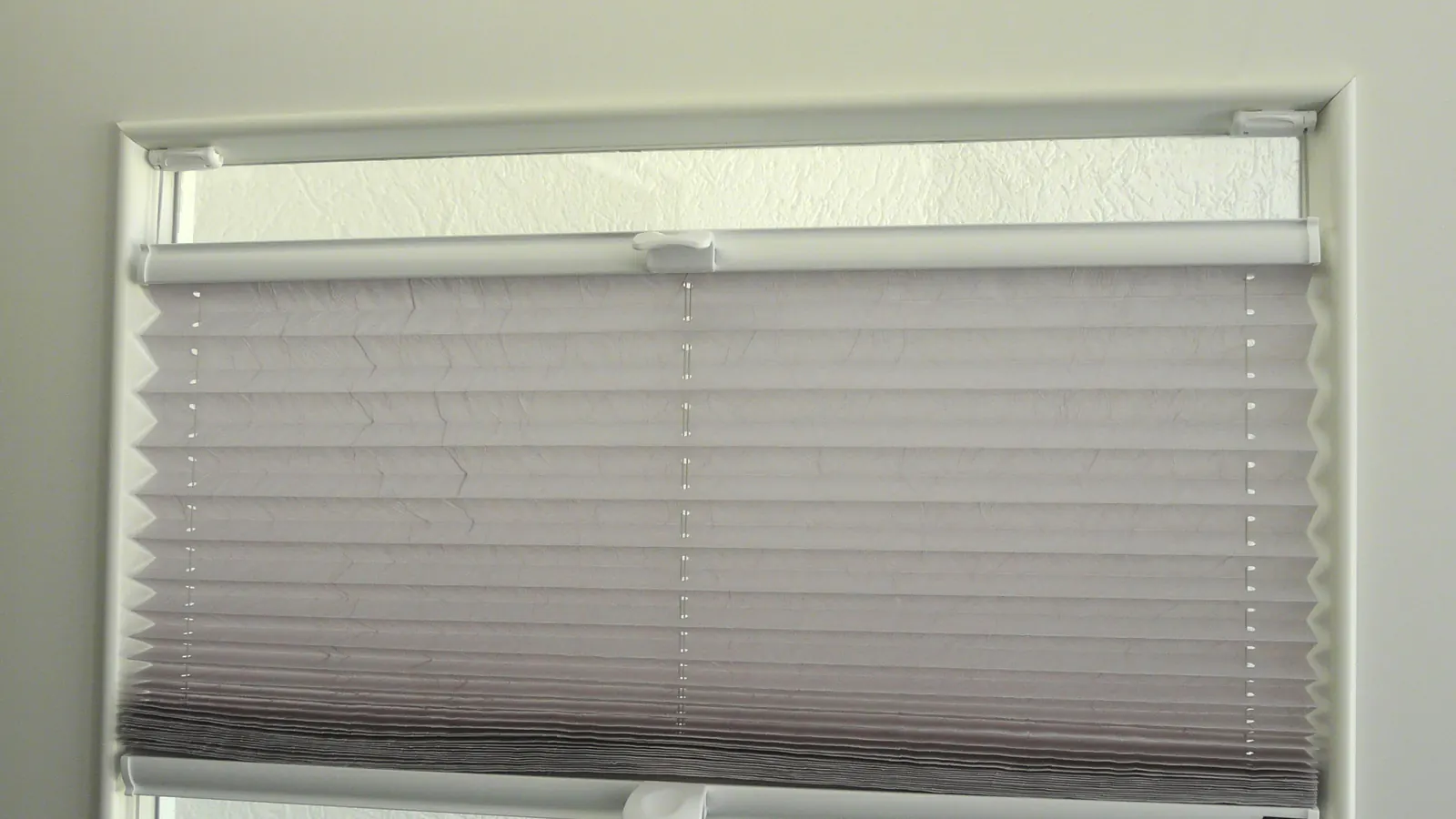
Paper blinds are usually pleated shades rather than slats, and they make a cheap covering while you wait for a permanent one. Redi Shade’s product information separates its paper Original from its fabric versions, and its paper shades use included clips to hold the pleats at the chosen height, so there is no lift mechanism. Its FAQ describes the Simple Stick adhesive as a one-time application and lists surfaces it does not recommend, so do not count on damage-free removal from every paint, finish or wallpaper. Redi Shade also says not to clean its paper shades with water and to keep them away from flames and heat sources, which rules out a spot above a stove or a heater. Light-filtering paper still lets light through, and a trimmed shade cannot be returned, so confirm the quantity and return terms before cutting.
How dark it gets
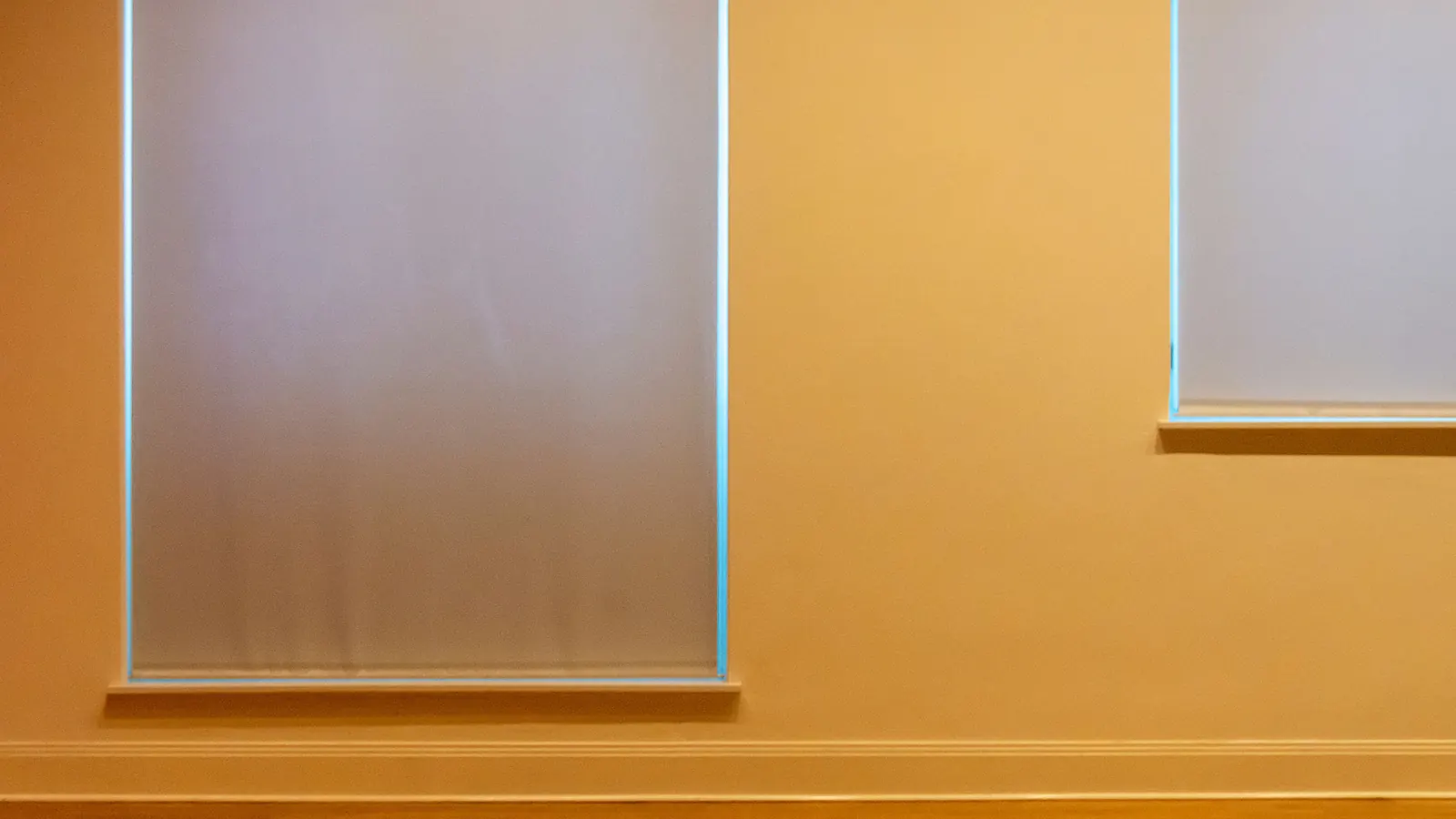
An inside-mounted no-drill shade leaves a small gap down each side, so even a blackout fabric lets a strip of light in. Cellular shades often sit closer to the frame than rollers, whose fabric is narrower than the bracket-to-bracket width, so for a bedroom see blackout cellular shades.
In a rented bedroom, a white blackout roller fitted flush inside the frame disappears against white trim and leaves the wall free for a curtain on a tension rod. The rod adds height and a vertical line, the shade takes care of the dark, and the two together look planned rather than temporary.
In a living room, a no-drill linen-look roller in a light beige sits well against a pale sofa, and its flat face gives a rented window the tailored line that vinyl mini blinds miss. Persilux’s No Drill No Tools Linen Roller Shades supply that texture: polyester fiber with added linen, a choice of control systems, and light-filtering and blackout styles across three fabric families, so a living room can keep its daylight while a bedroom in the same flat takes the blackout version. For most rentals the roller is the lightest shade in the range, so it is the safer order while the weight a headrail holds goes unstated; cellular is worth it for a bedroom with a deep, square frame.
Which style
Roller shades are the lightest and simplest, which suits tension and clamp mounting. In a rental with several windows that should read as one set, the plain No Drill No Tools Roller Shades are the simpler route: the product page offers five colors, each as a standard and a blackout version, so every window can share one color while only the bedroom goes dark.
Cellular shades insulate more and sit closer to the frame. For the bedroom with a deep, square frame, the No Drill No Tools 1” Aperture Cellular Shades come in light-filtering and blackout versions, ten colors each, with a cordless lift. Their size table caps the blackout version at 78 inches wide and the light-filtering one at 86, so a bedroom window wider than 78 inches takes the blackout fabric only as two shades side by side. On a ground-floor flat where people walk past the window, the lift direction matters more than the fabric.
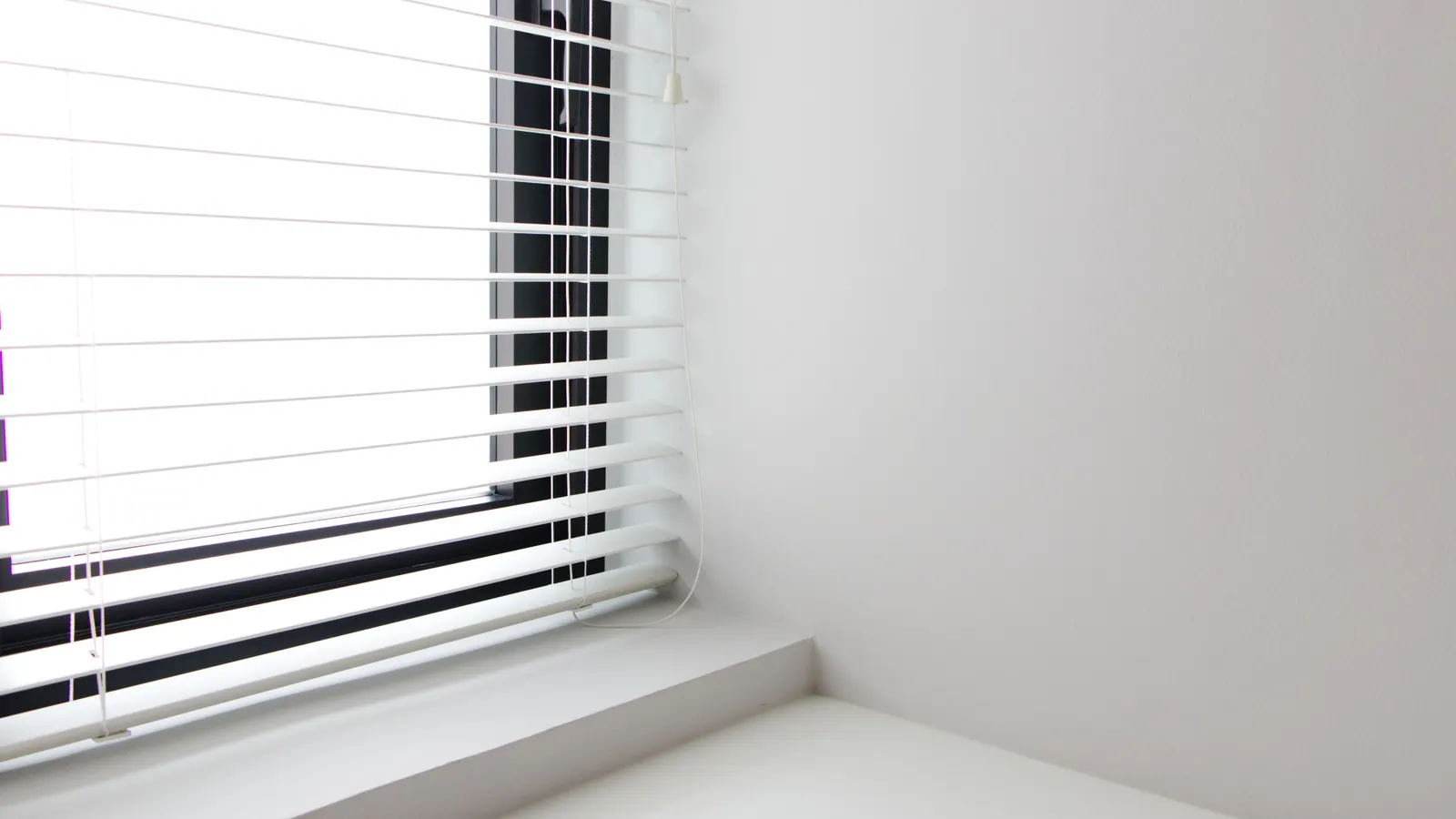
Zebra shades adjust light without raising the whole shade. Mini blinds tilt light but block less when closed; if you would rather angle the slats than raise fabric, the no-drill 1” Mini Blinds are aluminum, with a cordless option and six colors on the product page.
The Persilux sizes and depths
The product pages give these limits. Each page also states its minimum depth more than once, with different figures, so the table shows the range and the safe figure to plan on is the largest one.
| Persilux no-drill shade | Width | Minimum inside-mount depth stated |
|---|---|---|
| Plain roller, plain blackout roller | 12 to 86 in corded, up to 87 in cordless or motorized | 1.25 to 1.6 in (plain roller, 2 in to sit fully recessed), 1.25 to 2 in (plain blackout, which needs 3.54 in to sit fully recessed) |
| Linen roller | 12 to 86 in | 1.25 to 1.6 in (2 in to sit fully recessed) |
| 1-inch cellular, top-down bottom-up cellular | 18.5 in up to 78 in blackout or 86 in light filtering | 1 to 1.5 in |
| 1-inch mini blinds | 16 to 86 in | 1 to 1.5 in |
Read it against your tape. A frame 2 inches deep clears every minimum on these pages; only the plain blackout roller asks for more, 3.54 inches, to sit fully recessed. At 1.5 inches the cellulars and mini blinds clear all their stated figures, but a roller misses its own FAQ figure (1.6 or 2 inches), so ask Persilux which applies before ordering one. Below 1.5 inches every product clears only some of its own figures, which is too thin a margin to order on; an outside mount, or a curtain on a tension rod, is the safer route there. A window wider than 87 inches is beyond all of them as a single shade, and close to those widths the missing weight figure matters most, which is where the lighter fabric is the safer order.
How to choose window shades compares them more fully.
Cords and measuring
CPSC says cordless coverings are the only way to remove the strangulation hazard, and the Window Covering Safety Council recommends them for homes with infants and young children, with cribs, beds and climbable furniture kept away from windows. A cordless lift is the natural pairing for a light shade that sits inside the frame. Follow the installation instructions and look for accessible inner cords too, since cordless on the label can still mean cords inside the shade.
Measure the width inside the frame at the top, middle and bottom and use the narrowest; measure the height at the left, middle and right and use the longest for full coverage. Measure the frame depth against the minimum the retailer states, and note anything that sticks out, such as a lock or handle. Give the retailer exact figures and let it make the inside-mount deductions unless its guide says otherwise. Made-to-measure shades are often non-returnable or carry restocking fees, so order a fabric sample if the color is in doubt.
The Persilux picks come from its no-drill range and are described from the retailer’s listings, not tested by us; the links are affiliate links and may earn us a commission.
For renters
Read the lease for window-covering rules, and keep the landlord’s original blinds wrapped and labeled so you can refit them when you move out. Clean the frame before fitting a mount, then check the window still opens, closes and locks with the shade in place.
The picks
Availability updates from the retailer feed. Where our copy of a price is out of date, the retailer’s site shows the current one.

Plain no-drill roller, with blackout colors
No Drill No Tools Roller Shades
A made-to-measure roller shade sold as no-drill, no tools, with a no-punch design the listing says protects windows and walls. The product page offers five colors, each as a standard and a blackout version, and a cordless option.

Flat-woven blackout roller without drilling
No Drill No Tools Plain Fabric Blackout Roller Shades
A plain, untextured blackout roller that the listing says hangs without wrinkles or patterns, in white, grey and black. Choose it for a plain blackout fabric rather than a textured one.

Linen-textured no-drill roller, several controls
No Drill No Tools Linen Roller Shades
Polyester fiber with added linen, with a choice of control systems. The product page offers light-filtering and blackout styles across three fabric families, from Summerland to Abura.

Honeycomb shade, light filtering or blackout
No Drill No Tools 1" Aperture Cellular Shades
A no-drill, no-tools cordless cellular shade with 1-inch cells, in light-filtering and blackout versions, each in ten colors. The size table allows up to 78 inches wide in blackout and 86 in light filtering.

Honeycomb with top-down bottom-up lift
No Drill No Tools Top Down Bottom Up Cellular Shades (1" cell)
A no-drill cordless shade with 1-inch cells that moves from the top as well as the bottom, so the lower half of the window can stay covered while the top lets daylight in. Light filtering or blackout, six colors each, up to 78 inches wide in blackout and 86 in light filtering.

Mini blinds for tilting slats
No Drill No Tools 1" Mini Blinds
One-inch aluminum mini blinds in the no-drill range, for anyone who prefers tilting slats to fabric. The product page lists a cordless option, six colors and widths up to 86 inches, and the listing cites UV protection.
Retailers to browse
Compare colors, sizes, materials and return details on the retailer’s current listings.
- Browse no-drill blinds and shades at Persilux
Persilux
Opens Persilux’s no-drill blinds and shades collection, not a single product.