Bedside Lamps: Choose Reading Light, Shade and Controls Together
A bedside lamp has to work from the pillow, not just look balanced on the nightstand. Check the lit area, the glare from two eye positions and a switch you can reach lying down.
By DecoraMintPublished 4-minute readMore in Lamps
In this guide
Lean back against your pillows with a book and look at where the lamp sits. If the bottom edge of the shade is level with your eyes, you are staring at the bulb; if it sits well below them, the light pools on the nightstand and the page stays dim. That one sightline decides more about a bedside lamp than its base or finish, and it can only be judged from the bed, not from the doorway.
So decide the lamp’s job first. A reading lamp wants a directed beam that lands on the page without your head or a partner’s pillow getting in the way. A lamp for winding down wants a broad, translucent shade that spreads a low glow across the wall and bedding. Some lamps manage both, but most lean one way, and a bedroom with two sleepers often needs two different answers.
Height, shade and the glow you see from the pillow
Think of the lamp as a column of light with the shade as its cap. A tall base with a short drum shade throws light down and out, flattering the nightstand and the wall behind it. A shorter base with a wide empire or bell shade sits lower and spreads its glow sideways, which feels softer from a low position. A lamp that looks balanced beside a standing person can look top-heavy once you are lying down, because the shade rises into your field of view.
Shade fabric and lining change the mood more than most people expect. A pale, thin linen shade turns the lamp into a lantern, bright in the middle and warm at the edges. A dark or opaque shade holds the light in a tight cone above and below, which suits reading and leaves the rest of the room dim. Bedding and wall color feed into this: pale linens bounce light back and brighten the whole bed, while a deep headboard wall absorbs it.
Harvard Health notes that even dim light can interfere with circadian rhythm and melatonin secretion, and it describes eight lux as a level most table lamps exceed. Light of any kind can suppress melatonin, it adds, but blue light at night does so more powerfully, a reason to choose a warm bulb for the last hour. Treat that as a reason to keep the last light of the evening low, not as a case against reading in bed. A lamp with a genuine low setting, or a modest bulb under a shade, gives you somewhere to go between bright and off. The points come from Harvard’s article on blue light.
Fit the lamp to the nightstand
Sketch the base, the shade at its widest point and any arm that swings out. A shade often projects well past a narrow base, into the walkway beside the bed or into a neighboring lamp. An articulated arm can sweep across a glass of water as it moves.
Leave room on the top for what lives there: a glass, a book, glasses. If the lamp swallows most of the surface, choose a smaller lamp or a wall-mounted light instead of letting the base overhang the edge. Never balance a lamp partly off the nightstand to win a few inches.
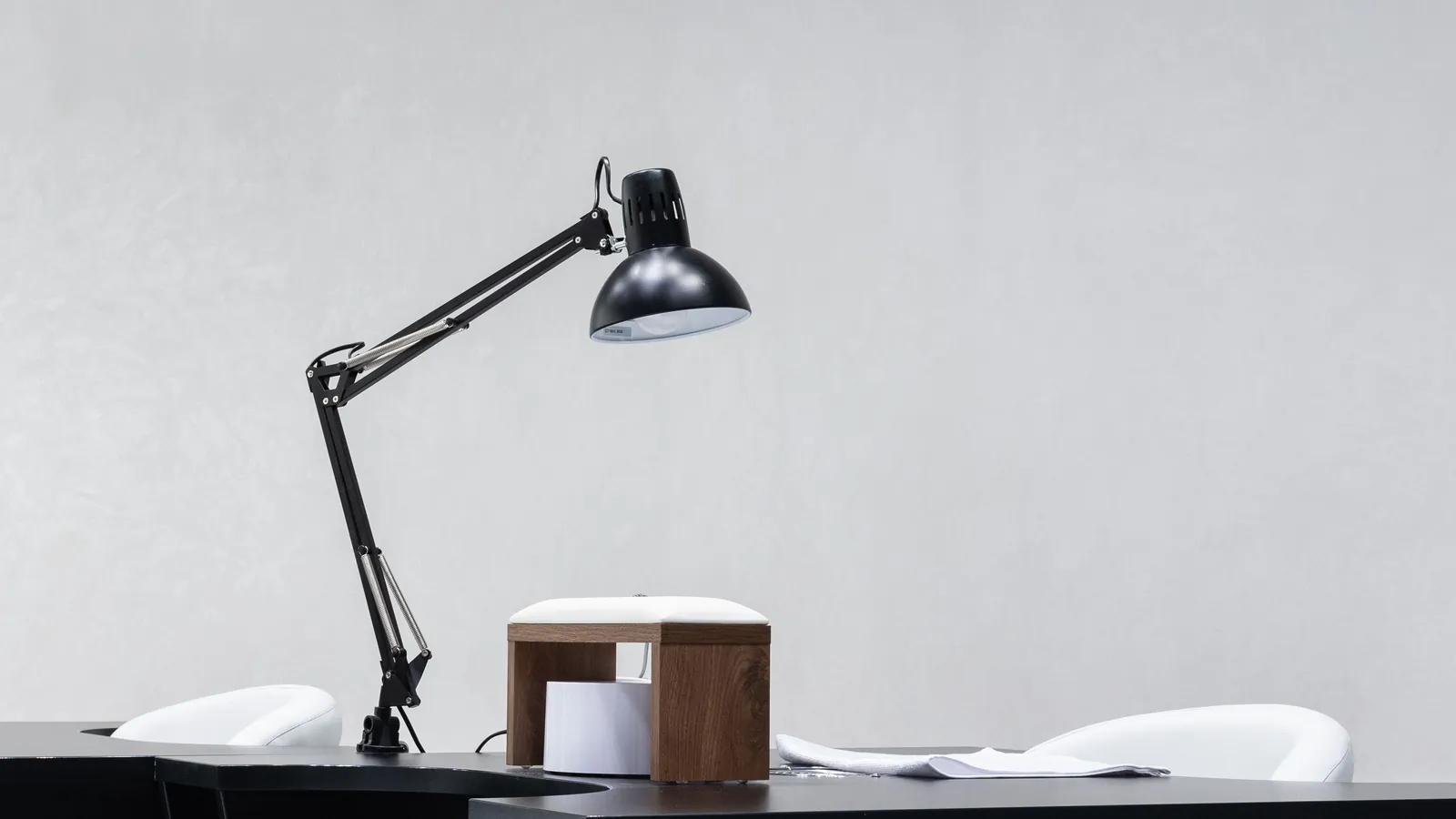
IKEA’s TERTIAL work lamp, 203.554.34 shows the directed, adjustable format. Its page describes an adjustable arm and shade and a separately purchased bulb. It is a work lamp, so the question beside a bed is where its head swings relative to your pillow. We have not tested its glare in a bedroom.
Bulbs, wattage and dimming
Every lamp socket has a maximum wattage, usually stamped on the socket or on a label near it, and a bulb can screw in perfectly while exceeding it. Excess heat can damage a shade or the wiring, so stay at or under the marked rating, and use only the shade, harp and mounting the lamp was designed for.
With an LED, compare lumens for brightness and kelvins for warmth; the wattage printed on the box describes power drawn, not how bright the light will look. A lamp with an integrated light source cannot take a different bulb, so its fixed color and brightness are part of the purchase. To dim, the lamp, the bulb and the control all have to be dimmable together; a dimmable bulb in a lamp with a plain switch will not dim.
Reaching the switch
Lie down and reach for the switch before settling on a position. A cord switch tucked behind a tall nightstand is hard to find in the dark. A base or touch control is easier, though it should not need a reach over a water glass. For two sleepers, separate switches matter more than matching bases.
Route the cord so it stays out of foot traffic and clear of the bed’s moving parts, and leave the plug where you can pull it out. If a lamp includes a charging port, compare its output with your devices, and weigh whether the extra base width is worth the lost surface.
Wall-mounted or hardwired bedside lights need correct fixings and, for hardwired ones, a qualified electrician; set their height from the finished bed and mattress, not before. Our lighting collection covers the other layers of a room.
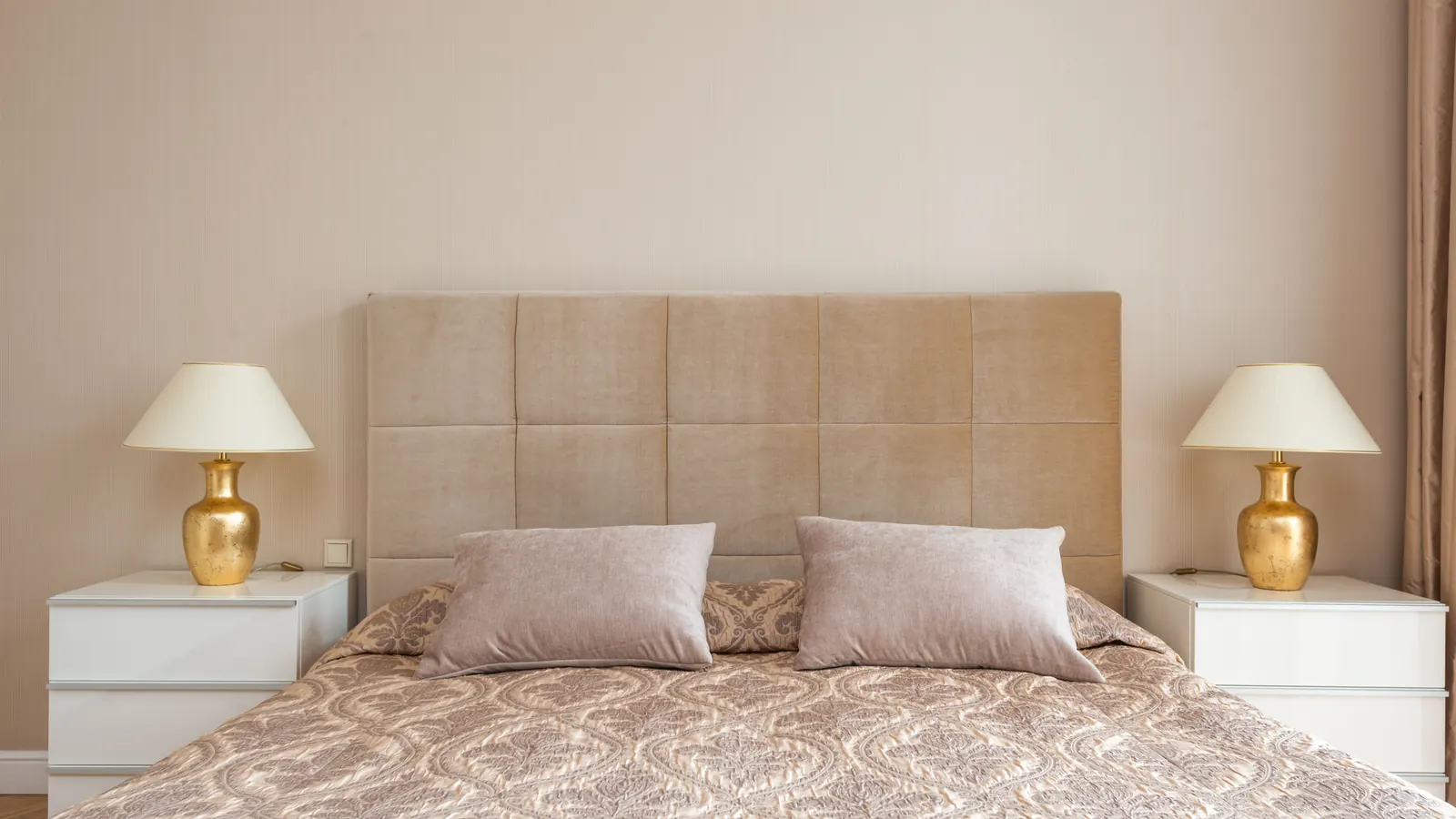
Matching lamps give a bedroom a calm, symmetrical look. Mismatched ones work too, as long as they share a shade color, a finish or a scale. Choose whichever pair lets each side read, switch off and settle without sitting up.