Blackout Shades: Fabric, Light Gaps and Bedroom Choices
Light gets in through the fabric and around it. Roller, cellular and Roman blackout shades handle both differently, and the mount and side gaps matter as much as the fabric.
By DecoraMintPublished 6-minute readMore in Blinds & Shades
In this guide
We may earn a commission from links on this page, at no extra cost to you. Affiliate disclosure
Six in the morning, curtains drawn, and the bedroom is still striped with light: one thin bright line down each side of the shade, another along the sill. The fabric is fine; the gaps are the trouble. A blackout shade mounted inside the window frame needs a sliver of clearance on both sides so it can travel up and down, and in a bright room that sliver is the first thing your eye finds.
So darkening a bedroom is two choices made together. Pick a fabric that is truly opaque, then pick a mount that covers the edges: an outside mount that overlaps the frame, or side channels sold for that exact shade. If you only want less glare on a TV or a desk screen, a room-darkening roller inside the frame is plenty and you can skip the second step.
What the labels promise
| Label | What you get | Good for |
|---|---|---|
| Light filtering | A soft glow; shapes often visible at night with lights on | Living rooms, kitchens, daytime privacy |
| Room darkening | Most light blocked through the fabric; edges still glow | Reducing glare, a dimmer bedroom |
| Blackout fabric or lining | The fabric itself blocks light; edges depend on the mount | Bedrooms, nurseries, media rooms |
| Light-blocking system | Fabric plus channels or rails sold together | Daytime sleep, shift workers |
Hunter Douglas’s guide to opacity draws the same line between opaque fabric, liners and add-on light-blocking pieces. A single product page often offers several fabrics and only some are blackout, so confirm that the color in your cart carries the blackout rating. A sample of the exact fabric held against a sunny window will show you the material; the gaps only show up once the shade is installed.
Three formats, three moods
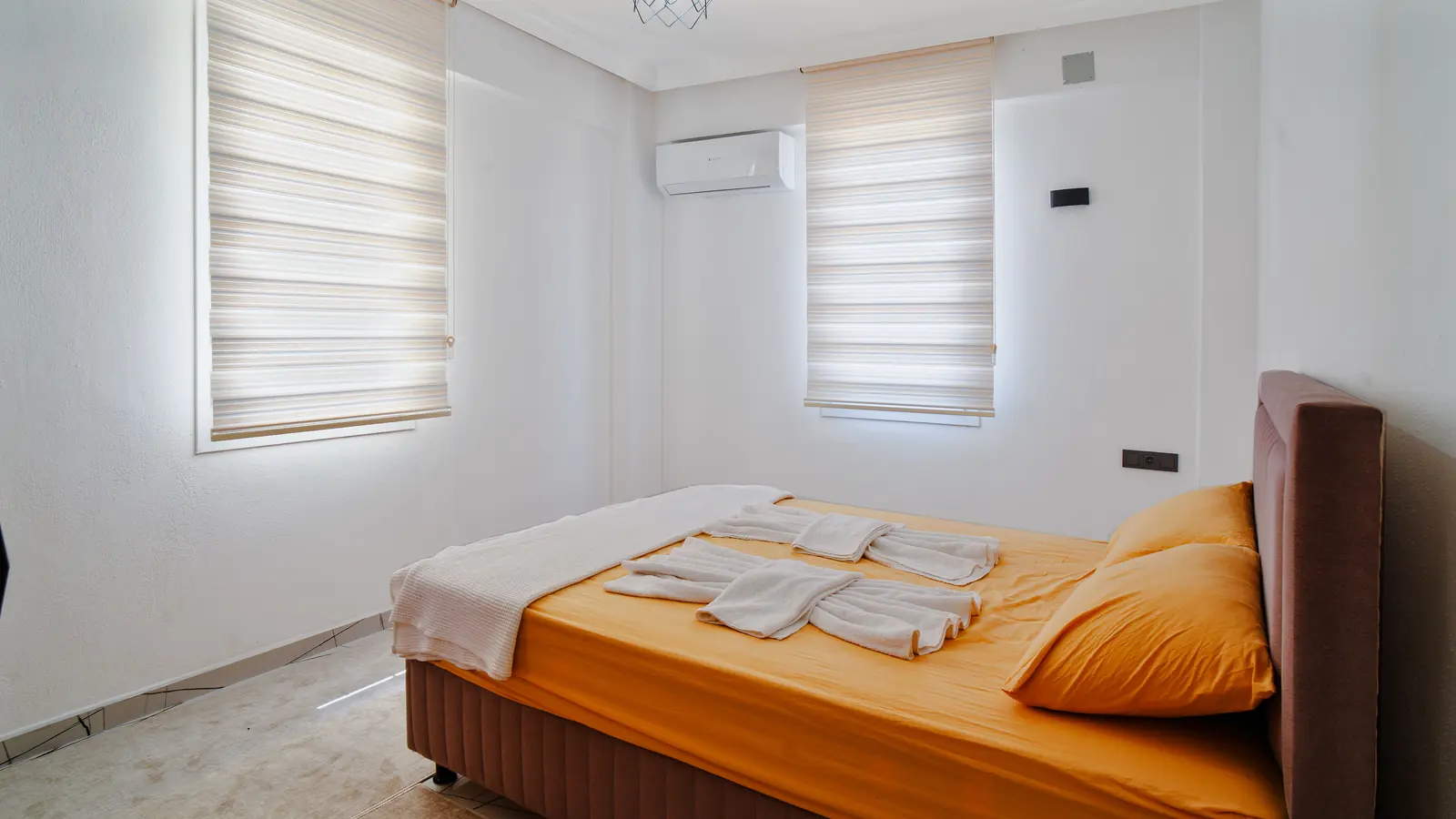
A roller shade is the quiet one: a single flat panel that rolls into a tube or cassette and leaves the window looking almost bare. In a minimal bedroom with plain walls and a low bed it disappears, which is exactly the point. The tube and brackets take width, so the fabric is a little narrower than the ordered width, and that matters most on an inside mount.
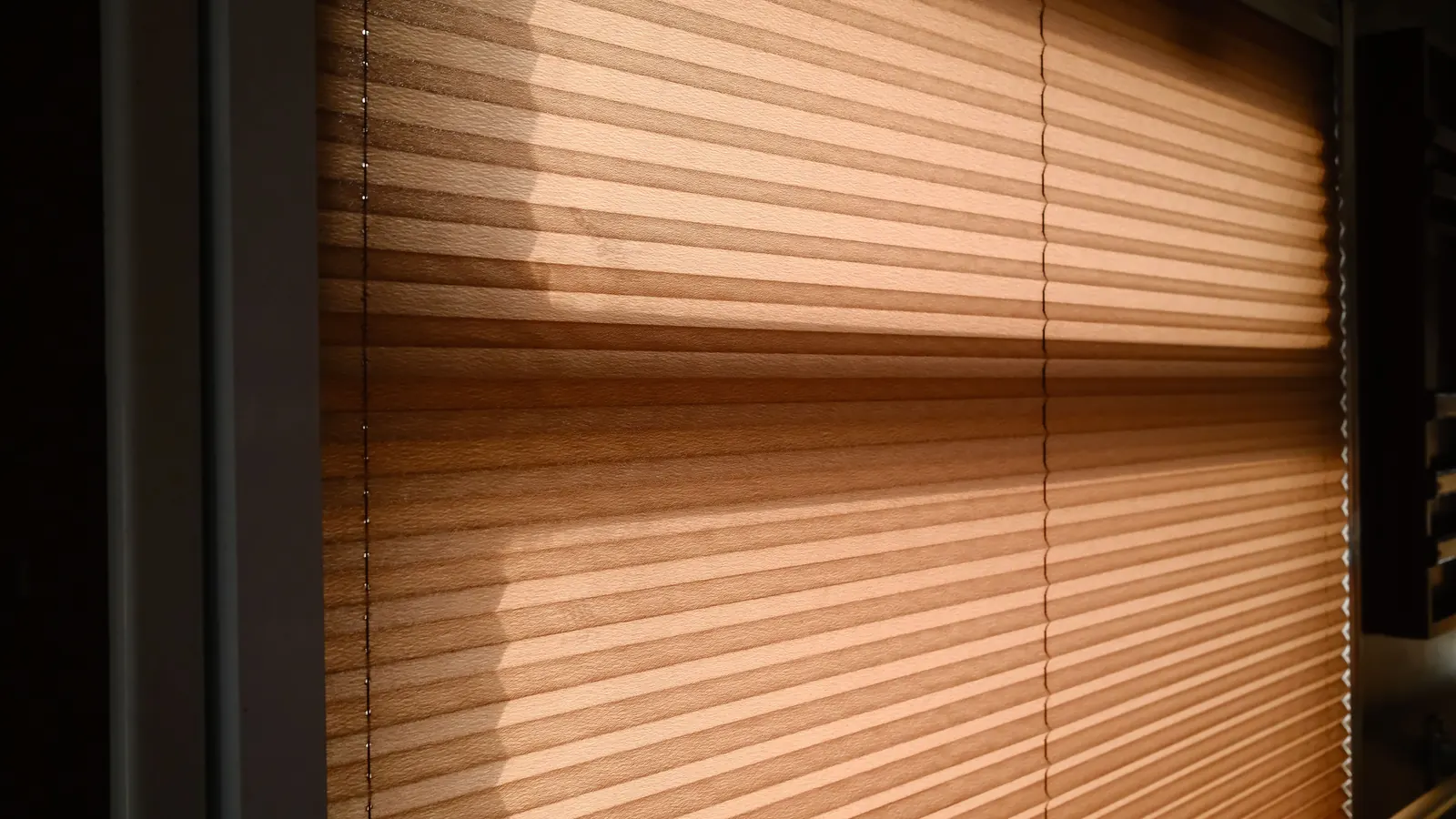
A cellular shade folds into narrow pleats, a fine horizontal rhythm that adds texture without color and stacks small when raised. Some brands make perimeter channels for particular cellular models, and with an inside mount that is the most complete way to darken the room. Those channels fit only the shades they were designed for.
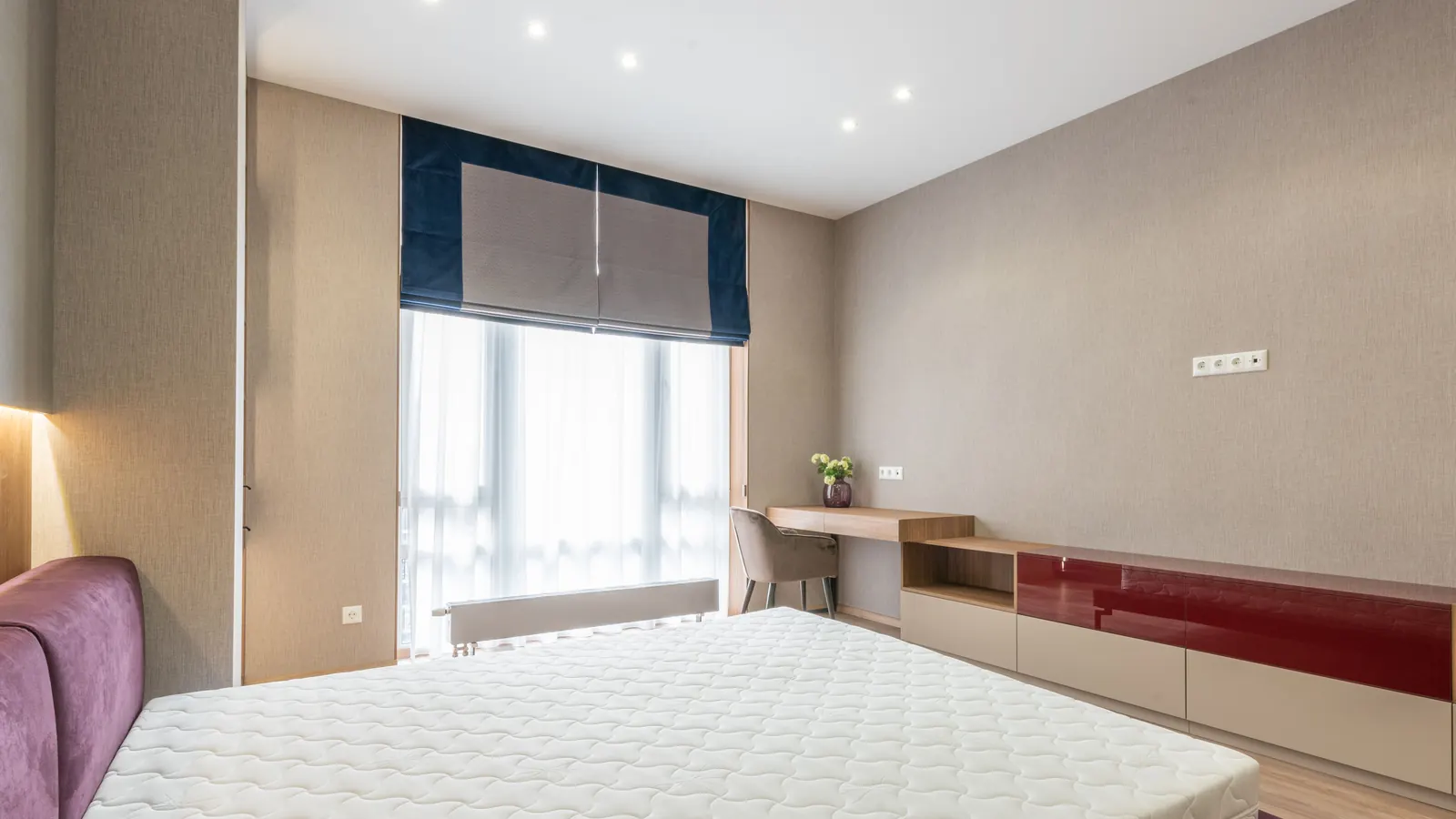
A Roman shade is the softest of the three. Fabric folds fall in deep, even bands, and a border or a linen weave turns the window into a feature, particularly with a sheer curtain layered behind or beside it. It suits a bedroom that is already built from textiles: a wool throw, a linen duvet, a rug underfoot. Select the blackout lining or blackout version when you order, and expect the raised stack to cover the top of the glass and take a little daylight with it. On Persilux’s linen-blend Roman the dark version is its own entry in the color list (Beige-Blackout, Brown-Blackout and so on), and the darkness comes from a coating applied to the back, so the weave facing the bed is the same cloth as in the standard version.
Slatted blinds sold as “blackout blinds” leak at every slat edge and through the cord holes, as Hunter Douglas notes. If you love wood slats, hang a lined curtain over them for the nights you need it dark.
Find where your light gets in
Close your current shade at the hour that bothers you and look at it.
- The whole panel glows: the fabric or lining is too thin.
- The panel is dark but the sides are bright: light is slipping past the edges, so change the mount or add channels.
- A bright line along the top or bottom: look at the headrail position and the sill.
A narrow bedroom window and a wide one over a desk can need different answers even with matching fabric.
Inside mount, outside mount or channels
An inside mount sits within the frame and shows off the trim, which gives a tailored finish. It needs those operating gaps, as Hunter Douglas’s mounting guide explains, so it suits glare control better than daytime sleep. How wide that gap is depends on the shade, and some retailers print it. Persilux’s size tables list “gaps on both sides” of 0.40 inch for its cordless blackout roller and 0.08 inch for its bottom-up blackout cellular, whose pleats run almost to the frame. If the trim is the reason you want an inside mount, the cellular is the one of the two that keeps the edge lines fine. Depth changes the look too: by the roller’s size table, its cassette stands 1.57 inches proud of a 2-inch-deep frame and needs 3.54 inches to sit fully inside, where the cellular needs 2.76.
An outside mount hangs on the wall or trim and overlaps the opening on every side, which stops most edge light. The maker’s measuring guide gives the overlap for each product. Look at the wall around the window first: deep trim, a door that swings close or a nearby corner can all interfere. Extra width helps only here, where it overlaps the frame.
Side channels close the gaps on an inside mount. Buy them as part of the same system as the shade so the fabric runs freely. Hunter Douglas’s notes on light gaps also suggest curtain panels at the sides, which works with any mount, catches stray light and dresses a bare-looking window. Leave room between the shade’s brackets and the curtain rod so both move freely.
Daytime layers
A blackout shade is either down or up. If you want soft light and privacy while it is day, add a sheer or light-filtering layer: a dual roller, or a sheer curtain in front of the shade. Sketch both layers first so the front one clears the back one. Opacity comes from the fabric or lining, whatever the color.
Controls and safety
Choose a control you can reach without leaning across the bed: a cordless bottom rail for an easy window, a motor for one behind a headboard or high on the wall. For a motorized shade, find out how it charges and whether the remote, hub or app is included.
The CPSC recommends cordless window coverings and keeping cribs and beds away from any cords. Cordless shades can still contain internal cords, so install them exactly as instructed and never add a homemade pull cord.
The three Persilux picks
The picks below come from Persilux’s product pages, checked on October 27 and November 4, 2026, and we have not tested them for light leakage. The blackout roller page offers matching side channels (white or fabric-wrapped) as an order option; ask Persilux whether the cellular and the Roman can be ordered with them. So if the shade has to sit inside the frame and the room must be fully dark for daytime sleep, order the roller with its channels, or choose another system sold with its own; for everyone else, the gap and depth figures above are the fairest way to compare them.
Custom sizes often come with stricter return terms than stock ones, so read the current policy before ordering.
If the room has to be dark for daytime sleep, choose the outside mount or a shade with its own channels. If you are only cutting glare, an inside-mounted roller will do.
The picks
Availability updates from the retailer feed. Where our copy of a price is out of date, the retailer’s site shows the current one.

Flat roller panel, cordless and custom size
Blackout Roller Shades (Custom Size)
Made to measure, cordless and listed as blocking unwanted sunlight, in white, beige and light grey. The continuous panel gives the flattest, most minimal look of the three formats. The product page lists 0.40 inch of side gaps and light-blocking strips in the valance, so in a bedroom it belongs outside the frame.

Honeycomb blackout with folded cells
Bottom Up Only Blackout Cellular Blinds (1.5" cell)
A bottom-up blackout cellular shade with 1.5-inch cells and a cordless lift. Its size table gives 0.08 inch of side gaps against the roller's 0.40, which suits an inside mount that keeps the trim on show.

Soft linen-blend Roman with blackout versions
Linen Fabric Roman Shades
A cordless Roman shade in a polyester and linen blend that trades the flat roller panel for soft folds. The product page lists a blackout version of each of its four colors, made by coating the back of the fabric, so select the blackout version rather than the standard one.
Retailers to browse
Compare colors, sizes, materials and return details on the retailer’s current listings.
- Browse blinds and shades at Persilux
Persilux
Opens Persilux’s blinds and shades collection, not a single product.