6 Curtain Ideas for Arched Windows: Show the Curve or Cover the Whole Opening
Show off the curve or cover the whole window? Six curtain arrangements for arched windows, and what each one leaves uncovered, before you decide where the rod goes.
By DecoraMintPublished 4-minute readMore in Blinds & Shades
In this guide
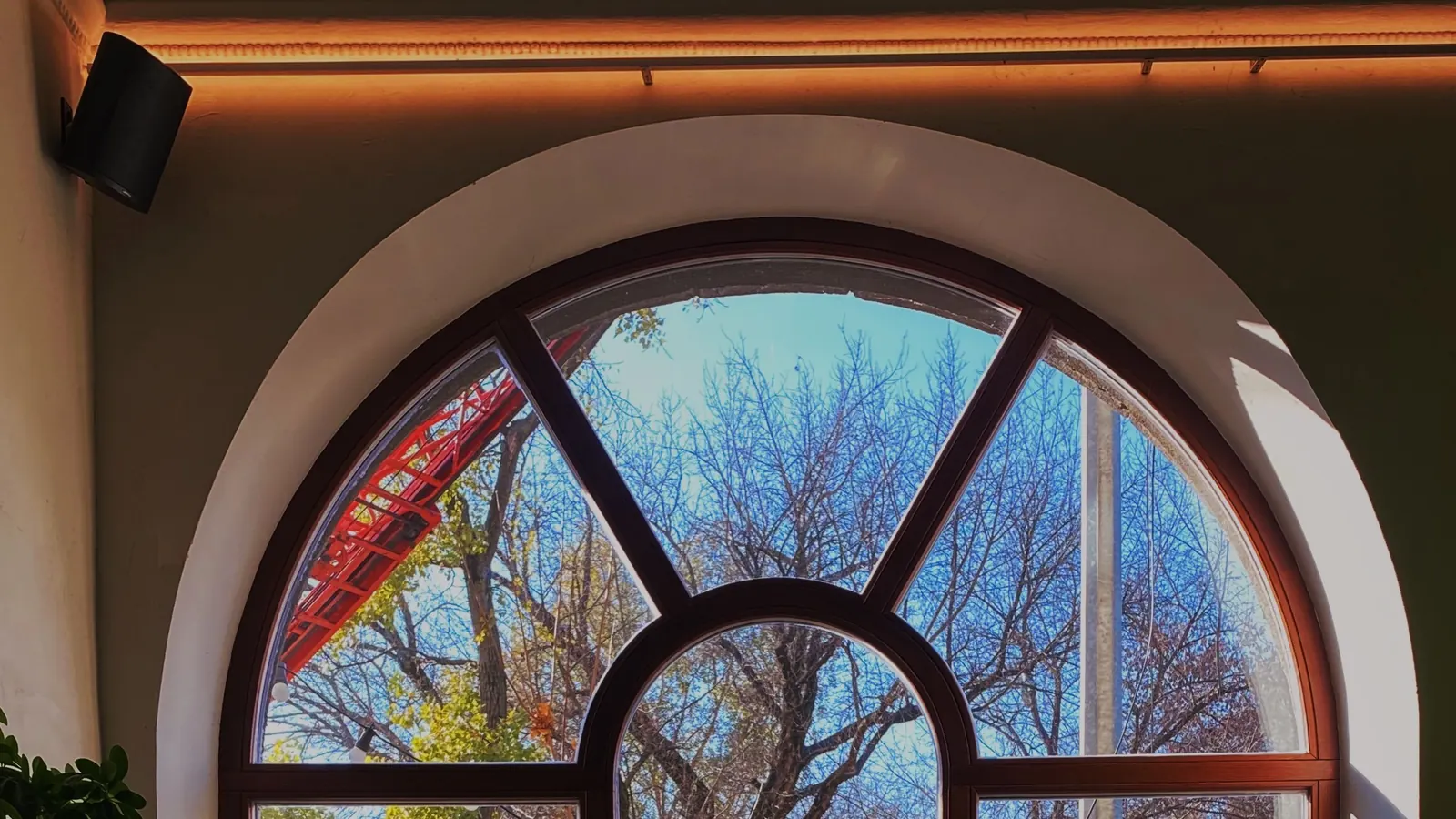
Late in the day, a tall arched window throws a bright half-moon of light across the floor, and that curve is the reason most people hesitate to hang anything near it. Curtains can honor the shape, hide it or answer it with a shape of their own. Six arrangements follow, from the quietest to the most dramatic, each with what it leaves bare.
Start by looking at your window the way a tailor would. Where does the curve end and the rectangle begin? That line, the spring line, is the hinge for most of these ideas.
1. A straight rod high above the whole arch
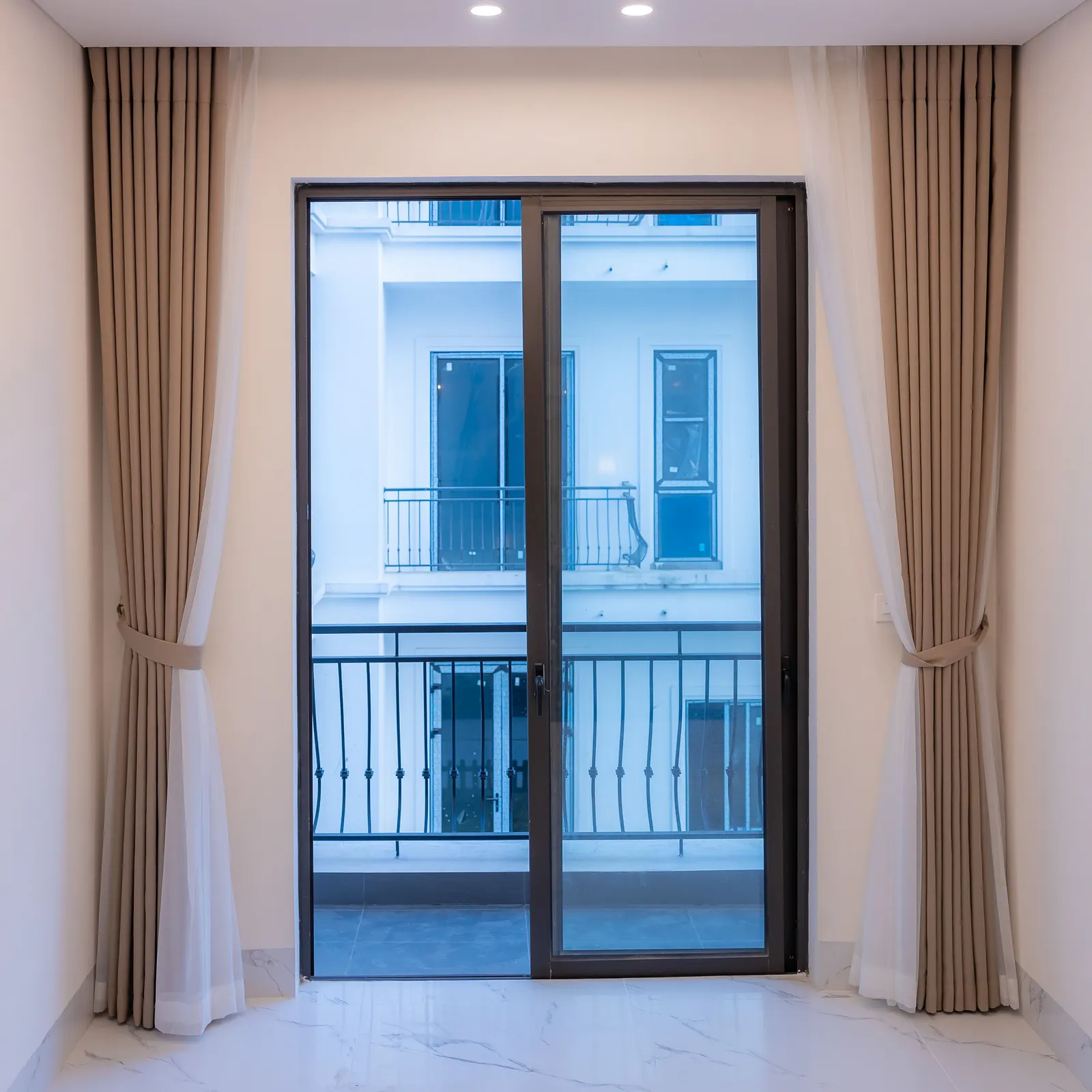
This is the classic move: carry the rod above the highest point of the curve and let floor-length panels fall on either side. The arch becomes a jewel set in a tall rectangle, and the room reads as taller than it is. Pulled closed, the panels cross both the curve and the glass below, so this is also the version that gives full coverage for a bedroom.
The practical catch is wall space. You need room above the arch for the rod and brackets, and beside the opening for the stacked fabric, so open panels rest on the wall instead of crowding the glass. Linen or a heavier cotton in a tone close to the wall keeps the arch the star. A contrasting velvet makes the curtain the star instead. The decor collection is a good place to browse fabrics in these tones. Whatever the fabric, choose a rod and brackets rated for its weight and fix them into solid support, since a wide lined pair is heavier than it looks.
2. Curtains below the spring line, arch left bare
Hang the rod just under where the curve begins and the arch becomes pure architecture, a half-circle of sky above soft fabric. It works well where the glass above is high enough to need no privacy cover, and it is a good choice for a reading corner or a dining room where you want daylight over the top of the curtains.
The compromise is plain: the arch gets no darkness and no glare control, whatever the label on the lower fabric says. If several matching windows share a wall, put every rod at the same height. One window a few inches off looks like a mistake, while a consistent line looks designed.
3. Fixed side panels as a frame
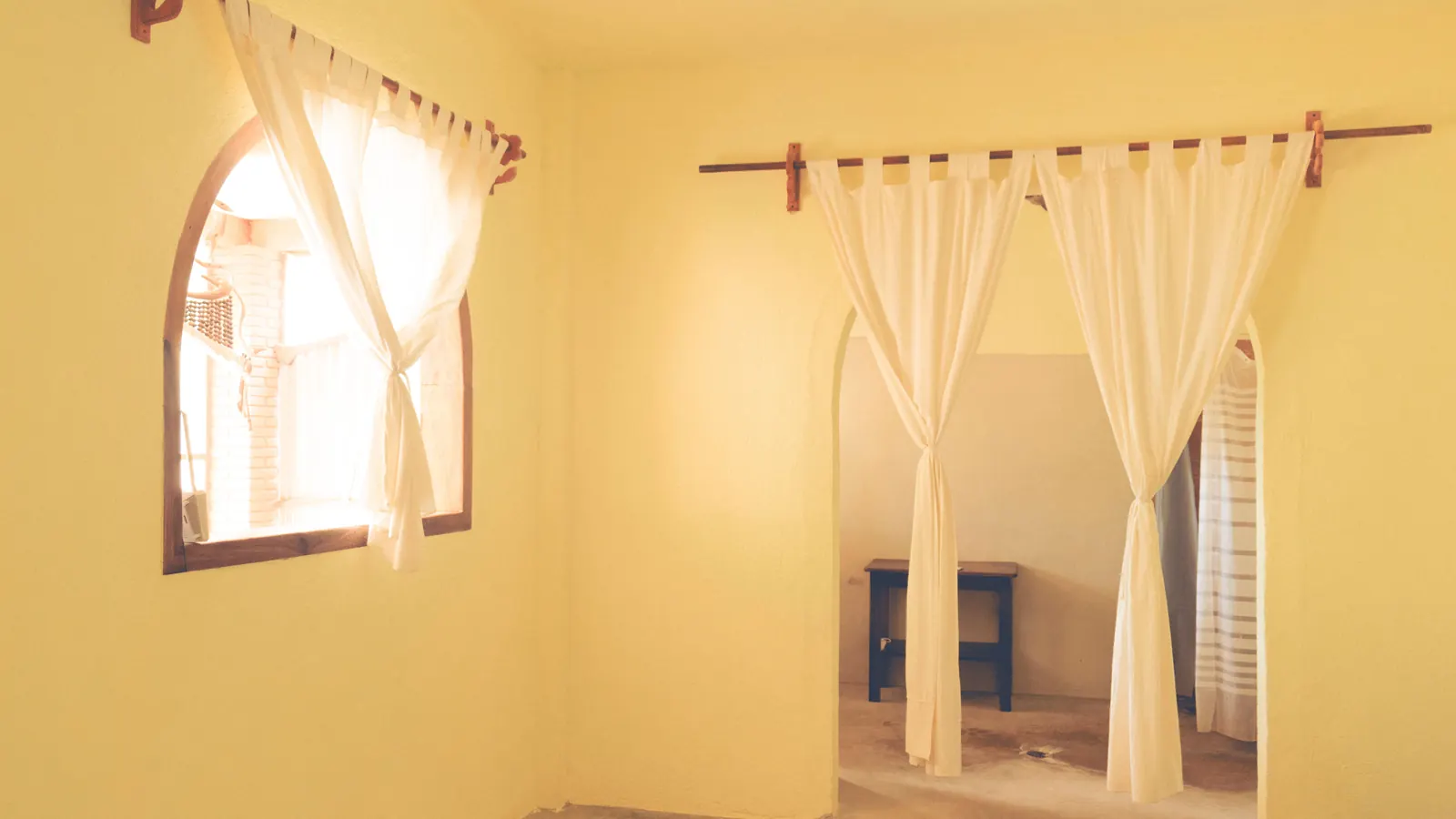
Stationary panels, hung wide of the frame and tied back or left straight, add vertical color and texture without any need to close. A pair in a soft rust or sage beside a white arch looks like a picture frame, and because they never move, you can use less fabric than a working pair needs and still get a full, generous look.
Treat them as decoration. Another layer, such as a shade or a sheer, has to supply privacy. A rope tieback or tassel cord is also a loose cord, so hang it high or switch to a fabric band, particularly in a child’s room.
4. Curtains plus a fitted shade in the arch
Here the work is split: a drapery pair handles the rectangle, and a shade or fan-shaped treatment made to the curve handles the glass above. Hunter Douglas’s arched-window guide lists specialty shades, shutters and drapery among the approaches, and it treats the shape and the operation as separate questions.
Ask whether the fitted piece moves or is fixed in place; plenty are fixed. Compare the fabric of the shade and the curtain together, in the room’s own light, because two whites with the same name can differ sharply in warmth and texture. A sheer curtain over a fixed arch panel can be lovely, since the sheer softens the hard edge between the two.
5. One long line across a group of arches
Two, three or four arched windows side by side, a Palladian arrangement with a tall arch flanked by rectangles, or a row of French doors with arched transoms: a single rod above all of them turns separate openings into one wall of fabric. It is a grand gesture and suits a large living room or an entry with a high ceiling.
Sketch where the open panels will stack, and where brackets and wall piers fall, before you commit. The cost of the single line is that closing it covers every window at once. If one opening is a door you use every day, a pair of panels for that door alone may be smarter.
6. A shaped top that repeats the curve
The most architectural option is a treatment whose upper edge follows the arch, such as a curved rod or a fixed shaped valance. It echoes the window instead of fighting it, and in a traditional room it looks tailored.
This is a fabrication job, not a weekend project. A standard rod cannot be bent at home, and fabric on a curve will not draw like a straight curtain. Ask the maker which parts are decorative and which move, and have them show the mechanism.
Putting it to the test tonight
Tape three lines to the wall with painter’s tape: one above the arch, one at the spring line, one at the height of the lower sash. Stand back at the far side of the room and look at each in the evening light. The one that makes the arch look intended is usually obvious in a minute. Hang the drop from the spot where the fabric will actually start, not from the top of the glass, and keep the hem clear of heaters.