Dining Room Curtains: Plan Privacy, Proportion and Chair Clearance
Dining curtains have to work with people seated, chairs pulled out and the room shifting from daylight to evening. Plan the open and closed positions before choosing fabric.
By DecoraMintPublished 5-minute readMore in Blinds & Shades
In this guide
Here is the test a dining room puts to its curtains: what happens when everyone stands at once and the chairs scrape back? If the panels brush the chair backs, snag on a cabinet door or crowd the way to the kitchen, they will annoy you every meal, however good the fabric looks. Decide how the curtains behave in use first, and let the fabric follow.
Side panels that frame a window look finished, but they only give full coverage when they are wide enough and hung to close. Two well-proportioned panels suit a casual dining area, and layers suit a formal one. The windows, the table’s position and the light and privacy you want settle which.
What the curtains are for
Separate the look from the job. Do you want softness around a bare window, control of afternoon glare, a more private evening meal, or all three? Rank them before you start browsing photographs.
If the room faces a street or a neighbor, look at it from outside with the lights on after dark. A fabric that feels private at noon can turn see-through at night. A room used mostly by day may care more about keeping useful daylight than about darkness, and when the dining room doubles as a workspace or media area, a separate shade can control light more easily than panels you keep adjusting.
Panels, layers or something grander
| Treatment | Why it suits a dining room | What to settle |
|---|---|---|
| Operable curtain panels | One treatment softens the room and closes across the window | Enough fabric and a clear path for opening |
| Stationary side panels | Frame a window that is rarely touched | A separate treatment if you need full coverage |
| Sheer layer plus opaque panels | One setup for daytime, another for evening | Hardware depth and independent operation |
| Shade with decorative curtains | Light control sits within the window area | Room for both sets of hardware to work |
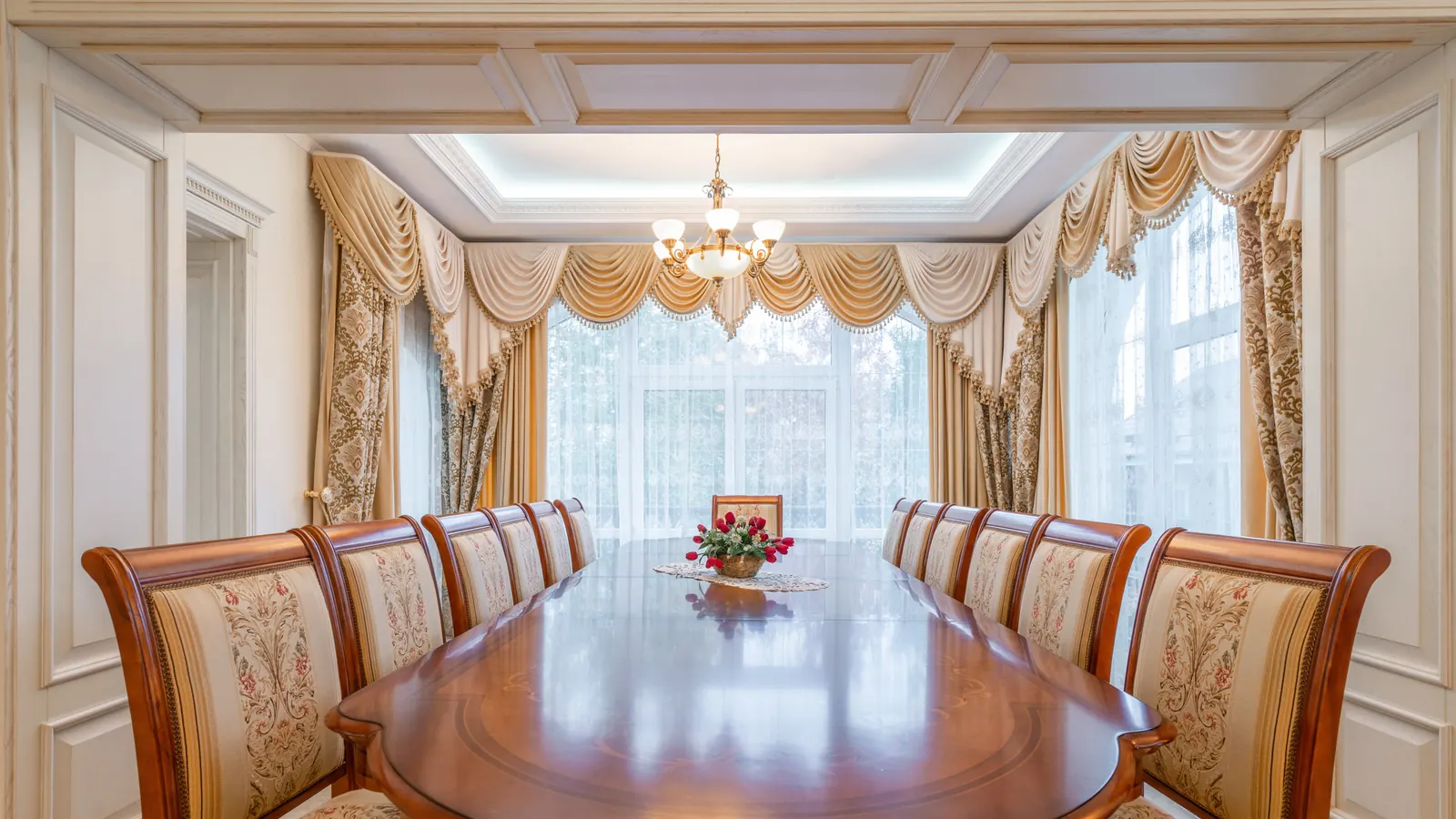
| Formal drapery with a valance or swags | A deliberate, traditional composition | Whether it suits the room and can be cleaned |
Pottery Barn’s room-by-room window treatment ideas show formal and simpler dining rooms side by side, a useful reminder that dining curtains can be plain. A casual room follows the same planning steps with simpler panels.
How the room should feel
Curtains are among the largest soft surfaces you see from the table, so let them set the temperature of the room. Linen panels in oatmeal or warm white slump into easy folds and make a family kitchen-diner feel relaxed. A heavier velvet or lined cotton in deep green or rust hangs straighter, gives a dinner-party room some weight and shows candlelight well. Sheers filter low sun into a pale glow across the table and keep a small room open.
Hold a sample beside the table finish, the chair upholstery and the wall, in daylight and under the lamps you use for dinner. A warm cream can turn yellow against cool gray walls, while an oatmeal or sage settles beside dark wood. If the rug and chairs already carry strong pattern, a quieter curtain gives the eye somewhere to rest. If most surfaces are plain, a patterned panel brings character, and repeating one color from elsewhere in the room is enough to tie it in. Judge a pattern gathered, since a large motif can break up in the folds and a small repeat reads as texture from across the table. In an open plan, treatments you can see together should share a color, a hardware finish or a degree of formality.
Open and closed
Measure the window area to be covered and leave space for the fabric when it is drawn back, since the stack takes room beside the glass. A window near a corner, cabinet or another window may leave little room to clear the opening. Decide where the panels rest during a meal: a stack directly behind a chair gets brushed at every meal, and one beside a serving cabinet can block its doors.
Check the heading and hardware before working out panel width, because fullness varies. If a particular product calls for twice the covered width, a 60-inch span would need 120 inches of fabric; that is the arithmetic for that instruction, and other headings differ. Measure length from the attachment point of the chosen hardware too, since rings, tabs, rod pockets and tracks hold fabric at different heights. RH’s drapery measuring guide shows why the heading and hardware belong in the plan.
Keeping fabric out of the way
Pull the chairs out as if the party is leaving. Look at the space behind each chair and the route to the kitchen; curtains should leave a narrow route as easy as it was. Floor-length panels look finished without deliberately pooling fabric in a busy area. A longer, pooled hem is handsome in a photograph and hard to keep arranged near chairs and feet, and it collects dust and spills.
For a patio or French door, plan around the active leaf, the handles and the direction of travel, so the curtains clear the opening when someone carries a dish outside. A center support or fixed panel can limit how far fabric moves. Keep treatments clear of heaters, vents and other equipment, and follow their required clearances and the manufacturer’s instructions, since clearances differ by heater and room.
A table near a window invites splashes and handling. Read the care label before buying, including whether lining changes the cleaning method, because a washable-looking fabric can behave differently once lined or structured. Consider how the panels come down: a high installation or a fussy heading makes routine upkeep harder. A delicate finish suits a formal room used on occasion better than one used daily.
Floor-length panels often give the cleanest line; where furniture, a heater or the window’s construction gets in the way, hang shorter ones. Repeat one color or texture from the dining chairs and the curtains will sit well with them.