End Tables for Living Rooms: Choose the Right Height, Shape and Storage
An end table serves the person sitting next to it. Decide what needs to be in reach, then compare height from that seat, the base, storage and three real compact tables.
By DecoraMintPublished 7-minute readMore in Furniture
In this guide
We may earn a commission from links on this page, at no extra cost to you. Affiliate disclosure
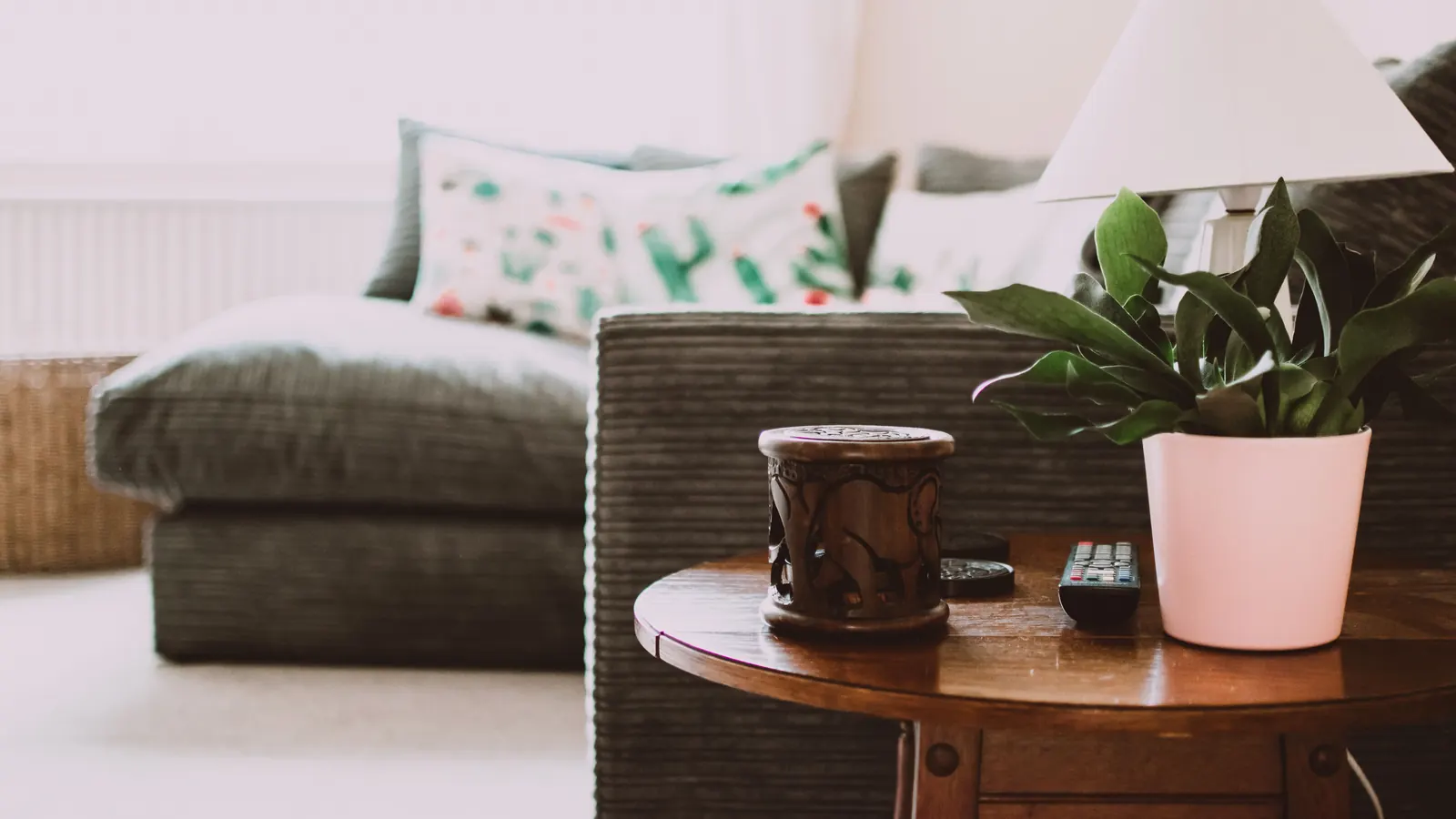
A familiar rule of thumb in retailer sizing guides puts an end table’s top within about 2 inches of the sofa arm, a little above or below. That is a sound starting point, and it explains why a table that towers over the arm looks perched and one far below it looks sunk. But the real test is the person sitting there. Sit in your usual spot, reach for an imaginary mug, and notice where your hand wants to land; that height, and what you need within reach (a drink, a lamp, a book, a drawer for remotes), should choose the table.
The two ends of a sofa rarely need the same thing. One side may have room for a lamp and storage, while the other sits beside a doorway and only has space for a slim perch for a cup. Choose each spot on its own terms, then decide whether the pair should match. Our furniture guides cover the wider room arrangement.
Measure from the seat you use
Note the arm height of the sofa or chair, the width of the gap beside it and how much depth you can use before the table pokes into a walkway. For an armless seat, go by your comfortable seated reach.
Then fake it. Stack books or set a box at the planned height, sit normally and put a cup on it. If you have to hike your elbow, bend down or reach across a broad, rolled arm, keep adjusting. A table can fit the gap perfectly and still be awkward to use.
Do this separately for a reading chair and the sofa. Their arm heights and seat depths often differ, and a sink-in sofa puts you lower than a firm armchair.
When shopping online, separate overall height from the usable top. A raised tray rim or a handle may be the tallest point. Look at the base, too: a narrow top can sit on a wider foot.
Give the top a realistic job
Gather the things you want on the table and set them together on any surface. Measure the area they cover. A lamp base, a coaster and a paperback take up more room than most product photos admit.
| Main use | Format that suits it | What to inspect |
|---|---|---|
| One drink beside a chair | Compact top or small pedestal | Reach, stability and the full base footprint |
| Lamp plus everyday things | A larger uninterrupted top | Lamp-base size and the landing room left over |
| Remotes and small belongings | Drawer or open shelf | Interior dimensions and space to open |
| Occasional serving | Removable tray design | Whether the tray is meant to be carried |
| Reaching over the seat | C-shaped table | Clearance under the sofa and the load rating |
Leave a landing spot. A styled vignette that fills the whole top looks good until someone needs to put a glass down.
The base matters as much as the top
A C-shaped table slides its foot under the sofa so the top hovers over the seat, which is perfect for a laptop or a bowl of popcorn. Measure the clearance under the sofa first, including low rails, and keep the base out of a recliner’s moving parts.
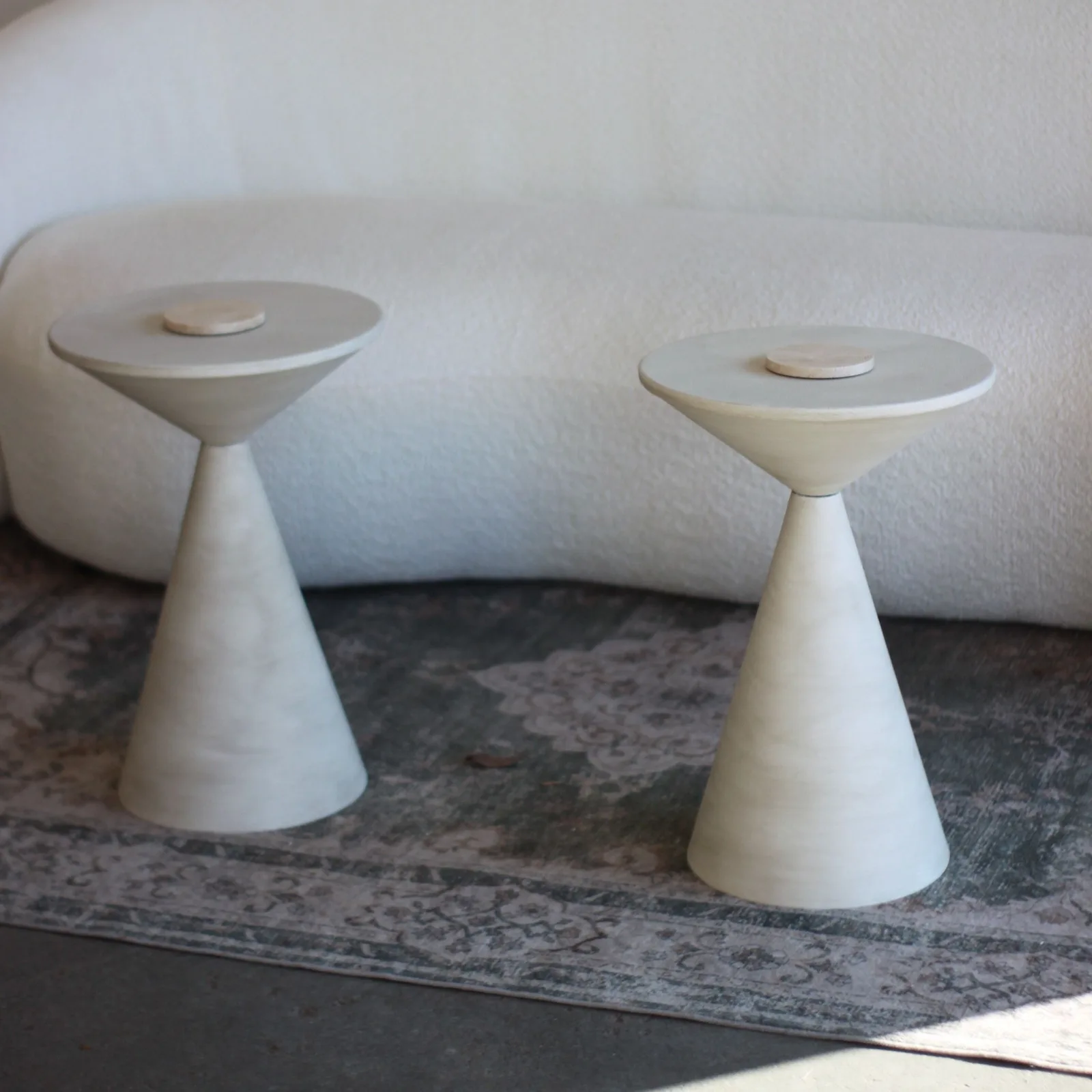
Pedestals and four-leg tables occupy the floor differently. A small round top can sit on a surprisingly wide foot, so check the widest point against the path you use to sit down.
In a tight gap, compare a slim rectangle with a round table using full-size paper outlines. A circle loses its corners, which helps traffic flow, but it also gives you less surface. A 16-inch square offers 256 square inches; a 16-inch-diameter circle offers about 201. To match the square, the circle would need to be roughly 18.1 inches across, which may not fit the gap, and a rectangular book or lamp base still might not sit comfortably on it. Put your actual objects on the outlines and see.
Visually, the base changes how heavy the table feels. An open metal frame lets the floor and rug show through and feels light beside a chunky sofa; a solid drum or cube table reads as a strong block of color and anchors a leggy chair. Neither makes a room bigger, but each shifts the visual weight.
Three compact tables, compared on paper
These examples compare published specifications only; we have not handled them or ranked them. The product links below are cited for their published specifications; the retailer link that accompanies this guide opens Super Area Rugs’ homepage, not the Vesana or Ania page. Check the current configuration and terms before ordering.
Vesana: a small metal surface
Super Area Rugs lists the Vesana end table as powder-coated iron, 20 inches high on a 12-by-12-inch footprint, for indoor use with no assembly. That footprint suits a narrow gap beside a chair, but a 12-inch top fills up fast; test your lamp and mug on a 12-inch square of paper, and ask for a load limit if you plan to put anything heavy on it.
Ania: taller and narrower
The Ania end table page describes a marble top on a mango-wood base, 22.5 inches high and 10 by 10 inches. Next to Vesana it is taller and slimmer, closer to a pedestal for one drink or a small plant. The page gives conflicting assembly information, so ask before ordering. Marble can stain and etch, so treat the top as something to protect with coasters and follow the care guidance.
GLADOM: a removable tray
IKEA’s black GLADOM 504.119.90 is a removable tray on a steel frame, listed at 17½ inches in diameter and 20⅝ inches high, with a maximum tabletop load of 22 pounds and indoor use only. The tray lifts off to carry drinks, a handy trick that not every round-topped table offers. Allow for the rim when you work out the flat surface.
Run the three through the seat test from the first section and they sort by job, not by rank. Against the 2-inch rule, Ania’s 22.5-inch top sits beside an arm of roughly 20½ to 24½ inches, while Vesana (20 inches) and GLADOM (20⅝) belong beside a lower arm, about 18 to 22½. For one mug in a tight gap by a reading chair, Ania’s 10-inch square takes the least floor. A lamp base plus a mug is where the small squares run out: GLADOM’s 17½-inch tray is the largest top of the three and comes with a stated 22-pound load, so it is the stronger candidate for the lamp end of a sofa even though IKEA is not a partner of this site. Both Super Area Rugs listings say their table holds a lamp, yet neither gives a weight figure, so ask the retailer for a load limit before resting a heavy lamp on Vesana or Ania.
Storage you will actually open
A drawer earns its place when it can open fully beside the seat and its interior fits what you want to stash. Thick sides and runners eat into the outside dimensions, so check the interior measurements. Then picture opening it: if the front hits a sofa cushion or a person’s knee, you will end up moving the table every time, and an open shelf would have been easier.
A lower shelf is lovely for a basket of magazines or a stack of coffee-table books, as long as you measure the opening above it before buying the basket.
Mixing tables without matching everything
Two end tables can belong together through one shared idea: the same dark metal, a similar rounded edge, a matching height. Beside a broad sofa, a generous lamp table on one end and a slim drink table on the other can each do its job, and repeating that metal or wood somewhere else in the room makes the difference look chosen.
Look at the arrangement from the doorway, not only from the sofa. A heavy enclosed table can overpower a light, leggy chair, while an open frame lets more of the wall and rug read through.
Lamps, cords and the path through the room
Find the outlet before choosing a table mainly to carry a lamp. Run the cord along the back of the table and the wall, out of the walkway and away from moving furniture, and follow the lamp’s instructions. A lower shelf is not automatically a safe place for a power strip and coiled cord.
Check the shade, not just the lamp base: a wide drum shade can overhang the table edge and catch shoulders as people pass. Walk the room with the table outline taped down, sit on the sofa, open nearby doors and windows. If everyone has to turn sideways to get by, go smaller or move it.
Surface care
Identify the finish from the specification, not the photo. A wood look may be veneer or laminate; a stone look may be a printed surface. Use coasters and care products suited to that exact material, and never stand on a small table or use it as a seat.
One evening of ordinary use settles it: the lamp has room, the mug lands without a stretch, the drawer opens and nobody clips the corner on the way past. The other end of the sofa can pass that test with a completely different table.
Retailers to browse
Compare colors, sizes, materials and return details on the retailer’s current listings.
- Go to Super Area Rugs
Super Area Rugs
Opens Super Area Rugs’s store (area rugs).