Storage Ottomans: Compare Usable Space, Lids and Everyday Access
An ottoman full of blankets is less useful if reaching them means moving a tray, a chair and a lid. Name the contents, check the opening and plan where the lid goes.
By DecoraMintPublished 4-minute readMore in Furniture
In this guide
A storage ottoman is a footrest, a low surface and a cupboard in one upholstered box, and the cupboard only works if the lid gets out of your way. Lift, reach, close: when that is quick, the piece earns its floor space. When a tray, two mugs and a pulled-out chair stand in the way, it turns into a chore.
Decide what lives inside
List what you want to hide and fold or stack it the way you would on an ordinary day: blankets loosely folded, game boxes as they sit on the shelf, spare pillows squashed only as far as you would squash them. Then sort the daily things from the once-a-month things. A throw reached for nightly belongs in a box with an easy lid and a shallow stack; holiday linens can sit underneath.
Outside dimensions say little about the cavity. Frame, padding, lining and hinges all take space, so look for interior measurements and a photo of the ottoman open. A rim around the opening can also block a flat game box that would fit inside if you could get it past the lip.
The lid decides how it lives in the room
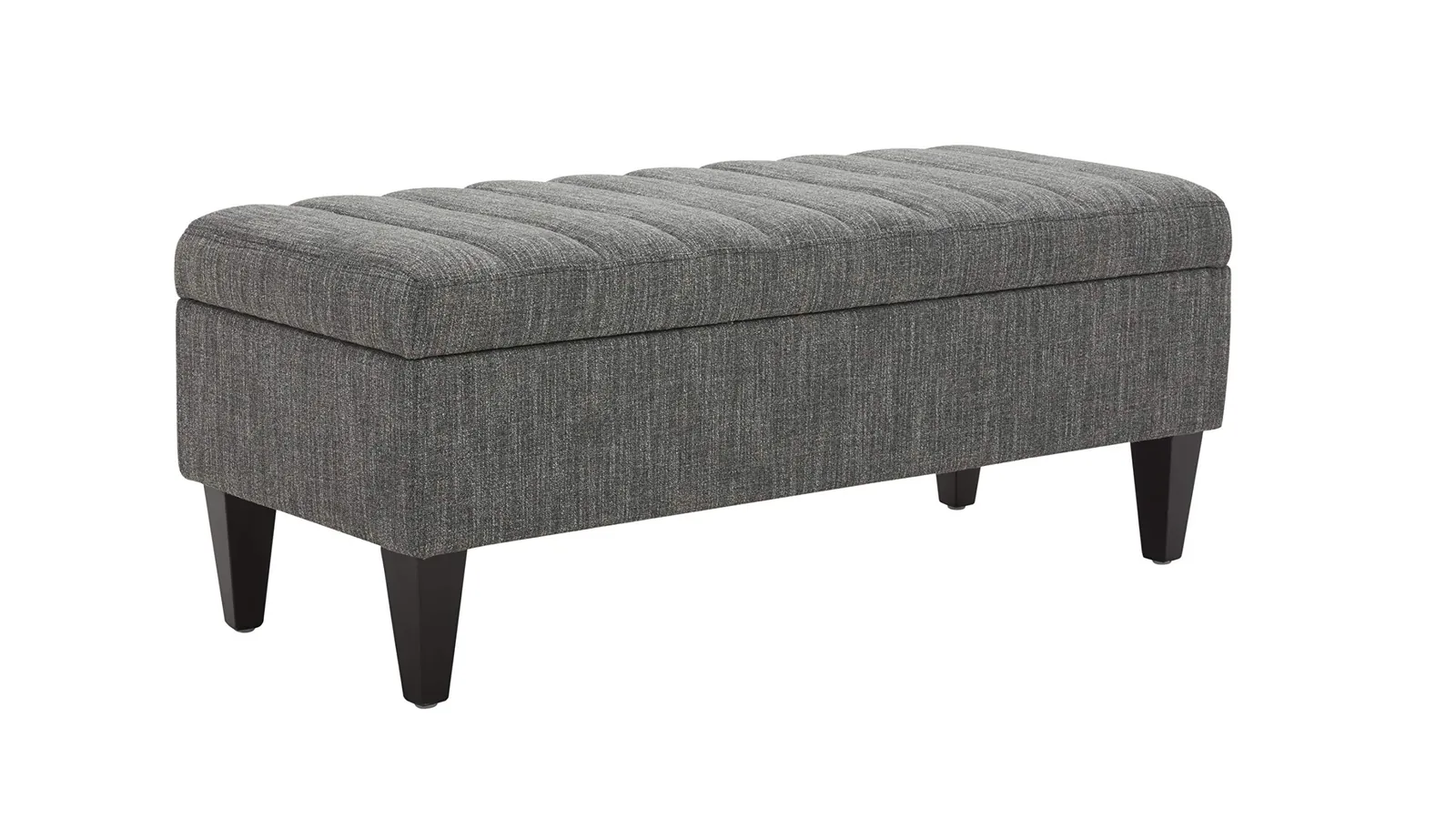
Lift-off tops are the simplest and leave you holding a padded slab, so they need a landing spot nearby, such as a chair seat or a sofa cushion. Hinged tops stay attached and need clearance to swing fully open, which rules out a tight gap against a wall or sofa arm. A reversible tray top gives you a table and a storage box in one piece, with the catch that everything on the tray has to come off before you open the base. Side openings suit a corner or a wall where the top is occupied.
Measure the footprint, add the space the lid needs to open, and look at sofa arms, wall trim and anything hanging above. Walk around it as the room is actually used, with a dining chair pulled out and the door open. A long padded lid can be awkward to handle even when light, so ask for its weight if you will lift it often.
Proportion, height and the sofa
We would keep the top at or a little below the sofa seat. At that height it works as a footrest and a low surface, and the sightline across the room stays open. A squat cube in front of a long sofa looks stubby; a wide rectangle that carries a good share of the sofa’s length looks planned. In a small living room, we would pick one generous ottoman over two small ones, which crowd the walkway and chop up the floor.
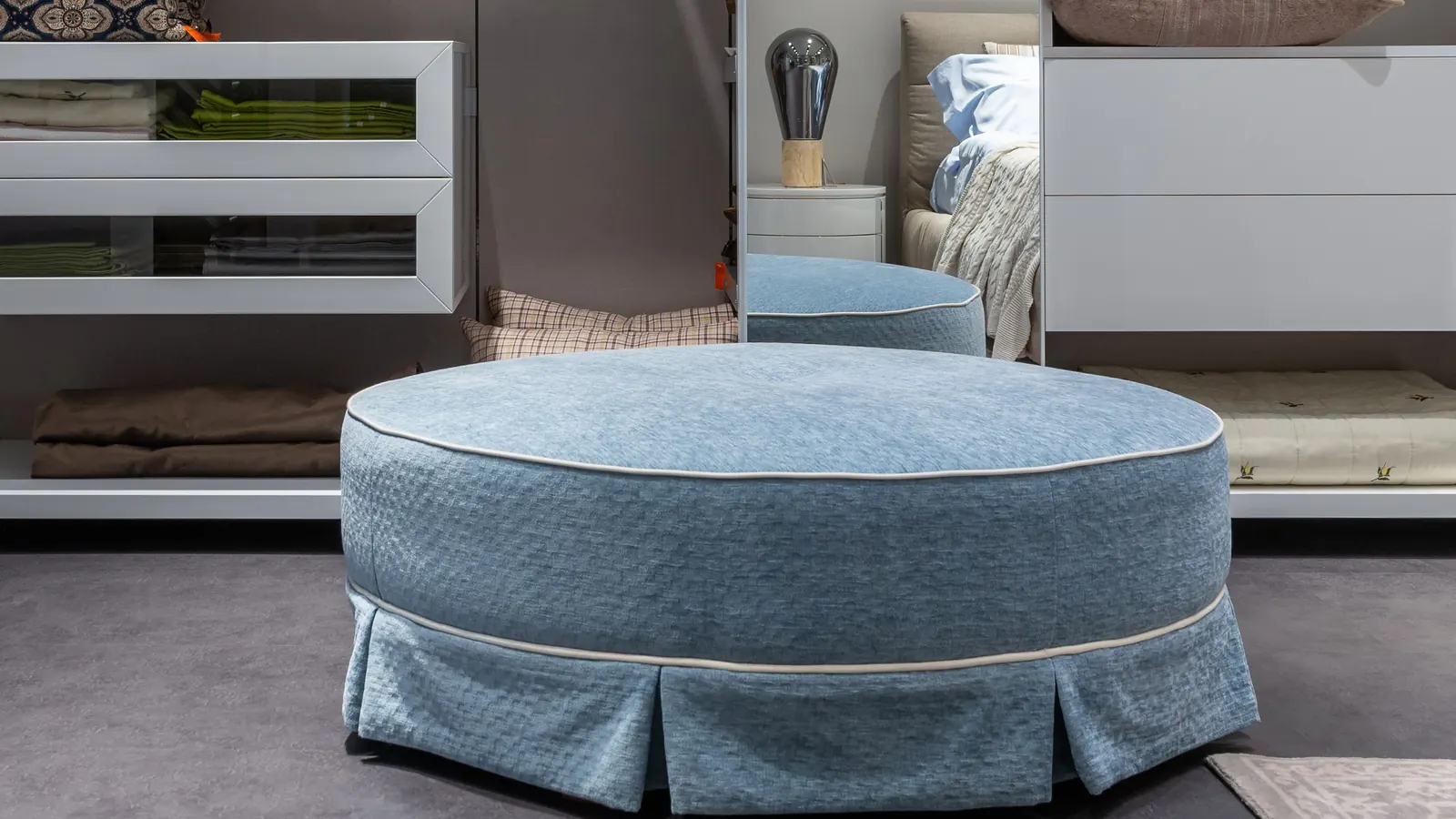
Shape sets the mood. A square or tufted box gives a seating group a firm anchor, while a round or oval piece softens a room full of right angles and slips into a tight passage more easily. A tray with a vase or a stack of books pulls the top into the room’s styling. Choose one with a steady base, because upholstery shifts underneath it and hot drinks need a firm surface.
Fabric for hands, feet and pets
Consider who touches it. Pale linen looks serene in a quiet bedroom and shows every shoe beside a busy family sofa; a dark, textured weave hides wear and can show lint and pet hair. Which is easier comes down to the household.
Read the care instructions for each part. A removable cover can sit over foam and lining that must stay dry, and a zipper may be there only for assembly. For leather, coated fabrics or heavy weaves, follow the maker’s instructions rather than a general cleaning recipe. If replacement covers or hinges matter to you, make sure they are sold for that version.
One example with numbers
IKEA’s KIVIK storage ottoman in Tresund light beige, 89482905, combines frame 50519368 with cover 70527541. It measures 35.375 by 27.5 inches and 16.875 inches high. The cover is 78% cotton and 22% polyester, machine washable warm and separately, with no tumble drying; those directions are for the cover, and other KIVIK versions may differ. The cover instructions, pages 6 and 7, show a separate upholstered top that sits on the storage base, so it needs a landing spot when you reach inside. Interior space is smaller than those outside figures. All of this comes from IKEA’s documentation rather than our own use of the piece.
Seat, footrest or toy chest
Storage, extra seating, a footrest and a coffee table are separate jobs, and a maker may allow some and not others. Look for each use named in the product description; a firm cushion or a tray in the photo only hints at them. For seating, read the instructions for intended use and any weight limit. An ottoman is never a step stool. If children will be getting things out, choose furniture designed for children’s use, since a general ottoman is not meant to be climbed into or used as a play chest. Do not modify a hinge, remove a restraint or swap hardware to change how it opens, and stop using it if the mechanism is damaged.
Before it arrives
Make sure the listing includes both frame and cover, since replacement covers are sold under similar names. Cartons can be larger than the finished piece, so measure stair turns and doorways against the package size as well. Our living-room collection covers the rest of the seating arrangement. The lid style that suits you is the one you can open from the seat where you will use it.