Floor Lamp Shades: Match the Fitter, Dimensions and Room
A replacement shade has to fit the lamp before it suits the sofa. Record the lamp and old shade, identify the fitter, measure more than the bottom width, then pick the look.
By DecoraMintPublished 5-minute readMore in Lamps
In this guide
To replace a floor lamp shade you need four facts before you look at a single color: the type of fitter that holds it, the top width, the bottom width and the height, plus where the fitter sits inside the shade. Get those right and the new shade will sit at the right height, hide the bulb and stay put. Get them wrong and even a beautiful shade perches too high, glares at you from the sofa or simply will not attach.
Before the old shade comes off
Switch the lamp off, unplug it and let the bulb cool before handling anything. Remove the shade the way the lamp’s instructions describe. If the shade looks integrated, or you cannot tell how it attaches, ask the maker; do not take apart the socket or wiring to find out.
Photograph the whole lamp, the attachment and the model label, and be clear about why you are replacing the shade. Is it torn, too wide for the corner, too heavy-looking, too dim, or just the wrong color? If the old shade’s size worked, matching its dimensions and fitter is the easy path. If you want something much larger or heavier, check that the lamp can take it; a tall, slim floor lamp can become top-heavy, and looking balanced says nothing about stability.
Identify the fitter
The fitter is the part of the shade that attaches to the lamp. Lamps Plus’s measurement and fitting guide describes three common systems: a spider fitter that rests on top of a harp and is held by a finial, an uno fitter that attaches around the socket, and a clip-on fitter that grips a compatible bulb.
| What you see | What to match |
|---|---|
| Shade resting on a wire harp, held by a finial | Spider opening, the drop, and the harp height |
| A ring around the socket | Exact ring size and how it is held in place |
| Clips that grip the bulb | A compatible bulb shape and any limits from the lamp and shade |
| Glass bowl or integrated shade | The maker’s replacement part |
Those names tell you the family, not a guaranteed fit, and some lamps need their own replacement part. Do not bend a frame, remove required pieces or add an unapproved adapter to force a fit. If the seller cannot confirm compatibility from your measurements, choose another shade.
Measure more than the bottom
Record the top width, the bottom width, the vertical height and, for a tapered shade, the slant length down the side. For an oval or rectangular shade, record width and depth at top and bottom. Then note how far down from the top the fitter sits.
That last number changes everything. Two shades with the same bottom diameter can have different heights and tapers, and a fitter set lower inside the shade lifts the whole shade higher on the lamp. Put the old and new measurements side by side, and if a listing leaves one out, ask before ordering; a photo without a scale is not a measurement.
A good fit hides the hardware. Once the shade is on, the socket and bulb should not show from where you normally sit or stand. On a floor lamp next to a sofa, that means checking from the seat, since you are looking up at the shade’s lower edge.
Shape and scale for the spot it stands in
A drum shade has straight sides and a modern, architectural look; it spreads light evenly up and down. A tapered or empire shade, wider at the bottom, feels more traditional and directs more light downward onto a book or a side table. An oval or rectangular shade projects less in one direction, which helps a lamp tucked against a wall or behind a sofa arm, provided the fitter lets you turn it the right way.
Think about the space around the lamp. A wide shade beside a walkway can catch shoulders. A lamp behind a sofa is half-hidden, so its shade matters mostly from above; one beside an armchair is seen from every angle and earns a bit more attention. A slender stand with a very broad shade can look top-heavy, while a heavy base with a tiny shade looks unfinished. Aim for a shade that feels in proportion with the base and the furniture next to it.
How the shade changes the light
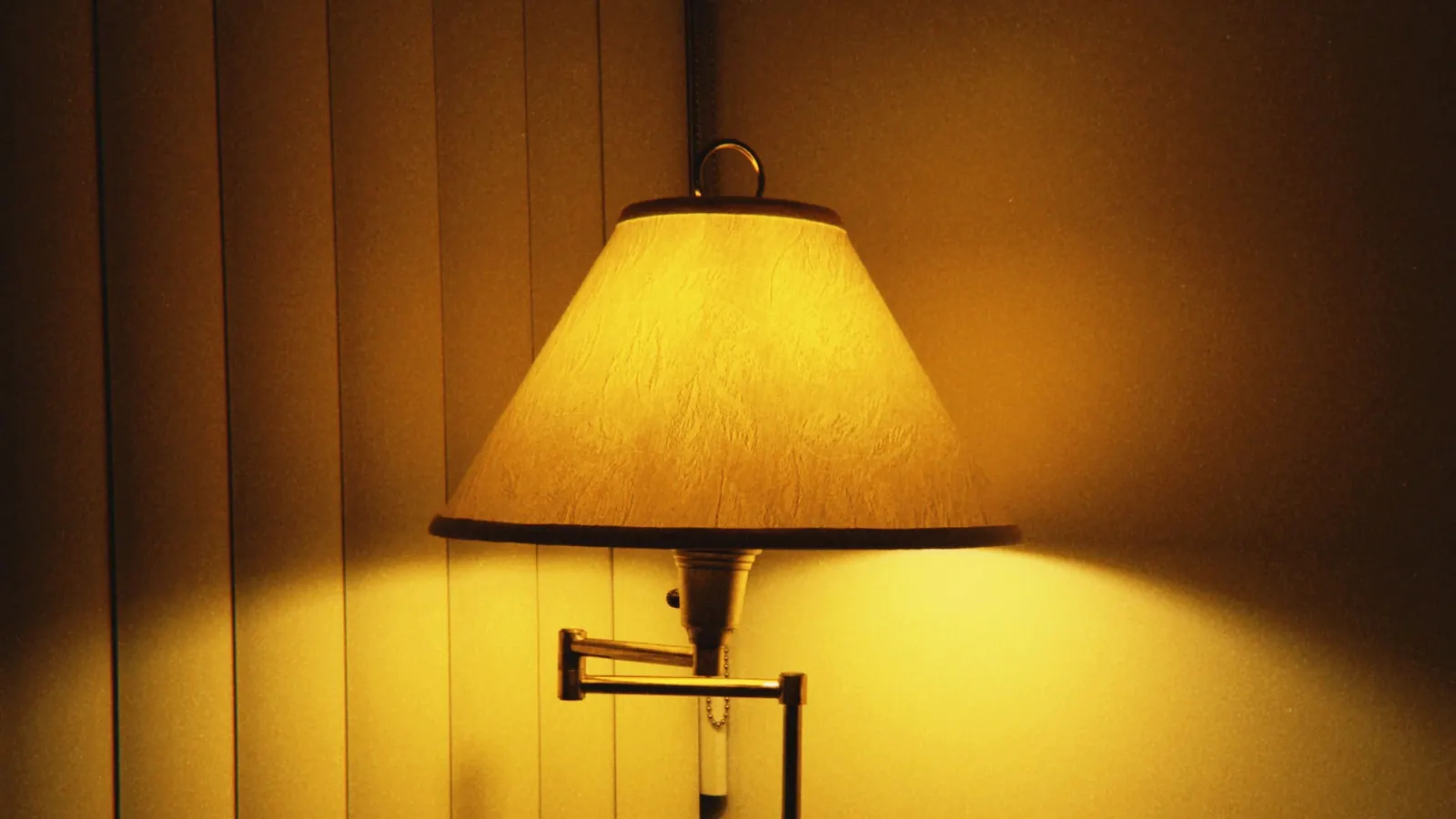
Here a shade does its real work. A white or ivory fabric shade glows and spreads soft, warm light into the room, so the lamp contributes to the general mood. A dark or opaque shade, black, navy or a lined fabric, glows very little through the sides and pushes light up and down instead, giving a dramatic pool of light on the floor and the ceiling and a strong silhouette. Linen texture and seams show when lit; paper and parchment give an even, lantern-like glow; a gold or metallic lining warms the light that escapes.
Look at any shade lit and unlit, in the evening, under the room’s own light. A color that matches the curtains at noon can look quite different glowing at night. If the lamp is for reading, sit in the chair and check that light actually reaches the page, and do not stare into an exposed bulb while you test.
Bulb and safety limits
The lamp’s label and instructions set the bulb type, maximum wattage and any clearance rules, and the shade may add its own restrictions. A new shade never permits a stronger bulb than the lamp is rated for. Lamps Plus’s shade buying guide stresses that fitters are not interchangeable and that clip-on shades have product-specific limits, so follow the exact item’s directions instead of a number from another lamp.
With LEDs, read the wattage the bulb actually draws, not the incandescent equivalent printed large on the box, and check whether the lamp or shade has requirements for enclosed use or dimming. LEDs run cooler, but that does not make every shade and bulb combination acceptable; ask the maker if you are unsure.
Living with it
Read the care instructions before choosing a fabric or paper shade. A shade that looks like washable linen may have a paper backing, adhesive or trim that cannot get wet. In a dusty corner or a busy family room, a smooth shade is far easier to keep fresh than pleats, beading or layered trim. Keep the shade’s dimensions and model with the lamp’s details, so a future replacement takes minutes.
A table-lamp shade can sometimes work on a floor lamp, but only if the fitter, size and weight suit that lamp; the shop category tells you nothing. Shades in a room do not have to match either. A floor lamp and table lamps that share a color, a material or a shape feel coordinated, and the different heights already give the room variety. Changing the harp to raise or lower the shade is also possible on harp lamps, but it moves the shade relative to the bulb, so stay within what the lamp maker allows.