Mid-Century Modern Lamps: Choose the Shape, Light and Scale
A mid-century lamp has to be a good light and a good shape. Pick the job first, then the silhouette, and know whether you are buying new, a licensed reissue or vintage.
By DecoraMintPublished 5-minute readMore in Lamps
In this guide
Some of the most copied lamps of the mid-century were answers to very plain problems. Flos says Achille and Pier Giacomo Castiglioni designed the Arco in 1962 to hang light over a table without installing anything in the ceiling; its famous marble base works as a counterweight that balances the big arched metal stem. That is the spirit worth chasing when you buy a mid-century modern lamp today. Pick a silhouette that does a real job in your room, and let the shape carry the period.
The shapes that define the era
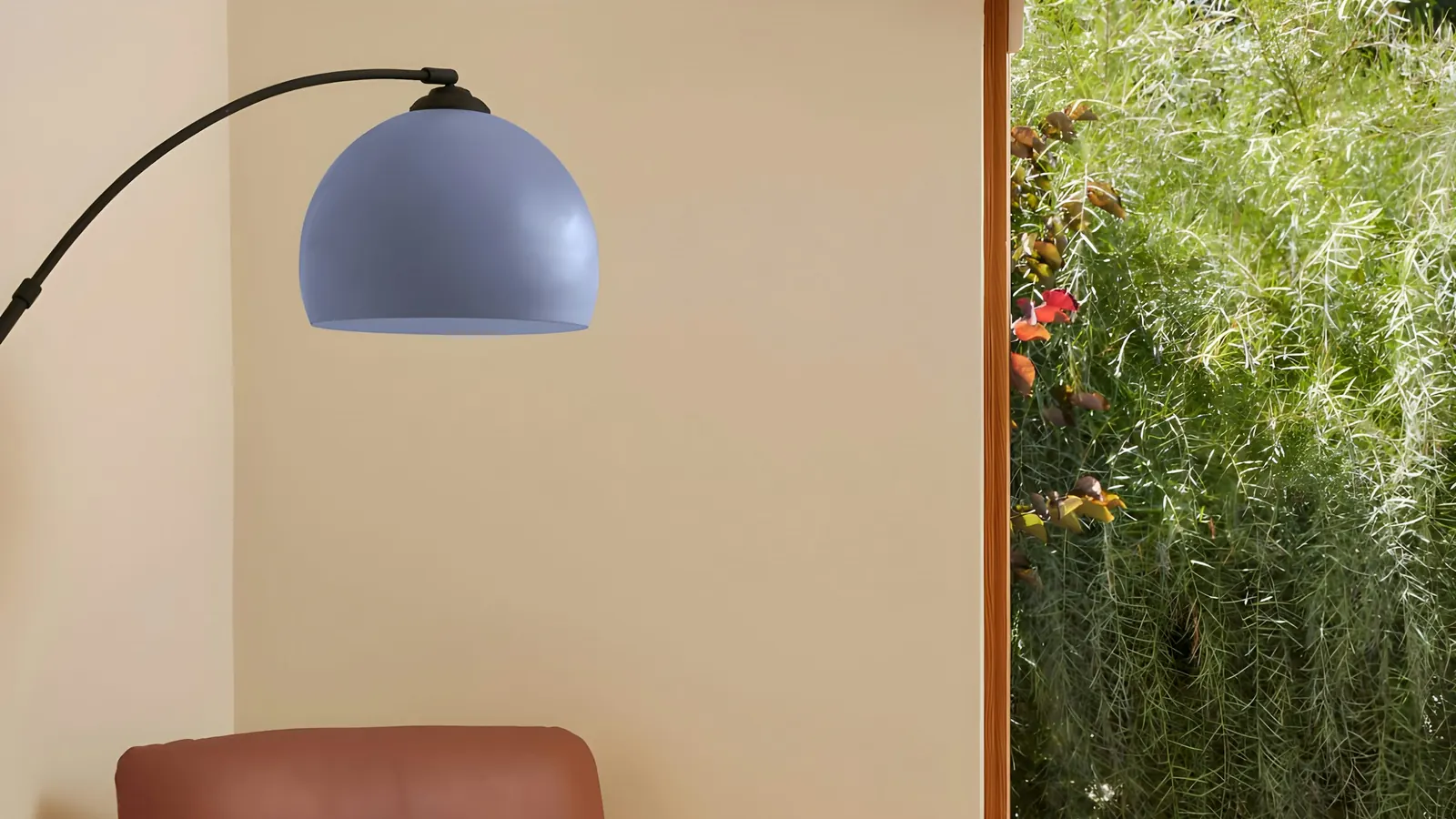
Mid-century lighting is often reduced to brass arms and angular metal cones, but the range was wider and softer than that. Herman Miller identifies George Nelson’s Bubble Lamp series as a 1952 design, all rounded forms in a translucent skin that glows like a paper moon. Put that next to the Arco’s long swooping arc and you have the two poles of the style: the geometric and the organic.
A few visual signatures recur:
- Cones and shallow domes that throw a crisp horizontal line across a room and aim light down.
- Globes and bubbles with soft outlines that glow evenly in every direction.
- Slender stems and tripod legs that keep the lamp visually light, as if it barely touches the table.
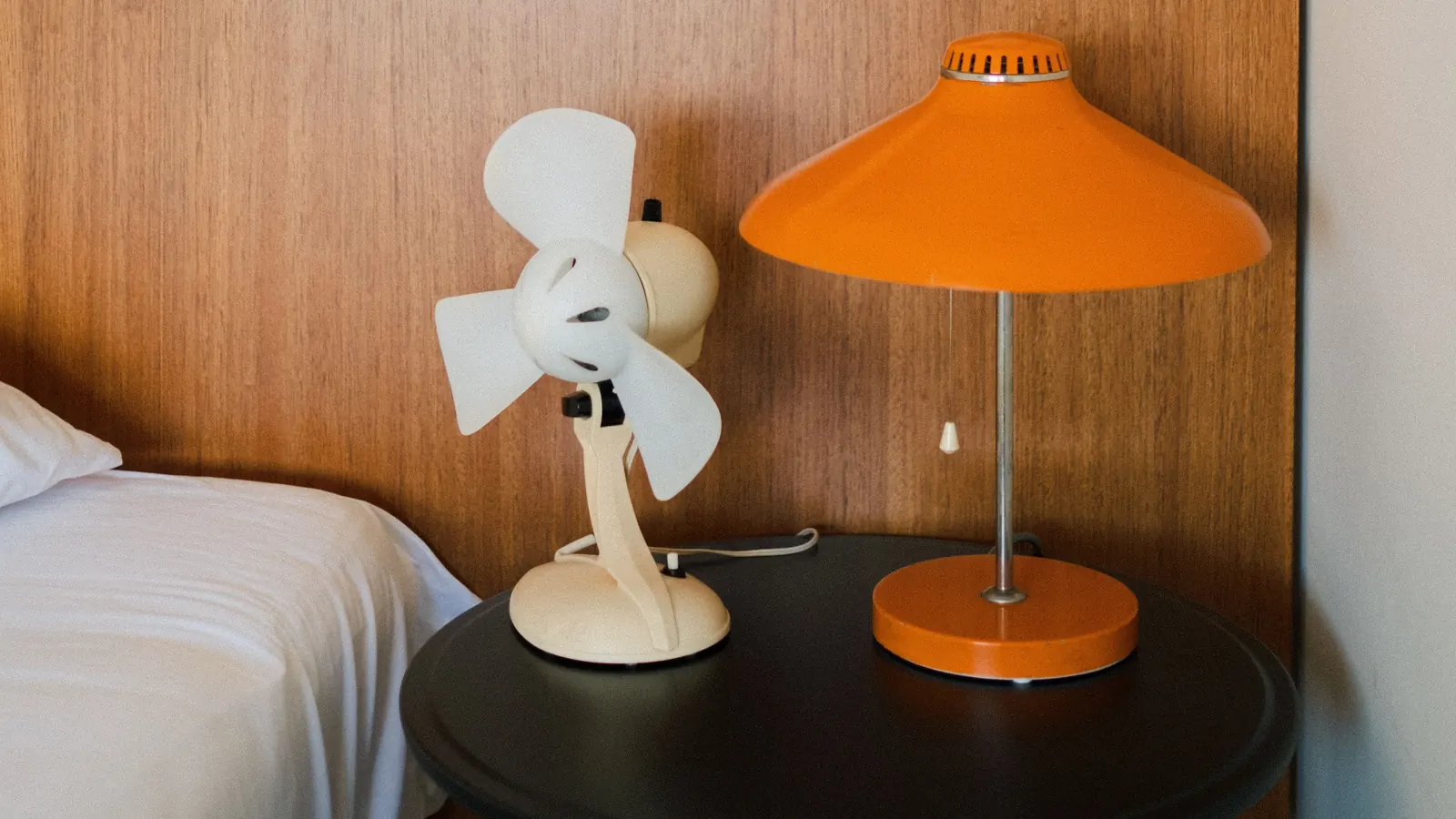
- Warm wood, brass and colored enamel, like the burnt-orange conical shade in our photograph, often set against a crisp white or black stem.
The common thread is clarity. Each part is legible: shade, stem, base. A busy, ornamented lamp in a vaguely retro color misses that point.
Silhouette first, then job
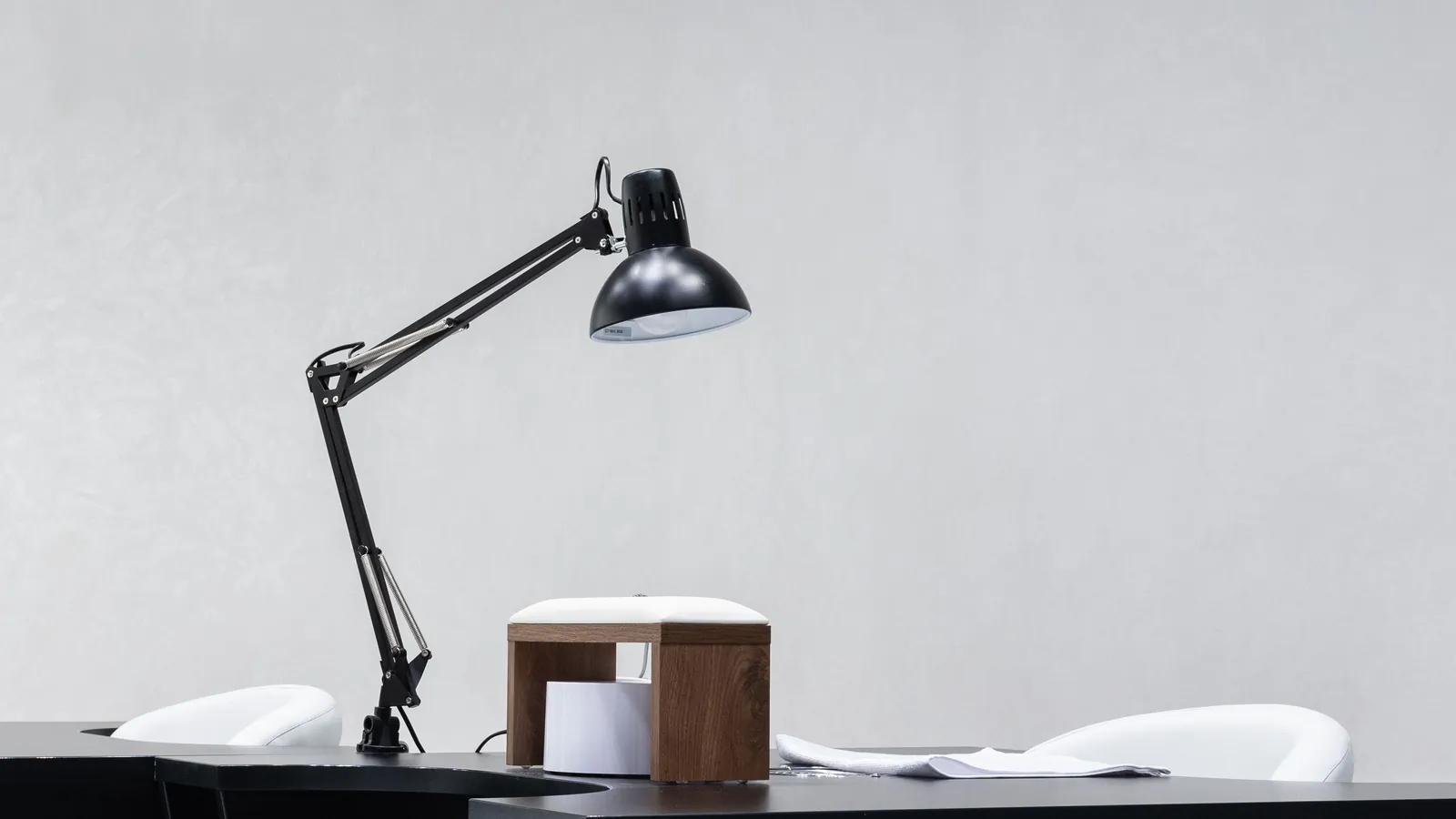
Hold the outline against a plain wall in your mind. A thin stem with a broad cone makes a graphic, airy statement on a credenza. A chunky ceramic base under a fabric drum feels grounded and calm beside a sofa. A tripod spreads across several points on a tabletop, while a round base looks tidier. An articulated arm adds movement, but measure its full reach, not its parked position.
Then match the shape to the work:
- Beside a reading chair, a directional cone or adjustable arm that puts light on the page.
- On a sideboard in the evening, a translucent globe or bubble that glows evenly with the bulb hidden.
- At the bedside, a compact base with a switch you can reach from the pillow.
- In an empty corner, a tall floor lamp with a clear profile, like an arc or a tripod.
One lamp rarely lights a whole room. Our living-room lighting guide explains how to layer sources, so the mid-century piece can go where its form shines.
New, licensed reissue or vintage
These are three different purchases.
A new, style-inspired lamp is the easy route when you want the look plus a current warranty and support. Read the materials list: a wood-tone finish may be a surface treatment, and a brass-colored finish may be plating over another metal.
A licensed reissue matters when you want a specific design. Confirm the named maker, the model and the seller’s relationship with the manufacturer, and compare dimensions with the maker’s own listing. Trust the maker’s documentation over a designer’s name typed into a marketplace title.
A vintage lamp asks for a conversation about provenance and condition. Request photos of markings, the base, shade, cord and socket. Separate what the seller can document from what they believe. Wear and an old plug do not date a lamp, and a collectible description is no evidence of electrical safety; if the wiring is uncertain, have a qualified electrician look at it before use. That goes double for European pieces, where swapping the plug alone does not make the lamp suitable for a US home. Avoid paying a premium for an attribution the seller cannot support.
Scale on the furniture
Total height is only one number. Note the base footprint, the widest point of the shade and, for adjustable lamps, the extended reach. A small base does not help on a narrow console if a wide cone juts into the walkway. On a nightstand, leave room for what you actually keep there.
Pairs are trickier than they look. Identical lamps on two nightstands of different heights will sit at visibly different levels. An asymmetric pair, say a taller lamp on the lower table, can look deliberate and relaxed, as long as you plan it.
The shade, lit and unlit
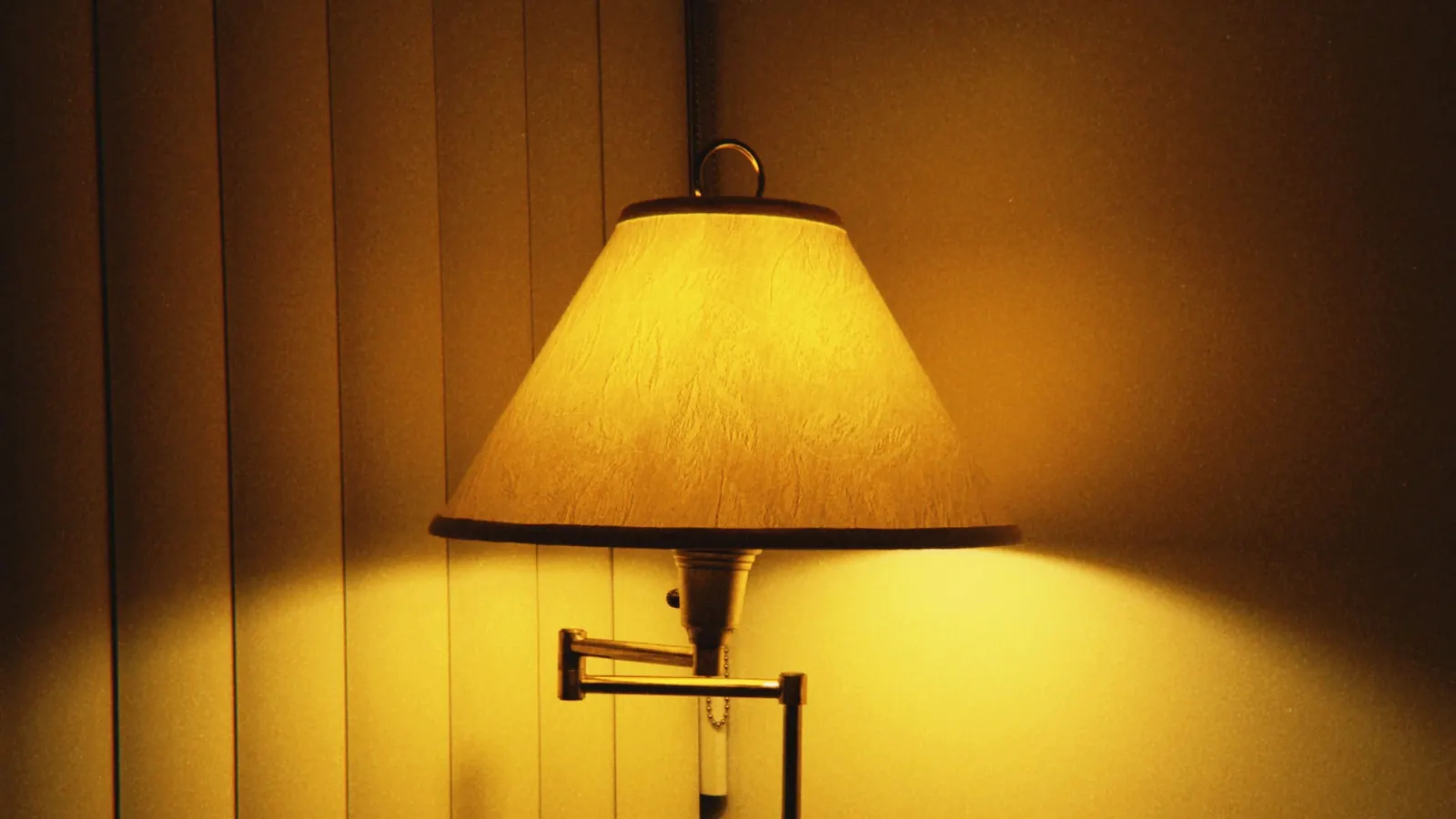
A dark metal cone makes a strong sculptural accent and keeps light tightly directed. A translucent bubble becomes a bright object in the room. Colored fabric and enamel can read very differently once switched on, warming or deepening as light passes through or bounces off. Look for photos of the lamp lit, and check whether an open underside will put a bare bulb in view from the sofa.
Shades do not swap freely between lamps. The attachment, weight and bulb clearance belong to the original design, so if you buy a vintage base without its shade, work out what fits before paying.
Bulbs and switches
Start with the lamp’s own limits: bulb base, size and maximum wattage. Within those, the FTC’s bulb guide explains how to read brightness in lumens and light appearance from warm to cool on the label. Warm light suits the walnut and brass palette of the period. For dimming, the lamp, bulb and any dimmer must all be compatible, and on a bedside lamp, check that the switch is not hidden behind a broad shade.
Making it belong in the room
You do not need a period-perfect room. One clear connection is enough: a walnut base that echoes a sideboard, an orange shade that repeats a stripe in a throw. Think about contrast with the wall, too. A black stem almost vanishes against charcoal paint, while a pale globe stays luminous against anything dark. In an open-plan space, the back of the lamp is on show from the next room, so judge it from the doorway as well as from the chair beside it.
Mixing a cone, a globe and an arc works when one trait repeats, such as a curve, a finish or an enamel color. When two lamps compete for attention, give the sculptural one the sightline and let the plainer one do the reading.