How to Choose a Rug Color: Compare Contrast, Pattern and the Room
Should the rug blend in, tie existing colors together or become the focal point? Decide that, then test three genuinely different samples on the floor beside the furniture that stays.
By DecoraMintPublished 5-minute readMore in Decor

In this guide
We may earn a commission from links on this page, at no extra cost to you. Affiliate disclosure
The most common rug mistake is shopping by color name. “Blue” covers a dusty gray-blue that nearly vanishes under a gray sofa and a cobalt that takes over the room, and “cream” on a pale oak floor can disappear altogether. Settle the rug’s job first: melt into the floor, outline the seating group, repeat colors the room already has, or be the one bold thing. Then choose among colors.
Start from what is fixed
Floor, largest upholstered piece, and any curtain or art you are keeping set the terms. A cushion or vase can change tomorrow, so do not build the rug around one. Write a one-line brief, such as “link the dark floor to the pale sofa and repeat a little of the green chair,” and shop to that.
Check lightness before hue. A rug close to the floor in lightness merges with it, while one clearly lighter or darker defines the seating zone. The Rugs.com color guide says very light cream rugs can blend into a light floor, that a dark floor wants a noticeably lighter rug, and that a rug too close to wall-to-wall carpet reads as an accidental patch. It also says a lighter rug makes a small room feel larger and a dark one makes it feel smaller, though a dark rug should still leave some floor showing at the edges.
Undertone: floors, walls and sofa
Undertone is usually why a rug that looked right in the shop looks wrong at home. The same guide describes cool gray as blue-leaning and warm gray as brown or pink, and advises matching the room’s temperature. It warns that strong orange or yellow undertones can fight a warm wood floor, and strong pink or peach can clash with a cream or tan sofa.
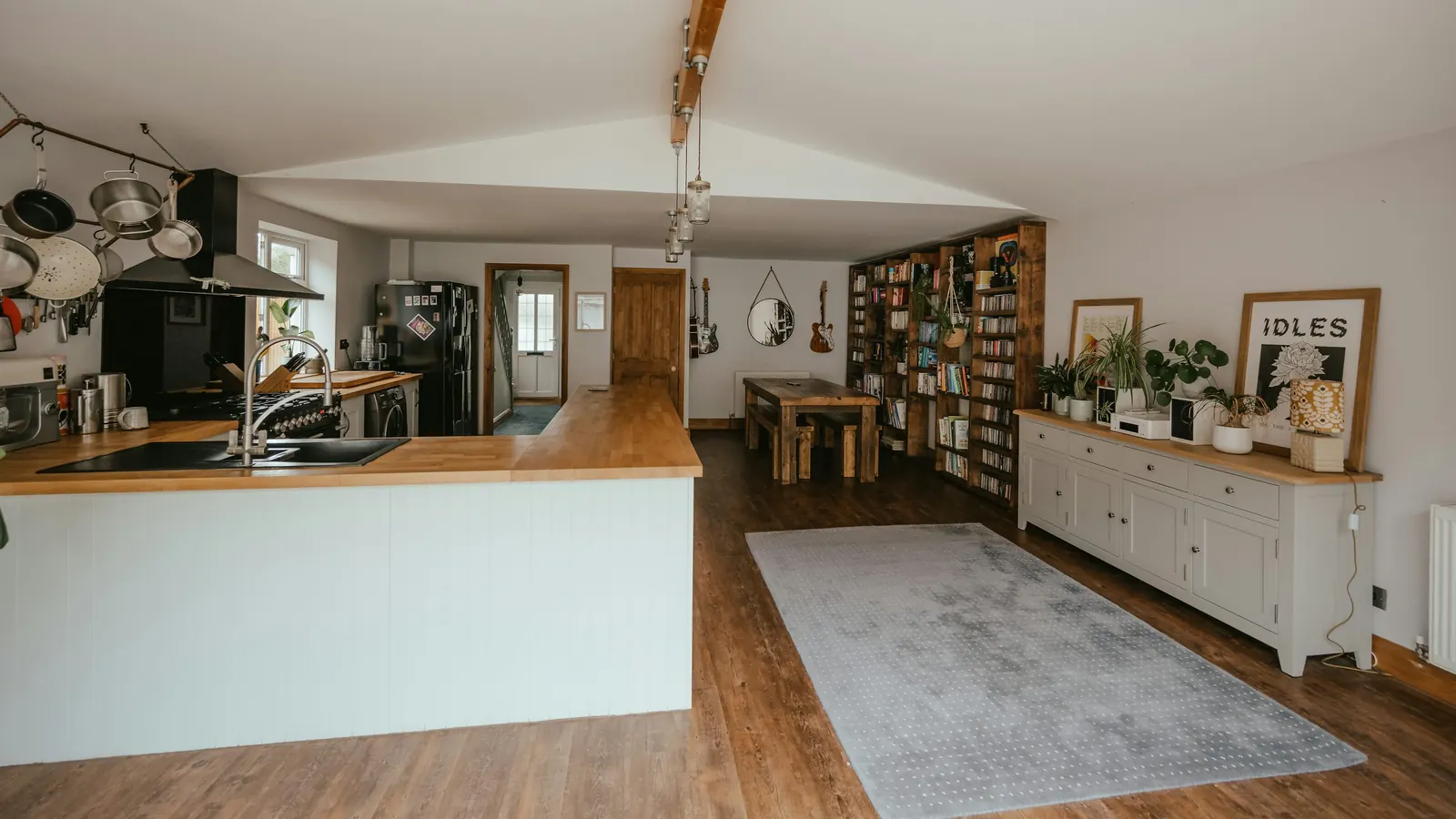
Say the floor is honey oak, the walls a warm white and a tan linen sofa. A cool blue-gray rug sits oddly on that floor: the floor looks yellower and the rug looks flat and cold. A rug in muted terracotta, rust or warm oat with a bit of texture leans the same direction as the wood, and the room reads as one family of warm tones with different weights. Now reverse it: gray-washed floor, cool white walls, charcoal sofa. Here a navy or slate rug with a hint of blue belongs, and a warm camel one would look borrowed from another room. Hold a sample against the wall and the sofa leg, not just the floor.
Light, sun and traffic
Light changes the choice. Rugs.com says deeper, darker rugs suit bright rooms with strong natural light, and that south- and west-facing windows can fade color over time. A dark room is the reverse: a lighter, warmer rug lifts it, while a very dark one makes it heavier.
Traffic is where pattern earns its keep. Rugs.com’s piece on patterned rugs says patterned rugs almost always hide wear better than solid ones, because the eye does not fixate on one spot and foot-traffic lanes blend into the design. Busy and multicolor designs camouflage imperfections best. It says medium tones balance the visibility of dirt and wear, light solids show stains easily and dark solids show dust and lint. For a hallway, entry or family room, a medium-toned rug with a tonal or multicolor pattern is the forgiving choice, and a pale solid is the one to reserve for a room where shoes come off at the door.
Pairings that work
A pale linen sofa on a light oak floor wants separation. A textured, low-contrast rug in sand or stone makes the whole arrangement continuous, while a slate or navy flatweave gives the sofa a visible edge and grounds the floor. If the room feels washed out, take the darker one; if you want it airy, take the textured one.
A dark sofa on a dark floor sinks, and the legs vanish. A clearly lighter rug in cream or oat turns the sofa into a figure on a stage. Rugs.com’s pairings include cream, navy or blush under a gray sofa, and warm tones under a navy sofa while avoiding cool grays that chill the room. For colorful upholstery, repeat one of its colors in the rug and keep the rest quiet. A busy rug under a busy sofa gives the eye nowhere to rest.
If the room already has patterned pillows, curtains or art, a solid or subtly tonal rug keeps it settled, and a mostly solid room welcomes pattern. Mark the furniture on a product photo first. A central medallion can vanish under a coffee table, and a broad border becomes the main feature when furniture covers the center. Look from the doorway as well as the sofa, since a small motif that is bold close up often blurs into a single color across the room.
Ruggable’s color collection is organized into eight groups: White & Cream, Natural, Brown & Taupe, Black & White, Multicolor, Orange & Yellow, Pink & Purple and Red & Burgundy. It is a quick way to pull three different candidates for a side-by-side: one quiet, one color-forward, one multicolor. If your brief calls for a plain field in one exact color, BENI’s solids collection opens a page of single-color wool rugs, about sixty shades running from Oat, Taupe and Chocolate Brown through Terracotta and Ochre to Forest Green and Shadow Blue, so the warm-oak room and the gray-washed room above can each be answered with one color rather than a pattern. They are woven to order, which makes the floor test below more important, not less.
Test it on the floor
Size matters as much as color, and our rug size guide covers how big the rug should be. Lay each sample flat beside the main furniture, since light falls on floors differently from walls. Look in morning light and under your evening lamps, in more than one spot. Screens and auto-exposure change color, so make the final choice from the material if you can; with no sample, the return terms matter before you order.
Some makers split the sample in two, and the split is useful. BENI’s swatch and pom page sells colored wool poms, singly or in collection bundles, and separate construction squares for its weaves, from the knotted Atlas pile to the flatwoven Zahara. A pom answers the undertone question against your sofa leg and wall; a construction square shows the surface that color will sit in, and laid beside the pom in your evening lamplight it tells you whether the texture changes the match. With BENI the step is not optional: its solid-rug pages state that all orders are final. Then confirm cleaning instructions for the rug you pick, because color alone does not make a rug easy to clean. When two colors both work, take the one that fits your written brief.