How to Decorate a Bed: Three Looks You Can Make with Fewer Pieces
Style an adult bed with a clear palette, useful layers and a pillow arrangement you can reset. Try tailored, relaxed or pattern-led bedding schemes.
By DecoraMintPublished 4-minute readMore in Bedroom
In this guide
We may earn a commission from links on this page, at no extra cost to you. Affiliate disclosure
The fastest way to make a bed look expensive is to take things off it. From the doorway it is one large rectangle of cover and a row of pillows against the wall, and getting those proportions right matters more than any accent. Each layer should be a clear step down in size from the one behind it. These looks are for adult beds; an infant’s sleep space should stay bare, with only a fitted sheet on a firm, flat mattress.
The pillow ladder
Behind every well-dressed bed is the same back-to-front order. Puffy’s euro pillow guide gives it as euro shams against the headboard, sleeping pillows in front of them, then standard or decorative pillows, with a lumbar or accent pillow centered last. It lists euros at typically 26 by 26 inches, two for a full or queen and three for a king. Studio McGee’s pillow size guide counts decorative pillows beyond the sleeping pillows and shams: one or two on a twin, and three to five on a king or queen, for example two 24 to 26 inch squares with an extra-long lumbar. For a minimal bed it suggests a single long lumbar.
You do not need the full ladder. Sleeping pillows against the headboard, with one lumbar or a small square in front, already looks finished. Add euros when the bed is wide and the headboard is tall enough to carry them; skip them under a low headboard whose outline you want to keep visible. A narrow bed looks resolved with one small accent or none.
Tailored, with one fold
Use a mostly solid cover and center it before anything else, since a fold on a lopsided cover only advertises the problem. Turn the top edge back once to show a contrasting sheet or lining, and keep that fold parallel with the headboard. Sleeping pillows sit together at the head, flat or propped, and one rectangular accent can sit in front if the proportion needs it.
An ivory cover with a narrow blue folded edge and one cushion piped in the same blue is the idea: repeat the contrast color at exactly two points and add nothing else. Against a pale wall and a wood nightstand, the result is a bed with a crisp outline and a single deliberate accent. For a solid base, Bella Maison’s Basic Cotton Sateen Sheet Set is listed with a flat sheet, fitted sheet and two pillowcases, with cream among the colors; we have not tested it, and the details come from the retailer.
Layered texture, tight palette
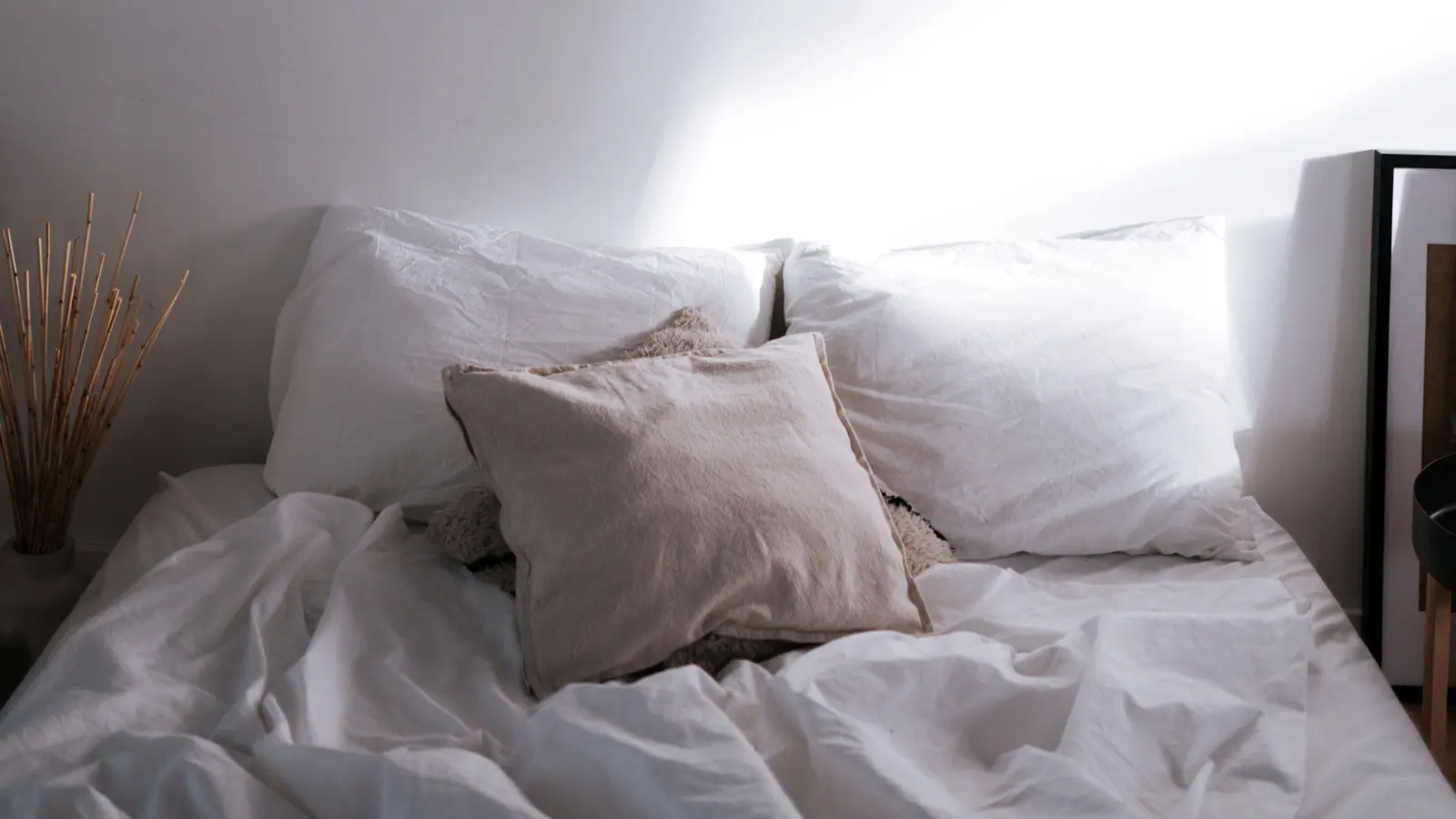
Here the interest is in the weave, not the color. A plain main cover with a chunky knit or woven throw in nearly the same tone reads as a single color with depth. Lay the throw across the lower third and loosen one end so it looks relaxed rather than dropped. If the throw covers nearly the whole bed, it has become the cover, so decide whether you want that.
A simple fold across the foot beats an elaborate diagonal drape, because it survives making the bed in the morning and sitting on the edge in the evening. Our pick is linen or washed cotton for the cover and wool or a heavy knit for the throw: a matte, slightly rumpled base makes the heavier texture look intended.
Let the quilt do the talking
Choose the pattern you love and then quiet everything around it. A quilt or patterned cover sits well with solid pillowcases that repeat its background color. If you combine two patterns, make the scales clearly different, a broad floral with a narrow stripe, say, and keep one of them in a single quiet color family. Turn the top back only if you like the reverse beside the front; a reversible cover gives two looks, but the back is not always the best partner for the rest of the room.
Make it fit the room
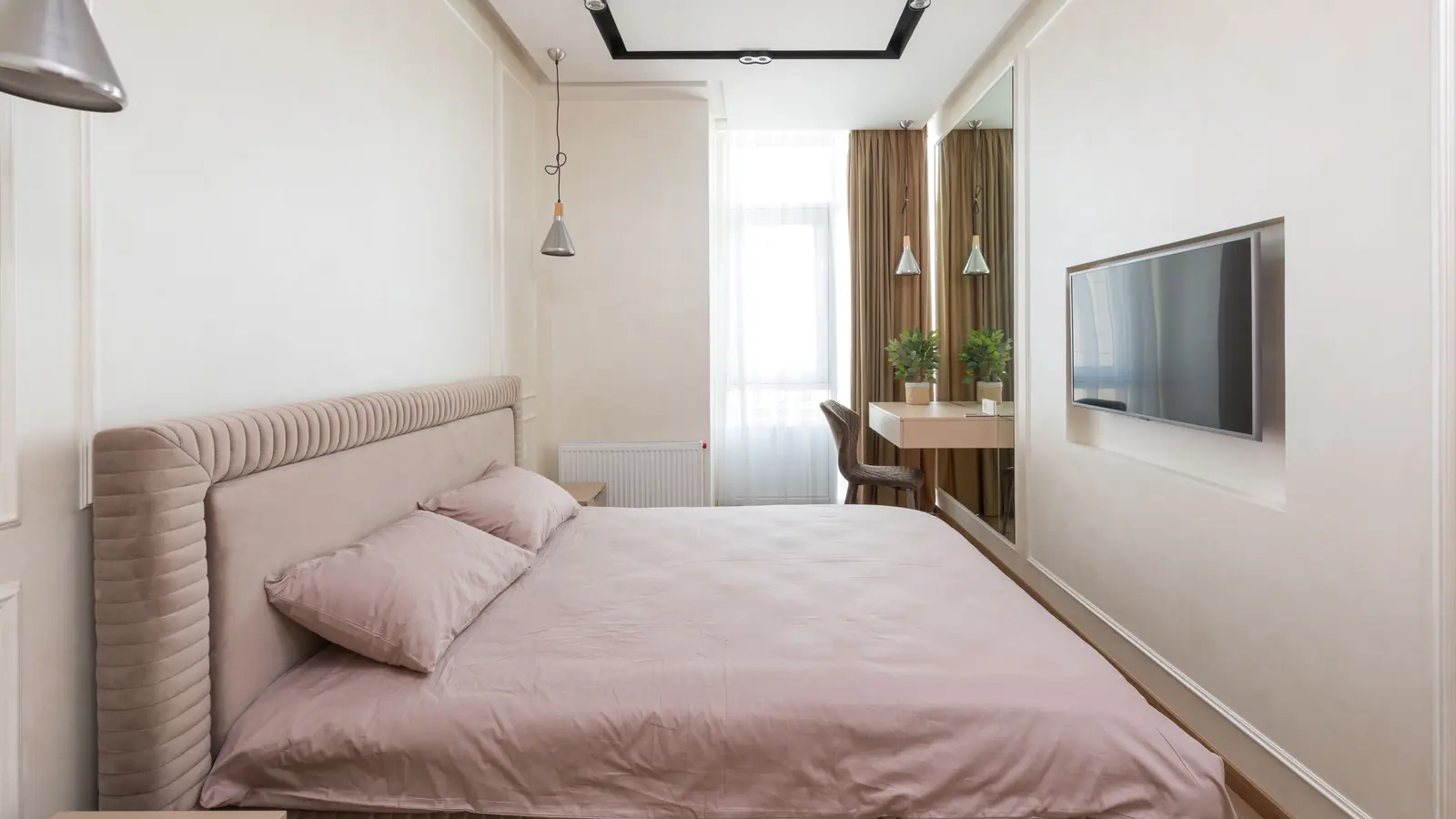
Let the bed answer the headboard and the wall. A dark wood or black metal frame against a pale wall wants light bedding, white or cream, so the frame draws the outline. A tall upholstered headboard in gray or oatmeal already supplies the softness, so a smooth, crisp cover in a deeper tone keeps the bed from looking like one pale block. With no headboard at all, a long lumbar and a wide band of fold give the wall a horizontal line to hang art above.
Connect the bed to the room with one color you already own, such as the muted green in a curtain or a warm neutral that echoes wood furniture. The bed does not need to reproduce every color on the walls. Measure the drop on each visible side before assuming you need a bigger cover; a cover that looks short may just be on a deep mattress or a tall frame. Keep fabric off the floor and out of the way of any bed mechanism. For more ideas for the whole room, browse the bedroom collection.
If the bed looks coherent but the room still feels unsettled, the problem is probably the wall, curtains or nightstands. Another layer on the mattress will not fix that.
Make it easy to reset
Make the bed with your chosen arrangement for several ordinary mornings before buying the rest. Notice which folds you keep, which pillows migrate to a chair and whether the throw earns its place. Give removable accents a nightly home, a bench or a basket; if the only place for them is the floor, take one away. Read each textile’s care label before buying a matching set, since pieces that match in color can need different washing.
Retailers to browse
Compare colors, sizes, materials and return details on the retailer’s current listings.
- Browse duvet covers and sheets at Bella Maison
Bella Maison
Opens Bella Maison’s duvet covers and sheets collection, not a single product.