Kids’ Beds: Choose the Right Format Before Choosing a Theme
A toddler bed, a twin platform, a trundle and a bunk each change the mattress, the assembly and the room plan. Choose the format and the child's use first, the theme last.
By DecoraMintPublished 5-minute readMore in Kids' Rooms
In this guide
A child’s room works best when the bed is the calm thing in it. A plain twin frame in pale oak or a soft painted color, set low enough that a small person can climb in alone, leaves the walls free for art, the floor free for a rug and the shelves free for the mess that comes with being six. Everything fun can arrive through bedding and wall color, which you can change in an afternoon.
That is why a twin frame at a comfortable height is the bed that lasts longest for most children leaving a crib: it takes a standard mattress and standard sheets, and it carries a child well into the pre-teen years. A toddler bed is lower and smaller and is outgrown in a few years. A trundle makes sense when sleepovers are frequent. Bunks and lofts are a separate, later decision with rules of their own.
The main formats
| Format | Choose it when | Think about |
|---|---|---|
| Toddler bed | You want a low, small bed for the first few years | It usually takes a crib-size mattress and will be outgrown |
| Twin frame | You want one bed that lasts | Footprint in a small room; a standard twin mattress |
| Storage bed | Floor space is tight and you need drawers | Room to open the drawers fully with a nightstand in place |
| Trundle | Sleepovers or a sibling who visits often | A second mattress and space to pull it out |
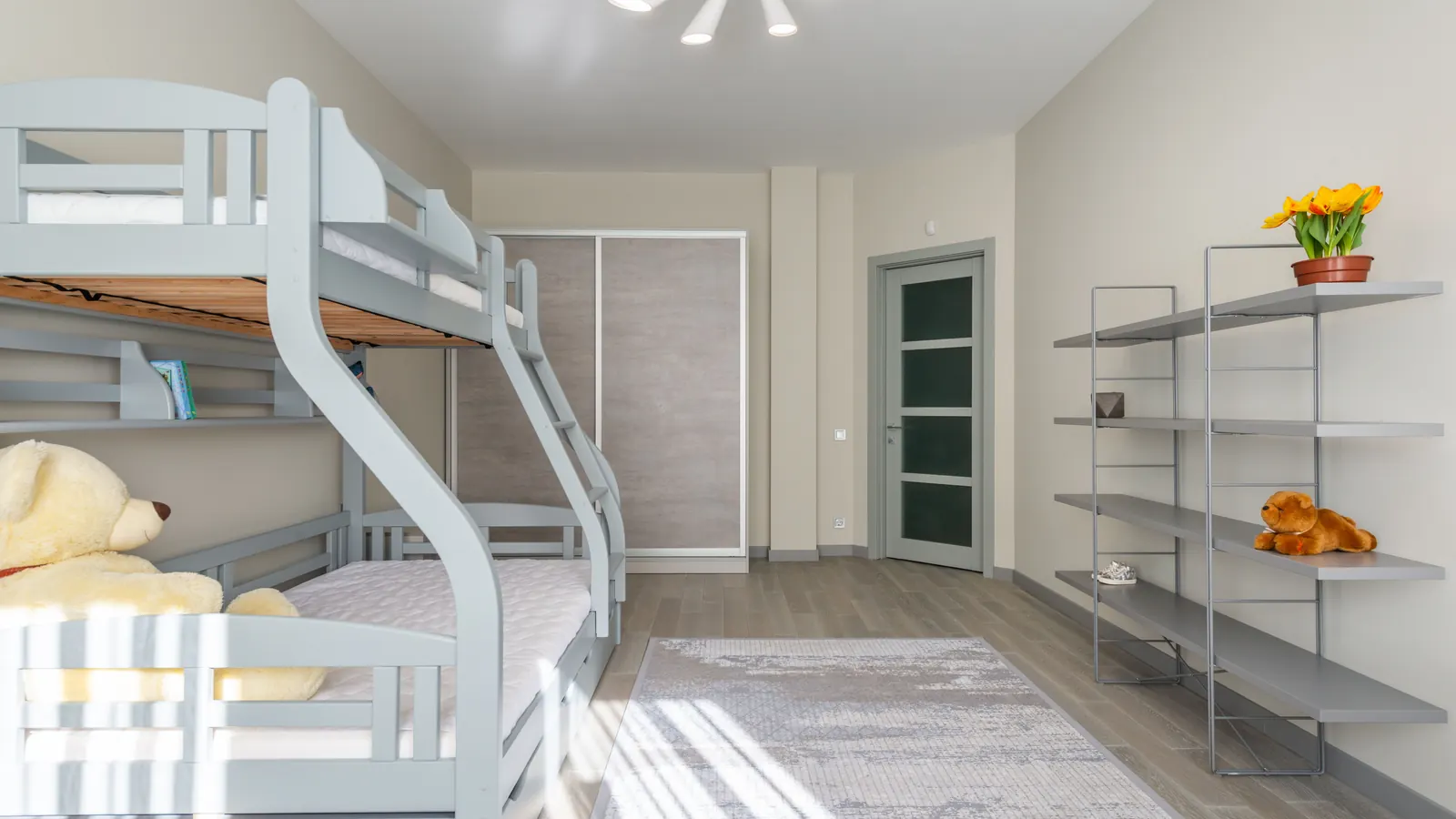
| Bunk or loft | Two children share, or you want floor space under the bed | Age limits, guardrails and ceiling height |
| Low or house-shaped frame | You love the look | It is one of the formats above underneath, so find out which |
Formats overlap: a twin frame can have a trundle and a house-shaped bed can be raised. Judge the construction rather than the style in the photo.
Shape and color in a small room
Low furniture leaves more wall above it, which makes a small bedroom feel taller. A low platform twin in light wood, against a wall painted a quiet shade of green or warm white, gives you that open band of wall for a gallery of prints or a shelf of books. A bed with a tall headboard and footboard fills the same room in a different way: it becomes the focal point, and the rest of the furniture has to be calmer to match.
A house-shaped frame is the one place where the theme lives in the furniture, and it can look wonderful against plain walls and neutral bedding. It is also the piece that dates fastest, so keep everything around it quiet. If you want more charm, bring it in with a patterned quilt, a round rug or a painted door, all of which can change as the child does.
Treat a roof-shaped frame as decoration. No climbing on it, and hang fabric, string lights or toys from it only if its instructions allow. Look at the whole room too, since blind cords, furniture a child could climb and anything near the window matter as much as the bed.
Babies are a different category
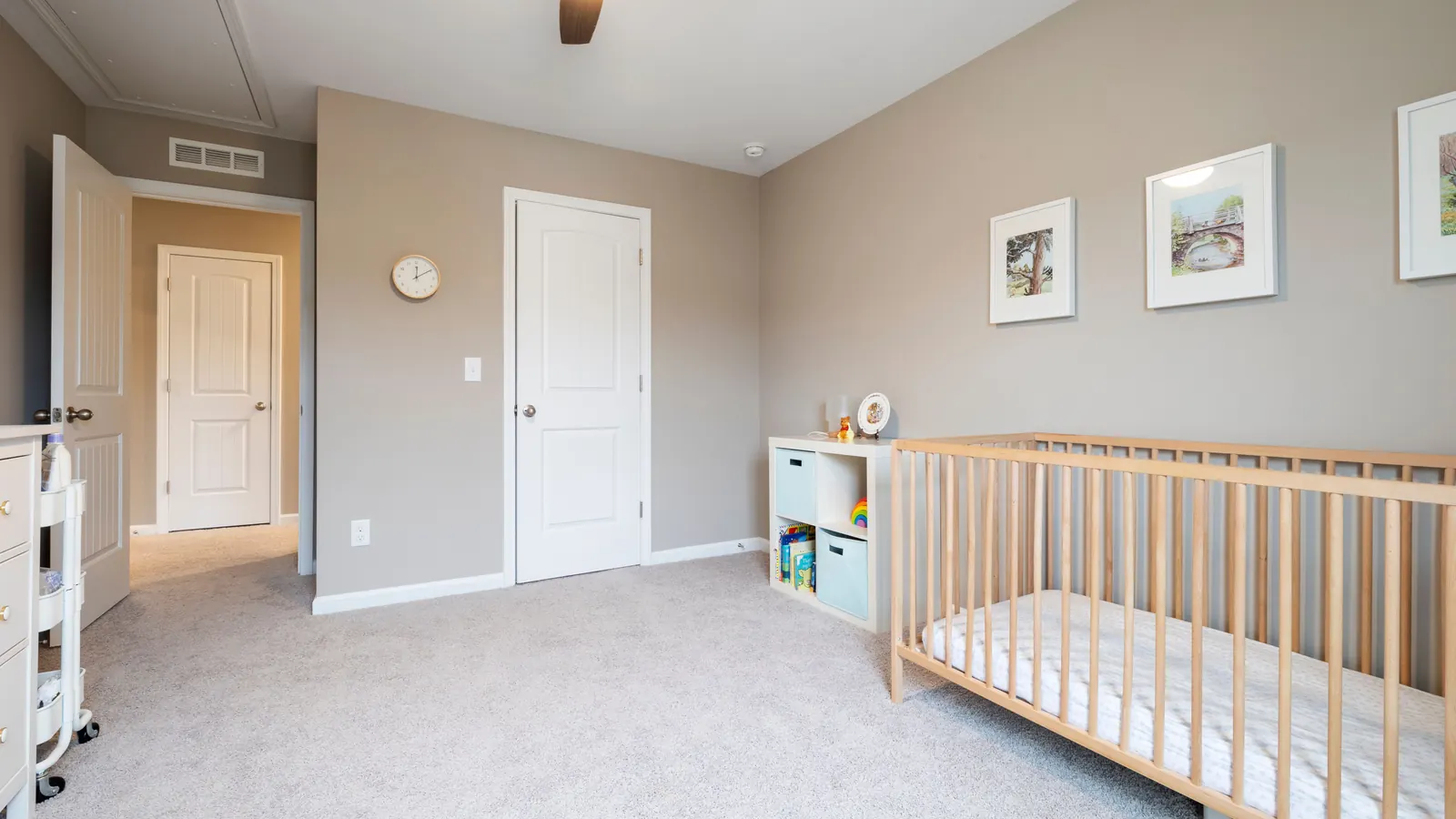
A low frame or a mattress on the floor does not stand in for a crib. CPSC’s safe-sleep guidance calls for a sleep product that meets federal requirements, back sleeping and a bare space with only a fitted sheet. A crib becomes a toddler bed only through the manufacturer’s conversion kit and steps; never just remove a side. When to make the move is a question for your pediatrician.
Buy the mattress and the bed together
Take the mattress length, width and maximum thickness that the bed specifies, and the base it needs, such as slats at a set spacing or a solid platform. Size names settle less than you would hope for imported, custom, trundle or raised beds. A mattress that is too thick for a bed with a guardrail lowers the rail’s effective height, so stay within the thickness the bed specifies. Never fill a gap between mattress and frame with pillows or padding; get a mattress that fits.
Plan the room with everything open
Draw the bed with its headboard, footboard and legs, then open everything around it: the room door, the closet and every drawer. Leave space at one side for an adult to change sheets, which is the job you will do most often.
For a trundle or storage bed, draw it fully pulled out. If using the trundle means moving a dresser every time, it will gather dust. In a shared room, compare two separate beds with a bunk on full footprints; a bunk saves floor space and brings its own age and access limits.
Drawers and a trundle take the same space under the bed and suit different households. Drawers earn it every day with clothes or toys, a trundle earns it on sleepover nights, and a big drawer front can hide a shallow box. A trundle is a sleeping system with its own mattress specification, so a child should never sleep in a storage drawer.
Bunks and lofts
The American Academy of Pediatrics advises that children under six should not sleep on an upper bunk. Above that age, it depends on the child and the bed. Use every guardrail the bed comes with, stay within its maximum mattress thickness and leave enough space between the top bunk and the ceiling. Never remove rails or add homemade ones to fit a different mattress.
If a raised bed suits neither your child nor the room, a simple twin with the fun brought in through bedding, a rug and a painted wall delivers most of it with none of the complications.
Before you buy
Look up the model on CPSC recall notices, especially for a secondhand bed, and use only the maker’s hardware and conversion parts. Add delivery and assembly to the price, and find out whether a later configuration needs extra rails or a new mattress. Storage and furniture to go around the bed are in the kids-room collection.
If you are unsure which format to buy, buy the twin frame and bring the theme in through the room.