Kids Bedding: Choose the Pieces, Fit and Laundry Routine
A fitted sheet, a duvet cover with an insert and a filled comforter are different purchases, even in one photo. Count the pieces, fit the real mattress and plan an easy wash day.
By DecoraMintPublished 5-minute readMore in Kids' Rooms
In this guide
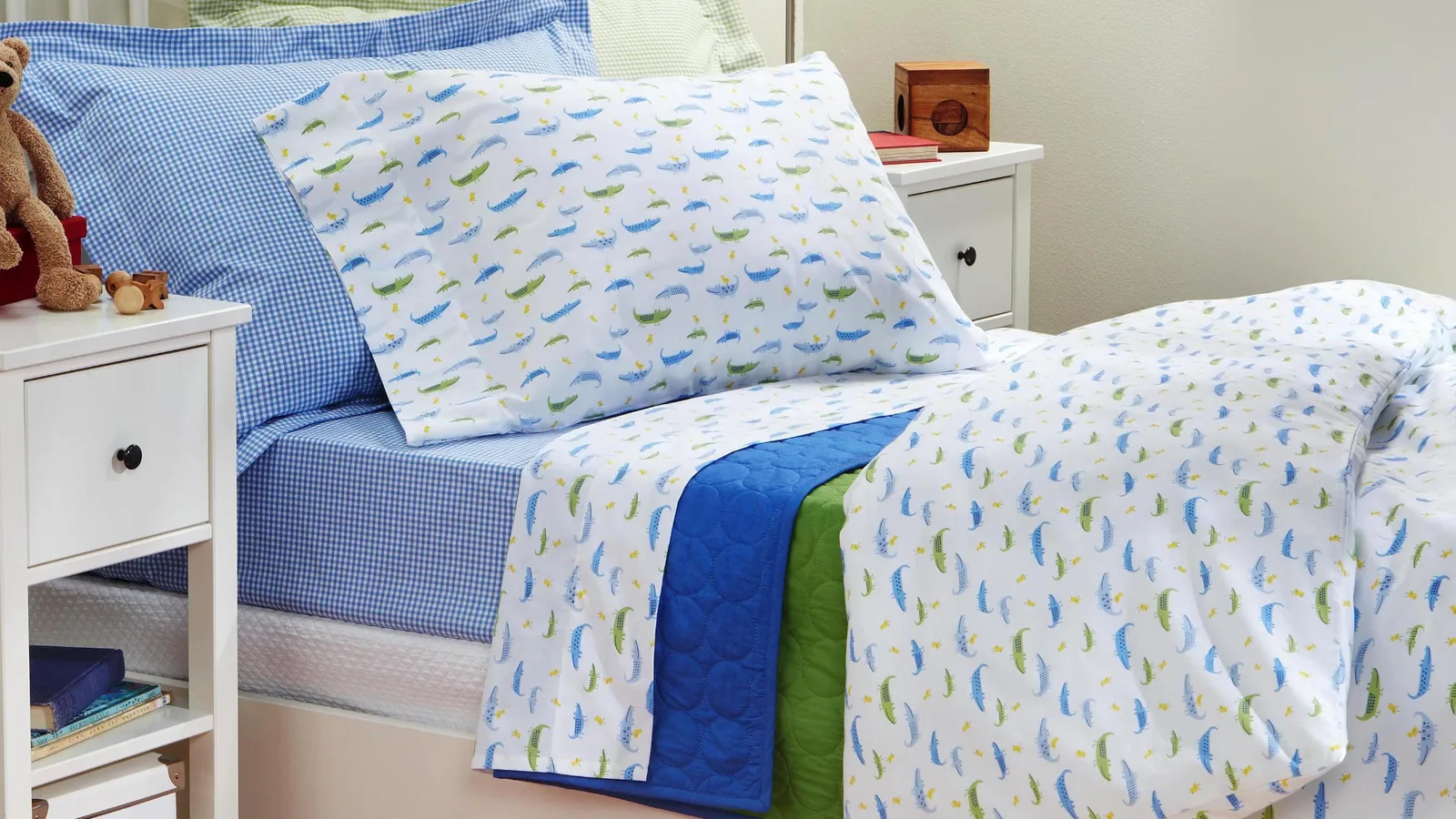
The usual mistake with kids bedding is buying the photograph. A styled bed shows a printed duvet, a fitted sheet, two pillows and a throw, and the box you order may hold only a cover and one pillowcase. Before anything else, write down which pieces you need for this bed, then read the contents line for the size you are buying. The print comes last.
Infants and toddlers first
If the bed belongs to a baby under 12 months, none of this applies. The AAP and CPSC’s safe-sleep guidance call for a bare sleep space: a firm, flat mattress in a crib, bassinet or play yard with a fitted sheet and nothing else, so no pillow, comforter or loose blanket. A cover sold for “kids” says nothing about infant use, and some toddler items carry their own age minimum, so read that line on every piece.
For an older child moving into a new bed, the bed decision comes before the bedding. The kids-room collection covers the furniture side; a sheet size name is not a sign a child is ready for a bigger bed. Check the bed maker’s instructions before changing the mattress or adding layers, because a child’s bed may take a shorter or thinner mattress, and never alter a guardrail or other safety part to fit a decorative layer.
What is actually in the set
A fitted sheet is shaped to one mattress. A flat sheet is optional; plenty of households skip it with a duvet. A duvet cover is an empty shell that needs a separate insert unless the listing says the insert is included. A comforter is the filled, finished top layer in one piece. Pillowcases fit a pillow you may not own yet, and a sham is a decorative cover with a flange, meant to sit upright behind the sleeping pillow.
Count pillowcases for your size. A twin package often holds fewer than the queen set from the same collection, whatever the photograph suggests. And if you already own an insert that fits, you only need a cover; if you need everything, add the insert’s price before comparing a cover set with a comforter.
Two listings that show why the size name is not enough
IKEA’s BARNDRÖM 10622715 duvet-cover set contains one Twin cover and one Queen pillowcase, with no insert. IKEA lists the cover at 63.75 by 85.875 inches, in cotton with a zipper, recommended for ages 3 and up, and asks you to turn it inside out and close the zipper before washing.
BARNDRÖM fitted sheet 90629893, from the same collection, is not a twin sheet at all. It measures 38.25 by 61 inches for IKEA’s extendable bed with one extension, fits mattresses up to 3.875 inches thick and is also marked 3 and up. Same name, same print family, and it would never stay on a standard twin.
So measure the real mattress: width, length and depth, plus any protector the sheet has to wrap. Children’s beds often use shorter or thinner mattresses than adult sizes. For a duvet, compare the cover’s finished size with your insert; a cover much larger than the insert leaves a flat, empty border, and one too small fights you every wash. A pillowcase should fit the pillow you have; buying a bigger pillow to fill a decorative case gets it backwards.
Duvet or comforter
The difference shows up on wash day. A duvet cover comes off and goes in the machine while the insert stays out, but someone has to wrestle it back on, so look at whether the closure is a zipper, buttons or ties and who will be doing the job. A comforter has nothing to take apart, but the whole filled piece goes through the washer and dryer, so look at its care label against your machine’s drum before you buy. A small bed size does not guarantee a small, quick wash when the fill needs low heat and a long dry.
Neither is warmer by definition. Weight and fill decide that, and a puffy photo or a “winter” name is not a temperature rating.
Choosing the print so it lasts
Give one textile the job of carrying the pattern. A bold duvet cover with dinosaurs or alligators reads best over plain sheets in one of its colors, with the curtains quiet. If the walls or rug are already busy, flip it: solid duvet, patterned pillowcase. Nothing needs to be assigned by gender; pick from what the child actually likes. Let the top layer hang clear of drawers, any ladder and the walkway beside the bed.
Look at scale from across the room. A product close-up makes a small motif look big, and a large illustration breaks up when the cover folds at the foot or bunches around the insert. If you can, view the full flat image of the cover, then picture it with the top third turned back.
Plain sheets in a color pulled from the cover are the practical choice. They outlive the print, survive a theme change and are easy to replace one at a time. If you do love a matched set, buy a spare pillowcase or sheet early, because kids’ collections are often discontinued.
Wash day and the second set
Read the labels piece by piece. The sheet, cover, insert and mattress protector may each want a different temperature or drying method, and a cotton shell tells you nothing about how to wash a filled comforter.
Walk through one full changeover in your head: strip, wash, dry completely, remake, store the clean spare. Two sets cover one on the bed and one in the wash; a third helps when accidents happen at night. Beyond that, the right number is whatever your routine and closet allow. If two similar fitted sheets serve different mattress lengths, label the shelf; color alone will get them mixed up.
When a piece wears through or stops fitting, replace that piece. Stretching a short sheet over a longer mattress is how corners pop off at night. Before checkout, read the return terms too: some retailers will not take back bedding once it has been opened or washed.