Kids Bookshelves: Choose Book Display, Shelf Space and Everyday Access
A shallow face-out shelf helps a child choose; a tall bookcase holds the collection. Measure the books you own, then pick the format that makes putting them back easy.
By DecoraMintPublished 4-minute readMore in Kids' Rooms
In this guide
Crouch to a toddler’s eye level and the case for covers is easy to see: a low, face-out display of current favorites lets a child choose by picture without pulling books off a shelf. A taller bookcase holds the rest of the collection, with the books a child should reach on the lower shelves and everything else up high. Measure the books you own, especially the big picture books, and pick a setup that makes putting books back as easy as pulling them out. The kids-room collection covers the rest of the room.
Everyday books and the full collection
Gather a sample that includes a tall picture book, a wide landscape-format one, a chunky board book and any large illustrated volumes; a neat row of paperbacks makes an unfair test. Decide which books are out every day and which wait in reserve, and rotate a small selection onto the display. Who puts books away matters as well. If an adult usually reads aloud and reshelves, storage can reflect that, and if your child chooses and returns books alone, they need to do it without climbing or stretching. Go by your child’s actual reach.
Face-out, spine-out and cubbies
Face-out displays make covers easy to spot, and the useful number is the usable compartments, not the outside width; a front rail can hide shorter books. A spine-out shelf holds more, but packed tight it becomes a struggle, so leave room to pull one book out or add bookends and count their space. Cubbies can separate library books, favorites and the current read, provided big books fit and the cubbies stay loose enough to use. Keep the categories few and obvious.
A FLISAT for favorites, a GERSBY for the rest
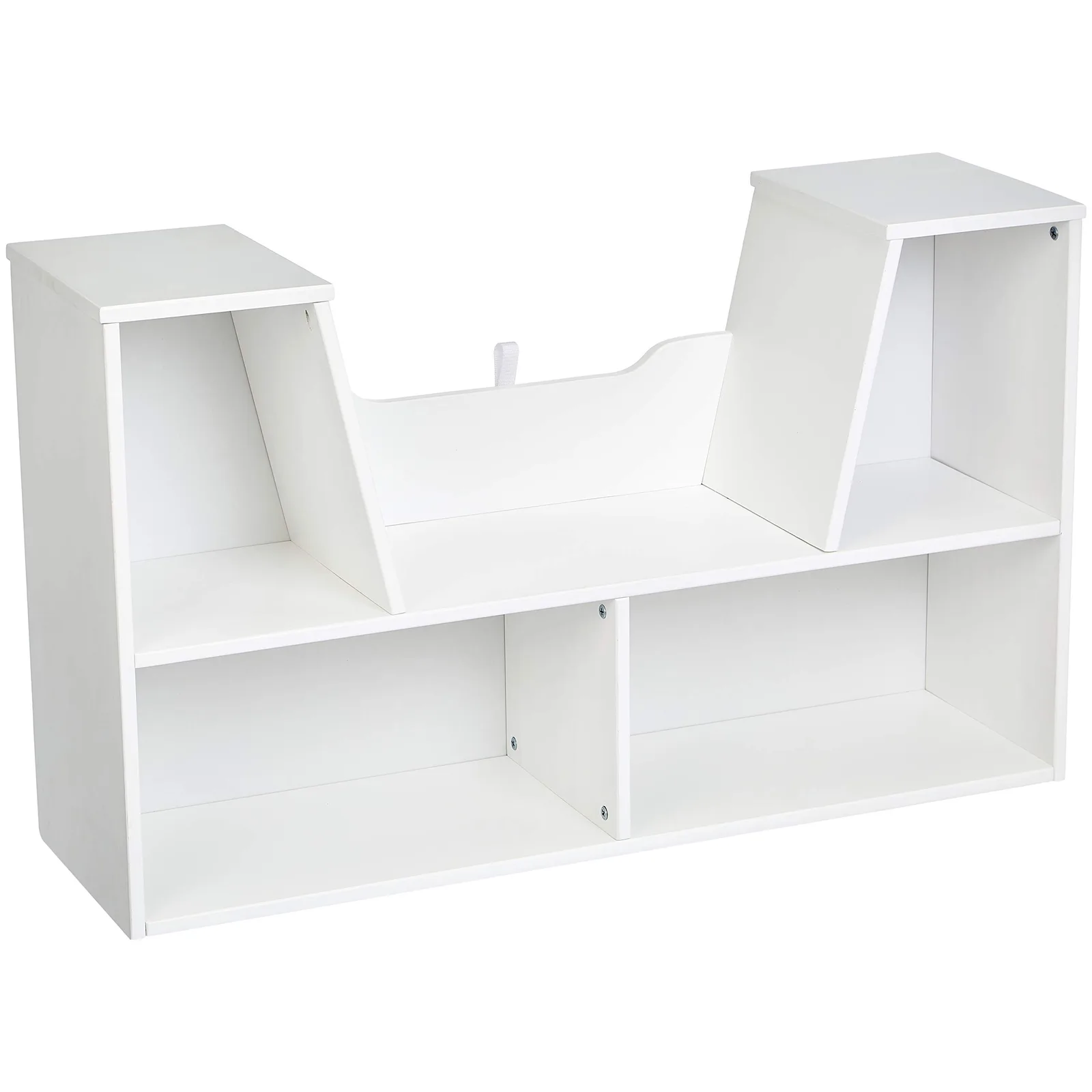
IKEA’s FLISAT book display 80614566 is 19.25 inches wide, 11 inches deep and 16.125 inches high, with a 22-pound maximum load, and its assembly diagrams show a low display with a retaining front. A low unit like this suits a floor-level reading corner.
For the bigger collection, IKEA’s GERSBY 70261131 is a tall bookcase at 23.625 by 9.5 by 70.875 inches, and its manual requires wall attachment and shows how. Its upper shelves are adult territory. We have not tested either piece, and the dimensions are IKEA’s own.
Measure books against openings
Outside dimensions do not give you the clear space inside each shelf, so measure each sample book’s height and depth the way it will stand and compare it with the clear opening: the space under the shelf above, inside a retaining lip or between dividers. A book taller than the compartment will not stand in it; laying it flat may work, or may make it hard to pull out. For a face-out row, add up the widths of the covers you want showing, plus whatever the sides and dividers take. If shelves adjust, use the allowed positions. If they are fixed, make sure the openings work as they are, and never drill new holes.
Making the corner inviting
Put the shelf where a child can browse without blocking a door, a drawer or the path through the room, and leave floor space for the pile that forms mid-sort. A shelf right beside a reading chair works well when the chair leaves the shelf clear; otherwise choose a nearby wall with a clear path between. A low white shelf, a floor cushion and a basket of oversized books make a corner that reads as an invitation, and a rug under it defines the spot and softens the floor for sitting. A reading nook also needs good light, with a lamp placed so its cord does not cross the path.
Unless a product is designed and rated as a seat, the top of a bookcase is a shelf and should not serve as a bench, whatever a styled photo shows.
Fixing it to the wall
CPSC’s Anchor It guidance exists because tipping furniture can seriously injure young children; it calls for following the furniture’s anchoring instructions and removing tempting items that invite climbing. Keep favorites low so no one climbs for them. Heavier books on lower shelves help, but the wall attachment still has to go in. Confirm that your wall suits the maker’s fastening requirements before buying a tall bookcase; if the spot cannot take it, choose another wall or a lower unit. Keep shelves and heavy decor away from the crib or bed, and look at the whole room, blind cords included, as well as the bookcase.
Loading the shelves
Test the setup with a small selection before filling it. If books slide down behind one another or a cubby is packed to the top, putting them away becomes a fight. Use categories only where they help: one spot for library books makes returns easy, and color-coding works if your child searches by color. When the shelves fill up, rotate some books into storage rather than stacking them on top. If a shelf or divider breaks, get a replacement part rather than improvising, and clean the finish as the maker says, since a wipeable-looking surface may not tolerate soaking or harsh cleaners.