Nursery Storage: Organize Clothes, Supplies and Everyday Routines
Matching baskets can look finished and still hide the outfit you need at 3 a.m. Organize around daily routines, give each drawer a job and plan an exit for outgrown clothes.
By DecoraMintPublished 5-minute readMore in Kids' Rooms
In this guide
A baby goes through clothes in sizes, not just in quantity, so the drawer that serves you best holds one size at a time. Sort nursery storage into what fits now, what comes next, what is in reserve and what is leaving the room, and let the containers follow that sorting instead of leading it.
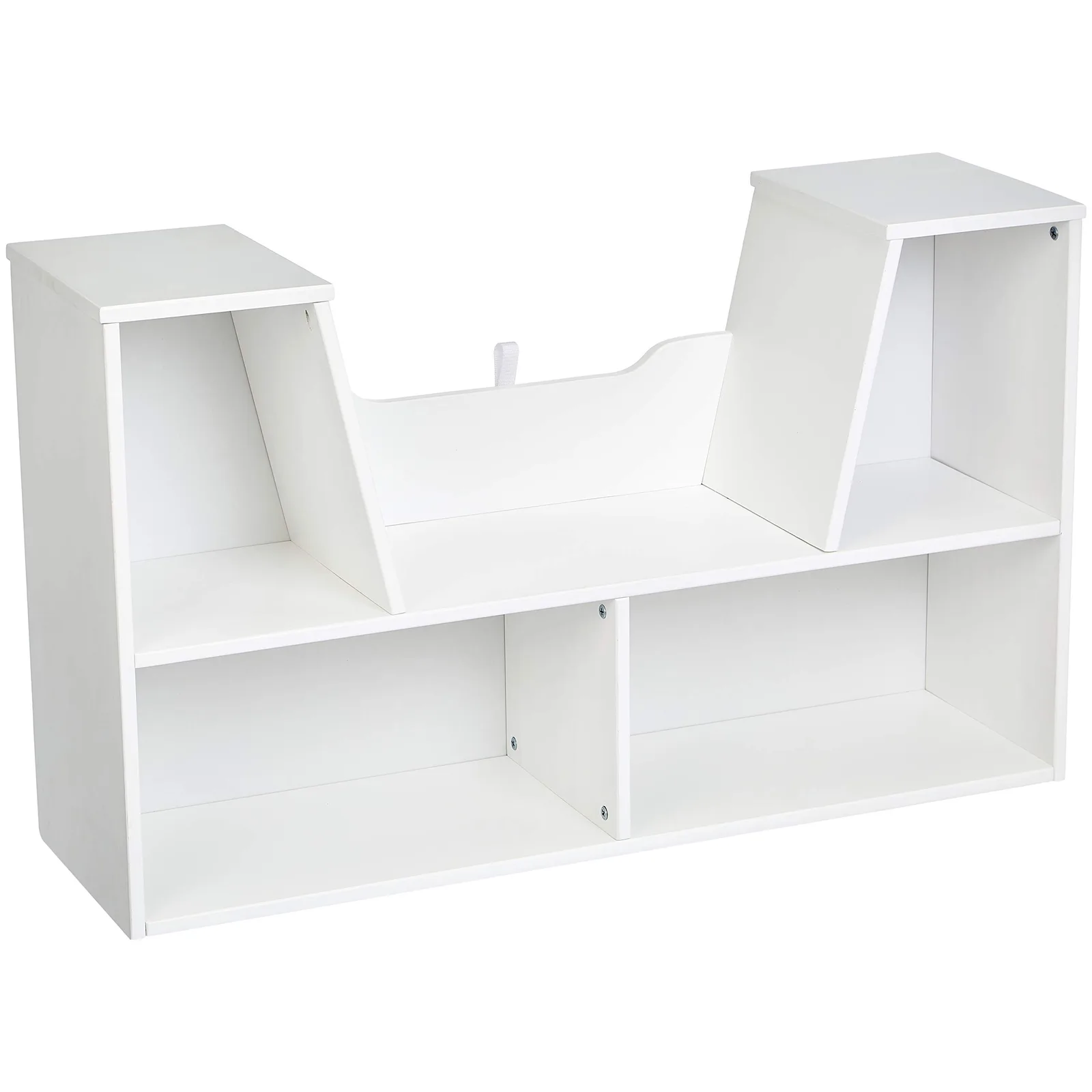
Start with what you already own and the furniture you can use. Leave some capacity unassigned. A divider can be added later; a whole matching system is hard to undo.
Four groups, then containers
Keep the groups physically apart while you plan. A drawer holding three sizes turns a quick change into a search even when every garment is neatly folded. How much belongs in the active group depends on how often laundry comes back, so if it returns every other day, stock for that rhythm plus a small spare supply.
| Group | Where it lives | Label |
|---|---|---|
| Fits now | Main drawers or an easy closet section | Garment type and size |
| Next size | Separate box or closet section | Size and season |
| Spare fitted sheets | Clean-linen space, apart from clothes | Size of the sleep space |
| Refills | Adult-height storage away from the changing surface | Item and quantity left |
| Outgrown | One temporary container | Keep, pass on or donate |
A few clearly named spaces are easier for a second caregiver to follow than a color code with many categories.
Give each drawer a job
Measure the inside of each drawer, because the front says little about usable width, depth and height, and a tall organizer can stop a drawer closing even when its footprint fits. Lay out folded clothes before buying dividers. A shallow drawer suits socks, hats and small accessories; a deeper one holds garments folded into rows you can read without pulling everything out. Leave room to lift a garment out.
Do the arithmetic on paper with the actual container sizes, including their walls. Bins that look as though they share a drawer evenly often need more than the drawer has, so draw the layout first.
Check care labels too. IKEA’s SKUBB six-box set lists three box sizes and says the boxes should not be washed. That is the maker’s instruction as published in the listing, and a reminder that fabric organizers vary in care. Pick storage you can keep clean where it will be used.
Against a pale gray wall, a light-wood dresser with two sizes of woven baskets in a cream-and-gray stripe on the shelf above gives the room texture without clutter, and a nearly bare top lets the grain read first. A lamp with a warm, low bulb beside the chair lights the drawers without a harsh overhead, with its cord run behind the furniture and well away from the crib. We would choose one pull finish, brass or matte black, and repeat it on the hamper and the closet hooks.
Dresser tops and chest hazards
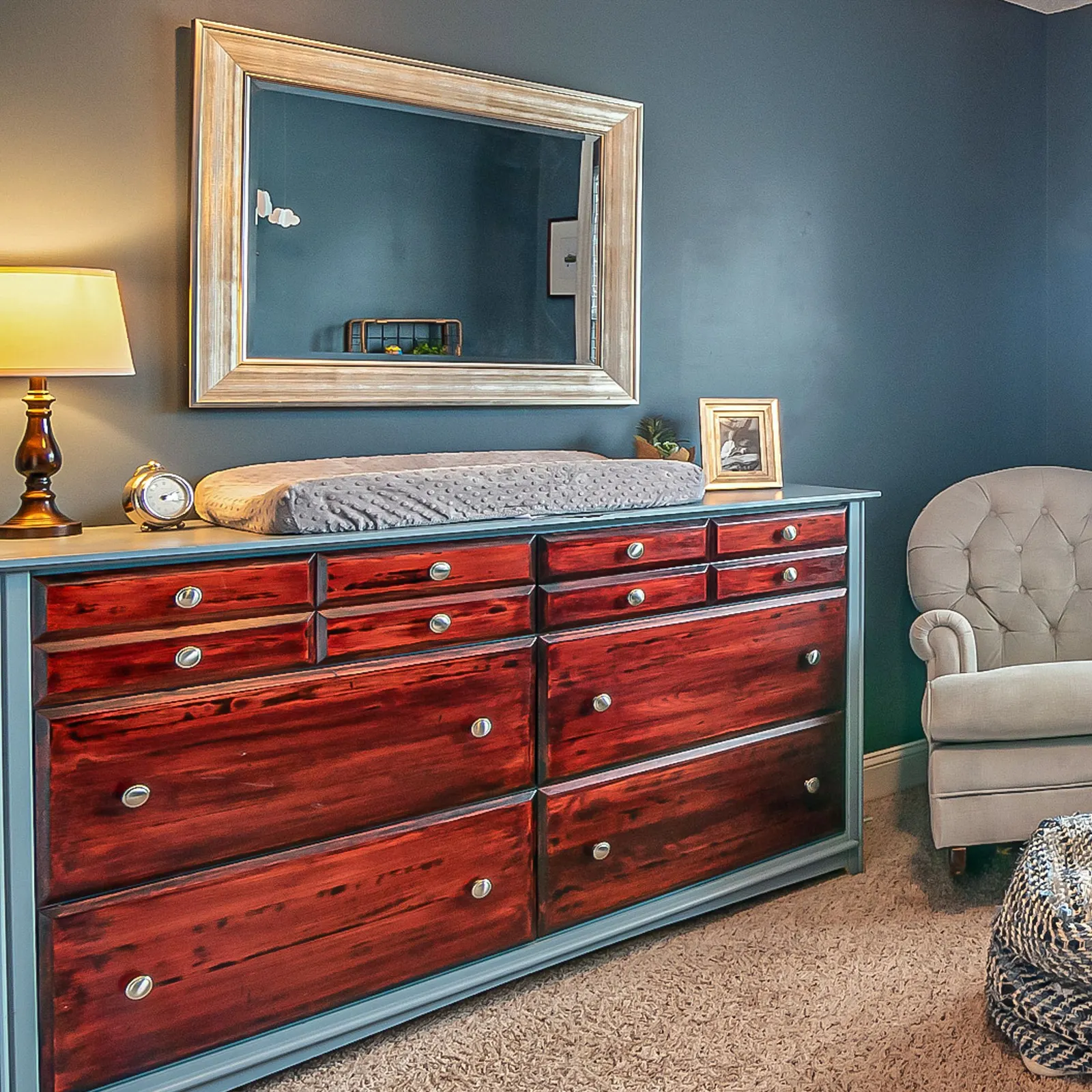
Using the dresser top for changing is a separate decision from using its drawers for clothes, and it depends on the furniture maker approving the whole setup, as our nursery dresser guide explains. For storage planning, keep a small working supply near the changing area and the bulk refill elsewhere, and keep the surface clear.
Medicines, cleaning products, small hazardous items and plastic packaging belong in secured storage; an open decorative basket leaves them reachable. Revisit the location as the child becomes mobile.
Chests need particular care. CPSC warns about entrapment, suffocation and falling-lid hazards with storage and toy chests, and recommends disabling automatic latches and using lid supports that hold the lid open in any position. We would keep a vintage trunk for the living room and put open, lidless baskets in the nursery.
A small closet
Map what hangs and what folds. When drawers hold most of the current clothes, the closet takes next sizes, spare linens and bulky supplies. With no dresser, it needs an everyday section at adult height.
Hang by size before color, and put a divider between current and future sizes. Printed sizes are sorting aids, and brands fit differently, so check actual fit when you rotate. Keep the floor clear enough for doors and drawers to open, and if a box must come out each time to reach the box under it, give that stack to rarely used things.
In a closet with white shelving, a rail at adult height and three matching sand-colored fabric boxes on the top shelf, labeled by size and season, the uniform color keeps the shelf quiet and the labels do the sorting work. Put the heavy items low, such as refill cartons and boxes of next-size clothes, so nothing needs a step stool. If there is a freestanding unit as well, anchor it as CPSC’s Anchor It guidance describes, following the manufacturer’s instructions, and keep tempting toys off its top.
Laundry, the crib and open shelves
Give clean clothes a route into the room: one basket carried in and emptied into labeled drawers beats several small baskets that gather mixed sizes. Keep a place for used items that does not block the doorway or the path to the sleep space.
The crib or bassinet is a sleeping space and never temporary storage. CPSC’s safe-sleep guidance recommends a bare sleep space with only a fitted sheet, so blankets, pillows and toys wait elsewhere while you decide where they go.
Open shelves show a small selection quickly, so start with a few books an adult picks from. Mount them for their load and wall construction, and keep heavy or breakable display pieces out of reach of the sleep and changing areas.
Where outgrown clothes go
Keep one collection point for clothes that no longer fit, labeled with what you plan to do, and empty it when full instead of adding a second container. That stops old sizes returning to the drawers after the next wash. For clothes you keep, store them clean and fully dry per their care labels and note the season as well as the size, since a winter size may be needed in summer. Review the layout when a routine changes: a new size, a new sleep space, a child who starts to crawl.