Kids' Room Organization: Give Everyday Belongings a Place to Return
Start with what keeps ending up on the floor, the bed or the chair. Give those things an obvious place to return to, and test the routine before buying more bins.
By DecoraMintPublished 4-minute readMore in Kids' Rooms
In this guide
Buying a matching set of bins before you know what is on the floor is the most common way a kids’ room ends up tidy for a week. Spend one evening noting what actually lands on the floor, the bed and the desk chair, and organize around that list.
Sort one activity at a time
Take a single group, such as drawing supplies, books or everyday clothes, and leave the rest of the room usable while you work. Sort into four piles: used here and staying, used elsewhere and going back, needs an adult decision or repair, and leaving the room.
Keep incomplete sets together until you have decided what stays. A puzzle box without its pieces and loose pieces with no known box belong in one pile for now, and a child’s current project stays even if it looks unfinished to an adult. Ask the child where they would look for something. The answer often shows that your categories describe the shelf, not the way the room is used.
What a child can reach and what an adult keeps
Seattle Children’s advises matching toys to a child’s age and skills, keeping small toys and parts away from young children and checking toys for damage (toy safety guidance). In a shared room, a label reading “big kid toys” will not stop a toddler, so the physical arrangement has to do it: small-part sets live on a high shelf or in an adult’s closet, and the low, open storage holds only what the youngest can use.
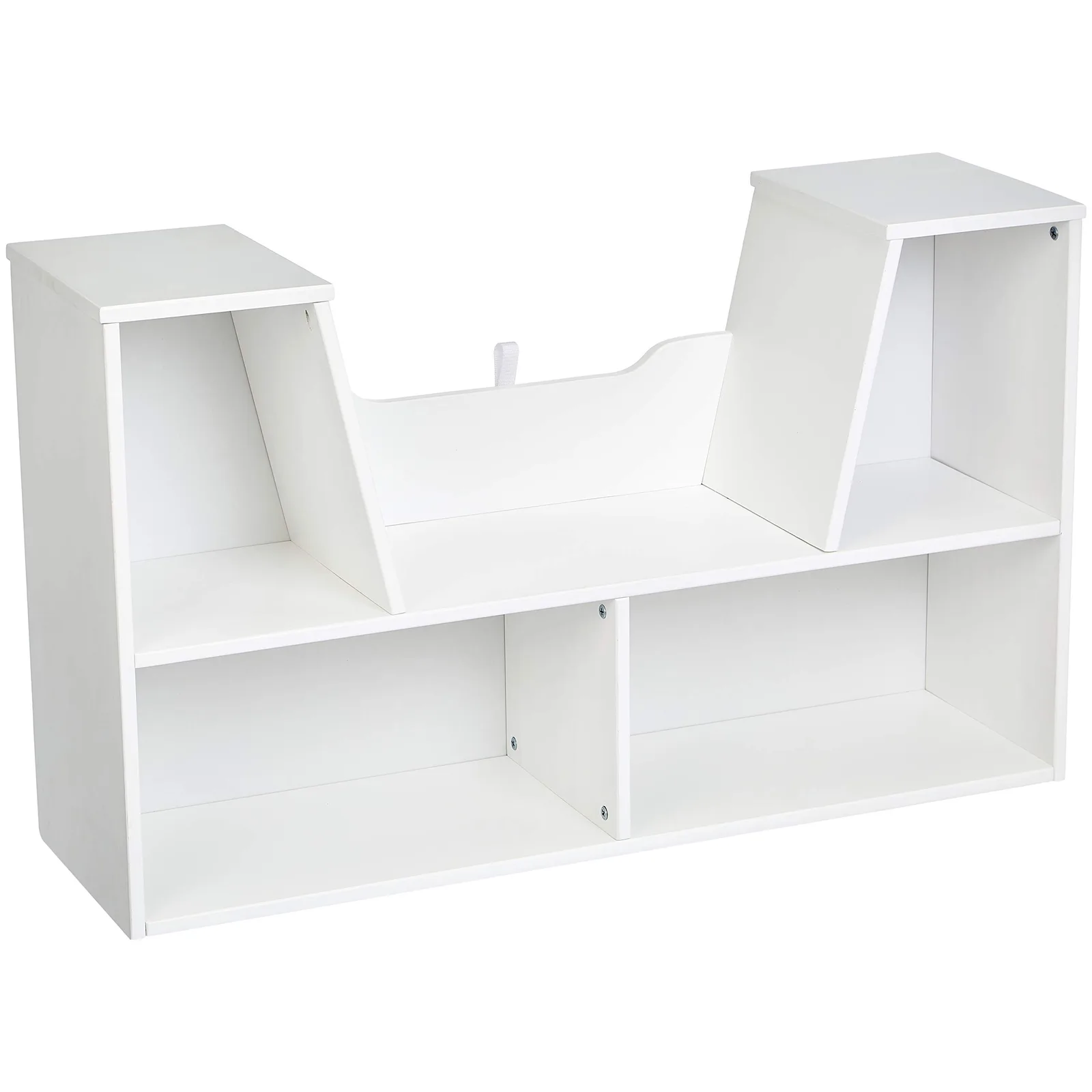
Anything tall enough to climb needs anchoring. CPSC’s Anchor It campaign calls for securing furniture to the wall with the supplied anti-tip hardware and keeping tempting toys off the top. Open cubby units are worth anchoring first, because the shelves invite stepping.
Take a shared room with white cubbies along one wall, a stack of canvas baskets in soft gray and a rug underfoot. It looks calm until the baskets are all the same size and nothing is labeled. We would use two sizes: deep baskets on the floor shelf for bulky, soft things like stuffed animals and dress-up, and shallow ones higher up for crayons and cards. A small picture tag on the shelf edge, not on the basket, keeps the label in place when the baskets get swapped.
Categories that match the collection
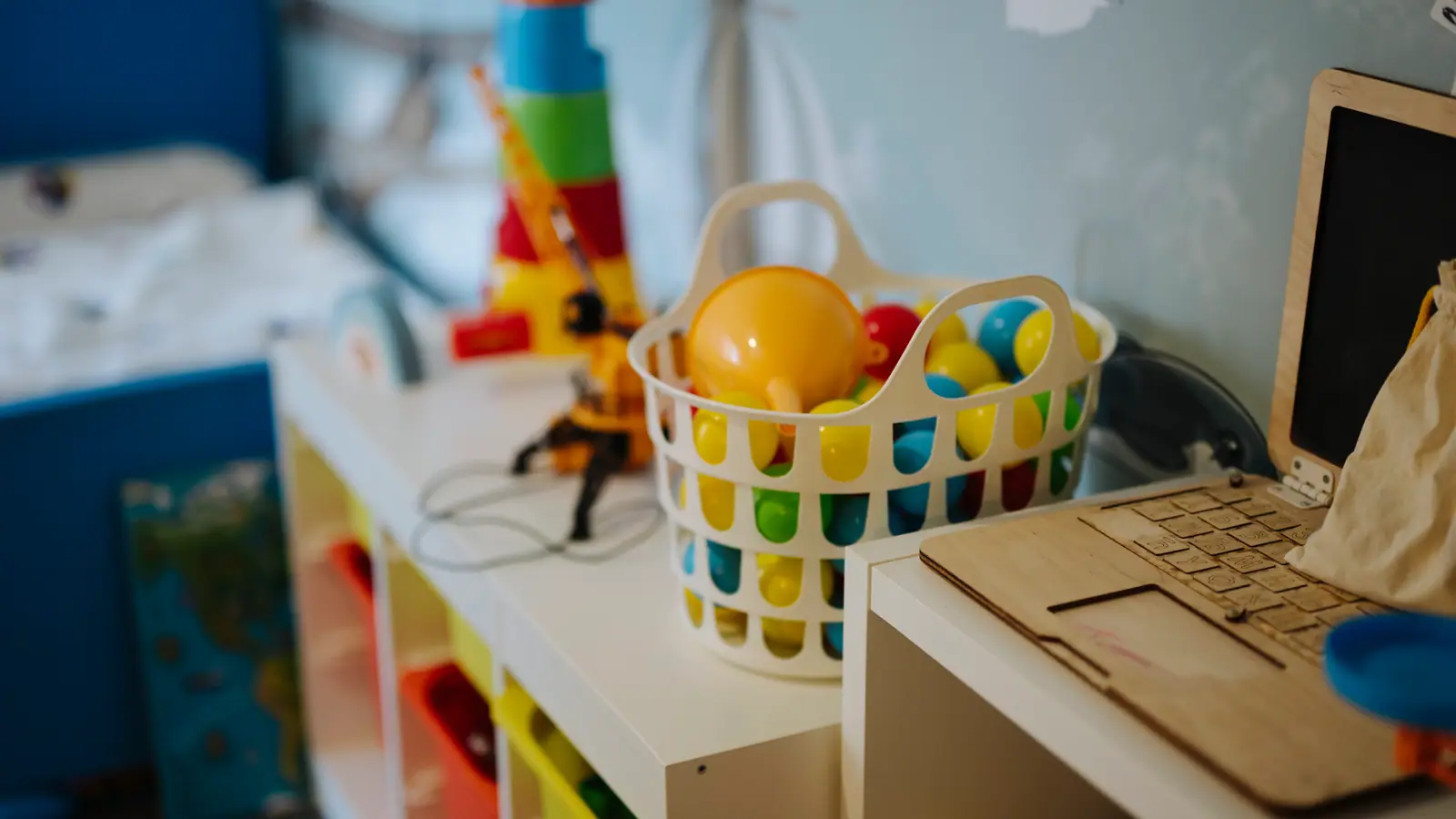
Use a handful of groups and try them in containers you already own before buying fitted organizers. Beds, desks and seating are covered in the kids-room collection, so this plan stays with what goes inside and on them. Books can split into a current few and a reserve; large picture books will not share a shelf with paperbacks. Building toys work as one known set or one deliberate mixed bin, and small-part sets need the controlled access above. Clothing needs separate routes for clean, worn-but-wearable and outgrown. A work-in-progress spot, a tray or one designated surface, needs a date when someone looks at it again.
Words, a simple drawing or both work as a label. A catch-all bin for uncertain things is fine for a week if an adult empties it on a set day; left alone it becomes the room’s permanent junk drawer.
Measure the opening, then the basket
A basket the same width as its shelf opening will snag on handles and rims, so measure the contents, the inside of the container and the clear opening, and leave a little give to slide it out. Fill one candidate container before buying several: can a child find what they want and return it without unloading everything? Containers are not seats or steps.
Trunks and toy chests
CPSC has warned that ordinary storage and blanket chests, not only toy boxes, can trap a child through an automatic latch or injure one with a falling lid (CPSC chest warning). Its advice is to remove or disable automatic locks, to use a lid support that holds the lid open in every position, and to look for ventilation holes on toy chests, kept clear of the floor and wall. Seattle Children’s simply suggests baskets or boxes without lids for toys. We would go lidless and keep the antique trunk out of the kids’ room.
Clothes and projects
A chair full of clothes is usually several decisions waiting: clean, worn once, laundry, too small. Give each a destination before adding a drawer. For projects, choose one tray or surface, keep the bed and the walking path clear, and in a small shared room give each child one spot with larger unfinished work stored elsewhere.
In a narrow room shared by two children, give the long wall to low, open storage in white or pale wood so the toys supply the color, and give each child a basket in a distinct hue, teal for one and mustard for the other, so ownership shows without labels. Put the drawing tray on a low shelf near the window for daylight, and keep the floor between the beds clear with a flat-weave rug that stays put under bins and vacuums easily. We would leave the wall above the beds free of shelves.
If you rotate books or toys, decide who manages the reserve and where it lives. Rotate only if it solves a space problem in your house.
Test the reset
After an ordinary play session, walk through putting everything away and note where it stalls: an unclear category, an awkward basket, a project with no home, a shelf already full. Fix that one thing and run it again. If books always need a toy basket moved first, swap their positions. Buy more furniture only when the trial shows a need your existing storage cannot meet.