King Bedroom Sets: Check the Pieces, Room Fit and Total Cost
The word set does not tell you how many nightstands come with it or whether it fits your room. Lay out the real pieces, check mattress support and compare the complete cost.
By DecoraMintPublished 5-minute readMore in Bedroom
In this guide
A king bed is the widest piece of furniture most bedrooms will ever hold, and an upholstered headboard with wings can make it look wider still. Add a pair of nightstands and a dresser, and the room is mostly furniture. So the question with a king bedroom set is how much of the package earns its floor space, and what the word “set” covers.
Draw the room, list the pieces you need, and measure each package against that list. The goal is a bedroom where you can walk, open drawers and make the bed, whatever the piece count says.
What is in the box, and what is only in the photograph
Listing photos often show two nightstands, a mirror, lamps and bedding for a package that contains a bed and a single storage piece. Count what the itemized contents say, for the exact size and configuration you select.
Look at the bed itself: a complete frame, or a headboard only? Rails, a footboard, slats and any foundation you must buy separately should all be named. Where the listing gives a piece count, find out how the retailer counts the bed parts and the mirror, since one bed can be tallied as several pieces.
| Component | What to find |
|---|---|
| Bed | Size, frame contents, exterior dimensions |
| Nightstands | Quantity, width, drawers, any outlets or USB features |
| Dresser or chest | Drawer interiors, depth, clearance to open |
| Mirror | Included or optional, how it attaches |
| Mattress and foundation | Included, required separately, or excluded |
| Delivery and assembly | What is included, what costs extra |
King and California king are different shapes
Common US mattress sizes are 76 by 80 inches for a king and 72 by 84 inches for a California king; Ashley’s bedroom delivery guide lists both. The California king is narrower and longer, so a frame and bedding made for one will not suit the other. A split king is two twin XL mattresses, 38 by 80 inches each, side by side in the standard king footprint, according to Saatva’s size information. If you are keeping a mattress or planning a split arrangement, take its exact dimensions from its own maker.
The mattress rectangle is only the start of the footprint. A broad upholstered headboard, a projecting footboard and thick rails all add inches, and so do handles and posts on storage pieces. Plan from the bed’s listed exterior width and length.
Fit comes before finish
Mark the bed’s outside dimensions on a floor plan along with doors, windows, closet openings and outlets, then add the nightstands and dresser and test the plan with every drawer and door open. Tape or paper on the floor makes this concrete: walk from the door to each side of the bed and to the closet, and judge how the room feels instead of hunting for a universal clearance figure.
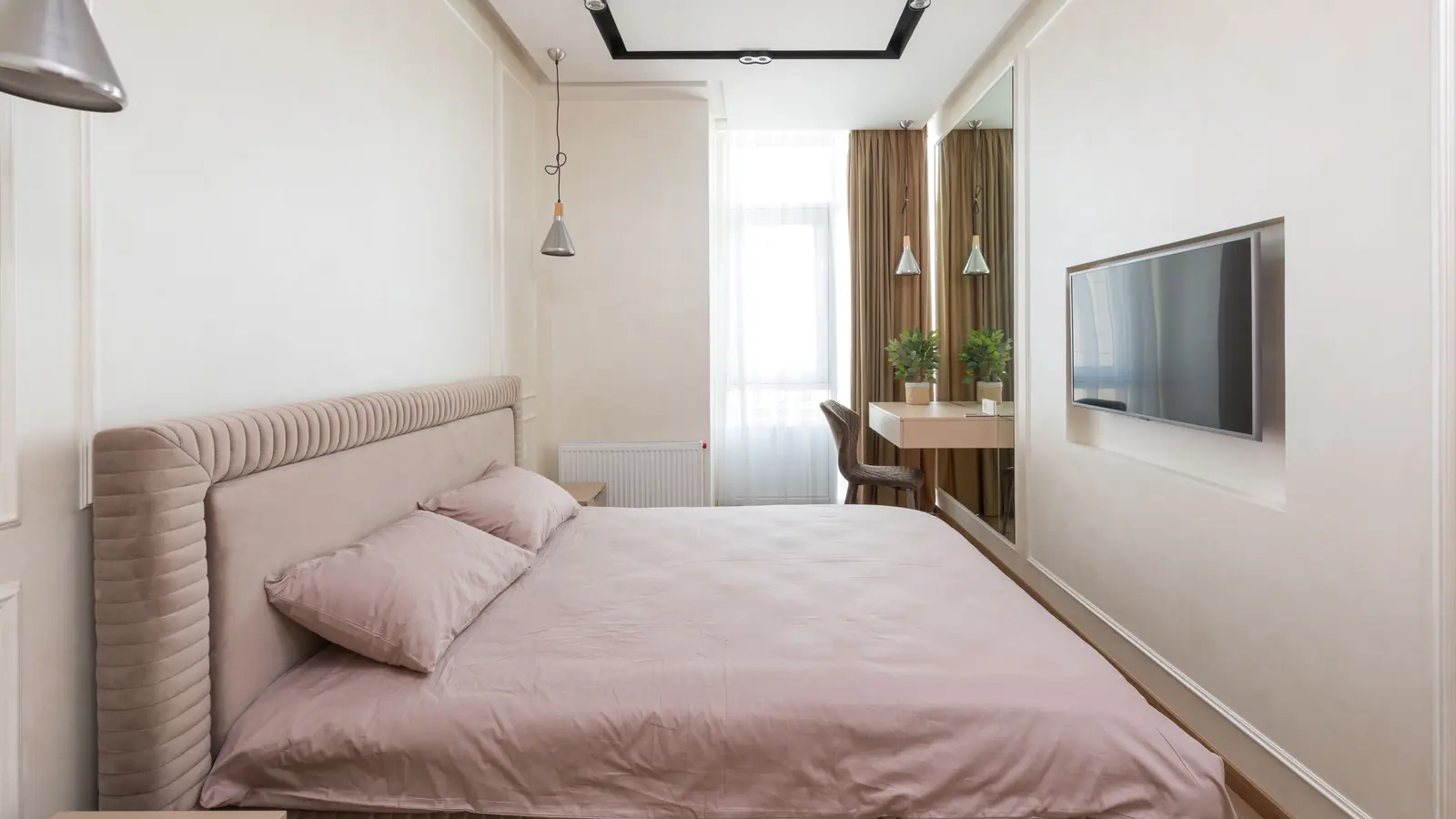
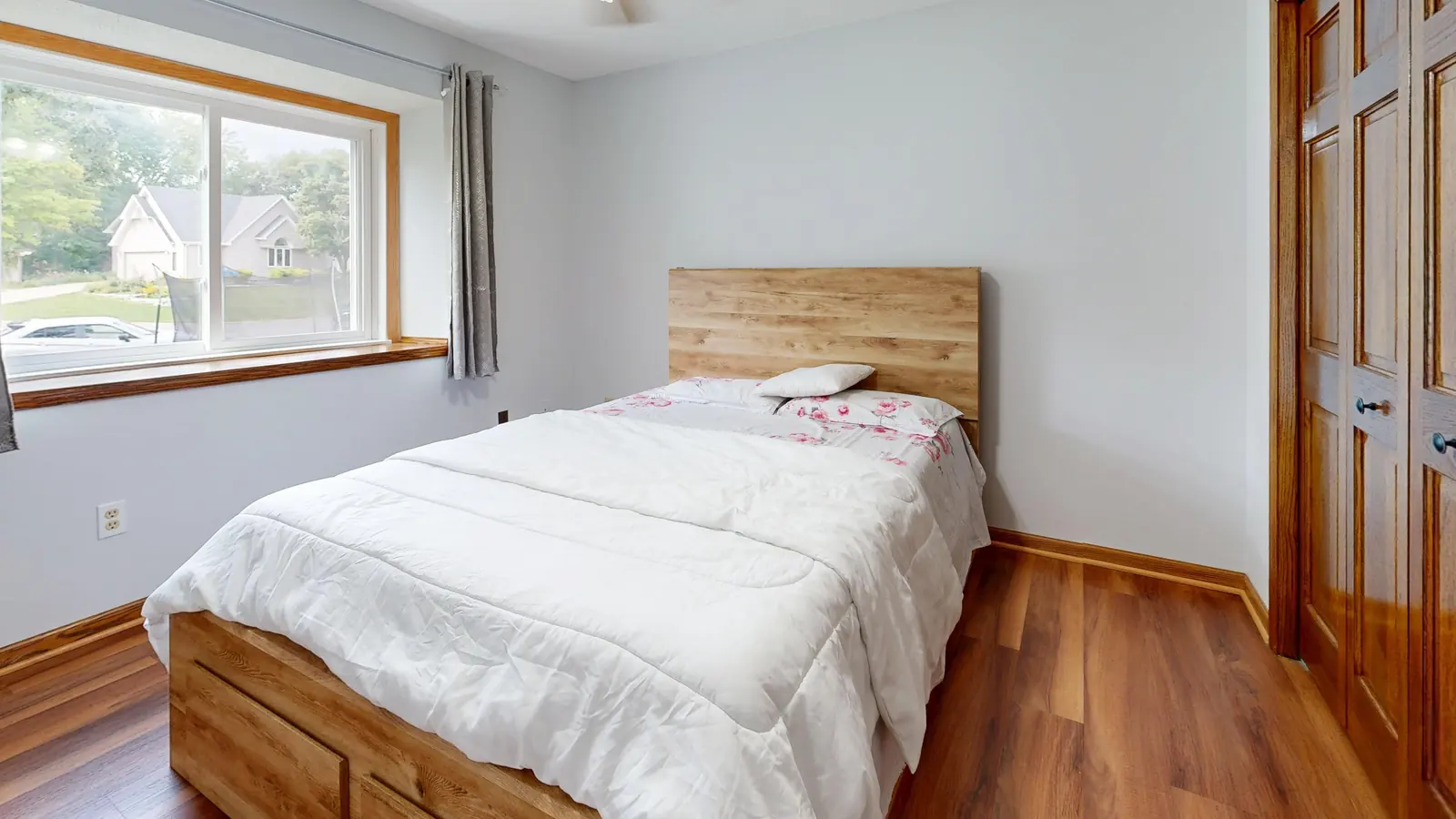
The bed also sets the look of the room. A tall upholstered headboard pulls the eye up and gives a plain wall a focal point, while a low platform frame leaves the wall and window above it open and makes the ceiling feel higher. Nightstands a shade lighter than the bed recede; a pair in the headboard’s own tone merges with it into one broad block.
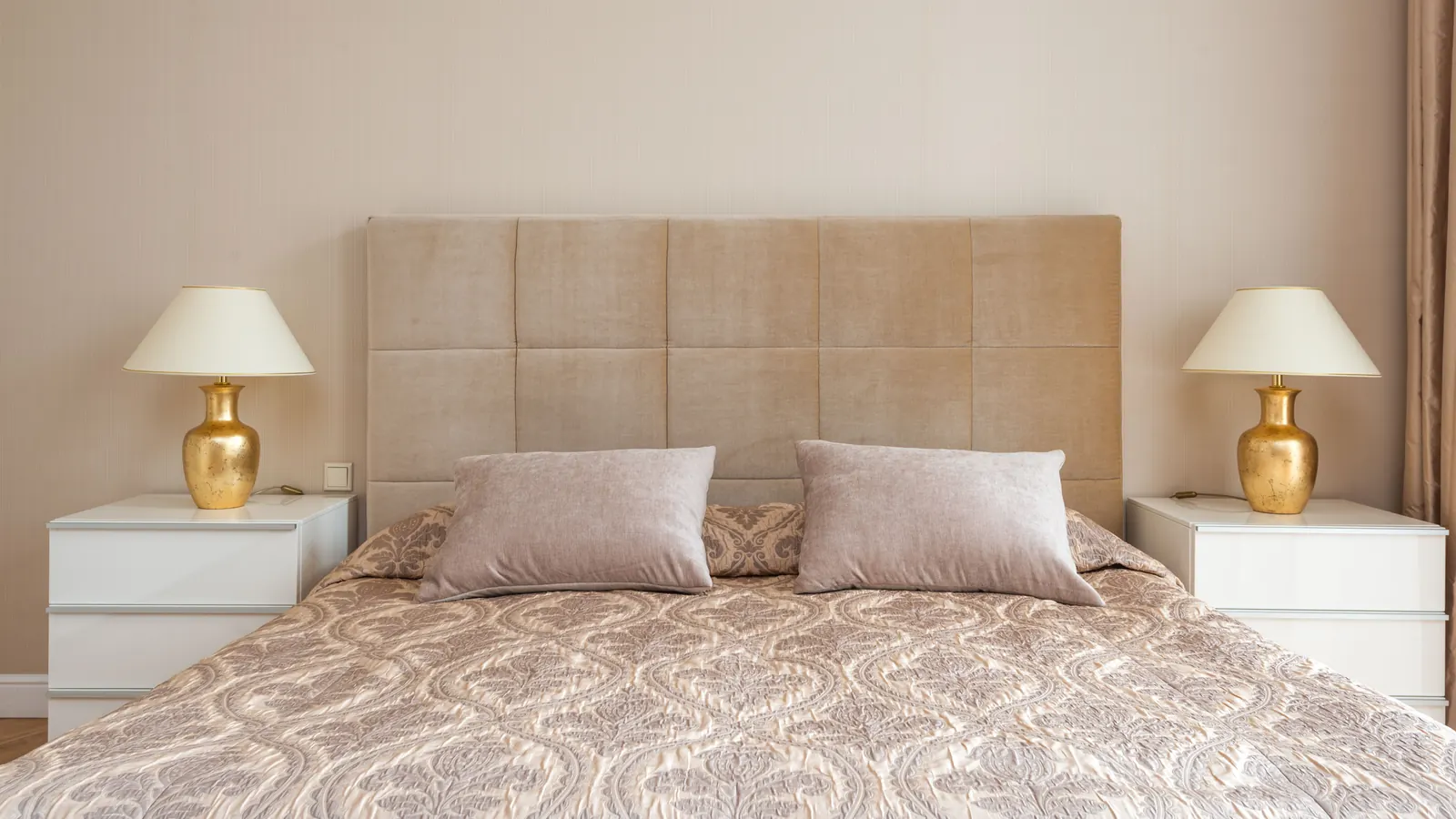
Wide nightstands are what usually crowd a king bed. On a wall that looks generous, a big headboard and two broad bedside pieces can use up the margin quickly, which is when a slimmer pair, or one nightstand and a wall shelf, starts to look wise. If the package carries more storage than the room needs, price a smaller configuration or buy pieces separately. Leaving out a chest often lets the remaining furniture breathe.
Nightstands at the right height
Compare the top of each nightstand with the mattress surface once the foundation, mattress and any topper are on; a pair that lines up in a showroom may sit far lower beside your bedding. Think about reach from the pillow: can you get to the lamp switch or set down glasses without leaning around a tall headboard wing, and will the drawer open past the bedding? Outlets and cables should stay reachable without pushing the furniture against a plug. Two identical nightstands work when both people need the same thing, and a tight side may call for something slimmer.
Mattress support and adjustable bases
A decorative frame, a slatted platform and a frame built around an adjustable base have different support needs, so get the requirements for your exact bed from the bed maker and the mattress or base maker. Matching mattress dimensions do not guarantee an adjustable base fits: rails, moving sections and clearances all play a part. A “no box spring needed” line for one configuration cannot be carried across a whole collection. If you will reuse your mattress, note its size, thickness and support needs first. That also shows how much headboard will remain visible and how high the bed will sit.
Construction and storage
A shared finish does not mean shared construction. Wood, veneer and coated panels can sit side by side in one collection, so read the description for the bed, drawer boxes, dresser top and backs separately. Think about what will go in the drawers: wide shallow ones suit folded clothing differently from narrow deep ones, and many small compartments are not automatically more useful than a few large drawers. Cosmetics and drinks on a top surface call for knowing how the finish should be cleaned, since wood color does not tell you which cleaner is safe.
Delivery and total cost
Compare packages on the same basis: mattress support, an extra nightstand, delivery, assembly and removal. Find out whether items can be returned individually. A headboard or dresser has to pass through the building and up the stair turns or elevator, so a bed that fits assembled can still have a part that never reaches the room. Inspect finish and components before you discard packaging, and report damage or missing parts through the maker’s process.
Anchor the dresser
Dressers and TVs need anchoring whatever the bed size, and a matching dresser is no exception because it feels heavy. Follow the furniture instructions and the CPSC’s Anchor It guidance. Under the CPSC’s rule (16 CFR part 1261), freestanding clothing storage units at least 27 inches tall, weighing at least 30 pounds and holding at least 3.2 cubic feet of enclosed storage, manufactured after September 1, 2023, must pass tip-over tests and come with a tip restraint, per CPSC’s clothing storage unit guidance. Many nightstands fall below those thresholds and older dressers predate the rule, so anchor whatever has drawers. The restraint protects a child only once it is installed in your wall.