Kitchen Light Fixtures: Ceiling, Counter and Cabinet Lighting
An island pendant can look great and still leave the counters in shadow. Map where you prep, wash and store, then choose ceiling, under-cabinet and pendant lights for those jobs.
By DecoraMintPublished 5-minute readMore in Lighting
In this guide
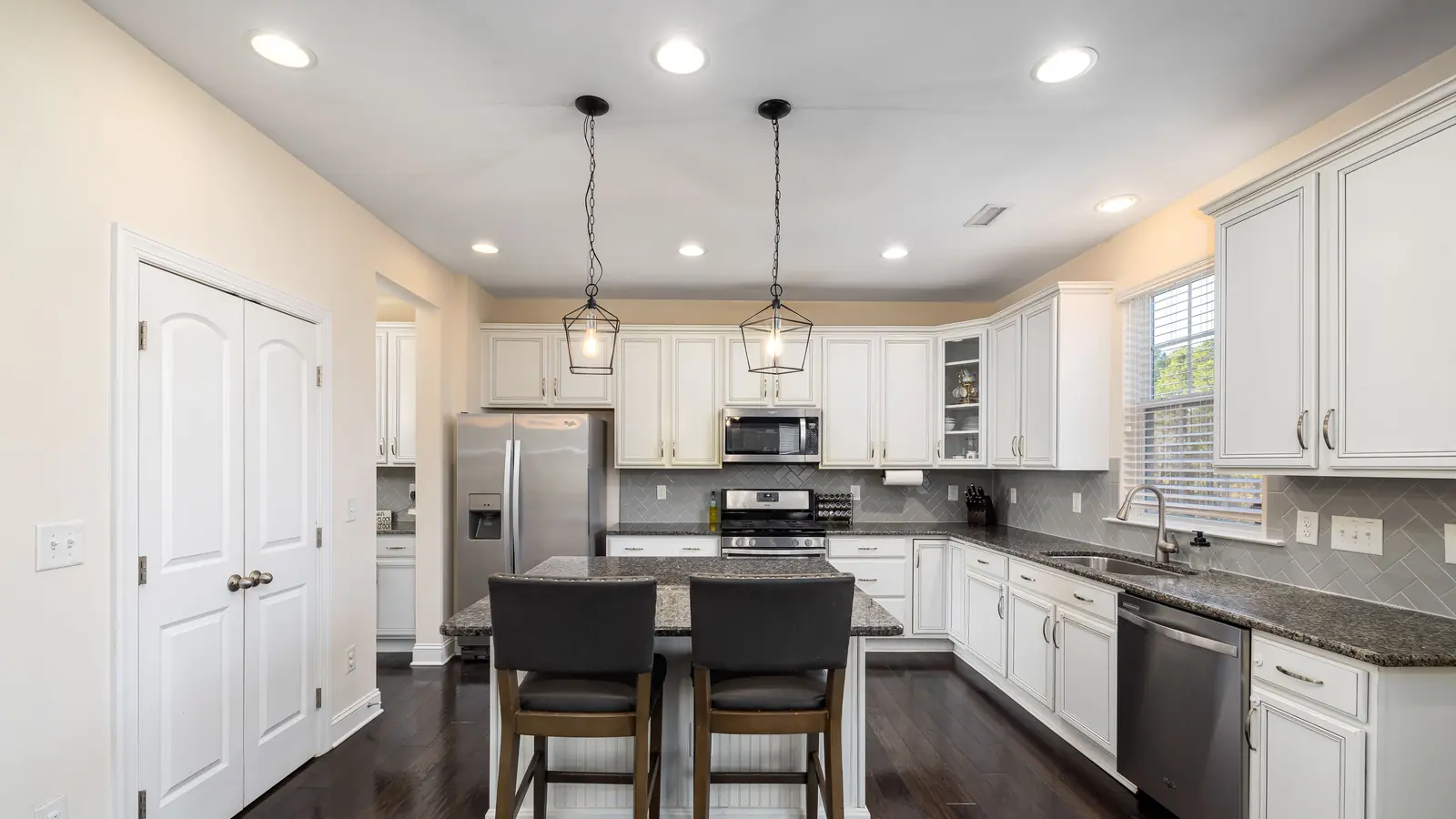
The classic kitchen lighting mistake is buying two handsome pendants for the island and expecting them to light everything. They glow beautifully over the stools, while the counter by the stove sits in your own shadow and the corner by the fridge goes murky after sunset. A kitchen works best with three layers doing three jobs: ceiling light to move around by, task light right over the counters, and pendants or accents where people gather.
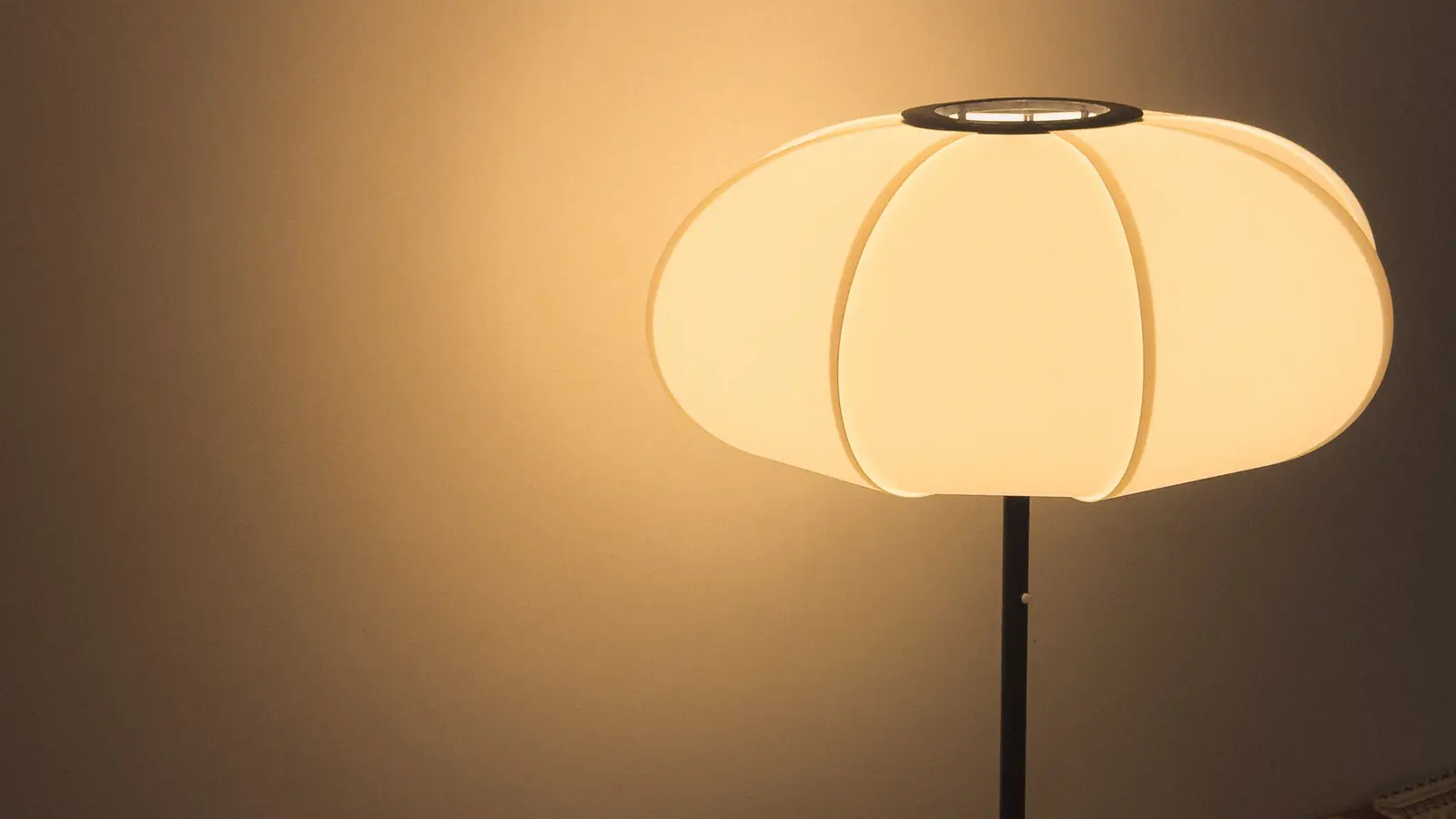
Kichler’s kitchen-planning guide frames it the same way, as ambient, task and accent light. Not every kitchen needs a separate purchase for each layer, but every working surface needs one of them aimed at it. Lamps for an adjoining dining or living area are in our lighting collection.
Find the shadows first
Walk through dinner in your head, or better, in the kitchen once the sun has set: fridge, prep counter, stove, sink, table. Wherever you stand between a ceiling light and the surface you are working on, your body casts a shadow straight onto the cutting board. That is why a neat grid of ceiling downlights so often disappoints. The lights sit behind you, upper cabinets block them from the back of the counter, and the brightest patches land on the floor.
Sort the room into three kinds of space:
- Work surfaces, where hands and knives need clear light right on the surface.
- Routes through the kitchen, which need even coverage without glare.
- Display, such as glass-front cabinets or open shelves, lit for mood and optional.
Ceiling lights: the base layer
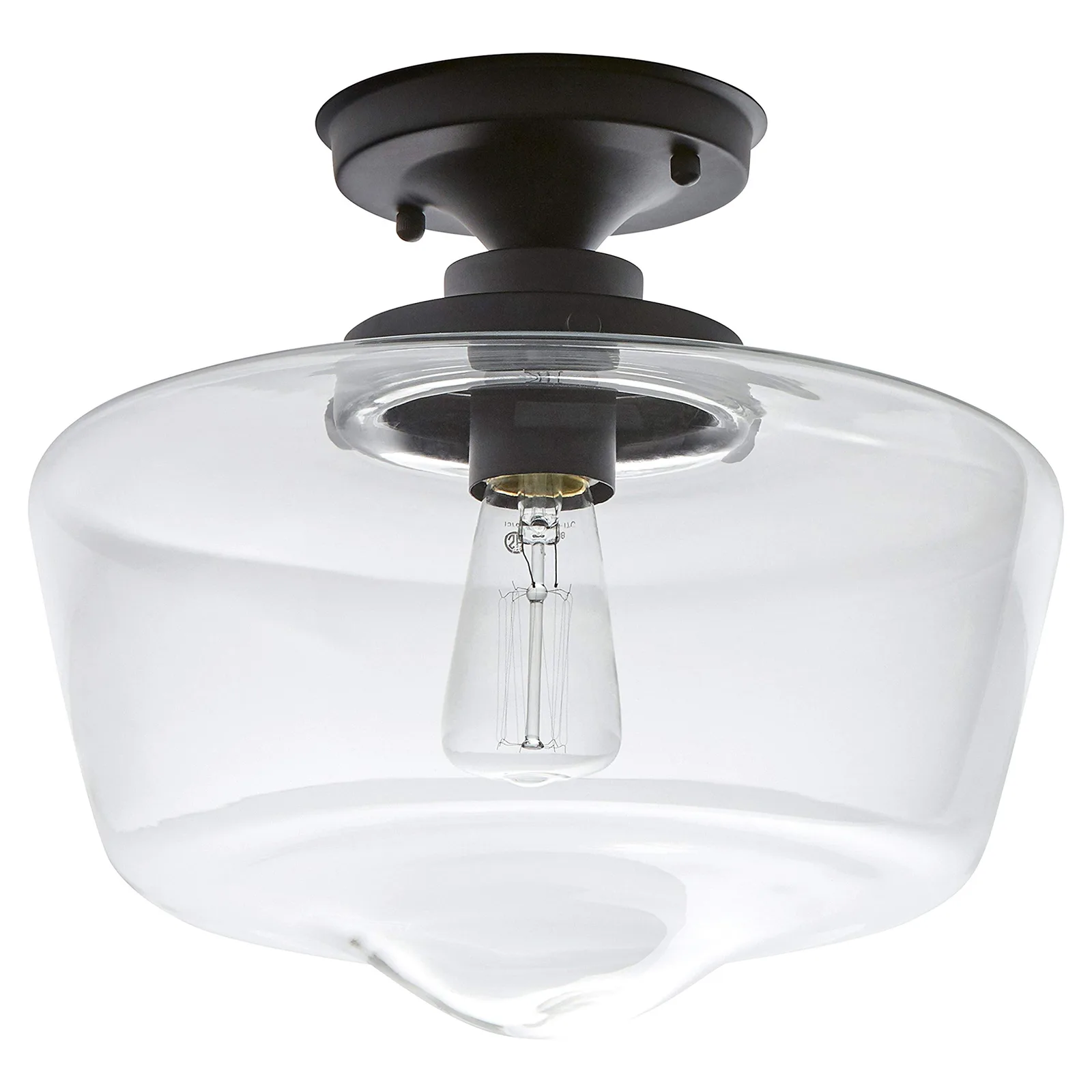
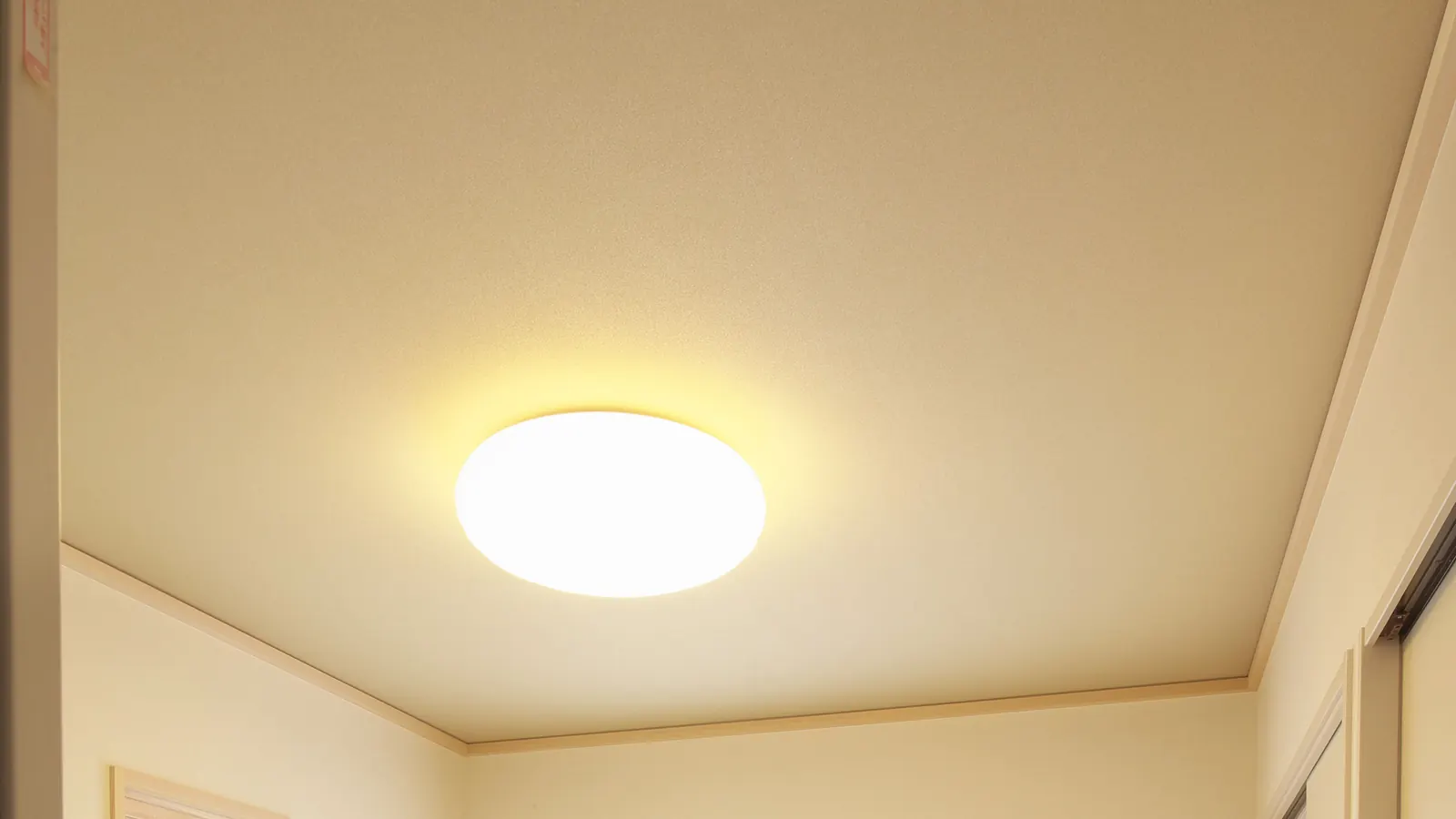
A surface-mounted fixture hangs visibly below the ceiling, so its depth and its spread matter as much as its shape. In a room with a lower ceiling, a deep drum can feel heavy from the doorway. Recessed downlights disappear into the ceiling and leave a clean plane, but the hardware behind each trim has to suit the ceiling and the building, and a product sold as a retrofit still needs to match what is already up there. Have an installer identify the existing housings or boxes before you order.
Use the ceiling layer to fill whatever the other layers leave dark, mostly the routes and the middle of the room.
Under-cabinet lights: where the cooking happens
Under-cabinet lighting puts the source inches from the counter, exactly where upper cabinets cast their shade. Placement changes the result. Mounting fixtures toward the front of the cabinet, set back just far enough that the source stays out of sight from a seated position, puts the light where hands work. Mounted toward the back, the same strip mostly lights the backsplash.
Linear bars, LED tape and individual pucks each spread light differently. Pucks can leave scalloped pools; a continuous run reads as an even wash. “LED” only names the technology; to judge evenness, look at a lit demonstration or the maker’s photos of a lit counter.
A light strip on its own is rarely a finished system. Count every part: light sections, driver or power supply, connectors, control and mounting hardware, and stay within the maker’s permitted run lengths. Plan where the driver will live so it can still be reached for service. For plug-in kits, map the cable to a real outlet; for hardwired systems, use a qualified electrician, and never hide a flexible cord inside a wall to tidy it up.
Glossy stone and polished tile mirror the light source back at you. A diffused lens and a front-of-cabinet position both help; a matte quartz behaves differently from a showroom sample of polished marble.
Pendants over the island
Decide what the island pendants are for. Pure decoration, real task light, or both? An open globe glows in every direction and makes the fixture the focal point. An opaque dome sends light down onto the worktop and keeps the bulb out of the eyes of anyone on a stool.
Height affects sightlines more than anything. Kichler suggests hanging a pendant 30 to 36 inches above the counter so it does not block eye lines. Stand and sit at the island and look across to the living area: a large pendant can sit right where people naturally look to talk.
There is no rule that an island needs three pendants. Count and spacing follow the fixture size and the island, and moving electrical boxes is a job to price before you fall for a layout.
Brightness and color
Shop by lumens, not watts. The FTC’s bulb guide puts the light of a 60-watt incandescent at about 800 lumens, which an LED can deliver at about 9 watts. Its Lighting Facts label also shows light appearance on a warm (more yellow) to cool (more blue) scale.
For fixtures with replaceable bulbs, read both the fixture’s limits and the bulb label. For integrated LEDs, the fixture’s own spec sheet is the only source. Keep the color appearance consistent across the layers: under-cabinet strips a shade cooler than the downlights can make white cabinets look patchy, one run creamy and the next almost blue. If a fixture has selectable color settings, find out whether the switch stays accessible after installation.
Controls for real evenings
Picture the moments: full meal prep, washing up while someone does homework at the table, a glass of water at midnight. Each wants a different combination. Putting everything on one switch forces a choice between operating theater and darkness; giving every puck its own control is overkill. Group the layers so each can be used alone.
For dimming, the bulb or fixture, any driver and the dimmer must all be compatible. Lutron’s MA-PRO compatibility guidance, for example, points shoppers to tested compatible bulbs for that dimmer. A smart switch, plug or remote cannot make a nondimmable product dimmable. Keep a physical switch that works when phones are elsewhere.
Safety and service, in short
- Choose fixtures listed by a recognized testing lab, such as UL or ETL.
- Match the fixture’s location rating to the spot. A fixture marked for dry locations does not belong where it will catch splashes or steam; damp- and wet-rated fixtures exist for exposed positions.
- Stay within any marked bulb wattage.
- Plan how you will clean a shade above the island or near the cooktop, where grease settles.
Ask how service works before you buy integrated fixtures: is the LED module or driver replaceable, or does the whole fixture come down? A long rated life does not answer that question.
The brief to hand an installer
Bring a measured sketch with cabinets, counters, sink, island and existing fixture locations, plus the exact products, the controls you want and the problem you are solving (“dark counter left of the range”). Ask for an assessment of support, electrical compatibility and local requirements. The smallest set of changes that kills the shadows usually beats a ceiling full of new lights.