Kitchen Window Treatments: Choose for Splashes, Privacy and Daily Use
A window above the sink and one beside the breakfast table need different coverings. Start with the location, privacy and how you open the window, then the treatment.
By DecoraMintPublished 5-minute readMore in Blinds & Shades

In this guide
The window above the sink and the window beside the breakfast table may share a wall, but they lead different lives. One gets splashed, steamed and reached for over a faucet with wet hands. The other frames a slow Saturday breakfast and faces the street at night. So the sink window wants something simple to operate and easy to wipe, while the table window can take softer fabric and more personality. A window near the cooktop is a third case, where fabric should be kept well away.
Hunter Douglas’s kitchen selection guide sorts kitchen windows the same way, by how close they sit to food prep, moisture and cooking. That is a better starting point than one pretty photo applied to every window in the room.
Read each window before choosing a style
Stand at each one and notice what happens around it: faucet spray, chopping, condensation on the glass, someone leaning across the counter, the swing of the window handle. A casement that cranks outward or a sash you tilt for cleaning will dictate how deep any hardware can sit.
| Window | What matters most | What to measure or look up |
|---|---|---|
| Above the sink | Reaching the control, wiping off splashes | Faucet projection, distance across the counter, care label |
| Beside prep counters | Cleaning off grease and marks | The exact fabric or slat care instructions |
| By the breakfast table | Privacy and soft light while seated | How much the material reveals with lights on inside |
| Near the range | Keeping combustibles clear | Appliance instructions and professional advice when unclear |
| Any opening window | The sash still works | Handle swing, bracket depth, stack height when raised |
How each type behaves in a kitchen
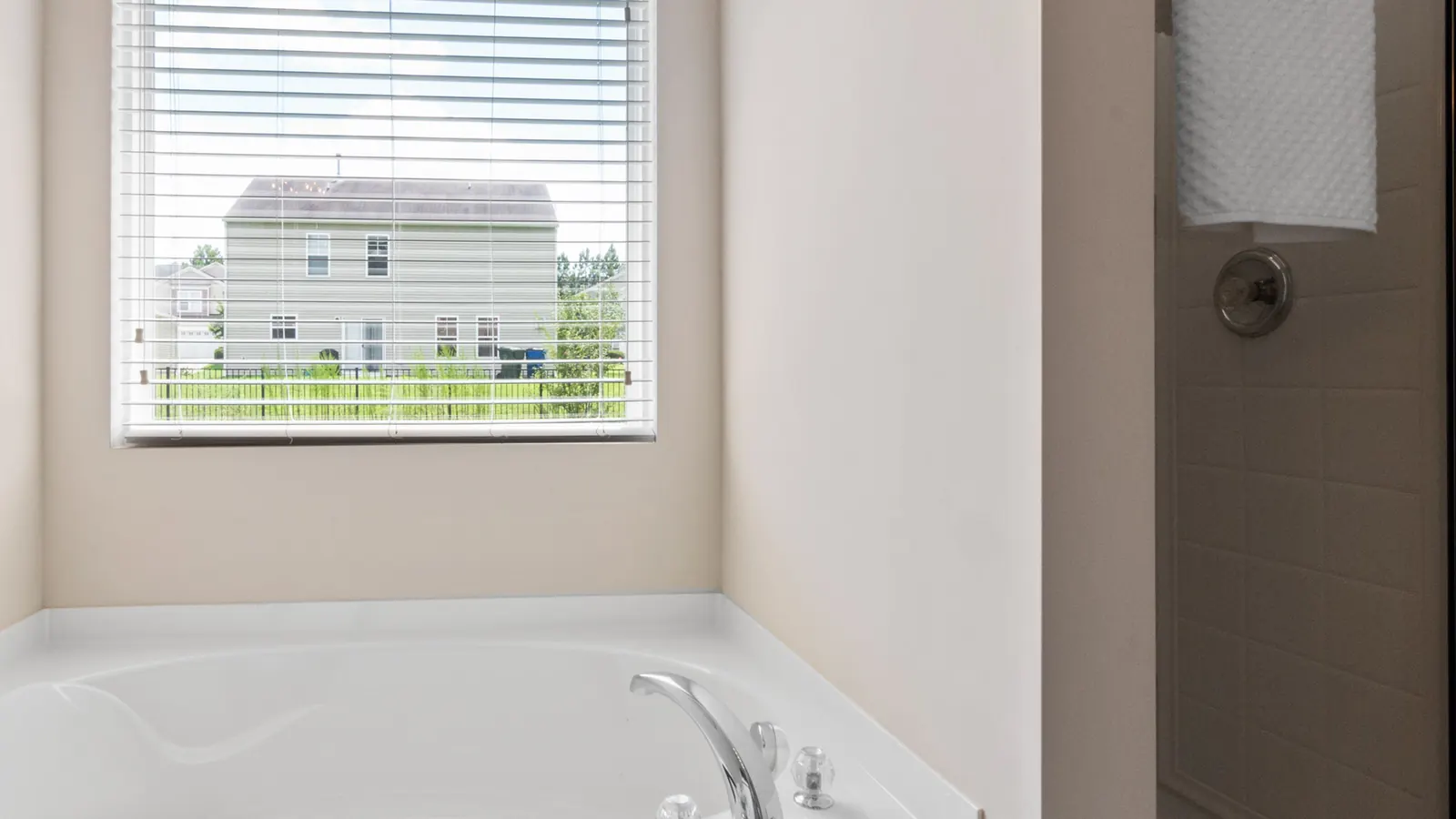
Horizontal blinds let you tilt the slats for daylight without giving the neighbors a view of the dishes, which makes them a natural fit over a sink. The cost is maintenance: dozens of slats collect the fine film that cooking leaves behind. A wood, faux wood or metal label does not tell you whether soaking or degreasers are allowed, so read the care instructions for that exact blind. Note how much glass the raised stack still covers; a slim headrail can hide a deep bundle of slats.
Roller shades give a calm, flat surface that suits a pared-back kitchen. Wipe-clean finishes exist, but a fabric that looks wipeable may not be approved for household sprays. Mind the opacity too. Once the kitchen lights are on and it is dark outside, solar and sheer fabrics offer no screening and many light-filtering fabrics reveal more than you expect, so a table window that needs night privacy wants a denser weave or a second layer.
Roman shades bring folds, pattern and warmth, and they look best at a breakfast nook or any window clear of splashes. Find out whether the fabric comes off for cleaning; a washable sample does not make the assembled shade machine washable. On a short window, the folded stack can eat a surprising share of the glass.
Interior shutters look crisp and architectural, but each panel swings open into the room and the louvers need clearance to tilt. Over a crowded counter or a tall faucet, that swing can be awkward. Ask the supplier how the frame affects reaching the window lock and how the finish handles regular moisture.
Cafe curtains cover the lower half and leave the top open to sky, which is a charming answer when the sightline you need to block is low. Check it from outside and from the seated position, including any neighbor’s upstairs window. Hem them to clear the sill and the worktop, so the fabric is not dragging through splashes, and check the washing instructions for lining and trim as well as the main fabric.
Keep fabric away from the stove
The U.S. Fire Administration advises keeping combustible items, including curtains, away from stovetops. Labels like “short,” “washable” or “kitchen curtain” describe laundering and length, not a safe position beside a burner, and a breeze from an open window can push a loose panel far past where it hangs at rest. There is no universal safe distance to quote here. If a window sits close to the cooktop, follow the appliance’s installation instructions, choose a treatment that stays put, and get a qualified installer’s view when the separation feels tight.
Controls you can reach over a sink
Try the reach before you order. You should be able to raise and lower the covering standing flat-footed, without leaning over a full sink or a hot pan. Many products let you choose which side the control sits on, which can make all the difference beside a tall faucet.
Cords are the one safety point that matters for every family with young children, living there or visiting. The CPSC recommends cordless window coverings in homes with young children, and accessible inner cords count too, not only dangling pulls.
Motorized shades solve the reach problem neatly. In return you take on battery charging or a power cable, plus a remote that needs a home somewhere other than the wet counter.
Measuring around a working kitchen
Pick the exact product and mount first, then follow that seller’s measuring instructions to the letter. Some makers take deductions for inside mounts themselves; if you subtract again, the shade arrives too narrow. Record depth as well as width and height, including the tile edge, trim and the window handle. An outside mount covers more but projects toward the cabinetry beside it.
Then picture three positions: fully down, halfway and fully up. In each, open the window and the nearest cabinet door.
Cleaning, honestly
Kitchen grime is different from bedroom dust. Before buying, find the care instructions and separate routine dusting, spot cleaning and deep cleaning. Hardware and motors often must stay dry. A strong degreaser that works on the backsplash can strip a fabric coating or cloud a slat finish. And if deep cleaning means taking the shade down, think about how you will reach the brackets over a deep counter; a treatment that is washable in theory but a struggle to unclip may be the wrong one for a splash zone.
Color against cabinets and counters
A kitchen is already full of hard surfaces, hardware and appliances, so the window rarely needs to add another loud pattern. Pick one relationship and commit: a shade that melts into the wall color, or a fabric that picks up the blue of the dining chairs. Hold color swatches against the actual cabinet door and countertop, since a bright white shade can make warm white cabinets look dingy.
The best choice for each window is the one you can work with wet hands, clean without dread and still enjoy looking at over breakfast. More shade comparisons live in our window treatments category.