Living Room Curtains: Plan for Glare, Privacy and Furniture
Hang curtains higher and wider than the window, then make them work from the sofa: no glare on the TV, privacy after dark and panels that clear the furniture.
By DecoraMintPublished 6-minute readMore in Blinds & Shades
In this guide
At four in the afternoon the sun slides across the TV, and the sofa has become a place to squint. At nine at night the lamps are on and the window has turned into a black mirror for anyone on the sidewalk. Living room curtains earn their keep in those two moments, and the ones that look best are usually hung higher and wider than the window itself.
Mount the rod well above the frame and extend it past the glass on each side, and the open panels rest against the wall. The window reads taller, more glass stays clear and the fabric has somewhere to sit. Everything else, from color to linen, comes after that.
Start from the sofa
Sit where you usually sit, at the hours you use the room, and look at each window in turn. One may throw a reflection across the screen; another may only ever give pleasant light. Note when glare bothers you, whether you want the view, and whether privacy matters by day, by night or both. If the room doubles as an office, add the computer screen.
The list often shows that a single window needs a hardworking treatment. The others can be lighter, as long as they look related.
Glare by day, privacy by night
Sheers soften daylight beautifully, and after dark they offer no privacy once the lamps are on. Anywhere privacy matters, plan a layer that closes. The Shade Store’s room planning notes separate living rooms, which usually want adjustable light, from media rooms, which want full darkness.
| What you want | A good arrangement |
|---|---|
| Soft daylight and an open feel | Sheers or a light-filtering layer |
| Privacy after dark | A lined curtain or a shade that closes fully |
| Occasional movie nights | A room-darkening layer that closes, ideally wider than the window |
| Glare from one window only | A separate shade or curtain on that window, adjustable from your seat |
| Decoration | Stationary side panels, with a shade doing the daily work |
Blackout fabric darkens a room only as well as it is hung. Light still comes over the rod and around the sides unless the curtains extend past the frame.
Hang it high, wide and full
These are common decorating rules of thumb, so adjust them to your walls and ceiling.
- Height: many decorators mount the rod several inches above the frame, sometimes partway toward the ceiling. Curtains that start high make the window and the room feel taller.
- Width: extend the rod past the frame so open panels stack on the wall. Heavy lined panels bunch into a wider stack than a sheer, so allow them more wall; the maker’s stack width, where given, is the best guide.
- Fullness: for curtains that close, the combined flat width of the panels is typically around twice the width they cover, more for a soft gathered look. Listings differ on whether width is per panel or per pair, flat or finished.
- Length: panels that just touch the floor look tailored and stay clear of feet and vacuums. A deliberate puddle looks romantic and collects dust in a busy room.
With almost no wall beside a window, a curtain that draws to one side works, or let an inside-mounted shade do the daily job while the curtains stay mostly open.
Plan around the furniture
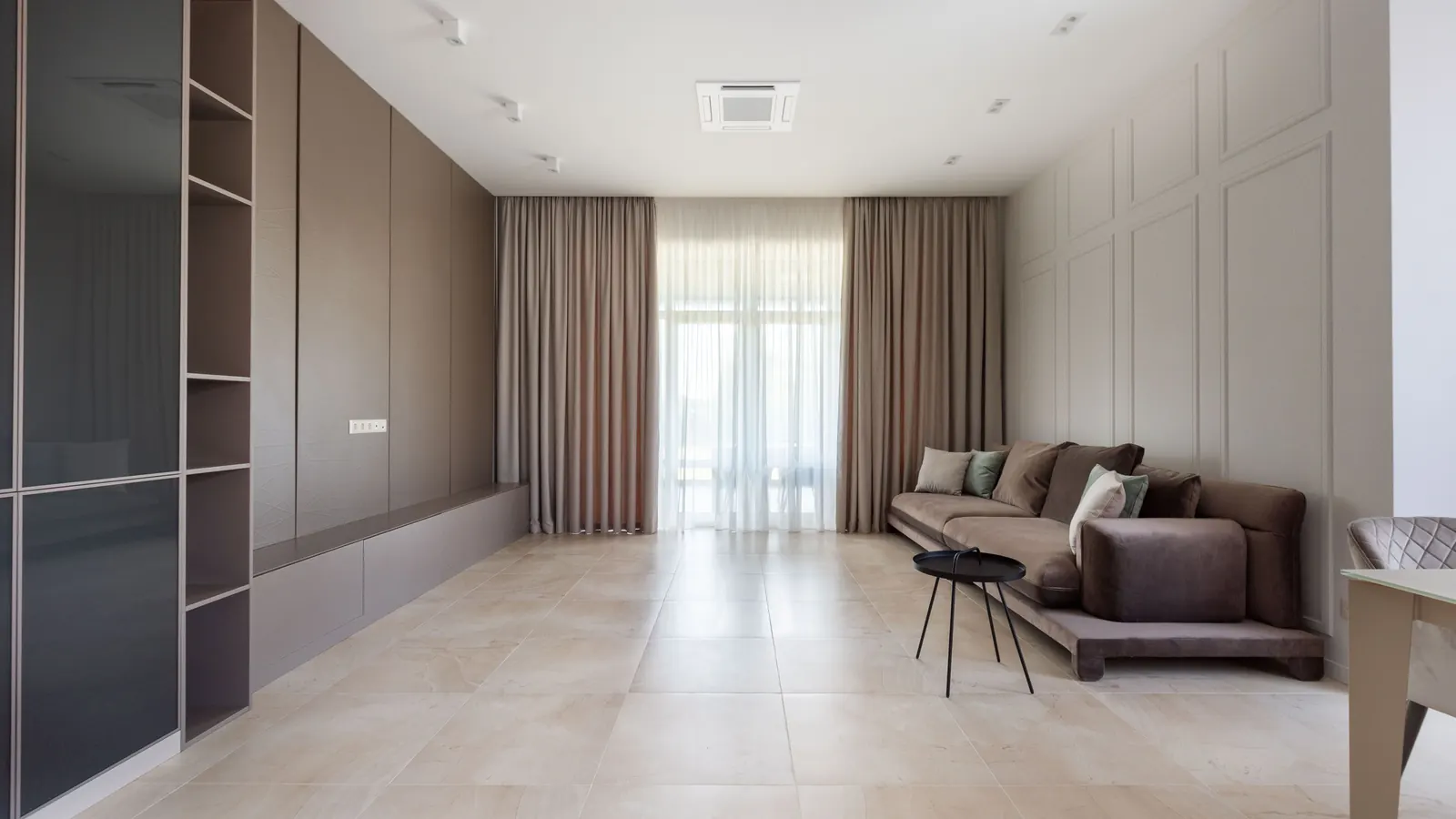
A sofa pushed against a window can block curtains from closing and get its back rubbed with every pull. Leave enough room for the fabric to hang and travel, and test it with recliners extended. If the sofa has to sit under the window, curtains can still hang behind it as long as the fabric falls straight, moves freely and no heater sits beneath it. Otherwise a shade you can reach from the side is easier to live with. Lamps and side tables in the curtain’s path can be knocked over by a moving panel.
Keep curtains well away from radiators, heaters and fireplaces, and follow each appliance’s clearance instructions. A window right above a heater suits a shorter curtain or a shade.
Layers
Sheers plus a closing curtain give you a daytime setting and an evening one. Use a double rod or track deep enough for the layers to slide past each other.
A shade plus curtains suits a room where a sofa makes reaching a full curtain awkward: the shade handles daily adjustment, the curtains frame the window and add privacy at night. Keep the shade’s controls within reach.
One good curtain is often enough when it closes properly and suits the light. It looks cleaner and costs less than the second layer in a styled photo.
Linen and the way light moves through it
Linen-look, linen blend and 100% linen are three different fabrics, so read the fiber content. Pottery Barn’s Belgian Flax Linen Unlined Curtain, for example, is described as 100% Belgian flax and unlined. Unlined linen glows when the sun is behind it and lets most of the light through.
On a window whose job is to soften light, with a shade behind it for privacy, unlined linen is lovely: the weave shows, the folds look relaxed and the room feels airy. In front of a bright window that faces the TV, the same fabric wants a lining or a second layer. Linen also creases and relaxes into folds, so steam it if you want it crisp.
Color across several windows
Repeat one thing across every window, whether the fabric, the color, the hardware finish or the rod height, and they read as a set even if one also gets a shade for glare. Windows that look identical often differ enough to matter, so measure each. In a bay, map the angles before buying hardware, since a straight rod cannot carry panels around corners.
Put large samples next to the sofa, rug and wall, and look in daylight and again under your evening lamps, because a neutral can turn noticeably warmer or cooler. From there you have three routes:
- Let the window recede with a color close to the walls or one that echoes the sofa. This suits a room where a rug or artwork already carries the pattern.
- Make the curtains the pattern. Look at a print across a full panel in folds, and set it beside any patterned upholstery.
- Repeat one accent drawn from a cushion or painting. A full-length panel is a lot of that color, so a border or small print can be enough.
Black or charcoal curtains make a strong frame against a pale wall and echo a dark TV, window frames or table legs. Open, they are narrow dark stripes; closed, they become a large dark wall behind the sofa. If closed black feels heavy, charcoal is softer, or use dark side panels that stay open with a lighter shade behind. A black face fabric blocks light only if it is lined for it.
Hardware, safety and care
Choose a rod or track rated for the weight of the finished curtains, lining and rings included, and fix it into the wall as its maker specifies. If young children are in the house, CPSC recommends cordless window coverings, which covers any shade behind the curtains.
Dry-clean-only lined curtains are a different commitment from machine-washable panels, so read the care label first. If it allows washing, wash before hemming, since some fabrics shrink. Our living-room guides pick up with rugs, lamps and the rest of the room.
If you have to decide quickly, hang the rod high and wide, choose a lined curtain that closes for the window facing the TV, and keep the other windows light.