Long Curtains: Compare Extra-Long Panels Before You Order
A 118-inch panel can solve a tall window, but length alone will not give you blackout, width or the right heading. Read the four specifications separately before ordering.
By DecoraMintPublished 4-minute readMore in Blinds & Shades

In this guide
Length changes how a room feels more than almost any other curtain decision. A panel that stops at the sill makes the window a picture hung on the wall; one that falls to the floor turns the whole wall into a column of fabric and pulls the eye up, and the same cloth in a tall or low room will do quite different work. Before comparing products, settle three things: where the hem ends, how tall the room is, and what the listing actually sells.
Where the hem lands
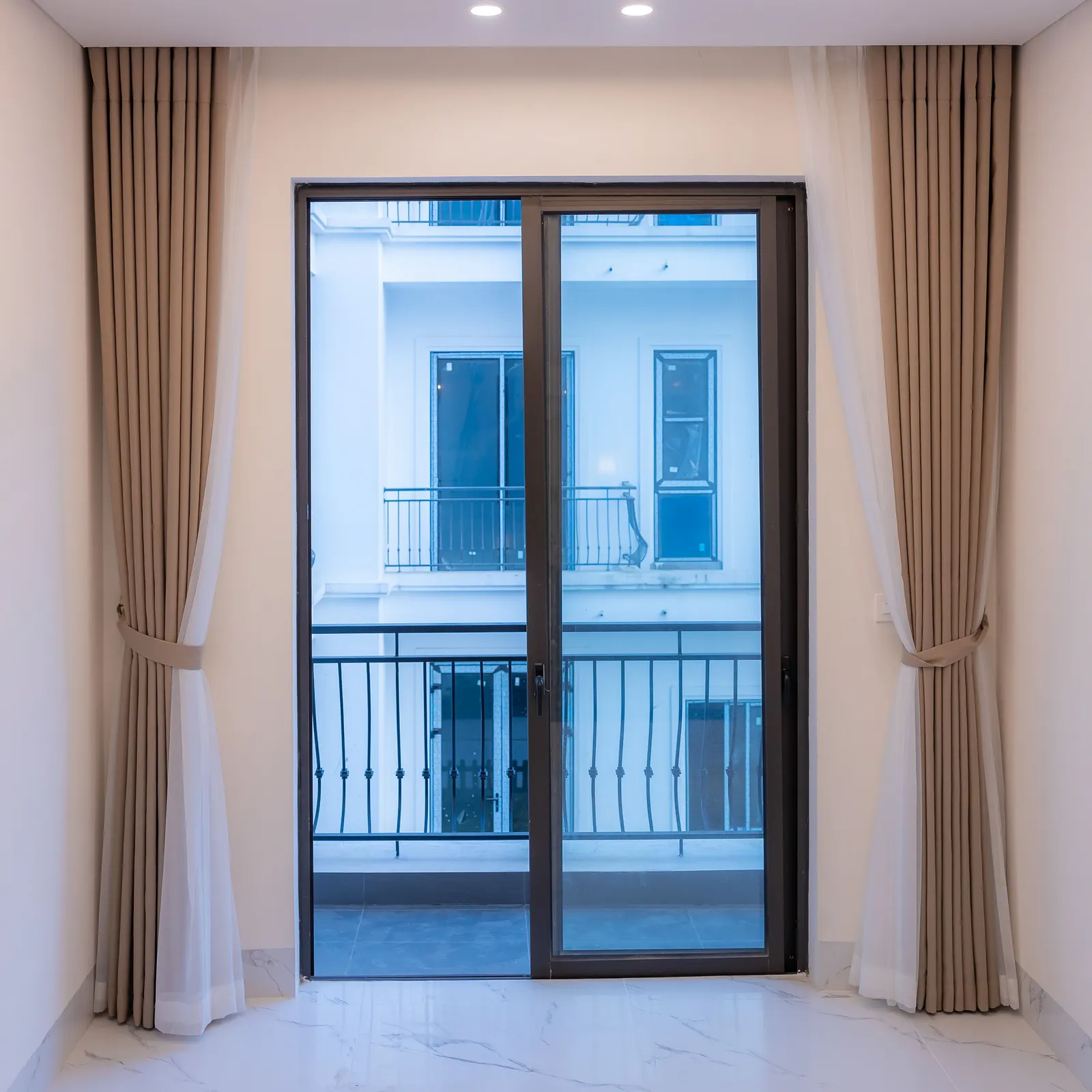
Four floor relationships turn up in most curtain advice, and sources differ on the exact gaps, so judge by eye. A float leaves a thin gap above the floorboards and keeps the hem clean. A kiss just grazes the floor. A break rests a little fabric on the floor, with a slight bend at the bottom like a trouser leg. A puddle spreads more fabric on the floor, which is the most formal and the hardest to live with. The Shade Store’s bay-window guide offers a shorter version, with curtains that hover above the floor, puddle, or fall somewhere between.
We would choose a float or a kiss for curtains that open twice a day, and reserve a break or puddle for a formal room where the curtains seldom move. Pooled fabric catches vacuum cleaners, pet hair and bare feet, and an uneven floor means one end touches before the other. Fabric on the floor looks soft in a photograph and means daily tidying in a house with pets or an exterior door nearby.
Low ceilings
In a low room, floor-length curtains do a lot of the work, in our view. Keeping the fabric unbroken from high up to the floor draws the eye vertically, so a plain, narrow-striped or tone-on-tone panel makes the walls feel taller, while a sill-length hem or a heavy contrasting valance cuts the wall in two. Choose a fabric that falls in straight lines and avoid a heavy pattern across the upper third. In a tall room the opposite risk applies: very long panels in a deep color can feel like a curtain wall, so lighter or sheer fabric keeps the proportion graceful.
Remember that a bigger drop also makes a bigger field of color. A white sample should be compared with wall paint and trim, and a saturated fabric judged across the whole wall instead of as a swatch.
Read the four specifications
Once you know the finished length you want, compare listings by what they state.
| Listing detail | Why it changes the order |
|---|---|
| Length | Whether the fabric can reach the intended endpoint |
| Width per panel | How much fabric you actually receive |
| Heading | Attachment, and where the finished top sits |
| Pieces per package | How many packages you need |
An extra-wide curtain is not necessarily an extra-long one. IKEA’s STOCKHOLM 2025 sheer is listed at 118 inches wide and 98 inches long, sold as one piece, so read the dimension order before comparing it with a 118-inch-long product.
IKEA’s RITVA white curtains with heading tape are listed as a pair of 57-by-118-inch cotton panels with tie-backs, a ready-made option to investigate for a tall window. That is a manufacturer listing, not a tested recommendation, and availability varies by location. White fabric and generous length supply no darkness: for a bedroom, require a stated blackout construction or plan a separate layer. Ask for a swatch before buying several pairs.
Ready-made, hemmed or custom
Ready-made works when a listed size reaches your drop and the heading suits your hardware. Hemming shortens a curtain and cannot add missing fabric, so look at the return rules before you cut or use an iron-on tape. Custom is the answer when length, width, lining or heading cannot be met from stock. Ask whether the quote includes lining, weights, hooks, pattern matching and installation, and compare suppliers on the same finished specification. Washable fabric can change size in the wash, so follow the seller’s sequence for treating and hemming and allow for its stated shrinkage.
Joining two short panels with a seam is a sewing project that shows as a line and may interrupt a pattern, a poor stand-in for a correctly sized panel.
Weight and layers
Tall lined panels are heavy. The rod or track must suit the load and span, including a second layer if you hang one, and inaccessible hooks high on a tall window make mistakes costly to fix. For two layers, use independent travel so a sheer can stay closed while the privacy curtain opens, and decide where both will gather when open.