Modern Coffee Tables: Choose a Form That Gives the Room Direction
An open base lightens a heavy seating group; a sculptural form gives a sparse room a center. Choose the relationship you want with the sofa, then the material and storage.
By DecoraMintPublished 3-minute readMore in Tables
In this guide
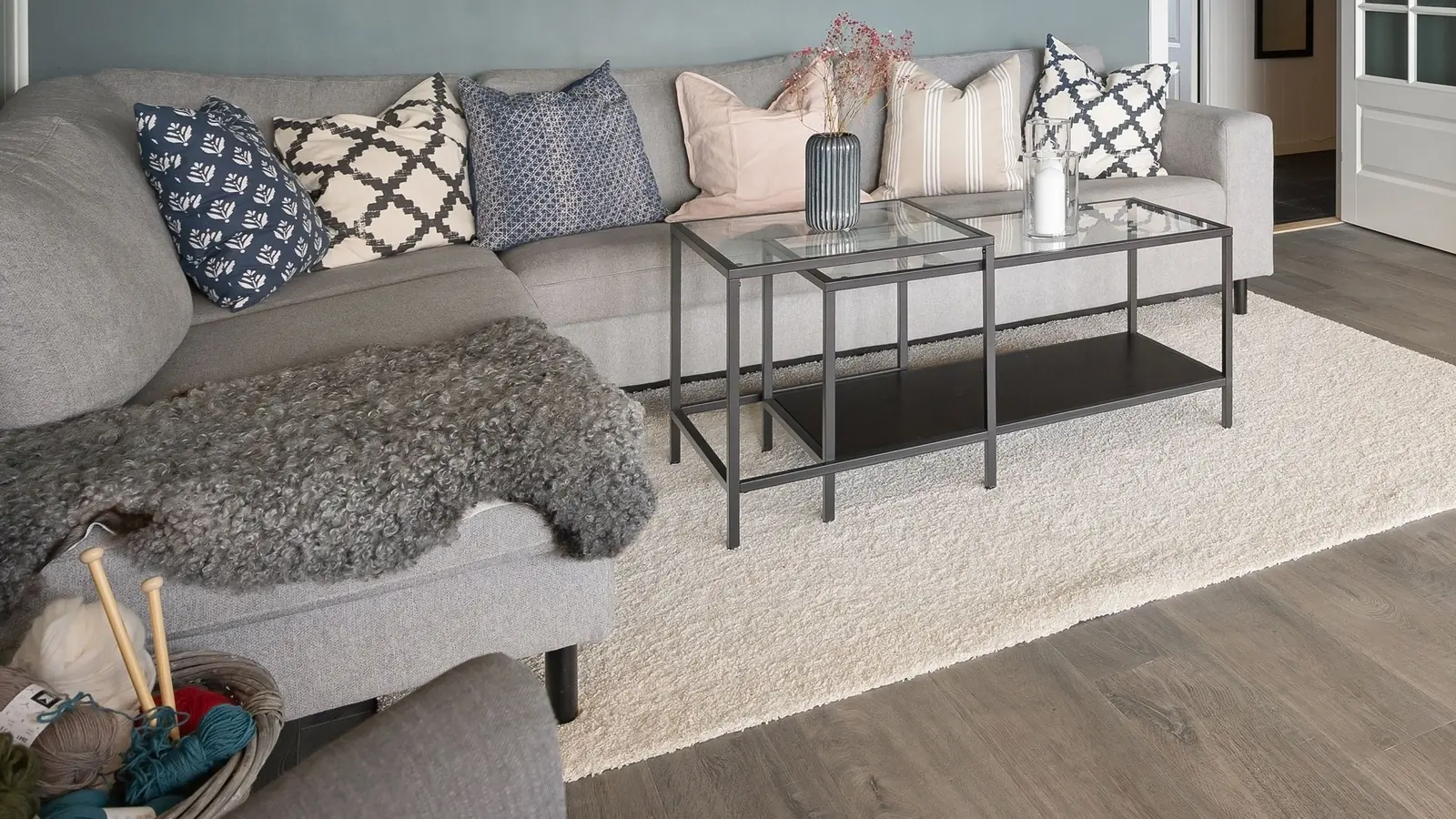
A heavy, deep sofa and a heavy, deep coffee table in front of it make a room feel like a furniture showroom stacked front to back. Swap in a table on slim legs with a visible stretch of floor beneath, or one with a soft oval outline against the sofa’s square arms, and the same seating group loosens up. Giving the seating a counterpoint is the job a modern coffee table does best.
Start with the pieces that will stay, then decide what you want the table to add. A place for cups, a display surface and hidden storage are different jobs. Once you know the role, size and walkway checks confirm a candidate; the form comes first.
Silhouettes and what they do to a room
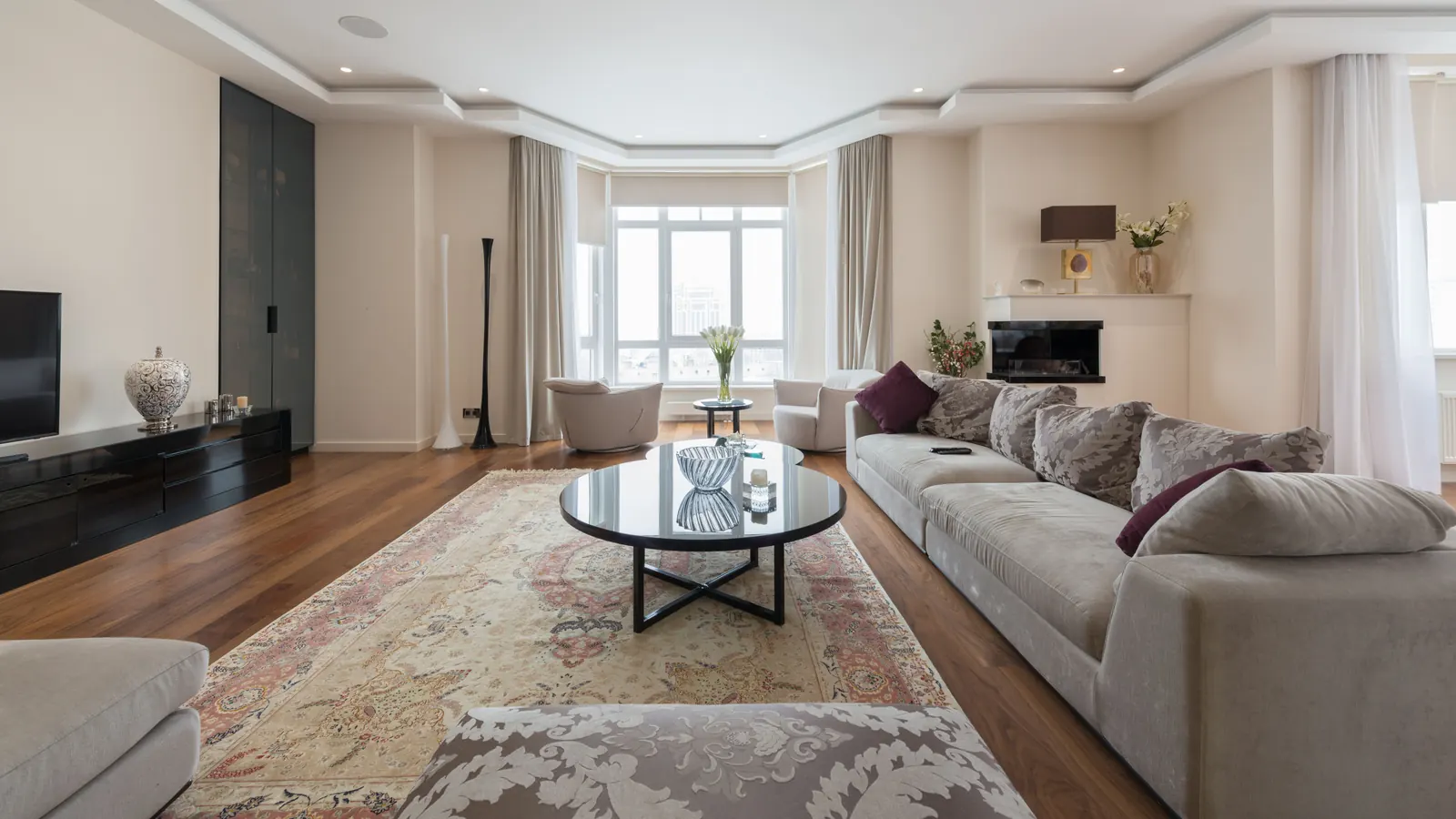
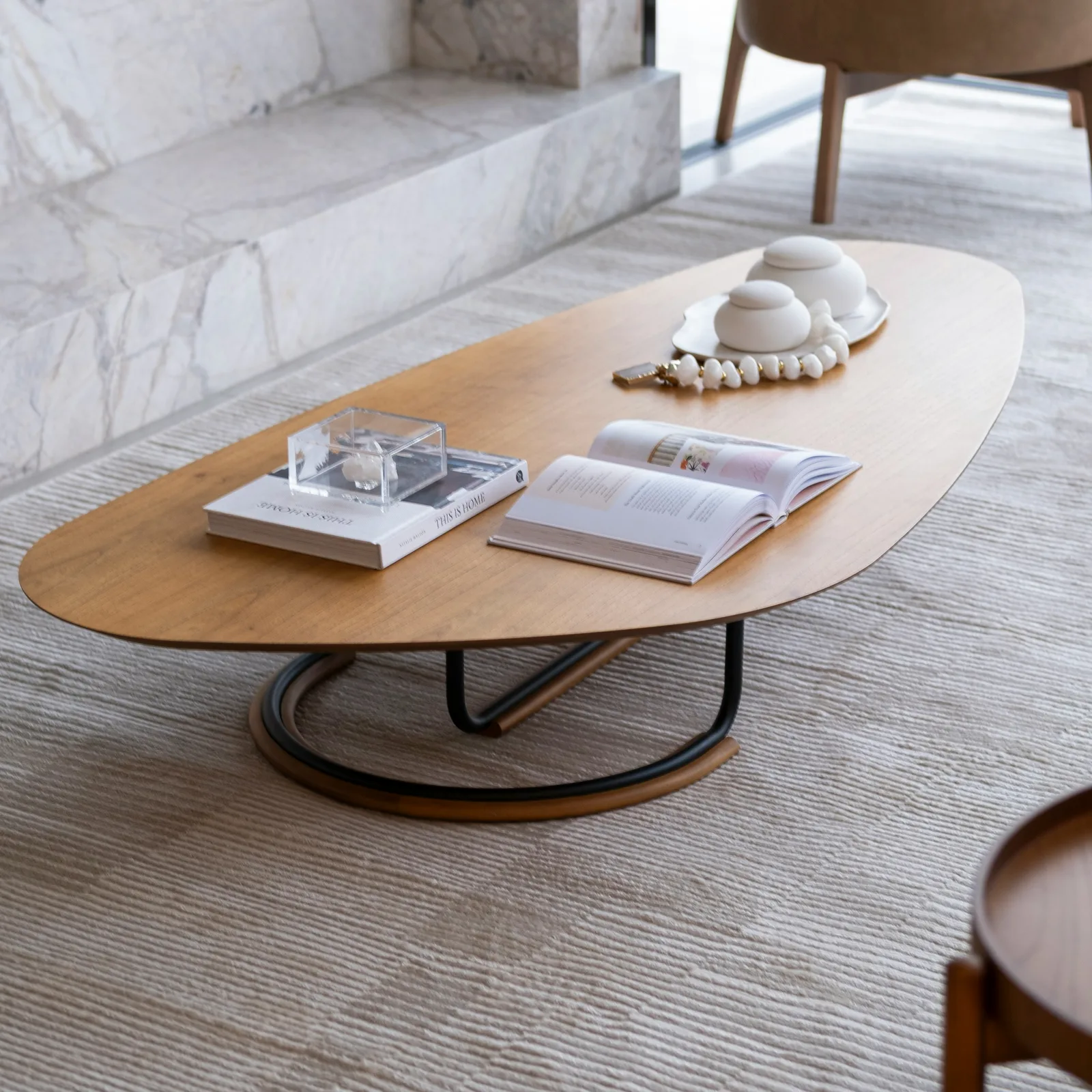
Oval and rounded-rectangle tops add a curve among squared seating, and they spare shins on a tight route. An open-legged frame keeps the floor visible beneath, which lightens a substantial sofa and shows off a rug. A block or pedestal reads as a deliberate sculptural anchor: dramatic in a sparse room, heavy in a small one. Two smaller tables can be pulled apart for guests and pushed together for everyday, if each has a parking place.
None of these shapes always makes a room look bigger. Judge the whole piece beside your sofa, with the rug under it, in the room’s own light.
Think about the surface too. A dark walnut top with a visible grain brings warmth against a pale linen sofa and holds its own beside a bold rug. Glass and polished metal reflect the window and look cool and airy, but they show every ring and print. A matte stone or stone-look top feels weighty and quiet, and it looks best when the room’s other materials are soft, like boucle, wool or flax.
One documented modern design
IKEA’s STOCKHOLM coffee table 70239710 has an oval walnut-veneer top, solid-walnut legs and a lower shelf. The US listing gives a 70 7/8-by-23 1/4-inch footprint, so it is long and slim, a good example of a modern table that adds length without depth. The listing identifies materials by component and gives cleaning directions, a reminder that a walnut-looking top does not mean every part is solid walnut. We have not tested it.
Pairing the table with the sofa
With a large rectangular sofa, try a curved table outline before repeating another large rectangle, so each piece gets a clear role. If the sofa already curves, a restrained open frame supplies a different line without competing.
With a patterned sofa, decide whether the table is a quiet surface or a second feature. Strong grain, veined stone or a patterned tray adds activity; hold material samples beside the upholstery in room light, not on a screen.
For a sectional, mark the whole opening between the seats. A long, elegant table can leave a corner seat out of reach, and a pair of smaller surfaces may serve better if the route between them stays open.
Materials and surfaces
Veneer, solid wood, glass, stone and finished metal each appear in many constructions, so look at the exact surface, edges and how the base joins the top. Do not assume heat, scratch or stain resistance from a material’s reputation. A strong pattern changes once books and a tray sit on it, and a photo of an empty table is not the composition you will live with. Follow the care instructions for that specific product, including the cleaners it permits.
Storage built into the design
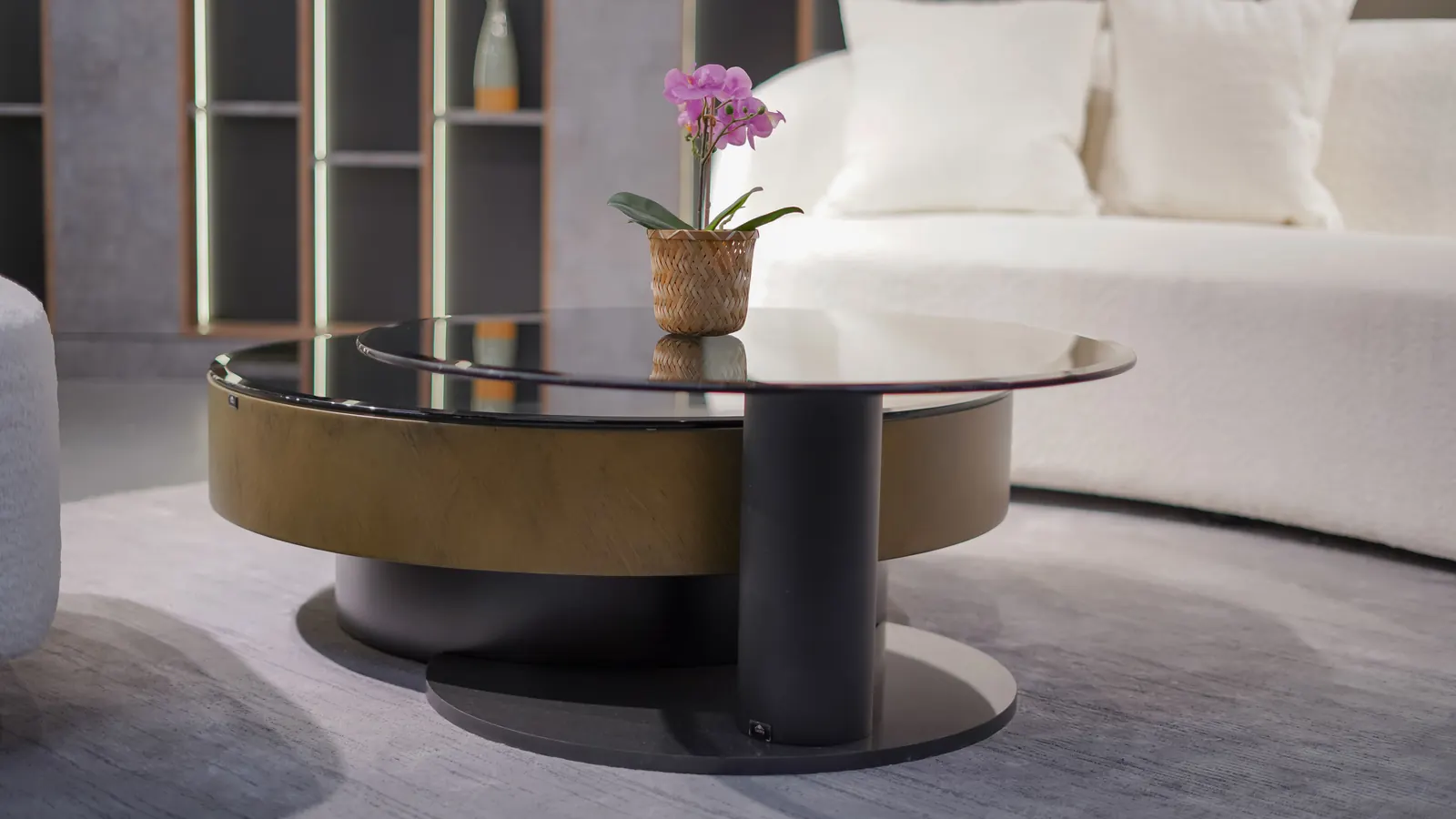
An open shelf keeps the top clear but shows its contents. A drawer hides objects, though it needs an opening direction and clearance. A lift-top or moving design is a mechanism, not a style, so run through its full movement beside the sofa and note its operating limits.
Final fit
Mark the outline with removable tape. Sit in each normal seat, reach for an imaginary cup and walk the everyday route, including reclining seats or an ottoman. Confirm the delivery route and assembly needs before you commit. Our living room hub covers related furniture.
Wood furniture nearby need not match the table; a shared undertone, edge shape or finish makes the difference look intended.