Round Coffee Tables: Choose a Diameter, Base and Living Room Layout
A round table softens a room full of rectangles, but its diameter still takes space both ways. Test the size in the room, check reach from each seat and look at the base.
By DecoraMintPublished 4-minute readMore in Tables
In this guide
Round earns its place beside a chaise sectional and in a tight room where people keep walking past. Castlery’s coffee table guide calls round tables the “no sharp corners” choice, easier to walk around in tight layouts and visually lighter in a small living room, and recommends a round or oval top for a chaise sectional because people keep passing the chaise edge. It keeps the gap between sofa edge and table at 16 to 18 inches. The catch is size: a 36-inch top occupies a 36 by 36 inch square of floor, and the curved edge hides only the corners, not the depth.
Draw the circle on the floor
Cut a paper circle at the table’s diameter, or lay it out with floor-safe tape, between the sofa and whatever faces it. Sit in your usual seats and put a cup on it. Does anyone lean? Can someone cross behind the table while another person sits with feet down? Does a recliner open? Castlery’s two-thirds rule sets a coffee table at about two-thirds of the sofa’s length, with an 84-inch sofa taking a 56-inch table, but it is written for rectangles. A circle has the same measure in both directions, so size it from the depth of the opening and the walkway instead, then choose the largest diameter that leaves a comfortable path. Castlery puts traffic flow ahead of table size in tight layouts and suggests walking your usual route to see whether you clip a corner.
We would pick the largest diameter that clears the walkway, and if that looks small beside a long sofa, add a side table at one end for a second landing surface instead of enlarging the top.
Round with each kind of seating
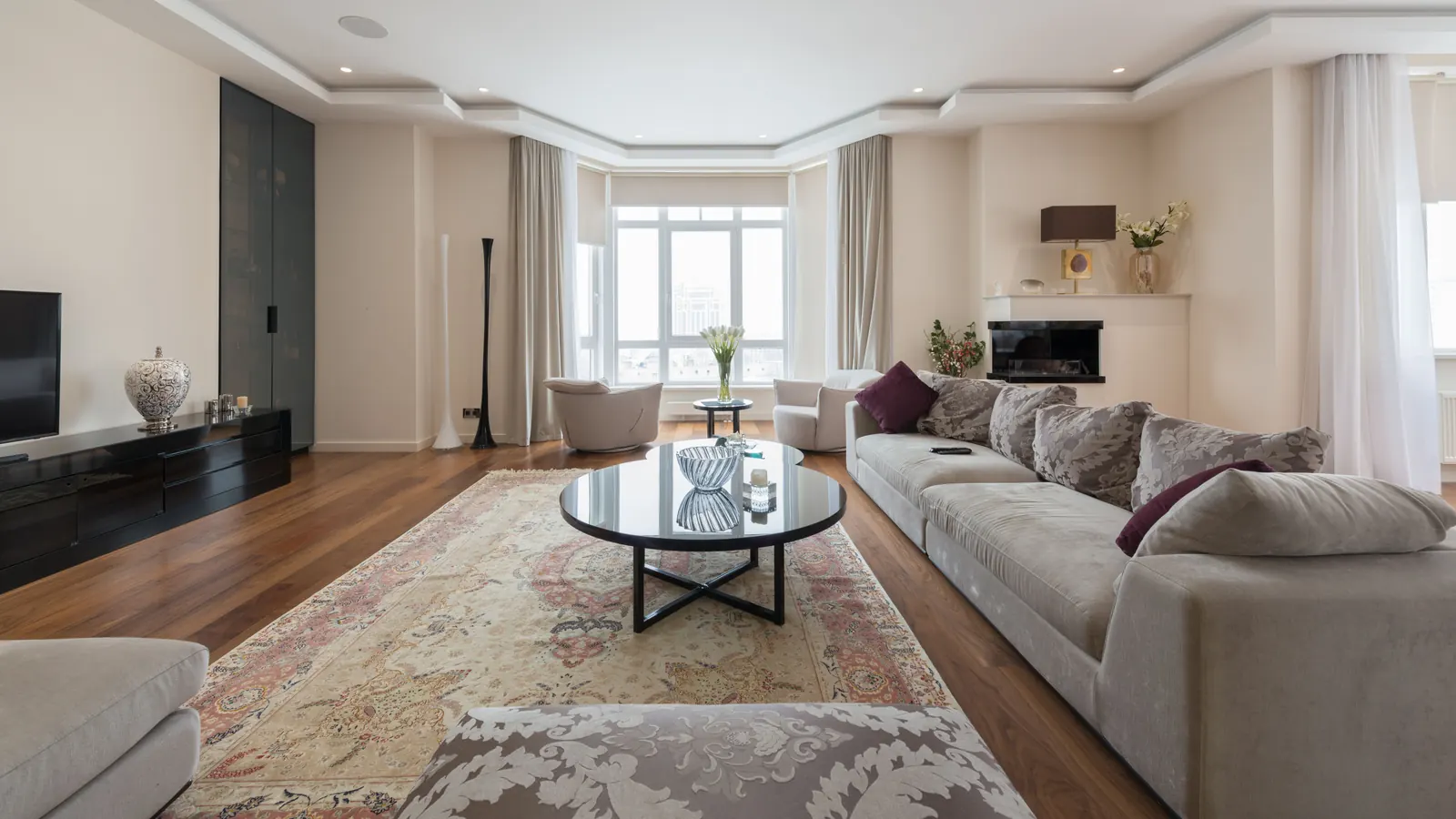
A sofa with two chairs gives a round table several equal edges, so the chairs can stay close enough to reach it. A compact sectional leaves an open corner that a round top fills without a point projecting into the opening. Move the table slightly toward the chaise, since a table centered on the long side can be awkwardly far from the person on the chaise, and giving up exact symmetry costs very little. For a large sectional Castlery prefers a square table, which gives everyone equal access, and for tight spaces with a sectional it suggests nesting tables. Beside a long sofa, a round table becomes a focal point but may leave the far ends without a surface; add small side tables there. Between two facing sofas it keeps the middle open, so check both aisles. In a narrow room, an oval or a pair of small tables uses the depth better.
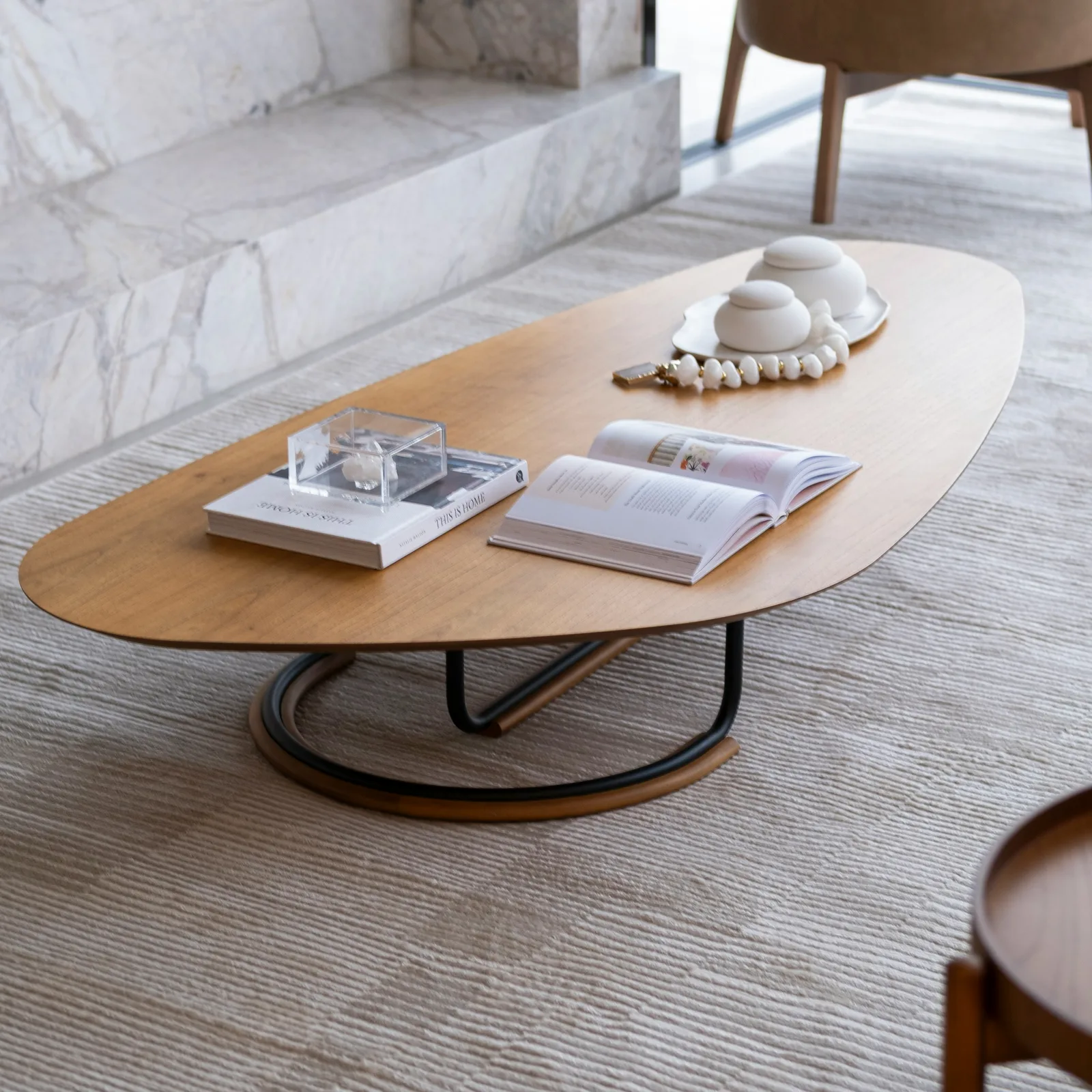
In a living room made of right angles, a round walnut table on a flat-weave rug in front of a linen sofa feels like the one soft shape on the floor. The rug’s rectangle gives it a frame, the pale upholstery shows the wood grain, and a curved chair back repeats the shape across the room. In a darker room, a round top in white stone or pale ash lifts the seating area, and a low drum table in black ash grounds a leggy sofa.
Check the base
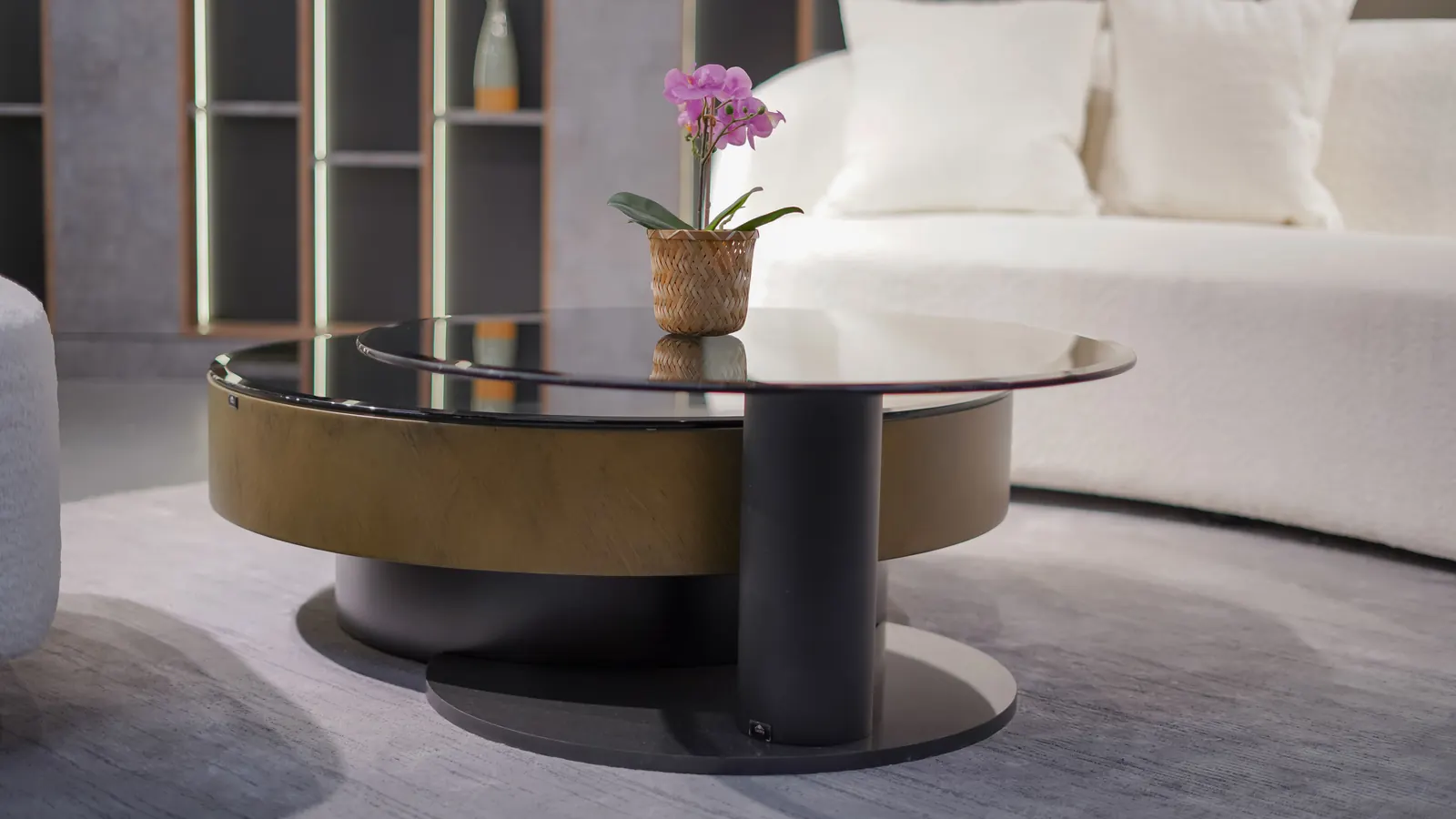
Pedestal bases leave more of the edge free for feet, though a wide plate can reach farther than the photos suggest, so read the base diameter. Cross bases and splayed legs look light but can sit where feet naturally land; compare a side-view drawing with a top view. A drum has a solid, sculptural presence and leaves less room to tuck feet under, so it suits a roomy group. An open frame with a lower shelf gives a place for books or a basket; measure the opening for what you plan to store, and expect the shelf to collect things you need to move when cleaning.
Respect the maker’s weight limit. A coffee table is not a step or a seat unless it is built to be one, and a rounded edge does not make a table child-safe: material, stability and household behavior still count. Glass tops need a clear statement of the glass type, edge finish and what supports the top.
Surface and care
Wood and veneer need a finish that tolerates the way you use the table; stone may need sealing, and stone-look surfaces differ from stone. Engineered tops have their own cleaner and heat limits. An ottoman used as a table needs a tray that sits flat and a top stable enough for drinks. Use the maker’s care sheet before deciding a table can handle meals, crafts or a busy family room.
Nesting pairs
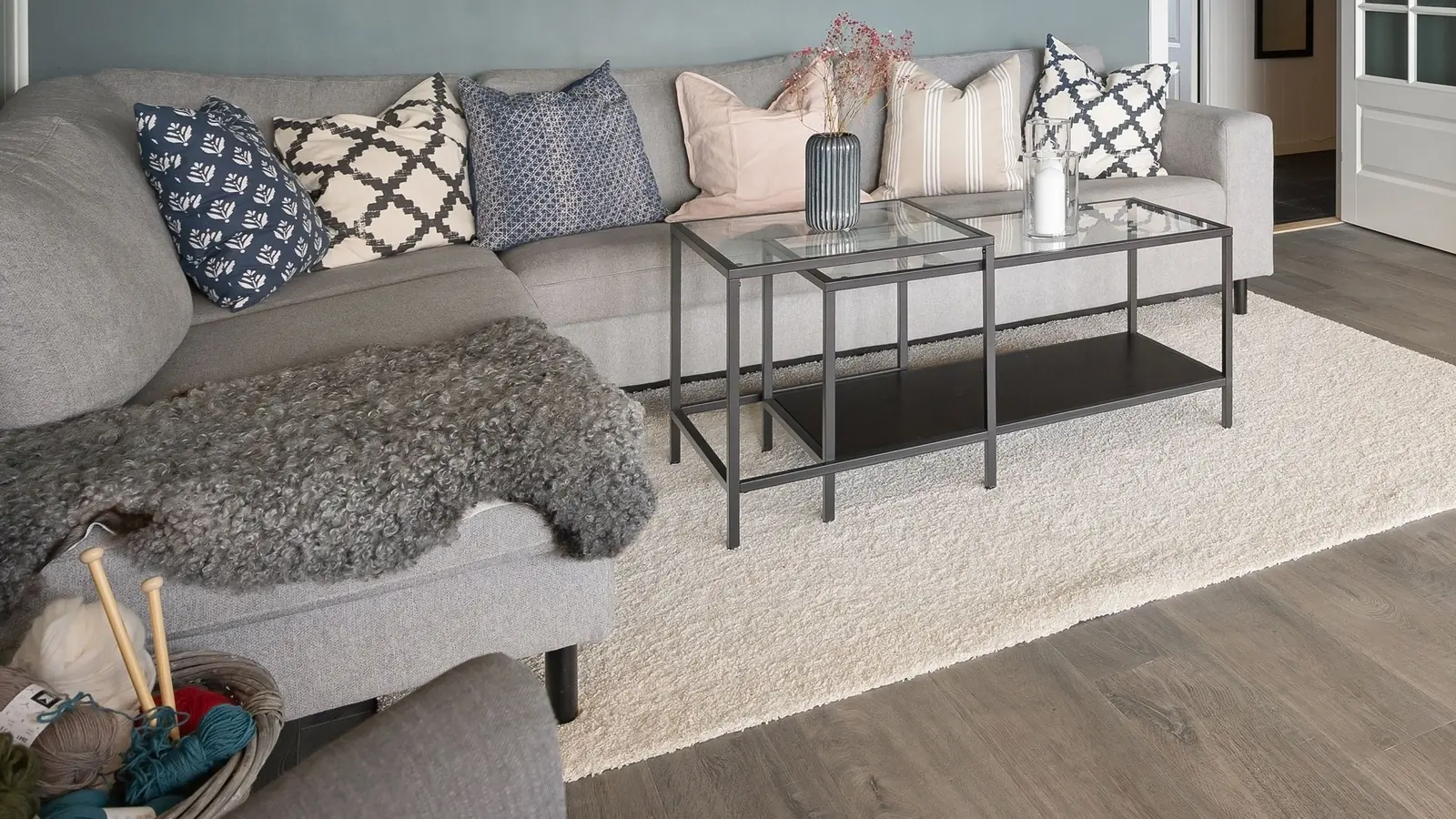
Two round tables can sit as one center arrangement and separate when guests arrive. Compare the footprint nested and spread, because the smaller table may not slide fully under the larger and the overlap can cost surface. A step between the tops makes a cup or book awkward if it spans both, so use each top as its own landing. If you move the small one often, check its weight and how it can be gripped safely, since lifting a detachable top may not lift the base.
Styling the top
Leave room for the things you use daily. Low books and a small object are often enough; a tall vase blocks sight lines between people and toward the screen, so look at it from a seat. A large rectangular tray visually erases a round surface, while a small tray or a simple group looks better, and drinks should never end up on the edge. Repeat a detail from elsewhere, such as a wood tone or dark metal, instead of matching a full set. A round top beside a rectangular rug is a good combination, judged with the sofa and chairs in place.