Coffee Table Size Guide: How to Choose the Right Fit and Shape
A coffee table should be within reach of every seat and still leave a way through the room. Worked size examples, height from the actual seat, and shapes that suit your sofa.
By DecoraMintPublished 4-minute readMore in Tables
In this guide
For a sofa 84 inches long, the usual starting point is a coffee table about 56 inches long, set 14 to 18 inches from the seat edge, with a top a little below the seat cushion. Those numbers come from Castlery’s coffee-table dimension guide, which suggests a length near two-thirds of the sofa, a gap of roughly 14 to 18 inches, and a height about 2 to 4 inches under the cushion. They are common furnishing guidance, not safety or accessibility standards, so treat them as a first draft to test in your room.
Length: two-thirds, then adjust
Two-thirds of the sofa’s length gives a table that sits in the middle of the sofa without crowding either end, which leaves a landing space for a side table or a floor lamp.
| Sofa length | Two-thirds |
|---|---|
| 60 inches | 40 inches |
| 84 inches | 56 inches |
| 96 inches | 64 inches |
Round the result down, not up, if a doorway, chair or cabinet crowds one end. For a sectional, ignore the outer dimension and measure the opening the table must sit inside, counting a chaise and any recliner in its extended position.
The best test costs nothing. Cut paper or lay painter’s tape to the table’s footprint, including any base that sticks out past the top, and live with it for an evening. Sit in each seat, set down a mug, stand up, and walk around it.
Distance and height
The 14 to 18 inch gap lets you stretch your legs and still reach your drink. In a narrow room the walkway matters more than the gap, so measure the route people actually take. Reach, leg length and sofa depth vary, which is why the tape outline beats any number.
On height, Castlery suggests a surface a little under the seat cushion, not above it. Measure to the top of the cushion, not the arm. A lower table feels relaxed and keeps sight lines open across the room; a higher one is easier for setting down plates but can feel like a wall in front of a low sofa. Coffee tables are not desks or dining tables, so if you plan to eat or work at one, sit at the proposed height before you buy. A lift-top model changes its footprint when raised, so measure it open.
Shape and the seating opening
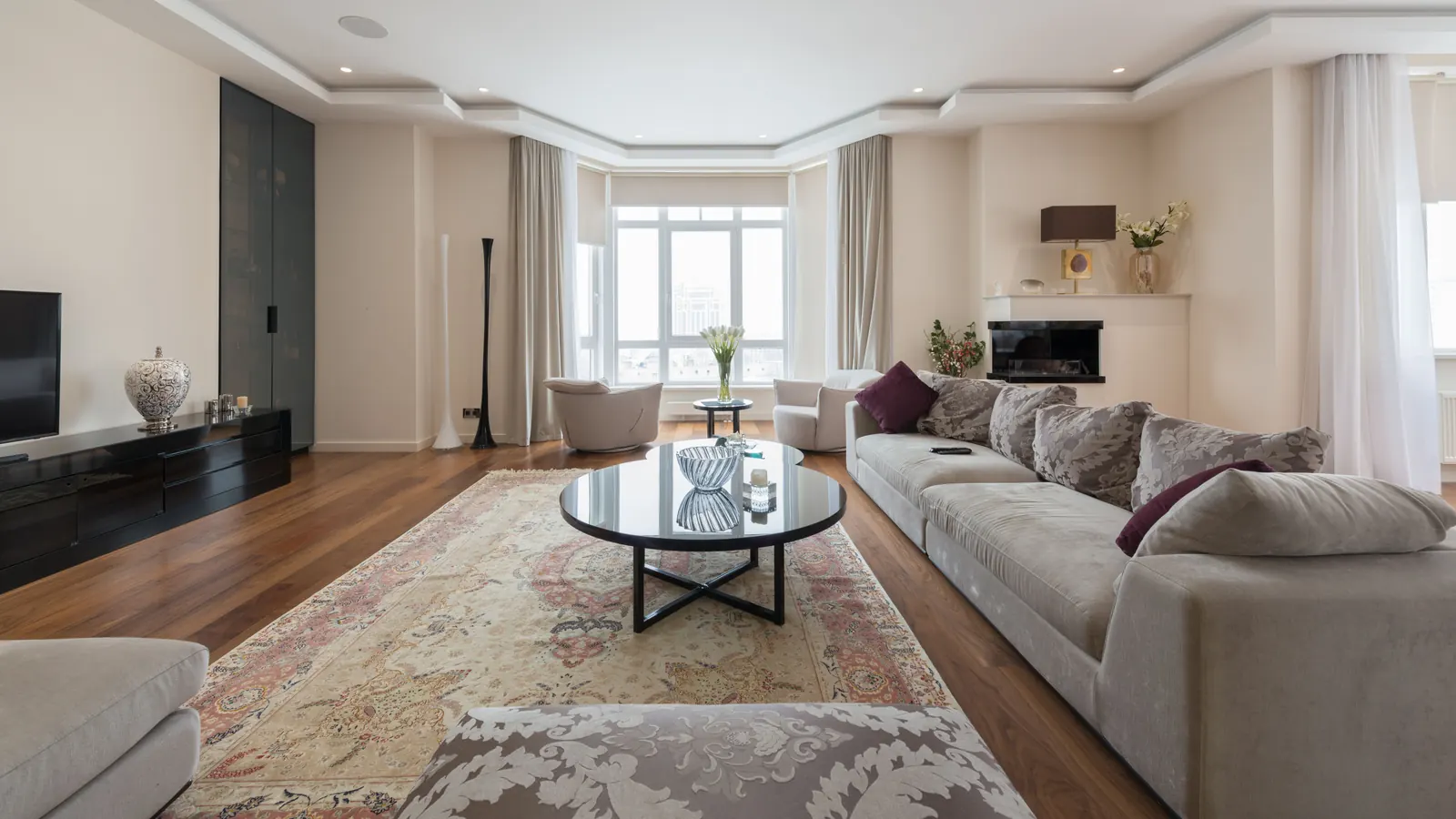
A rectangle gives a long, reachable edge along a straight sofa, but check its depth against the walking route. Round and oval tables soften the corners in a room full of right angles, though a round top uses its full diameter in every direction, so a large one can fill a narrow opening more than you expect. Square suits a roughly square sectional opening; test the far corner and the diagonal route around it.
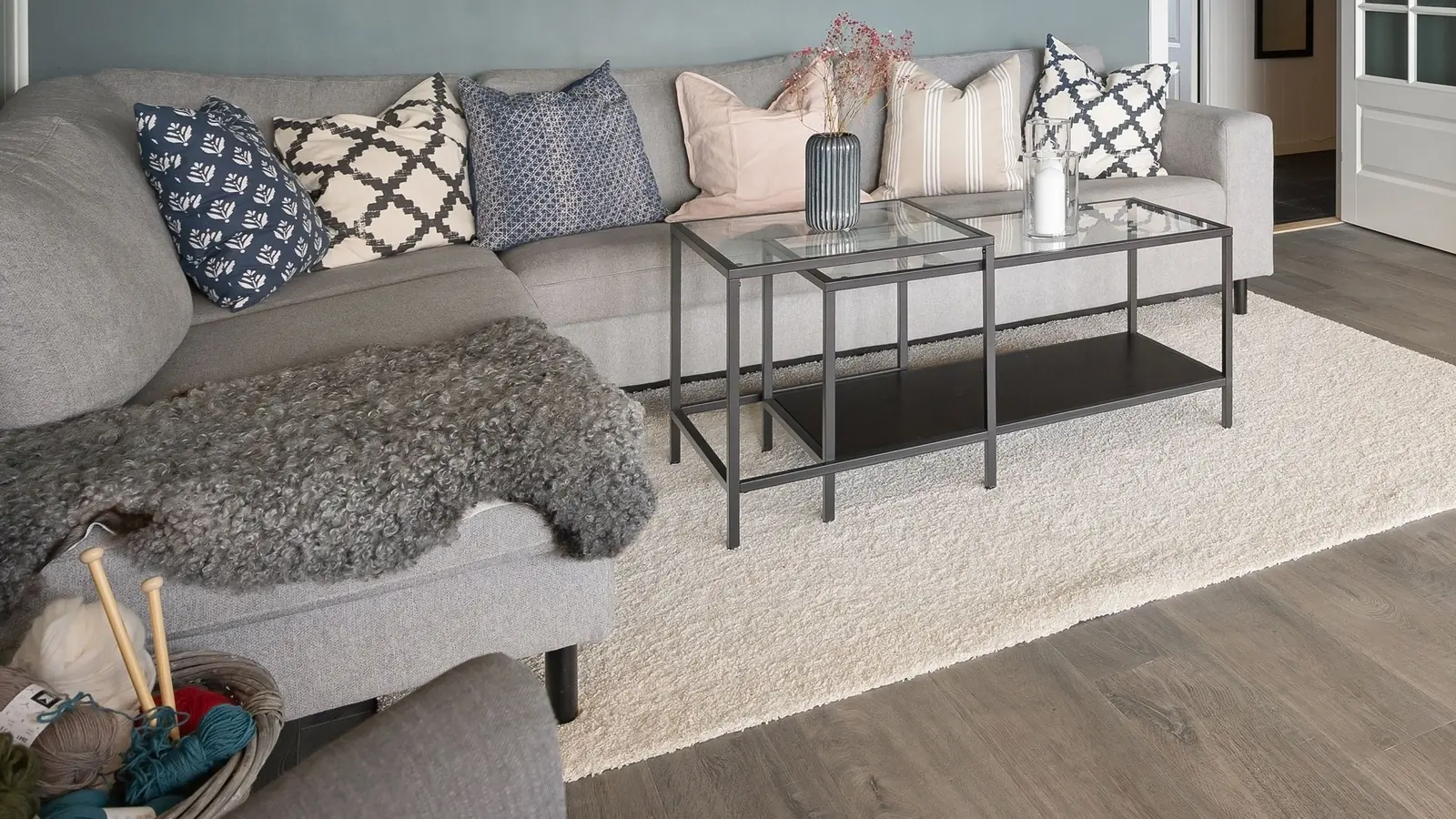
Nesting tables are the flexible answer: draw them both tucked and spread. Two separate small tables serve scattered seats better than one central table, at the cost of more legs to walk around.
A 36 by 18 inch rectangle and a 30-inch round have similar surface (648 and about 707 square inches), but the round table sticks 12 inches further into the room. In a tight seating opening, depth is usually the limit, not area.
What the base and surface do to the look
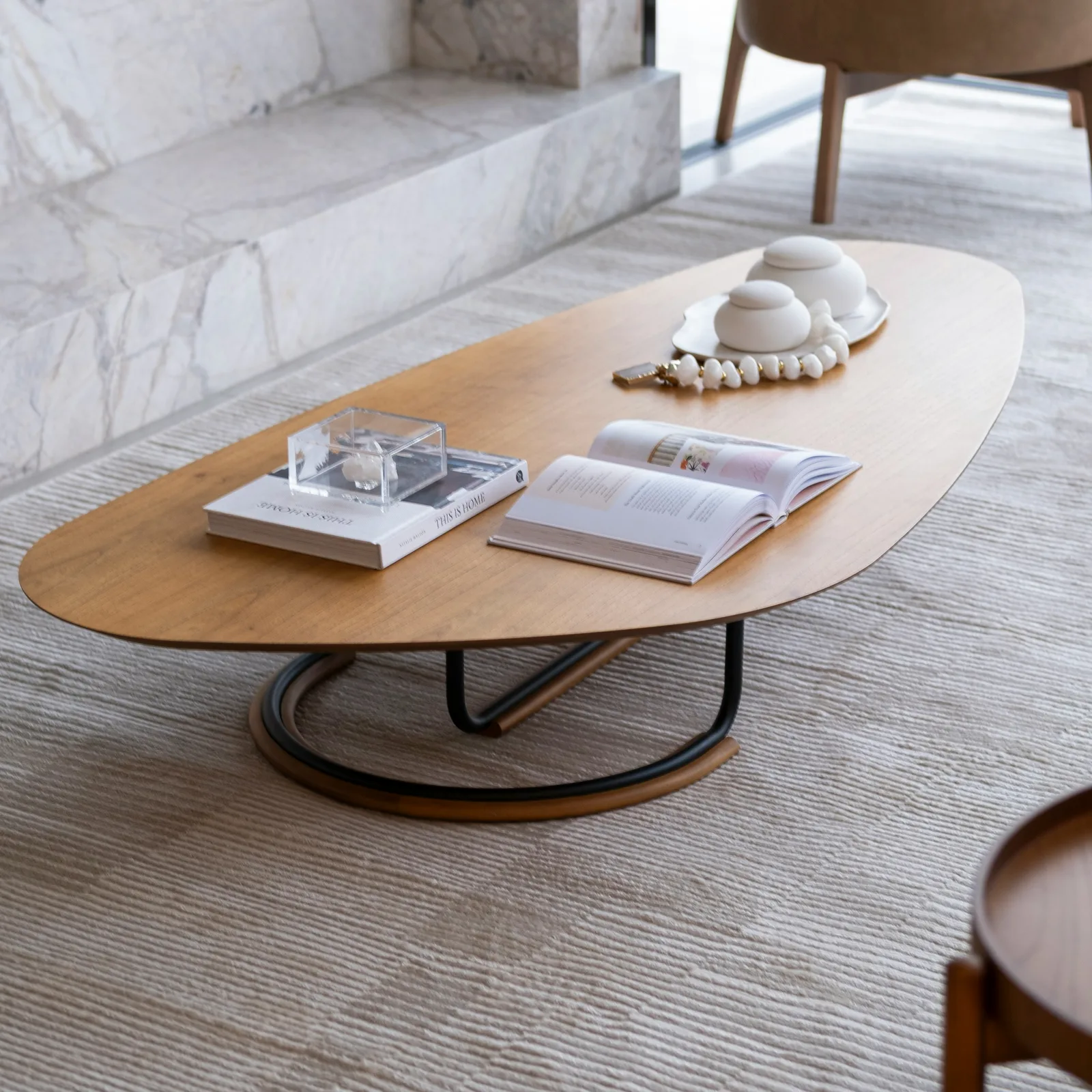
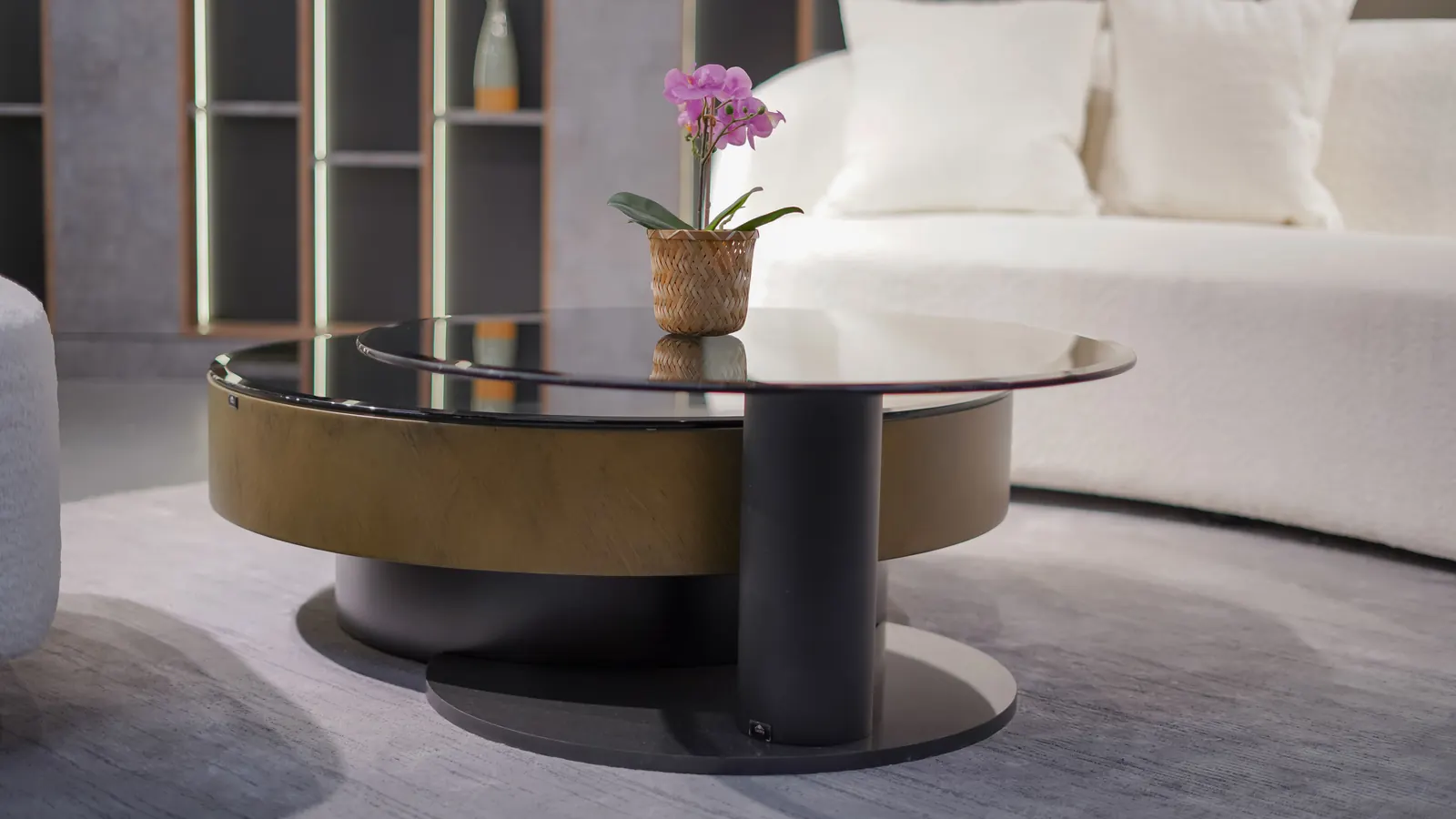
A low block base anchors the group with weight; an open frame lets the rug show; a glass top keeps the middle visually light, as with the nested glass-top pair pictured here; a sculptural base becomes the focal point and brings projections to dust around. Pair a strong table with a quiet sofa and rug, and an open or glass table with a busy rug.
Read materials by component. IKEA’s STOCKHOLM coffee table looks like one piece of walnut, yet it combines a walnut-veneered top with solid-walnut legs. Use coasters, and a tray for grouping objects, but a tray’s underside can mark a finish too. Keep a clear landing area in the middle of the table; a permanent centerpiece shrinks the usable surface.
If the table will be moved for exercise or guests, check its weight and handling instructions, and decide where it will go. A compact table that blocks a doorway while stored has not saved space. Do not use any coffee table as a step or seat unless it is designed for that. For a lift-top or extending model, ask for its open dimensions and keep hands clear of the mechanism while it moves. With children in the house, look at edge shape and stability, and read the care instructions before choosing stone, glass or any finish that needs upkeep.
Getting it through the door
Measure doorways, stairs and turns on the delivery route as well as the final spot; Room & Board’s delivery guidance lists them as part of the check. Confirm whether the table arrives assembled and what is actually in the order, since a styled photo may show a set while the listing sells one piece. Repeat the tape test with the final dimensions, and see our rug-size guide for how the table sits on the rug. The tables category covers related pieces.