Nursery Dresser: Choose Storage, Placement and a Compatible Changing Setup
A dresser can store clothes, and some are designed to support a changing top. Decide which job you need, measure with the drawers open and plan the anchoring at assembly.
By DecoraMintPublished 5-minute readMore in Kids' Rooms
In this guide
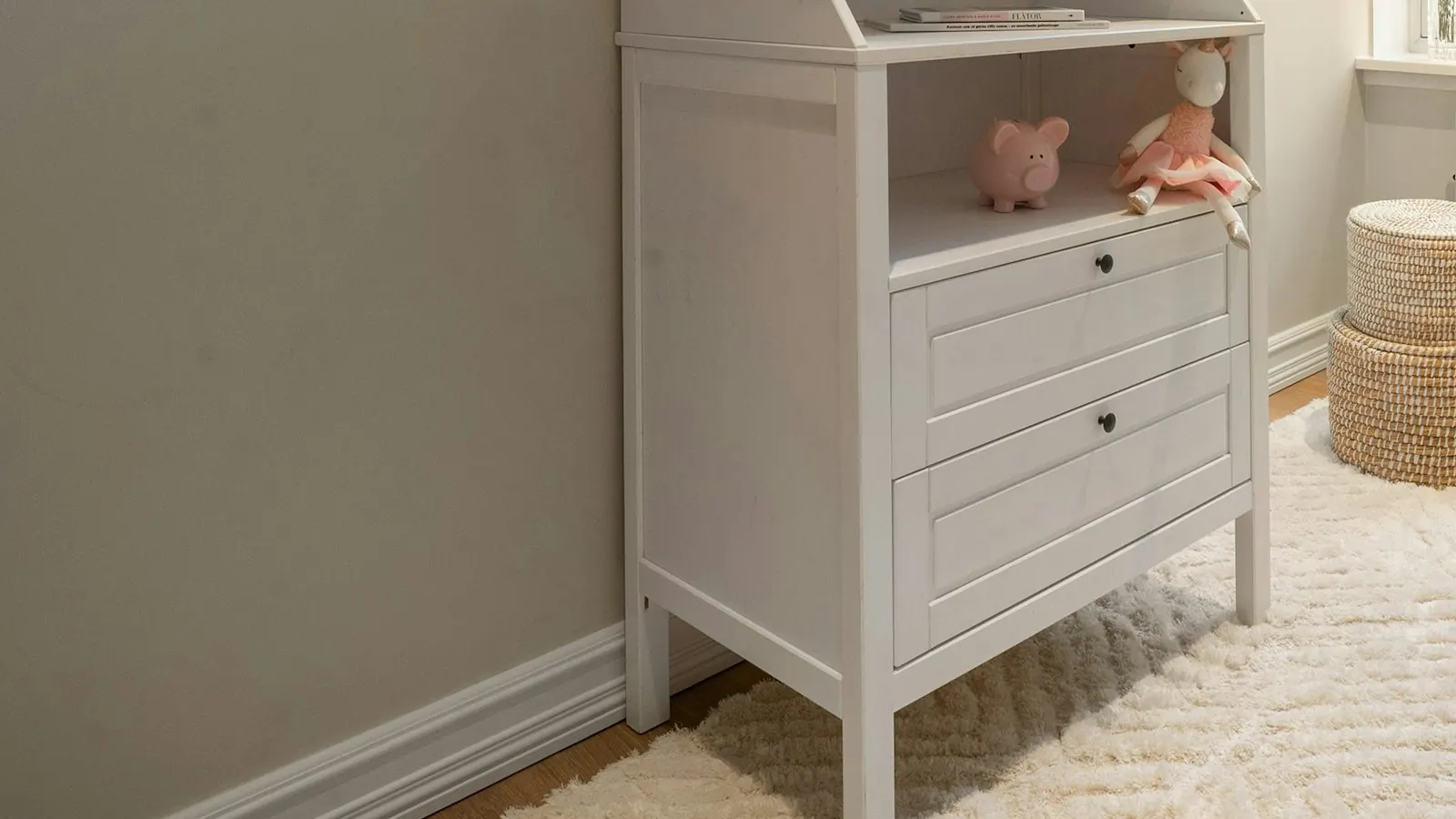
Soft white drawer fronts, a low run of storage beneath a window, a gentle wood top that picks up the crib’s finish: a nursery dresser is often the piece that makes the room feel settled. It can earn its place twice, as a changing station if it is designed for one and as clothes storage long after the diapers are gone. Only dressers designed for it can safely serve as changing tables, and a pad set on top of any dresser does not make it one. So decide whether you need storage alone or storage plus changing, measure with the drawers open, and anchor it to the wall as you assemble it.
Storage, changing or both
For storage alone, compare interior space, footprint and assembly. For changing too, you need the furniture maker’s approved combination of dresser, changing tray or topper, and pad.
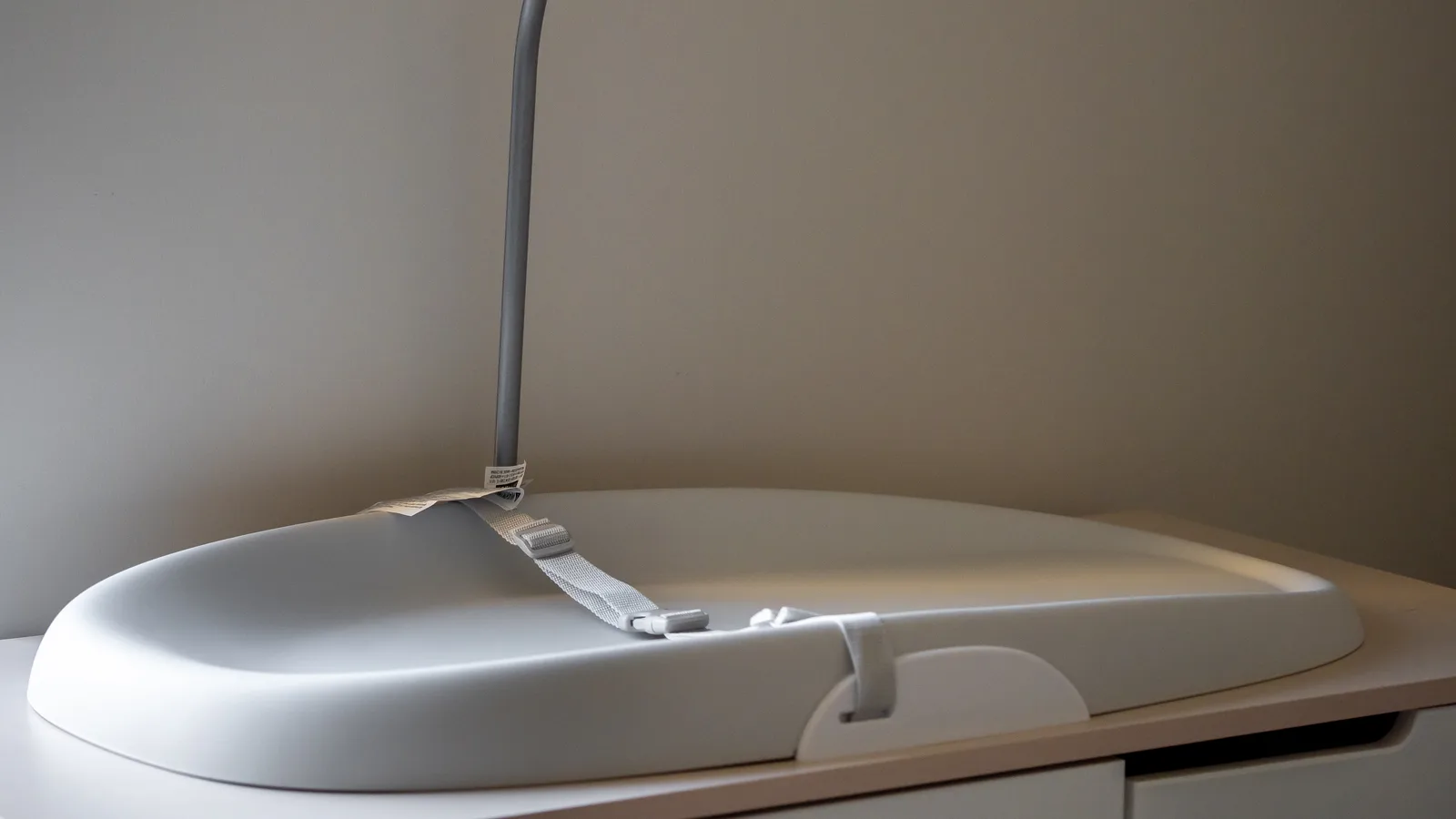
The CPSC’s baby-changing-product guidance distinguishes changing tables, add-on changing units and contoured changing pads, and a flat portable mat is none of these. Get the model numbers and instructions, including how the changing unit fastens and when to stop using it, and keep each system whole instead of mixing parts that look the right size. The changing tray has its own weight limit, separate from any drawer or whole-dresser load rating.
Measuring with the drawers open
Tape out the dresser’s width and depth, including handles and any changing tray that overhangs. Then add the space to open the drawers fully and stand in front of them. A dresser that fits an empty wall can make the room awkward once a glider is pulled up beside it or the closet door swings open, and the route you will walk at 3 a.m. should stay clear. Measure the delivery path too, from doorways to stairs and turns, against the box size.
Placement is also a design decision. A low dresser under a window keeps sightlines open and lets the window stay the brightest part of the room. Set against the longest wall it anchors the room, and a pale finish keeps a small nursery from feeling crowded. Baseboards and other obstructions affect how the anti-tip hardware fits, so work that out from the instructions before the dresser goes into use.
Drawers that suit what they hold
Sort what you will store into groups first: everyday clothes, spare bedding, the next size up. Then compare drawers by interior width, depth and height, how far they open so you can reach the back, whether glides and handles are sold as parts, and the maker’s load limit for each drawer or shelf. Leave drawer stops where they are, since they are part of the design.
Open shelves look sweet in photographs but put everything within reach of a crawling baby, so keep anything harmful off them and follow product labels.
Anchor it as you build it
CPSC’s Anchor It guidance recommends securing furniture and installing the supplied anti-tip devices right away. Furniture tip-overs can seriously injure young children, and even a low, heavy dresser needs anchoring as its instructions describe.
Anchor It’s kit guidance explains the parts, and what your wall needs decides which hardware to use. If you are unsure how to fasten into your wall, get qualified help. Do it on assembly day, before your child starts climbing. Keep toys and tempting objects off the top and put heavier things in the lower drawers, as CPSC advises. Anchor again if you move the dresser, and replace missing or damaged parts with the right ones instead of improvising a strap.
A changing setup that matches
The Babyletto Hudson 40-inch changer-dresser listing and its assembly manual show what a proper match looks like. The manual recommends Babyletto’s 31-by-16-by-4-inch contour pad, model M5319BL (sold as the Pure pad), sold separately, and sets a 30-pound maximum for the child on the changing table. A separate 50-pound figure on Babyletto’s pages does not raise that 30-pound limit. Those are that maker’s figures; read the current manual for your configuration and follow the lower figure whenever two disagree.
For any other dresser, look for the same three things: an approved changing attachment, a specified pad and how it fastens, and stated use limits. A pad that fits the tray’s outline still needs the maker’s approval for that combination, and a thicker pad or an enlarged tray voids the match.
Keep supplies within your reach so you never have to step away. The American Academy of Pediatrics’ changing-table advice stresses constant supervision and warns against relying on a safety strap. Never leave a baby unattended on a raised changing surface, even for a moment or while strapped in; if you need to leave, take the baby with you. Keep creams, wipes, powder and diapers out of the baby’s grasp, and stop using the changing unit when your child reaches its limits.
Finish and materials
A wood name in a listing may describe only the drawer fronts, while frames, drawer bottoms and backs can be other materials. Order finish samples and look at them in the nursery’s own light beside the crib, since “natural” and “white” vary widely between brands: one white leans blue in north light and another reads cream beside warm wood. A certification covers what it names, and correct assembly, anchoring and use still come on top. If you plan to repaint or change handles, confirm the maker allows it.
Secondhand dressers
Find the maker, model and date, and look the exact model up in the CPSC recall database and the maker’s notices. Get the assembly instructions and make sure all parts, including anchoring hardware, are present and the drawers run well. For a changing setup, the tray and pad must belong to the approved configuration. If you cannot identify the model or find its instructions, pass on it. A recalled dresser needs the official remedy.
After the changing years
If the changing tray comes off, follow the instructions for removing it and for the dresser afterward, and leave no exposed fasteners behind. A simple dresser with useful drawers serves long after the nursery theme is gone, so pick a shape and finish that would suit a ten-year-old’s room. The bedroom collection has ideas for how the room can grow up.