Plantation Shutters: Choose Interior Panels, Materials and Fit
Shutter panels swing into the room and louvers need clearance. Choose plantation shutters by how they will move in your space, then compare materials, light control and quotes.
By DecoraMintPublished 4-minute readMore in Blinds & Shades
In this guide
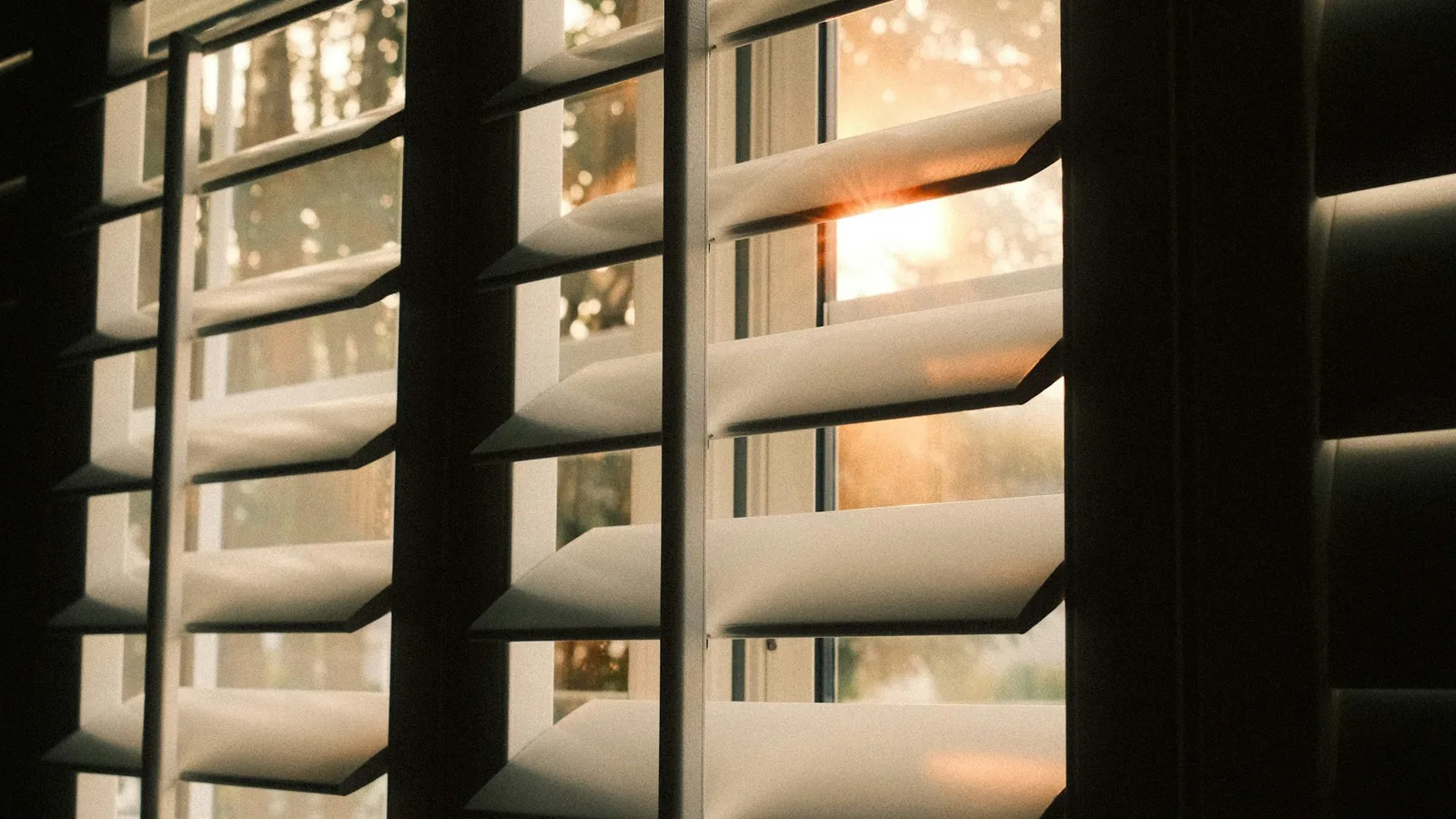
A plantation shutter earns its place on the days the louvers are tilted open: wide blades of light fall across the floor, the frame outlines the window like a built-in, and a bare wall suddenly has architecture. They suit a Craftsman bungalow and a modern apartment equally well. The catch is movement. Panels swing or slide, louvers need room to rotate, and a shutter that looks perfect closed can bump an armchair, a faucet or a window handle every time you use it. Settle the movement first, then the material and finish.
This guide covers interior louvered shutters, which offer no storm protection. The window-treatment guides cover other options.
How panels move
LEVOLOR’s Premier Poly Shutters reference guide shows the two separate actions most shutters offer: tilting the louvers and moving the panels. Its panel options include hinged panels, folding tracks, bypass tracks and separate upper and lower panels. A split tilt lets the top and bottom louvers angle independently, which differs from a tier-on-tier layout where the upper half opens on its own. The same guide separates the frame’s installation depth from the clearance needed behind rotating louvers, handles included. Those figures vary by frame and louver size, so have your supplier confirm your combination.
Hinged panels suit a window with clear wall on both sides, since each open panel lands in the room. Folding panels on a track stack to one side, so plan where the stack will sit. Bypass panels slide past one another, which leaves part of the window always behind a panel. Tier-on-tier lets you open the lower half for air and keep the top closed for privacy.
Walk through your own room. A bedroom window beside an armchair needs the chair and the swung-open panel drawn on the same plan. A wide living-room window with furniture at both ends may stack more panels at the sides than a closed sample suggests. If the window itself opens inward, cranks outward or has a projecting handle, show that to whoever measures, because shutter and window have to work together.
Hardwood, composite or vinyl
Hunter Douglas’s shutter collection spans Heritance hardwood, Palm Beach vinyl and NewStyle composite, three different constructions in one maker’s range. Wood brings natural warmth and takes stain. Hunter Douglas positions its Palm Beach vinyl for hot, humid rooms such as bathrooms; for any wood or composite shutter, ask what moisture exposure it is rated for, and compare warranty exclusions alongside the material name. These are that maker’s descriptions, offered as a map of the choices.
White comes in many versions. A cool white beside warm cream trim looks dingy, and a creamy one beside bright white trim looks yellowed. Hold physical samples beside your trim and walls in daylight and again in the evening.
Lines, frames and proportion
A divider rail that lines up with an existing mullion or meeting rail looks calm and intentional; one a few inches off reads as a mistake. Ask for a drawing of your window with the proposed divisions, and for neighboring windows to be drawn together so rails and frames line up across the wall.
Wide louvers give a more open, contemporary view when tilted and let more of the outdoors in. Narrow louvers feel traditional and sit neatly on a small window, where wide blades can look oversized. A frame that covers little of your existing trim keeps the window’s own character visible, while a deep frame turns it into a feature.
Privacy and light
Name the problem first: a sidewalk view, sun on a television, early light on the bed or simply a softer window. Closed louvers block most views and much of the light but rarely make a room fully dark, since light slips around the panel edges and between louvers. See the system closed, and look at it from the street one evening. If darkness matters, plan any extra layer before ordering, because curtains need room to hang without blocking the panels. Energy savings, sound reduction and security are separate claims, so ask for evidence that applies to the product if they matter to you.
Comparing quotes
Ask every supplier to quote the same window, layout and operation: collection, material and finish; panel layout and swing direction; frame style and how it meets the trim; louver size and any split tilt; who takes final measurements and owns the order dimensions; installation, delivery and removal of old treatments; cancellation terms for a custom order; and replacement parts.
Once installed, you will still open the window, clean the glass, reach the latch and dust the louvers. Follow the maker’s cleaning instructions, since steam, soaking and abrasive cleaners can damage finishes. If a panel starts to stick, contact the maker rather than forcing it or adjusting the frame.