Pleated vs Cellular Shades: Look at the Construction First
From the front, pleated and cellular shades look almost the same. The difference is inside, and it changes insulation, light control and price. Compare samples and quotes like for like.
By DecoraMintPublished 6-minute readMore in Blinds & Shades
In this guide
We may earn a commission from links on this page, at no extra cost to you. Affiliate disclosure
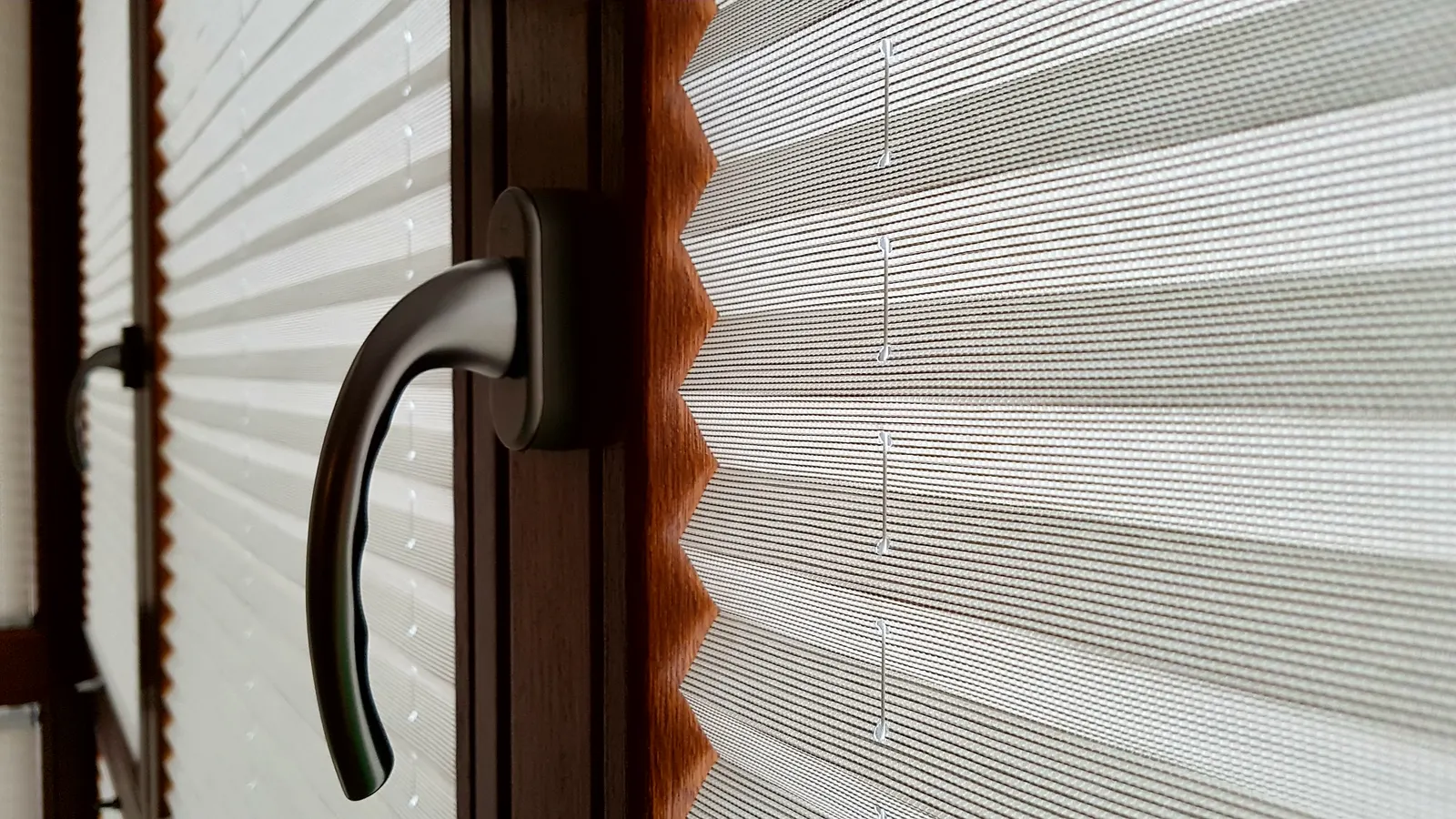
Lower either shade across a window and, from the sofa, you would struggle to say which is which: the same horizontal folds, the same slim band of fabric stacked at the top when it is raised. Walk up close and the difference is in the edge. A pleated shade is a single layer of fabric folded like an accordion. A cellular shade is built in layers that form hollow cells, the honeycomb you can see if you look at the bottom rail from the side. That hollow space is where the extra cost and extra insulation come from, and it is the main reason to choose one over the other.
What each is, in Bali’s terms
Bali’s pleated shade page describes the single-layer pleated construction against the multilayer cellular design, and its comparison guide fills in the details. These are one maker’s lines, but the contrasts are useful:
| Pleated | Cellular | |
|---|---|---|
| Construction | One layer of fabric in even folds | Honeycomb cells, single or double |
| Fold or cell size | 1 inch for most windows, 2 inches for larger ones | Four sizes, from 9/16 to 1 1/4 inches |
| Insulation | Some, improved by a liner | Bali says cellular shades surpass the insulating power of pleated ones |
| Light options | Many fabric opacities, plus day and midnight liners | Sheer, light-filtering and blackout |
| Price | Generally lower, though some fabrics and liners add cost | Generally higher because of the construction |
Bali also says cellular shades are not recommended where they may get stained, such as kitchens, and suggests faux wood blinds or composite shutters there because they wipe clean more easily. It does not say how a pleated shade fares in a kitchen.
Where insulation matters
The Department of Energy’s cellular shade factsheet explains that the cells trap air within each cell and between the shade and the window, which it calls particularly useful in colder climates. The factsheet reports that cellular shades saved up to 20 percent on heating energy, and up to 15 percent on total heating and cooling energy, compared with no shades, and more heating energy than conventional vinyl venetian blinds. Those figures come from experiments in Oak Ridge National Laboratory test homes feeding a model of one house across 15 climate zones, so actual savings depend on the product, the window, the climate and whether the shade is down when heat is needed.
For a window that runs cold at night, a drafty bay or a north-facing bedroom, cellular is the construction to try first. Shop for a rating rather than a promise: the Pacific Northwest National Laboratory’s window-attachment guidance points to Attachments Energy Rating Council ratings, and the DOE factsheet says to look for the AERC label on certified products.
A pleated shade still filters sun and cuts glare, and a liner adds some insulation according to Bali. If the window gives you no winter trouble, the extra cost of cells may buy little you will notice.
Light, privacy and fabric
Both types come in light-filtering and more opaque fabrics, so decide how you want the room to feel in the afternoon. A light-filtering white cellular shade turns a window into a glowing, soft panel; a pleated shade in a patterned or textured fabric makes the window a quiet feature of its own. With pleated shades Bali notes that privacy varies by fabric, and it offers day and midnight liners for more control. Examine a sample lit from behind and with a lamp on in the room, since a bright showroom does not tell you how a silhouette will read at night.
For a bedroom, remember that light also comes around the edges. Bali says cellular shades with blackout fabric suit bedrooms, and that a pleated shade with a midnight liner gives comparable light control. Light can still reach the room around the edges of any installed shade, so ask about finished coverage and compatible light blockers.
Some cellular listings print that coverage as a number. On Persilux’s 1.5-inch blackout cellular, the size table allows 0.08 inch at each side when the shade is mounted in the recess, about two millimeters, a pencil line along the dark face rather than a band of light; an outside mount laps the trim and closes even that. If the room is a bedroom and the window also runs cold, that pairing of cells and blackout fabric is the one to price first. The pleated answer to the same room, a midnight liner, deserves the same test: ask its maker for the finished side gap before comparing quotes.
Pleat and cell size change the look too. Larger folds read as a stronger rhythm on a wide window, and smaller ones recede. Bali’s guidance is 1-inch pleats for most windows and 2-inch for larger ones. Cells can go broader than the largest Bali size in the table above: Persilux’s 1.8-inch cellular comes mostly in blackout colors, from white and beige to blue and black, plus one white light-filtering option, and its cordless version is listed up to 104 inches wide. Across a living-room picture window, banding that deep sits closer in scale to a 2-inch pleat than to a standard cell, so at that size the two constructions look more alike and the decision returns to insulation and fabric.
Depth, mounting and curtains
Both shades need depth for the headrail. Bali’s measuring guide lists different depth requirements by product, size and operating system, so a shallow recess can rule out one type but not the other. If curtains will hang in front, leave room for the shade’s raised stack and headrail.
Operation and cords
How the shade moves can decide the purchase. Top-down bottom-up shades let you open the top for daylight while keeping privacy below, and motorized versions suit windows that are high or hard to reach, though availability varies with size, fabric and product line. If you hide the headrail behind a valance, make sure you can still reach the battery or charging port. Persilux’s cellular shade collection lists bottom-up, top-down bottom-up and motorized options, in light-filtering and blackout, with 1 inch and 1.5 inch cells. It is a place to compare cellular configurations, not a source for a matching pleated alternative. Persilux is an advertiser, this is an affiliate link, and we may earn a commission if you buy through it. We have not tested its shades.
Lift cords are the hazard in both types, and the standard for custom products has been in flux. A federal court struck down the CPSC’s custom-cord rule in September 2023, and the industry’s ANSI/WCMA A100.1-2022 standard now covers custom products made from June 1, 2024. In a home with young children, the CPSC says cordless is the option that removes the strangulation hazard, and it also advises moving cribs, beds and furniture away from windows.
The decision
Cellular earns its higher price when the window loses heat, when the room is a bedroom that needs darkness, or when you want the option of a double cell. Pleated is the better route when the broadest range of fabric and pattern matters more than insulation, or when the budget is tight, and a liner closes much of the gap on darkness. Persilux, the retailer linked in this guide, appears here for its cellular shades only, so if pattern brought you to pleated, start with a pleated maker’s fabric book and let the cellular options above win only if insulation or darkness tips the balance. Neither type is a kitchen choice by default, so check the fabric’s cleaning instructions before putting either over a sink. Compare quotes for the same size, mount and control, with fabric, liner and installation listed separately, and ask who checks the measurements, what changes a custom order allows and what the warranty actually covers, because the cheaper quote often reflects a simpler lift or a more translucent fabric and not a better deal.
Retailers to browse
Compare colors, sizes, materials and return details on the retailer’s current listings.
- Browse blinds and shades at Persilux
Persilux
Opens Persilux’s blinds and shades collection, not a single product.