Roman Shades for Windows: Folds, Fabric and Cordless Choices
A Roman shade brings fabric to the window without a full curtain. Look at it lowered and raised, because the folded stack can take more of the window than you expect.
By DecoraMintPublished 7-minute readMore in Blinds & Shades
In this guide
We may earn a commission from links on this page, at no extra cost to you. Affiliate disclosure
Most Roman shades are chosen from a photograph of the shade lowered and then lived with raised. Raised is the version you will see for most of the day: a thick band of folded fabric across the top of the glass, with the headrail above it. If the stack, the lift and the lining suit the window, the pattern and color will take care of themselves.
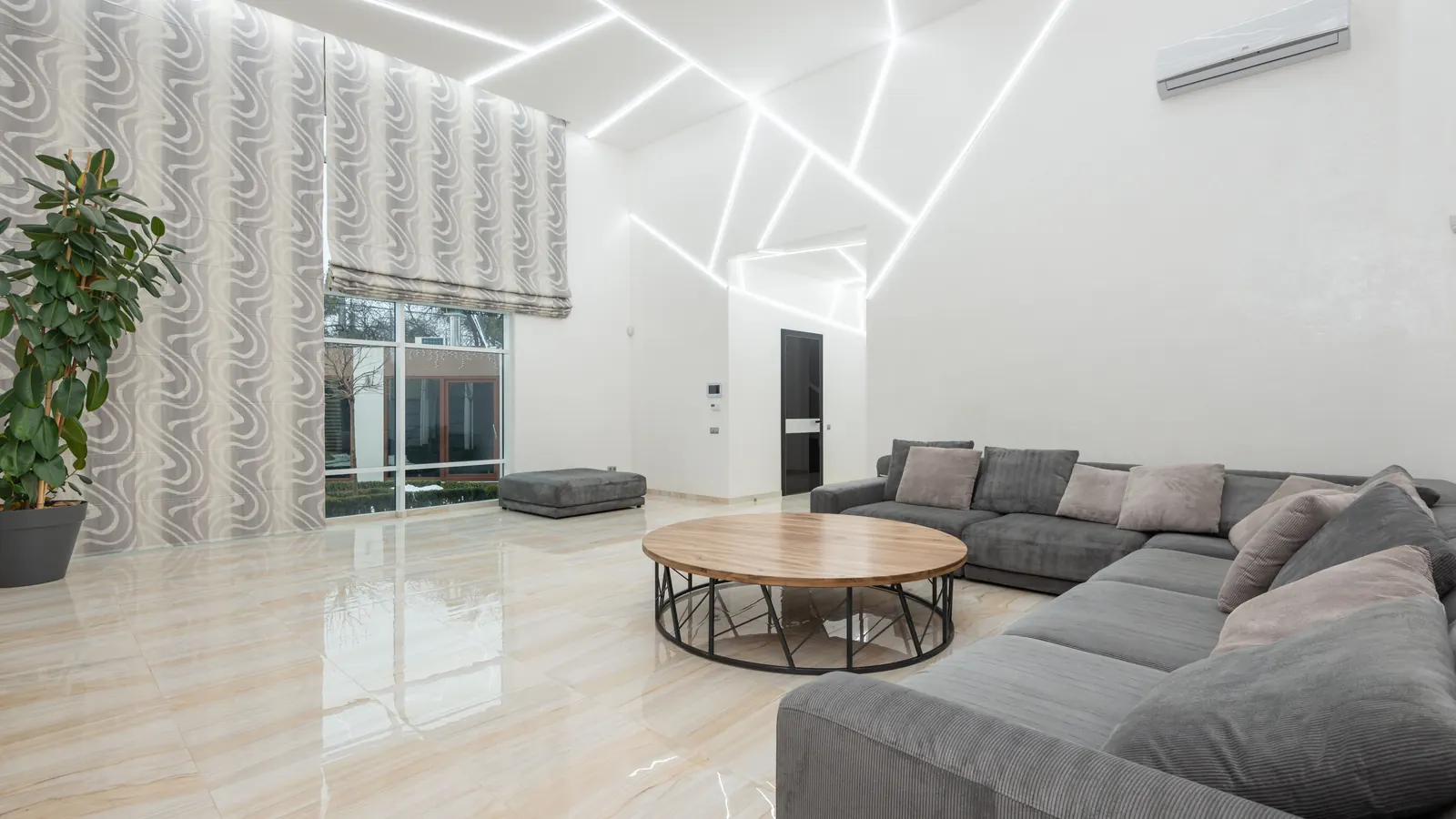
Roman shades give a window the softness of cloth without the width of curtain panels. In a living room with tall double-hung windows, a flat shade in a mid-tone woven linen look sits quietly between a pale wall and a darker sofa, and the horizontal fold lines echo the cushion edges. In a dining nook, the same shade pulled to a third of its height frames a garden and leaves the wall beside the window free for a sideboard. The look is tailored, but only if the fabric, fold and mount are matched to how the window is used.
Choosing the fold
Retailers name Roman styles differently, so judge the fold from photographs of the actual fabric made up in that style.
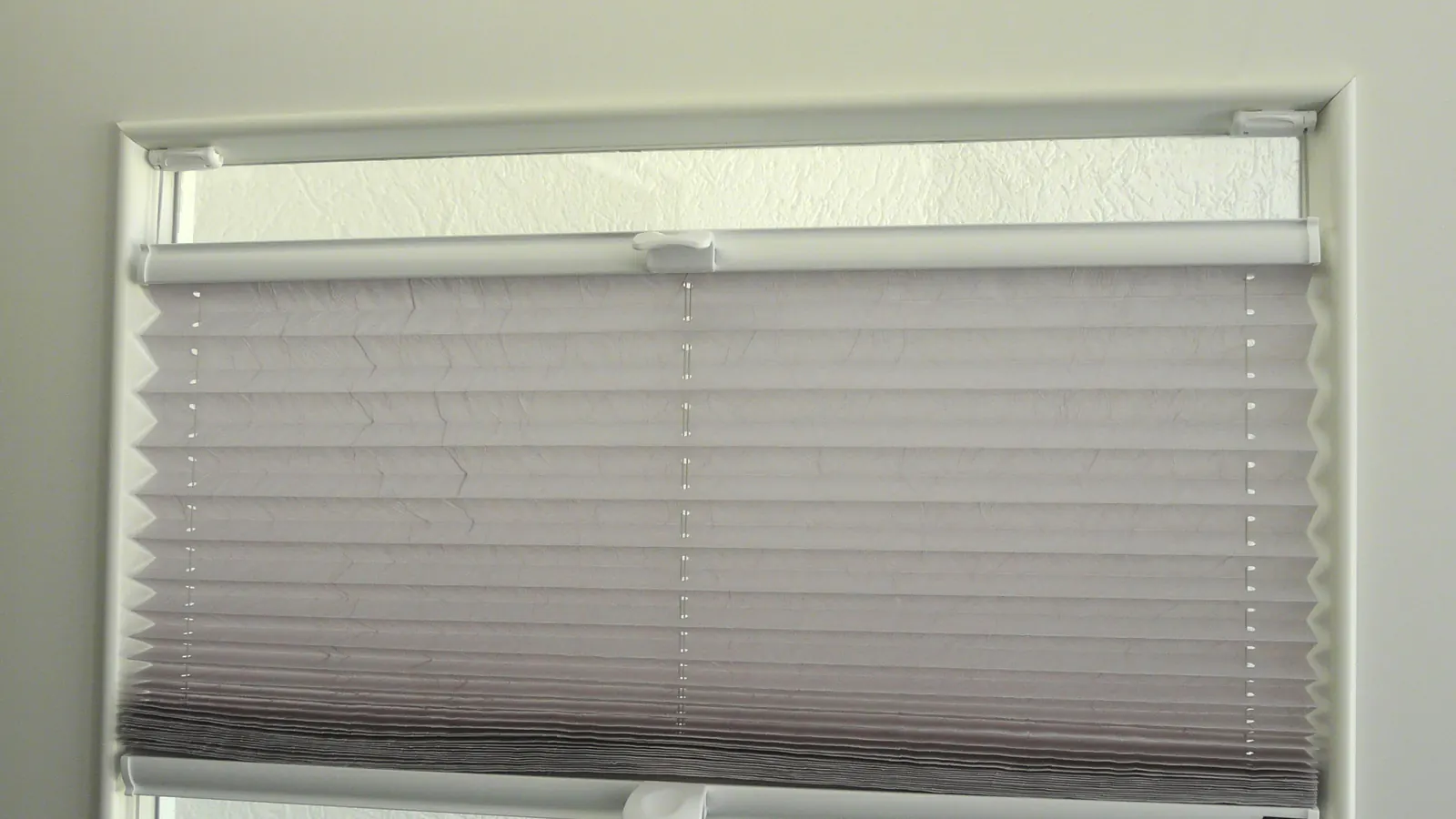
A flat shade hangs as a smooth panel when lowered, which gives a large pattern or a plain texture its full surface. Folds appear only as it rises. A soft or hobbled shade keeps loops of fabric in place even when lowered, so horizontal shadows cross the window all day and the effect is fuller and more traditional. A relaxed shade has a gently curved bottom edge that suits an informal kitchen or family room; look at how it sits when part raised, because that is where it usually hangs.
Folds also change how a print reads. A small repeat can turn busy when it is multiplied across a row of windows, while a plain slubbed texture picks up light and shadow in each fold. Order a sample and compare it with a photograph of that fabric in the exact style.
Fabric and lining
Names like “linen,” “natural woven” and “textured” can describe looks as much as fiber, so read the composition line. A linen blend, a polyester weave and a natural woven material can look alike online yet differ in care and in how much the surface varies. If you want a smooth, even face, expect slubs and weave changes to show up in a linen look; if you like them, judge the sample against the wall and trim in both daylight and lamplight. Persilux’s two Roman listings sit on either side of that line: its Linen Fabric Roman Shades are described as polyester fibers blended with linen, while the plainly named Roman Blinds are listed as 100% natural ramie. Where the folds will be seen across a room in raking afternoon light, put the two swatches side by side on the wall before deciding how much irregularity you want.
Lining decides what happens after dark. Unlined or light-filtering cloth glows by day and can show silhouettes with the lamps on. A privacy lining adds coverage and a blackout lining is meant to stop light through the fabric. Look at the face fabric with the proposed lining behind it: a white lining under a loose weave can wash out the color, and a heavy lining deepens the folds. The two Persilux listings handle darkness differently. The linen blend comes as a standard or a blackout version of each of its four colors, and its page says the blackout adds a coating on the back; its note on which colors get a white or a brown back names colors the listing does not sell, so ask which back yours will have. The ramie Roman Blinds instead let you set the lining separately from the color, so a pale cream face can still keep a bedroom dark in the morning, while a deep Cocoa can stay unlined in a living room and glow by day. Blackout lining stops light through the fabric, not around it, so the mount matters as much as the lining in a bedroom.
The raised stack
A Roman shade never retreats into a slim tube. Fabric gathers at the top, and how much depends on the style, the cloth, the lining and the drop. A tall, lined shade in a heavy fabric makes the deepest stack. On a small window or one with a view worth keeping, sketch how much glass is left uncovered when the shade is fully up. An outside mount a few inches above the opening lifts the stack onto the wall, if there is wall to take it.
Look at what else crowds the top: a sash handle, an inward-opening window, or curtains hung in front. Ask the retailer for headrail depth, bracket projection and stack height, not only the fabric width, and keep the answers if the shades will sit behind curtains. The two Persilux Roman pages give a size table (the ramie one also a side gap) but no stack height and no choice of fold style, so on a short window send them the drop and ask how deep the raised fabric will be. Our hub for window treatments has the neighboring options.
Reaching the lift
Many manual cordless shades are raised and lowered by the bottom rail or a handle, and the mechanism holds the shade wherever you stop. Use the grip point the maker shows rather than tugging the fabric. If you can, try a working sample. A shade over a deep kitchen counter or behind a sofa may be out of comfortable reach when raised, and motorization earns its cost there, as long as there is a charging point or power source you can get to. Both Persilux Roman listings stop the cordless version at a 94-inch drop and offer a remote-control version, so a tall living-room window or one behind a deep counter is a motor order from the start rather than an upgrade later.
Sizes have limits that vary by fold and lift. LEVOLOR’s Roman and natural shade technical guide gives different size tables for different operating systems and fold styles, which shows why a maximum for one range cannot be assumed for another. Smart-home control often needs a hub or bridge in addition to the motor; the controller named in the listing tells you which platform it speaks.
Inner cords
Roman shades hide a second set of cords behind the fabric. Cords threaded through rings on the back raise the folds, and in 2009 the CPSC and the Window Covering Safety Council announced a repair program covering all Roman shades and roll-up blinds, after children were strangled when they got their necks between an exposed inner cord and the fabric or pulled the cord out. A cordless lift removes the pull cord on the front and leaves the question of the back. Choose a shade whose inner cords are not accessible, and look at the back of an older shade to see whether cords or loops are exposed.
The CPSC recommends cordless window coverings wherever young children are present, with cribs, beds and climbable furniture kept away from windows. Fix or replace any shade with damaged or exposed cords at once. Owners of older Roman shades and roll-up blinds can still request the free repair kit named in that 2009 notice from the Window Covering Safety Council.
Measuring
For an inside mount, measure the opening in several places and confirm the recess is deep enough for the headrail. For an outside mount, decide where the finished fabric should reach and make sure the wall or trim will hold the brackets. Retailers differ on whether they deduct from your numbers, so submit what the order page asks for. Measure each window separately, even in a matching row, and ask how pattern placement is handled if the shades need to line up at different sizes.
Care starts with a vacuum brush on low suction. Many Roman shades cannot go in a washing machine because of the lining and operating parts, so a shade near a sink, stove or shower should be a fabric the maker says is suited to that spot.
The Persilux examples
Two Persilux listings are worth comparing: a polyester and linen blend whose blackout comes with the color, and a ramie Roman shade whose lining level is chosen on its own. We have gone by the product pages, not by handling the shades, and prices and options vary by size. The Persilux links are affiliate links, and the site may earn a commission if you buy.
Where the shade has to carry the room’s pattern, a flat fold with a blackout lining fits a bedroom, and a relaxed fold in a light-filtering cloth fits a kitchen where daylight should stay. Neither Persilux listing offers a relaxed or hobbled fold, so a reader set on those styles should look at a retailer that sells them.
The picks
Availability updates from the retailer feed. Where our copy of a price is out of date, the retailer’s site shows the current one.

Soft linen blend with a cordless lift
Linen Fabric Roman Shades
Polyester fibers blended with linen give a textured, natural look, and the cordless system raises and lowers it without a pull cord. The product page lists four colors, each as a standard and a blackout version.
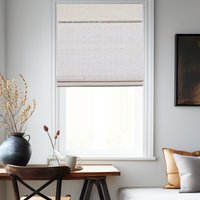
Choose between three lining levels
Roman Blinds
Lining Type is a choice: no lining blocks 40 to 50% of light, privacy lining 60 to 80% and blackout lining 100%, per the product page. The page describes the fabric as 100% natural ramie and lists eleven colors and a cordless free-stop lift, so it suits a room where how dark it gets is the main question.
Retailers to browse
Compare colors, sizes, materials and return details on the retailer’s current listings.
- Browse blinds and shades at Persilux
Persilux
Opens Persilux’s blinds and shades collection, not a single product.