Stair Runners: Plan the Material, Width, Turns and Installation
A stair runner is an installation, not a long hallway rug. Record the staircase shape, confirm the material is rated for stairs and resolve landings before ordering.
By DecoraMintPublished 6-minute readMore in Decor
In this guide
We may earn a commission from links on this page, at no extra cost to you. Affiliate disclosure
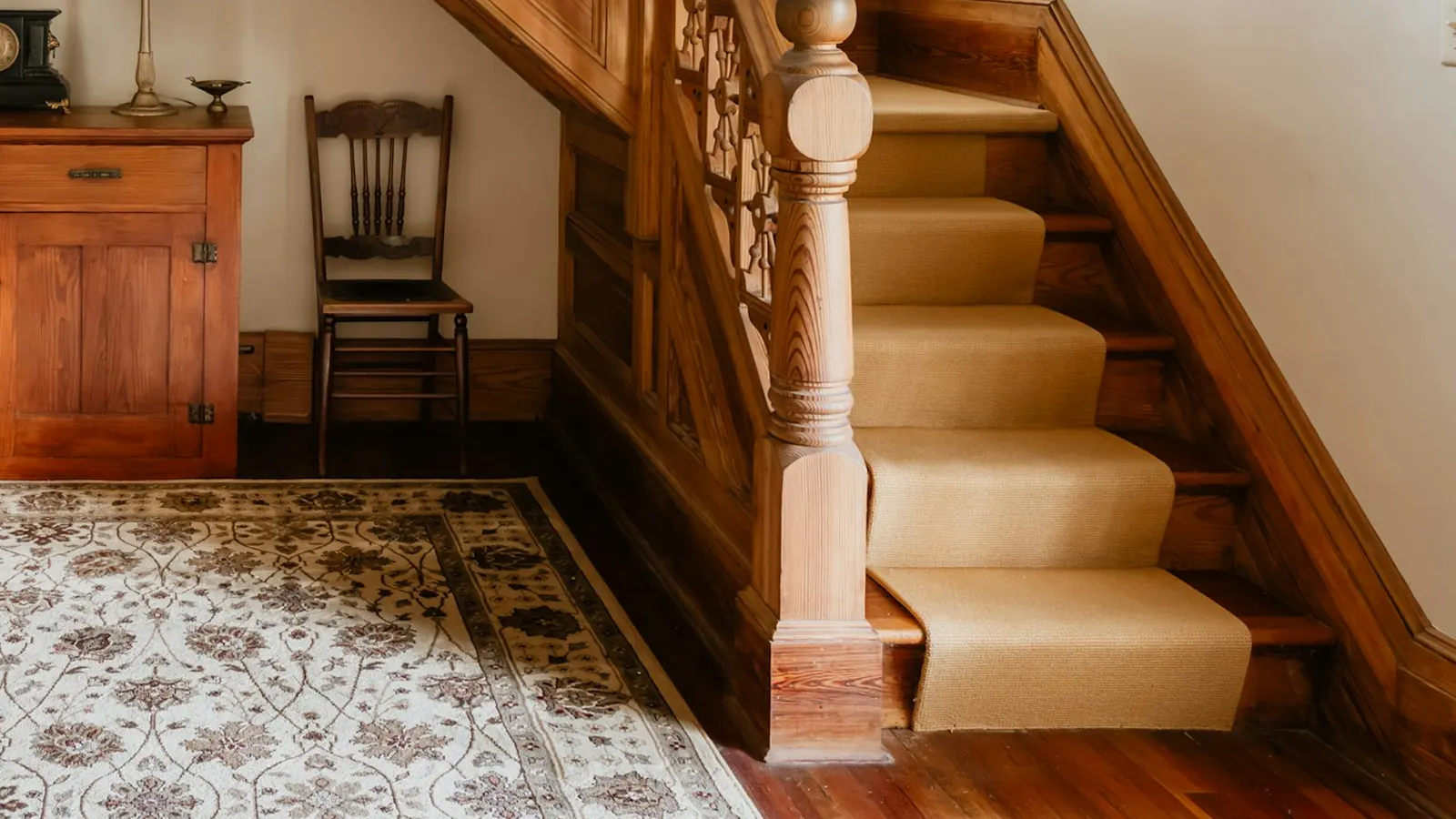
Stand at the bottom of a staircase with a runner running up its middle and you see the whole idea: a ribbon of color climbing through the house, with a strip of wood showing on each side like a frame. It softens footsteps, adds pattern in a place that is often bare and gives the stairs a finish that bare treads rarely have. It is also a fitted installation rather than a long rug. The material has to be made for stairs, the underlay and fixing method have to match it, and turns and landings need planning before anything is cut. Choose the look you love, then let the staircase and the installer settle the details.
What a runner covers
A runner covers the center of each step and leaves a border of stair showing on both sides. Full-width stair carpet covers everything and is fitted differently, and individual stair treads are another product again.
The difference shows from the bottom step. Super Area Rugs sells braided treads, mostly 8 by 28 inches in oval or rectangular shapes, singly or in sets, in wool or polypropylene depending on the line; the Super Area Rugs store opens on its homepage, with the treads under Accessories. On a 36-inch tread, a 28-inch piece leaves 4 inches of wood each side, close to the frame of the 27-inch runner worked out below, but an 8-inch depth covers part of each tread and leaves every riser bare, so the flight reads as a column of separate mats with wood between them rather than one continuous ribbon. They suit that look, or a stair where a fitted runner is more installation than you want; ask the retailer how each tread is meant to be fixed on your stair finish before ordering a set.
Decide where the runner starts and stops, including the first and last risers, any wide bottom step, turns and landings. Photograph the stairs from the top and bottom so a supplier sees more than the straight middle section.
Hallway rugs are made for flat floors, and stairs ask more of the backing and edges. Ask the maker whether that exact construction can be fitted on stairs, and how.
Describe your staircase
A straight flight is the simplest, because the repeating steps make layout easy: give the installer tread, riser and nosing measurements from several steps. Winding steps change width and direction through the turn, so photograph and measure each winder. A landing needs a plan for pattern direction and joins, with the full shape and the floors that meet it. A wide bottom step needs a special start, so send its outline and the border you want. A loose or damaged step needs repair first, since a runner only hides the problem.
Width and the border
Compare the stair width with the widths available in your chosen runner. A 27-inch runner on a 36-inch straight tread leaves a 4.5-inch border each side when centered, which shows a generous frame of wood. That is a single worked example, so run the same sum on your own stairs. Mark the candidate width on the stairs with finish-safe tape and look from both ends before deciding.
A narrow staircase often looks better with a slimmer border, and a grand one can carry more exposed wood. Dark wood with a pale runner gives a strong, graphic edge; honey oak with a wool runner in a close tone feels warm and quiet. Winders and wide bottom steps make an even border harder to keep, so ask how the runner will travel through any turn, especially with a strong stripe or bordered design where a slight shift shows.
Materials made for stairs
Fiber is only part of it. Weave, backing, thickness and edge finish all affect how a runner wraps a stair nose and wears under feet, and two wool runners or two synthetic ones can need quite different fitting.
Annie Selke’s stair-runner guide names particular constructions in its own range as suitable and leaves some materials out of its custom stair recommendations. Take it as one maker’s advice for its own products. The questions it raises suit any runner you are considering:
- Is this exact runner recommended for stairs?
- Which underlay and fixing method does the maker specify?
- Can it wrap the nosing and go around your turns?
- How are cut ends and edges finished?
- How should it be vacuumed and spot-cleaned?
Order a sample and handle it. Texture, thickness and flexibility tell you a lot about the look and feel underfoot, and the instructions and installer settle whether it suits your stairs.
See the pattern on the stairs
Look at the sample from the bottom and top of the staircase, in the light you normally have. A pattern that looks calm flat becomes much bolder repeated across treads and risers. A stripe can march upward beautifully or look busy on a short, steep flight. A plain or tone-on-tone weave stays quiet and lets the banister and wall color lead.
Ask where joins will fall and whether the pattern can be matched across them. Annie Selke advises checking pattern alignment when combining lengths, because two pieces with the same design name will join invisibly only if they are cut to match. For a strong stripe, large motif or complicated landing, ask for a layout drawing before ordering from a room photo.
Quantity
A runner goes over each tread, around the nose and down the riser, so tread depths alone leave out much of the material. Roger Oates’s measuring guide shows the route over tread, nosing and riser and explains why winders and uneven steps need separate measurements. Its allowances apply to its own products and method. For cut-to-length or custom orders you cannot return, have the installer confirm the full quantity, including the start and finish, landings, pattern matching and joins.
Landings and transitions
A landing can continue in the stair material, take a coordinated fitted carpet or meet a different floor. Decide which suits the rooms around it before finalizing the order. For loose rugs in adjoining rooms, our rug-size guide helps.
Runner plus underlay can stop a door on the landing from clearing. A loose rug at the top of the stairs can slide underfoot, which a fitted landing avoids. For a turn, ask the installer to sketch how the material will be joined and where any border ends.
Stair rods
Stair rods look classic and usually do not hold the runner down. In Roger Oates’s system, the rods are decorative and the runner is held by the specified fitting method. Choose rods once the fixing method is settled, and include their brackets in the plan. Installers with experience of your type of runner, particularly flatweaves, winding steps and patterned joins, can show you similar finished work.
Quotes and the finish
Ask each quote to list the runner, underlay, edge finishing, joins, installation and any removal or preparation. If the exposed stair edges need painting or refinishing, schedule that so the finish has cured before fitting. After installation, walk the stairs with the installer. If an edge lifts or the runner loosens, get it fixed promptly, since a loose runner on stairs is a trip hazard.
When the quote and the staircase disagree, trust the staircase: measure again before you order.