Twin Mattresses for Kids: Check the Bed, Thickness and Care First
A child's mattress has to fit the exact frame first, including its depth limit. Read the bed's requirements, then compare construction, waterproof claims and bunk restrictions.
By DecoraMintPublished 5-minute readMore in Bedroom
In this guide
In a child’s room the bed is usually the largest soft thing in sight, and the mattress under the quilt decides how high it sits, how the bedding falls and whether the room feels settled or cramped. All of that comes after one fixed question. The mattress has to fit the frame it will live in, so read the bed’s required length, width and thickness and shop only among mattresses that meet all three.
Twin is a size category with no built-in age. This guide covers a mattress for an older child’s bed; an infant needs a sleep product made for infants.
Start with the bed
A platform bed, a trundle, a bunk and a loft can all say “twin” while allowing very different thickness and support. A mattress a little too deep can foul a rail or refuse to slide into a trundle opening even when length and width are right. Find the instructions or model name for the bed and note the permitted configuration and any user limits.
Support matters as much as size. Slats, a platform or a foundation each suit different mattresses, and a topper or extra base adds height that a guardrail may not allow. These are the measurements to line up:
| Measurement | Why it matters |
|---|---|
| Length and width of the sleeping surface | Must match what the frame is built for |
| Thickness | Decides whether it clears a trundle, a bunk rail or a loft guardrail |
| Total sleeping height with bedding | Changes how easily a child climbs in, and how the room reads |
| Required support (slats, platform, foundation) | The frame may exclude some mattress types |
| Delivered package | Affects the route up the stairs and the setup |
Twin XL works as a hedge for growth only when the frame and sheets are made for its extra length. A trundle size shortened in length is a different product from a regular twin even when the width matches.
One product family, three mattresses
Naturepedic’s 2-in-1 kids mattress page lists MT48 at roughly 38 by 75 by 7 inches. The trundle version, MT48R, keeps that length and width but is 6 inches deep, and MT48R71 is shorter still at 38 by 71 by 6 inches. The maker notes that dimensions are approximate. A suffix on a model name carries information, so keep the full model code beside every offer you compare, and a regular twin and a shortened trundle mattress are never compared by accident. We have not tested these mattresses; they illustrate how configurations differ and carry no recommendation.
How the bed sits in the room
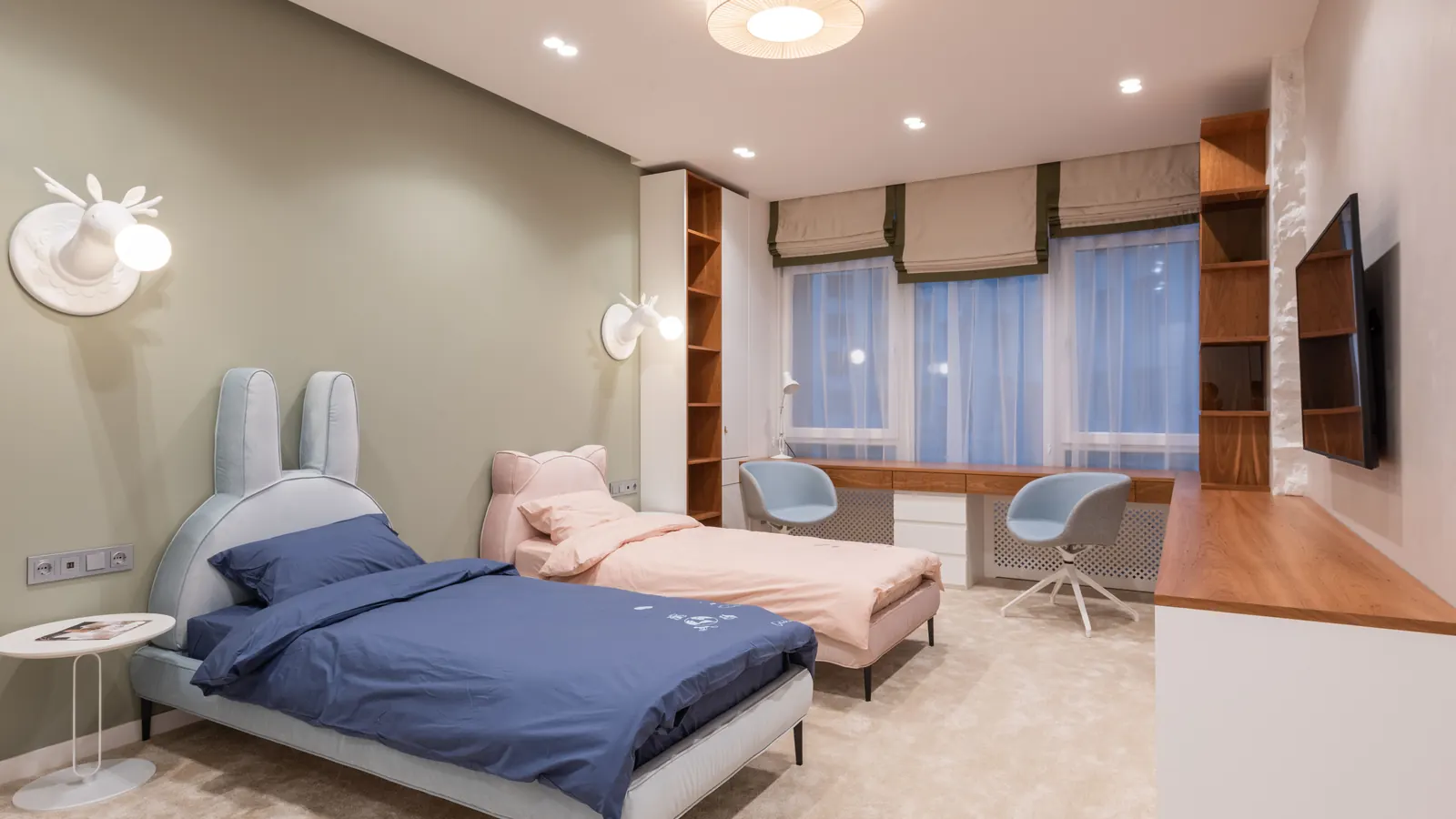
A child’s twin does a lot visually. A slim mattress on a low frame keeps the room open and lets a window or a favorite wall stay in view. A thick mattress lifts the sleeping surface and changes where the pillows meet the headboard, so the bed looks grander and also asks more of a child climbing in at night.
Bedding sets the mood. A washed-cotton quilt in a gentle stripe, a brushed flannel sheet in winter, a wool throw folded at the foot: layers of two or three textures in a related palette make a small bed look cared for, and a wall color picked from the quilt ties the whole thing together. Keep the bedding light enough that a child can make the bed alone, and the room stays tidy without much argument.
Construction, claims and care
A foam mattress and an innerspring mattress are built differently, so read the layers and surface description for the model. If you can visit a showroom, note the exact model and size you lay on, and treat “she liked this one” as a personal preference. The frame’s limits outrank comfort, and a continuing sleep or health concern is a conversation for a pediatrician.
If a mattress has two different sides, find out what each is for and how it is cared for. Two surfaces still mean one size, and the frame’s requirements apply to both. A waterproof claim applies to a particular component and may miss seams, the underside or a removable cover. A separate protector has its own fit and laundering rules. A removable cover is one washable part of the mattress, so follow the cleaning and drying instructions for each part and think through how an ordinary accident will be handled.
Bunks and lofts
The AAP’s bunk-bed guidance says children younger than 6 should not sleep in the top bunk. It also advises that the top mattress sit snugly in the frame so it cannot slide over the edge, that the guardrail leave no more than 3½ inches between it and the side of the bunk, and that wires or slats run directly under the mattress and be fastened at both ends. A corner position, with walls on two sides, braces the bed and reduces the open edges where a child could fall.
Check that a child cannot roll under the guardrail, and use the bed’s own instructions for the permitted mattress thickness. That rules out a topper or second mattress added to change the feel, unless the complete depth stays within what the bed allows. A mattress marketed for bunks suits only the bunks it is rated for.
Delivery, returns and used mattresses
Follow the maker’s handling and setup directions before you open the packaging. A mattress delivered compressed has its own unpacking and use guidance, and a waiting period borrowed from another brand may be wrong for it. Compare return or exchange terms for the exact purchase: when the clock starts, what protection or condition is required, and who collects. A used or hand-me-down mattress is worth considering only if you can identify its size and condition and it fits the bed’s requirements.
Cross off anything with the wrong dimensions or support first, then compare construction, care, delivery and the remedy if it disappoints. Our bedroom collection covers frames and bedding. Choose the frame and mattress together, then the quilt and pillows.