Types of Pillows: Fills, Shapes and Who Each Suits
Fill, shape, height and firmness are separate choices. Start with what bothers you about your pillow now, then compare constructions, sizes and return terms.
By DecoraMintPublished 6-minute readMore in Pillows

In this guide
Line up five pillows on a bed and the differences show before anyone lies down. The down pillow slumps into a soft pool; the solid foam one sits square and neat; the buckwheat pillow looks lumpy and heavy; the latex one holds a crisp, springy dome. Underneath every one of them is one of seven fills: down or feathers, a down alternative fiber, solid foam, shredded foam, latex, buckwheat hulls, or a natural fiber such as cotton or wool. The fill sets how the pillow moves, sounds and cleans, the shape sets how it holds your head, and height and firmness are two further dials on top. Learn those four and any listing becomes readable. For related reading, see our pillow guides.
The fills, one by one
Down and feather. The softest, most moldable option: you punch it into shape and it stays roughly where you put it, collapsing slowly through the night. Down clusters give loft and softness; feathers, with their quills, add weight and a firmer, crunchier feel. A listing should give the percentages of each and say whether they sit in separate chambers. Down also comes in more than one firmness: Brooklinen’s Down Pillow comes in soft, medium and firm versions. You may also see a fill-power number. Testing laboratory IDFL describes fill power as a measure of down’s lofting volume under a specified test, so it describes the quality of the down, not the finished pillow’s height or how much down is inside.
Down alternative and fiberfill. Polyester or microfiber clusters made to imitate down’s softness without animal material. Feel ranges from fluffy to dense depending on the fiber and how much is packed in. Some can be machine washed whole, which is part of their appeal, but read the label for the pillow you are actually buying.
Solid foam. A single molded or cut block, often memory foam, which softens with warmth and sinks slowly, or a more responsive polyfoam. It gives a crisp, consistent shape that looks neat under a sham and never needs fluffing. It cannot be made lower, and the core is usually unwashable.
Shredded foam. Pieces of foam, sometimes blended with fiber, inside a liner. Softer and more scrunchable than a block, with more air between the pieces. Some designs open so you can take fill out. Coop’s Original Adjustable Pillow is a clear example: the maker lists a cross-cut memory foam and microfiber blend and allows adding or removing fill. That permission is Coop’s; a sealed pillow from another brand should never be cut open.
Latex. Natural or synthetic rubber, as a solid core or shredded pieces. Latex pushes back with a buoyant spring that memory foam lacks, so your head rests on it more than in it. Natural rubber latex is a known allergen, which matters if anyone in the house reacts to it.
Buckwheat hulls. Firm, heavy and sculptable: the hulls lock together into whatever shape you press them into. Hullo’s FAQ identifies its filling as buckwheat hulls, allows adjustment and notes a rustling sound when the pillow moves. Some people find that sound soothing; light sleepers sharing a bed may not.
Cotton and wool. Natural-fiber fills that feel firmer and flatter than down, with a dense, quiet character. Wool is valued for handling moisture. Check the fill content separately from the cover, since a cotton cover on the label says little about what is underneath.
Shapes
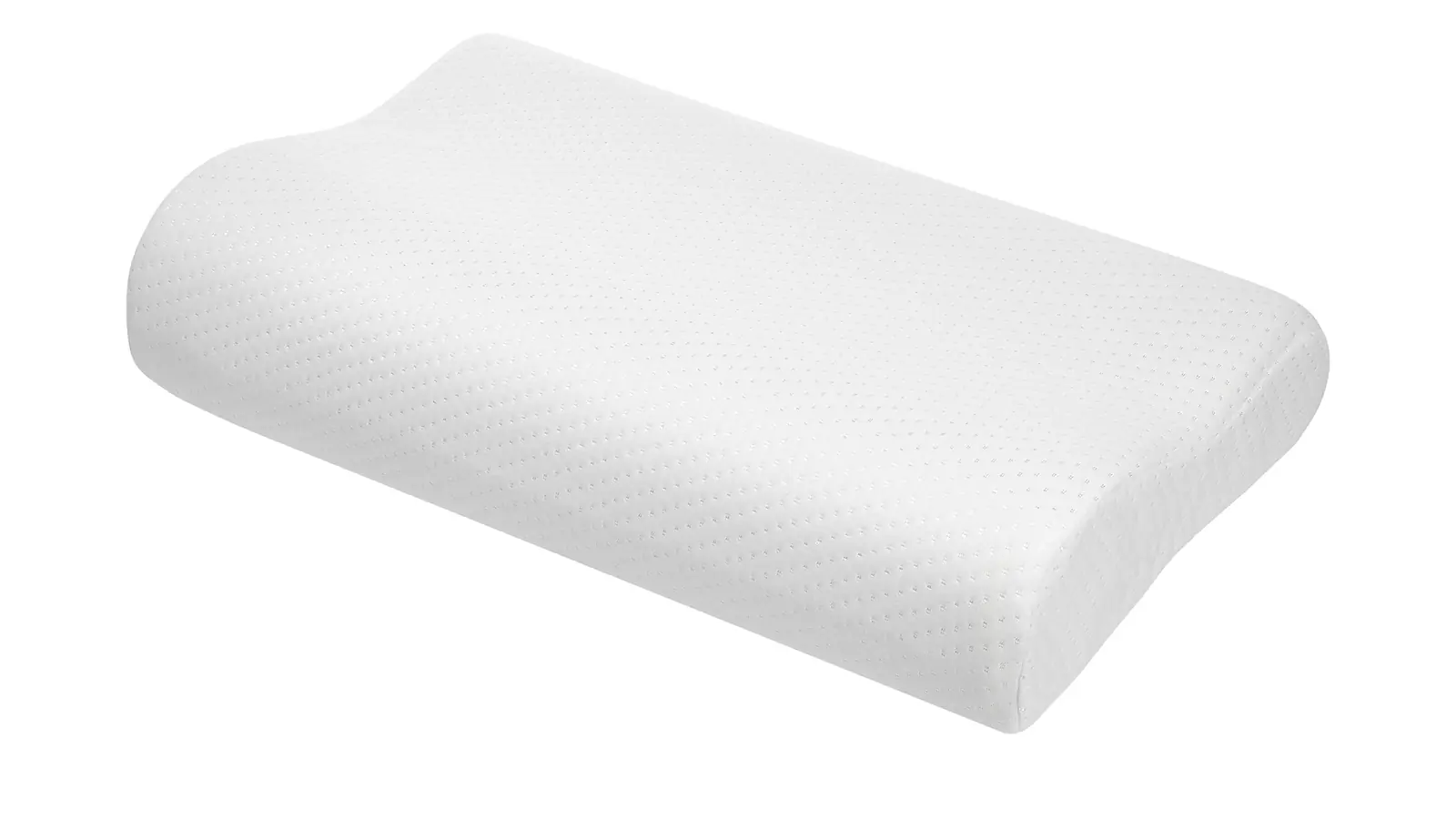
A rectangle in standard, queen or king length is the default, and the easiest to dress with ordinary cases and shams. A contour pillow has one or two raised edges and a dip between them and an intended orientation, so look at the maker’s side view before buying. Cutout designs leave room for a shoulder when you lie on your side but can need repositioning after you roll. Wedges and body pillows are separate categories with their own jobs; a long body pillow supports the body, not the head.
Loft and firmness are separate dials
Loft is height; firmness is resistance to squashing. A tall down pillow can squash to half its height while a thin latex one holds firm. Product photos show the pillow unloaded, taller than it will sit under your head, and one brand’s “medium” may feel like another’s “firm”. A firmer pillow will not fix one that is already too tall.
Who should choose what
Your current pillow is the best starting point. Notice what you do with it: fold it in half (you may want more height or firmness), push it away (you may want less), or rebuild it every time you turn (you may want a fill that holds its shape, or one that molds more easily).
- On your back, you want something that fills the curve of your neck without pushing your chin forward. A rectangle or a contour both work as starting points.
- On your side, there is more space between ear and mattress to fill, so height matters more, and so does how far your shoulder sinks into your mattress.
- On your stomach, less is usually the goal: a genuinely low pillow, or one whose fill can be removed.
- If you switch positions, a fill you can reshape (down, shredded foam, buckwheat) or a contour with two usable heights serves both.
Our short version: choose down or shredded foam if you like to mold the pillow; latex or solid foam if you want it to hold one shape all night; buckwheat if you want firm, adjustable support and can live with the rustle; a washable fiberfill if easy laundering is the priority. These are comfort observations, not measurements of spinal alignment. If pain, numbness or tingling is driving the purchase, see a clinician first.
Sizes
Common US sleeping-pillow sizes, as listed in Saatva’s size guide:
| Size | Typical dimensions | Two side by side |
|---|---|---|
| Standard | 20 × 26 inches | 52 inches |
| Queen | 20 × 30 inches | 60 inches |
| King | 20 × 36 inches | 72 inches |
For scale, a standard US queen mattress is 60 inches wide and a king 76, so two queen pillows fill a queen bed edge to edge while two kings leave a little air at the sides of a king. A king bed works with queen pillows too, and extra length adds no height. Check the insert size of shams separately from any decorative flange, and make sure a contour pillow will not be squashed out of shape by a rectangular case.
Which part goes in the washer
The case, the outer cover, any fill layer and the core can each have different instructions, and a maker can allow washing one layer and forbid another; Tempur-Pedic and Saatva both do this for their foam and latex cores. If easy laundering matters most, shortlist pillows whose label allows washing the whole thing.
Allergies
“Hypoallergenic” is a marketing word, not a test result. For dust mites, the American Academy of Allergy, Asthma & Immunology’s indoor-allergen guidance includes enclosing pillows in allergen-barrier covers, a step that works around whatever fill is inside, and washing bedding weekly in water heated to 130 degrees Fahrenheit. A zippered cover you can wash that hot therefore does more than a pricier fill. If a specific material is the problem, such as natural latex or feathers, get a clinician’s advice on what to avoid, then compare fill and care within those limits.
Pillows on an adjustable bed
An adjustable pillow changes its fill; an adjustable base changes the angle of the mattress. Try the pillow in the positions you actually use, including flat for sleep. Feature names can confuse things: Tempur-Pedic’s Pillow Tilt on the older Ergo Extend base describes a movement of that base, so no special pillow is implied.
When to retire one
No single lifespan applies to every fill. Replace a pillow when it no longer springs back, stays lumpy after fluffing, or has stopped doing the job you chose it for. If you wake with the same pillow folded in half, that is your answer.