Velvet Curtains: Choose the Fabric, Lining and Everyday Care
Velvet catches light differently in every fold, which makes a plain panel look rich. It does not make it blackout or washable. Check pile, lining, fullness and the real care label.
By DecoraMintPublished 4-minute readMore in Blinds & Shades
In this guide
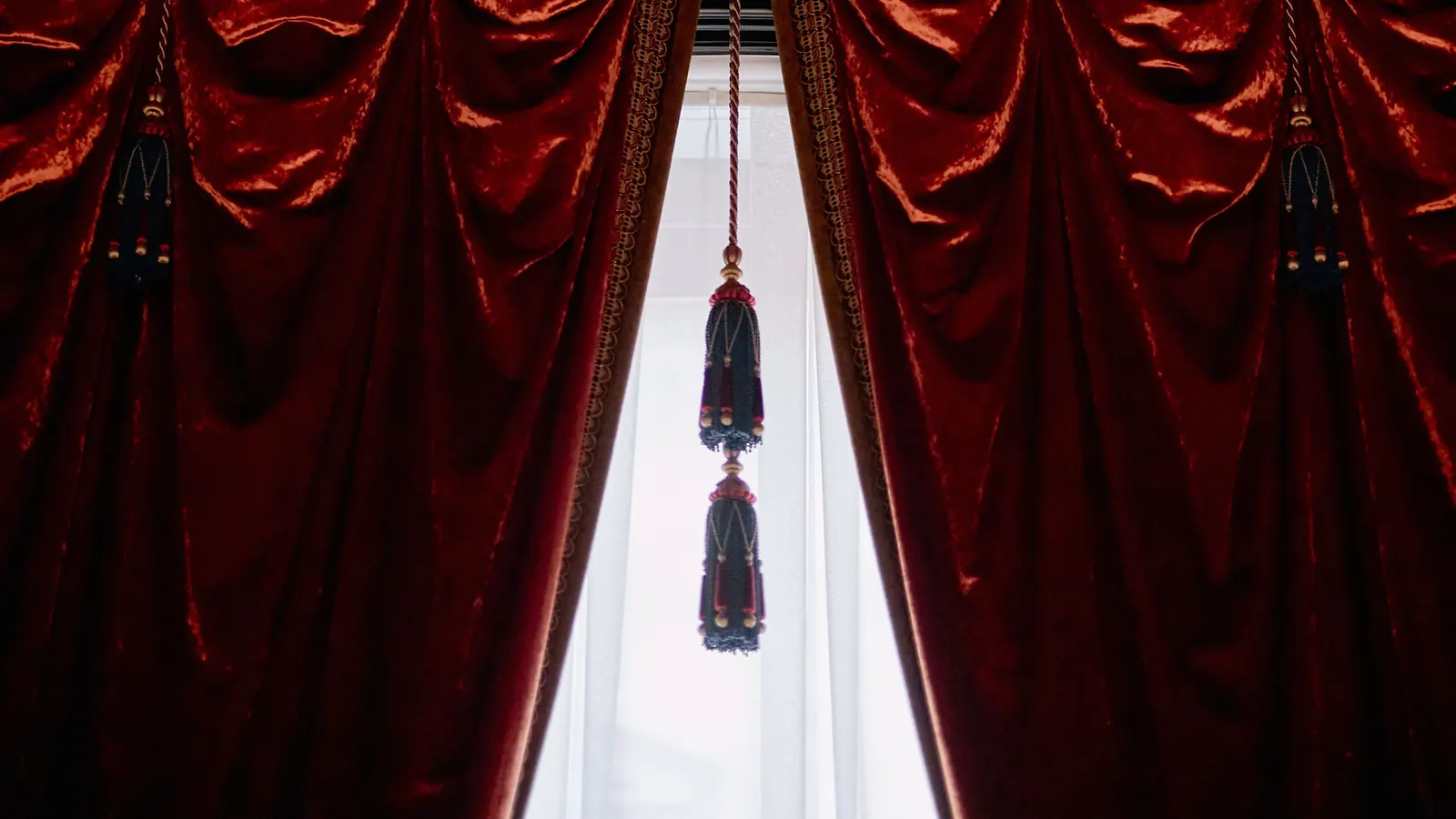
Velvet is the one curtain fabric whose color changes as it folds. Where the pile leans away from you it looks deep and almost inky; where it catches the window it goes pale and silvery, so a single bottle-green panel carries several greens down its length. Add weight, enough that the fabric falls in heavy, rounded folds instead of fluttering, and a plain rectangle of cloth becomes the richest thing in the room.
How the pile behaves
The effect is a matter of pile angle. YOMA Textiles’ velvet care guidance explains that crushing alters the angle of the pile and so the way it reflects light, which shows up as lighter or darker patches. It adds that such marks usually fade over a month or so, sometimes with steaming and brushing, and that freshly hung velvet gains richness and luster over several months. Velvet can be made up with the pile running up or down, as long as every panel runs the same way. Pile up gives a deeper color but shows handling marks and collects dust; pile down reflects more light, so the color is less deep and marks show less.
Ask the workroom or seller which way the pile runs, and make sure a pair matches. For separate orders, an online color name is no guarantee of a close match. Hold a sample upright, the way it will hang, and turn it toward the window and then toward a lamp, in daylight and in the evening. A swatch cannot show a full fold or the stack, so pair it with photographs of the same fabric hanging. Read the composition as well: velvet names a structure, cotton, synthetic and blended versions carry different care, and a velvet-look fabric can be built differently from true velvet.
Color in the room
Green is the color people most often search for, and it spans muted gray-green to saturated emerald. Set the sample beside your wood tones and upholstery. A deep green or oxblood reads as an anchor, a place for the eye to rest at the end of a living room, while oatmeal or dusty blue velvet keeps the texture and lets the walls lead. Against a patterned rug and busy upholstery, plain velvet gives the window a quiet surface; among smooth, plain furniture, its folds are the one thing in motion. Plain rings and a simple rod are enough, and tassels are optional.
Weight, lining and light
A velvet panel is heavy, so the rod, brackets and any center support must carry the finished weight of the panels. Find the panel weight in the listing and compare it with the hardware’s stated load. A wide span can need a middle support, which can interrupt the glide of the rings, and a track needs suitable support of its own.
YOMA calls lining essential for velvet curtains, saying it greatly improves the hand and general appearance. It also says no fabric is fadeless and that curtains should not be treated as sun blinds, so a shade or sheer behind the velvet shares the work. Velvet blocks light only if the panel and lining are sold to do it, and even a blackout panel lets light in around the edges and above the rod. For a bedroom that must be dark, add a separate shade. Thickness alone gives no figure for noise reduction either.
Stack and operation
Gathered velvet takes space. Pull the panels fully open and see how much glass the stack covers and whether it reaches a cabinet, radiator or door. Heading style and fullness change the stack, so ask for those numbers instead of applying one width multiplier. If the curtains close often, a draw wand made for the system saves handling the fabric, whereas an improvised accessory strains the heading. If the rod uses a pull cord, keep it up out of reach of children.
Cleaning, delivery and settling
Instructions vary by maker. YOMA recommends dry cleaning only for its velvets. Bemz says its synthetic velvet curtains can be machine washed gently at 30 degrees Celsius, line dried in the shade and not tumble dried, with ironing or steaming from the back at a low setting. Your label has the final word, and lining, heading and trim count along with the face fabric. If it is missing, ask the maker or a qualified textile cleaner before you treat the pile, and skip steaming, ironing or brushing an unknown velvet, since heat, moisture and pressure can mark the finish. Bemz’s curtain care guide also suggests gentle vacuuming with a soft brush tip.
When the panels arrive, compare them with your order (color, length, heading, lining, quantity) in steady light, then hang them and give the pile time to settle before judging shading or fold lines. Stains, damaged seams or wrong dimensions go back through the seller’s process, and hems and headings stay uncut until any problem is resolved, since alterations can affect returns. Open and close the panels several times and watch the path past window handles, furniture and hardware supports; they should glide without catching or needing a hard pull. Store them with nothing heavy on top.