Window Treatments: Types, Practical Ideas and How to Choose
Blinds, shades, curtains and shutters move differently and solve different problems. Set separate goals for daylight and privacy, then pick the type and combination.
By DecoraMintPublished 6-minute readMore in Blinds & Shades
In this guide
We may earn a commission from links on this page, at no extra cost to you. Affiliate disclosure
Linen panels stacked beside a window look effortless, but the shade behind them is usually doing the work. Curtains dress a window, shades and blinds control it, and shutters do both at a higher cost in floor space and money. Most rooms need one working layer for daily light and privacy, plus an optional second layer for softness or a darker night. Decide which layer you will operate every morning, and the category mostly picks itself.
Match the category to the room
A street-facing living room needs daylight by day and screening after dark. A white or pale-gray Roman shade inside the frame does the daily work, with full-length linen panels on a rod mounted well above the glass, so the window looks taller and the shade sits in shadow behind the fabric. In the evening the panels close across the shade; by day they stack beside the glass and leave the view clear. Order panels wide enough to meet in the middle if you want them to close, since narrow decorative side panels will not become a full nighttime covering. With panels in front, the shade’s bottom rail sits behind fabric and is harder to reach, so settle the lift before the color: Persilux’s Roman shades collection opens a page that lists cordless, motorized and no-drill versions together.
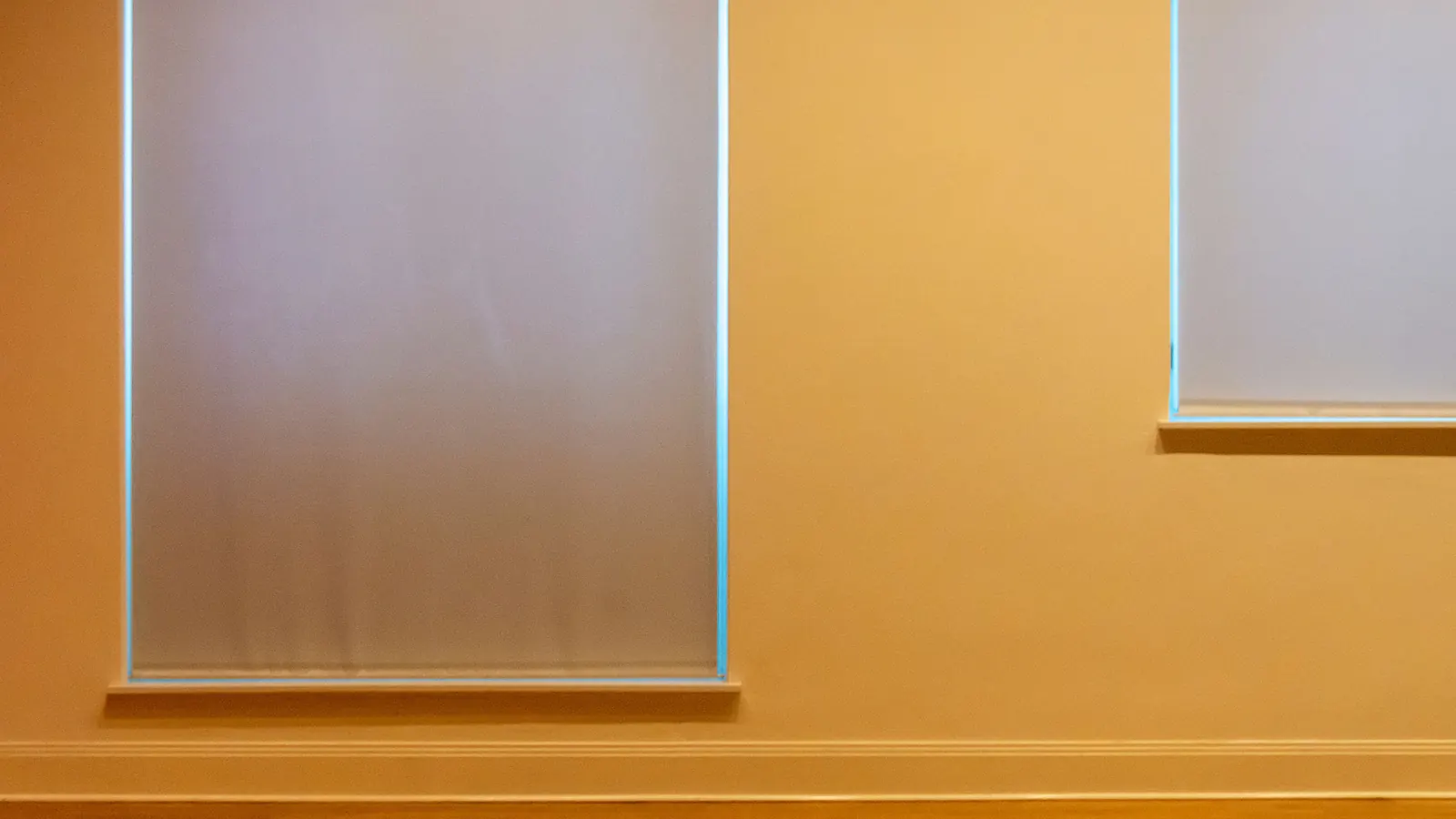
A bedroom puts coverage ahead of style, and the edges matter more than the fabric label. A deep-blue blackout roller mounted in the recess, with a wool-blend curtain on an outside-mounted track extending past each side of the frame, works well together: the roller handles the sleeping hours, and the curtain overlaps the sides and softens the hard edge of the roller at the head of the bed wall. Bracket projection, side overlap and the gap at the sill all decide how much light leaks. Layer curtains over a shade only if the brackets let each move independently, with Roman folds never pressed against the curtain track.
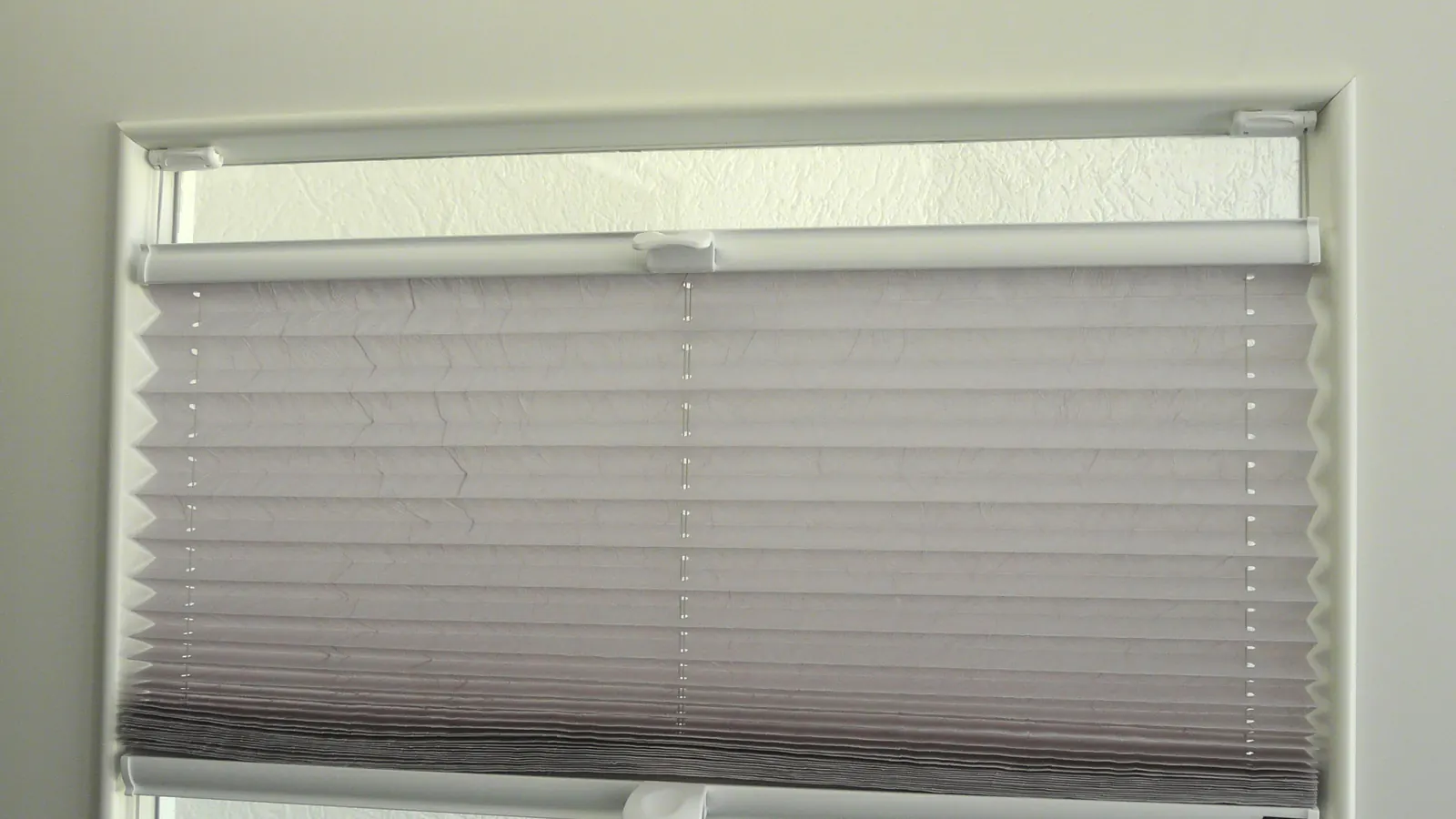
A desk by a window needs partial control. Blinds whose slats tilt, or a shade you can lower from the top of the glass, handle a bright reflection on the screen better than a fixed panel. Persilux’s top-down bottom-up cellular shade is one of the second kind, sold in light-filtering and blackout versions of six colors: at a desk the light-filtering fabric is the useful one, and because both rails move, it can sit as a band across only the part of the glass that throws light onto the screen. Judge the fabric at the hours you work, since a very open weave that keeps the view can leave the same glare.
A wide glazed door asks for something that clears the path. A traversing curtain or a vertical covering opens sideways toward the hinge or slide side, while a lifting shade can work when its raised rail and controls stay clear of the handle. Measure the open stack, not only the closed width.
A row of unequal windows hangs together when one visible thing repeats, such as the fabric color, the height of the top edge or the hem line. Choose one, then let widths and mechanisms vary.
How the main types move
| Treatment | Operation | Worth comparing |
|---|---|---|
| Horizontal blinds | Slats tilt; many also lift into a stack | View between slats, raised stack depth, cleaning access |
| Roller shades | Material winds onto a tube | Fabric openness, side gaps, roll direction, bracket projection |
| Roman shades | Fabric folds as it rises | Folded stack, lining, clearance above the window |
| Cellular or pleated shades | Folded material compresses when raised | Construction, operating direction, space taken when open |
| Curtains or drapery | Panels slide on a rod or track | Coverage, opening direction, room for the gathered panels |
| Interior shutters | Louvers tilt in hinged, sliding or folding panels | Louver clearance, frame depth, space for panels to move |
A category name tells you the mechanism and little else: a roller shade can be sheer or opaque, and a curtain can be fixed decoration or a working closer. Shutters need the most floor planning. Hunter Douglas’s shutter reference guide separates the hinged panel, the movable louvers and the frame, and a hinged panel needs a different clear area from a sliding or folding one, so keep a chair or sofa arm out of that sweep.
Light and privacy are separate questions
Write down what you want to see and what someone outside should see, at both noon and ten at night. A weave that feels private in daylight can show silhouettes once the room is lit. A sheer softens a view without screening it after dark, an opaque material can still leak light at its edges, and slats redirect sightlines at certain angles.
When it matters, get a sample of the exact fabric and color. Hold it in the window, view it from outside where that is safe and permitted, and judge it with lamps on. A small white swatch on a white website shows far less.
For a room that wants both a view and an evening screen, compare one adjustable covering with two independent layers, and keep the second layer only if you will use it. A pale linen curtain over a white roller shade, for instance, gives a bright morning room with a softened edge, and it works only if the shade’s control stays reachable behind a sofa back.
What the window does when it is open
An open covering still takes up room. The roller tube stays at the top, Roman fabric forms a stack, blinds gather into slats and curtains bunch beside the glass. Sketch both positions, including window handles, cranks, inward-opening sashes, cabinet doors, and any radiator or vent. Keep coverings the clearance from heaters that their instructions give.
Inside mounts sit in the recess and need enough depth and a suitable surface; outside mounts sit on the surround and change the coverage you need. Persilux, one retailer of blinds and shades, publishes its measuring instructions. It has you measure the inside width, take the largest of three height readings and leave the factory deductions to checkout, so follow the instructions for the model you order instead of borrowing a deduction from another brand. For a closer look at one family, see how to choose window shades or browse the blinds and shades guides.
Cords, controls and young children
Children have strangled on the cords of blinds, shades, draperies and other window coverings, and CPSC says cordless coverings are the only option that eliminates the strangulation hazard, so choose them wherever young children are present. Where cordless is not possible, move cribs, beds, furniture and toys away from windows and cords, preferably to another wall. That reduces the hazard without removing it. A motorized system hides the lift cord, and any remaining loop or tilt wand still counts.
For adults, think about reach and grip. A cordless lift still needs a handle or rail you can get to. A motorized shade needs a power source, and remote control, app control and compatibility with a given smart-home platform are three separate features.
Cleaning belongs in the decision too. Many slats, deep folds and long panels each mean a different chore, and a removable panel is not necessarily machine washable.
Energy claims belong to the product
PNNL’s window-attachment guidance says interior attachments tend to be less effective against heat gain than comparable exterior ones, and that for summer cooling you close them by day and open them at night, while in winter you open them when sun hits the glass and close them at night and on cloudy days. It describes multilayer honeycomb shades as one of the most effective interior options for reducing winter heat loss, and points to ratings from the Attachments Energy Rating Council. It also notes that closed insulating shades can cause condensation on cold glass. If energy matters to your choice, compare the rating of the specific product, and keep light control, privacy and insulation as separate lines in your comparison.
A top valance covers the upper part of the opening or the hardware and gives no privacy across the rest of the glass. Buy the working layer first and let the decorative layer wait until you have lived with it for a few evenings.
Retailers to browse
Compare colors, sizes, materials and return details on the retailer’s current listings.
- Browse blinds and shades at Persilux
Persilux
Opens Persilux’s blinds and shades collection, not a single product.