Wood Headboards: Choose the Shape, Finish and Attachment
Will it bolt to your frame, hang on the wall or come as part of a new bed? Settle that first, then judge the visible height, the shape and whether you can sit up against it.
By DecoraMintPublished 4-minute readMore in Bedroom
In this guide
Subtract the mattress and the pillows, and what is left of a headboard is the part you will actually see. A 48-inch headboard behind a sleeping surface 28 inches off the floor shows 20 inches of wood above the mattress, and less once two upright pillows lean against it. That is a calculation for proportion, not a recommendation, but it is the one to do first, because a design that looks commanding in a product photo can nearly vanish behind a deep mattress and a stack of pillows.
The other early question is mechanical: does this headboard bolt to the frame you own, hang on the wall, or come as part of a complete bed?
Will it attach to your bed?
Write down the mattress size, the frame model and the height of the finished sleeping surface, including foundation and topper. A headboard sold as queen or king does not necessarily fit every queen or king frame, since bracket type and mounting position differ. Ask the seller to confirm fit for your exact frame.
A headboard that comes with a bed is part of that bed’s structure. West Elm’s Nash storage-bed instructions show it joined to the other bed components, which is a reason not to treat it as a universal standalone part. The same manual calls for periodic checks of its hardware; that applies to the documented assembly, not to an improvised one.
| Situation | Why choose it | What has to be right |
|---|---|---|
| Made for your frame | Updates the bed and keeps its support | Exact compatibility and hardware |
| Wall-mounted | Placed independently of frame details | Wall construction, mounting system, position relative to the bed |
| Part of a complete bed | Coordinated design with documented assembly | Full footprint, mattress support, delivery route |
A tall headboard that is only leaned behind the mattress can tip or shift. Treat a freestanding arrangement as acceptable only when the maker provides for it and gives restraint instructions. Drilling new holes or adapting brackets creates an installation the product was not designed for, so if the connection is unclear, get an answer before buying.
Panel, slat or shaped
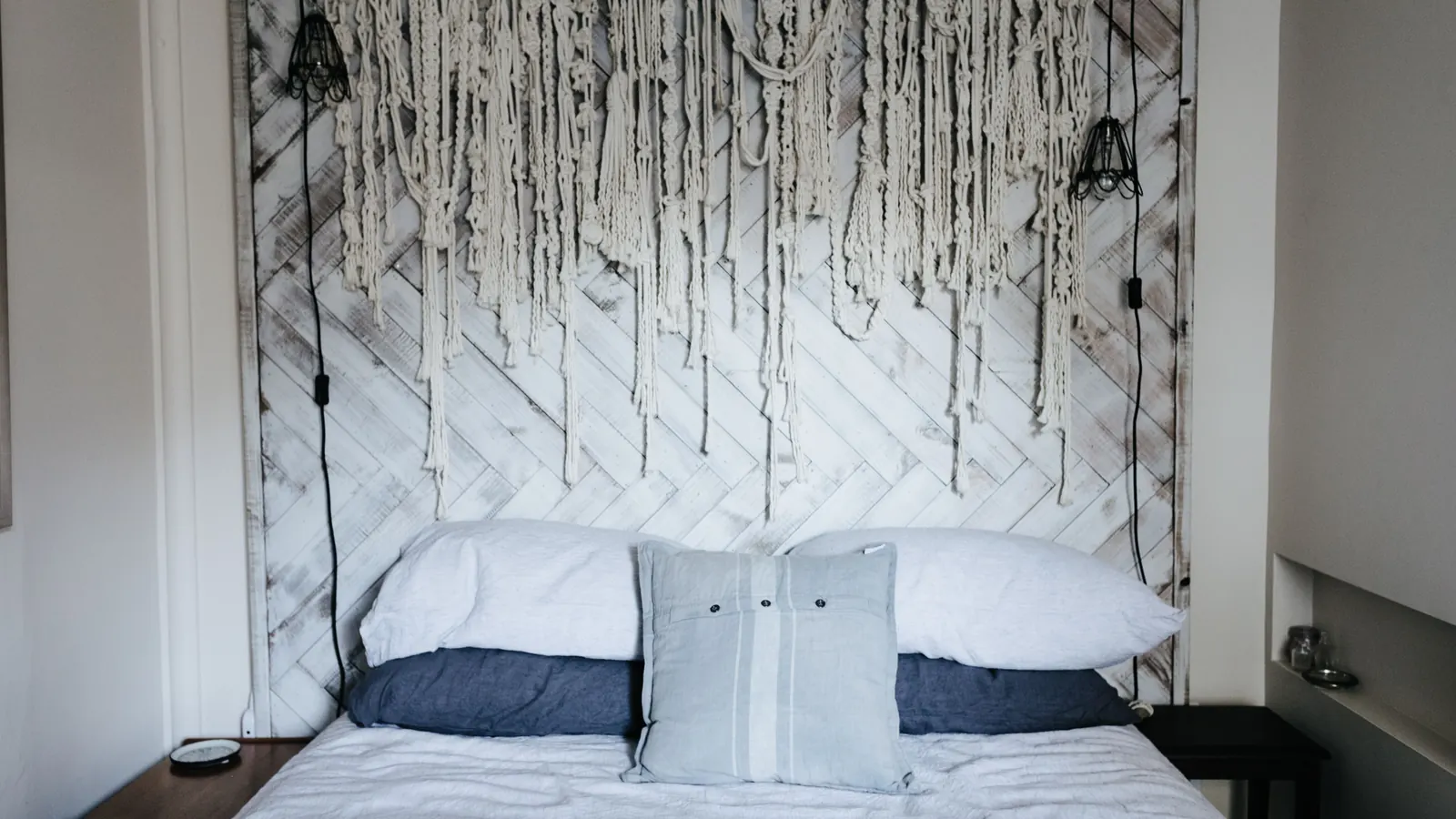
A solid panel gives the bed a calm backdrop and puts the grain or paint on display, as in the whitewashed chevron pattern pictured here, where the angled boards do the decorating and the bedding can stay simple. Slats let light and the wall show through, so the design feels lighter and suits a small room. Carved or shaped outlines carry the most detail; keep the bedding quiet so they do not compete, and remember that every curve is something to dust.
Check whether a panel is solid wood, veneer or another material. Appearance does not settle it. Painted white wood, whitewashed wood and a white laminate look different at the edges and in the grain.
Height and the wall
A tall headboard works as the focal point and can replace artwork above the bed. A low one suits a wall where a window or sconces already carry the composition. Tape a paper outline to the wall and look at it from the doorway and from beside the bed, with outlets, switches and sconces in view. A wide wing or storage ledge can block a bedside outlet, so check that too.
Wood next to wood
Hold finish samples next to the floor, nightstands and dresser, in morning and lamp light. A warm finish beside a cool gray floor looks different from the same finish against honey-colored boards. Everything does not need to match. A clear difference reads as intentional when the shapes stay simple, . If tones are close, a textile such as a quilt or rug between them breaks the comparison. “Oak” may mean a species, a veneer or just a color, so ask when it matters.
Sitting up against it
If you read in bed, think about what touches your back. A flat panel, an angled shape and open slats each press differently, and a wood headboard has no cushioning, so add pillows you actually like. Do not use pillows to cover a gap or prop an unsecured headboard, and follow the maker’s guidance on leaning against it.
Clean it the way the finish calls for: a painted or coated headboard needs different care from an oiled one, so skip the oil or wax until you know which you have. A secondhand headboard needs its model identified, its instructions and hardware sourced, and the area around the attachment points checked for damage before it goes up. A new mattress size often changes the required attachment, so confirm compatibility before pairing a headboard you own with a new bed.
Then do the one piece of arithmetic that settles the purchase: subtract the mattress surface height from the headboard height in the listing. Whatever is left, minus your pillows, is the wood you will actually see.