Blanket Buying Guide: Choose for the Sofa, Bed and Daily Care
A good blanket covers the person or bed it was bought for and is easy to wash. Give it one job first, then compare material, weight, real size and care.
By DecoraMintPublished 7-minute readMore in Blankets & Throws
In this guide
Three questions sort almost every blanket: what is the fiber, how is the cloth built, and how much of it is there for the size? Answer those and the rest of the listing, the color name, the photographed fold, the adjectives, mostly sorts itself out. The sections below take them in order, then move on to layering, size and care.
Fiber: read the label, not the collection name
Fiber content is the one thing a seller has to state. The Federal Trade Commission’s textile-label guidance lists blankets among covered bedding, requires fiber content on the label, and says any product containing wool falls under the Wool Act as well. It also says “wool” means fiber from the fleece of sheep or lamb, and that recycled wool has to be identified as recycled. A blanket called “Highland” or “Alpine” can therefore be wool, acrylic, polyester or a blend, and only the percentages tell you which.
Each fiber family behaves in its own way. Wool is dense and springy and often needs gentler cleaning. Cotton is flat, absorbent and easy to launder. Acrylic and polyester are what most fleece, sherpa and budget knits are made from, light for their bulk and quick to dry. A blend simply mixes those traits, so judge it by its percentages and by what the label tells you about washing.
Construction decides the look and the handling
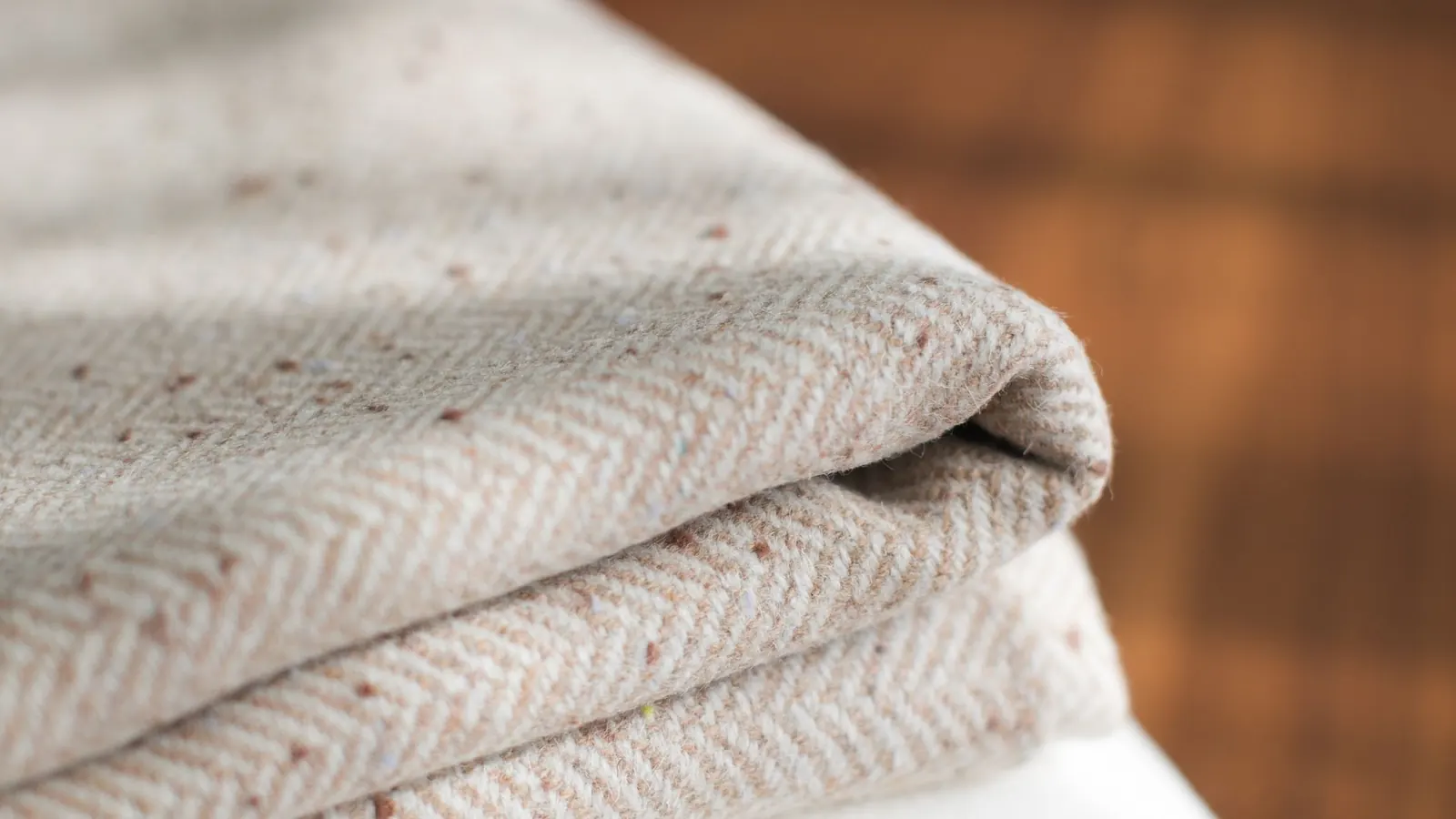
The same fiber can be made into very different cloth. Woven blankets come off a loom as a flat, stable cloth, often with fringe or a bound edge, and they tend to hold a crisp fold. Knit blankets are built from interlocking loops: they drape, give a little and show off chunky texture, and a loop can snag on a ring or a pet’s claw. Fleece, sherpa and other pile surfaces are brushed or looped on one or both faces, which gives a deep, plush face, often with a smoother reverse. Quilted and filled blankets add a layer of batting held in place by stitching.
Two blankets can match on fiber and still not feel alike, so look at both faces and the edge, and ask for a photograph of the reverse if the listing shows only the front. A pile on one side and a flat weave on the other will look different folded over a sofa arm than a blanket that is the same on both sides.
Weight: compare like with like
Many listings give fabric weight in grams per square meter, which is mass spread over an area. It is a fair guide to how substantial the cloth is, though it does not measure warmth. A king blanket will outweigh a throw of the same fabric because there is more of it, so compare weights only at the same size. If a listing gives one total weight and no area, treat it as a hint about handling, how easily you can lift it, fold it and put it in the machine, and little else.
Build the layers so one can come off
A bed made with a fitted sheet, a flat sheet, a blanket and a quilt or comforter gives you three levels of warmth: sheet alone, sheet and blanket, everything. Tucking a blanket tightly under a heavy comforter removes that option. Leave it loose enough to pull out or fold to the foot without stripping the bed. A single blanket can serve as a light summer cover or as a middle layer in winter, so we would buy for the shoulder seasons first and add or remove layers around it.
If two people in one bed run at different temperatures, two smaller blankets on separate sides can serve better than one shared oversized layer. If you are shopping for hot sleepers, our cooling blanket guide covers that specific question; the fiber, construction and weight checks above still apply.
A summer bed is where this pays off most. If the heavy top layer is what keeps you awake, a lighter blanket you can fold down is a smaller change than a product sold as actively cooling, so try the simpler arrangement before buying several new layers. Decide whether the blanket is for the first hour in an air-conditioned room or for coverage all night, since the first calls for a small easily moved layer and the second for full-bed coverage that can be pushed aside. This is everyday adult bedding advice; it makes no claim about night sweats or any medical need.
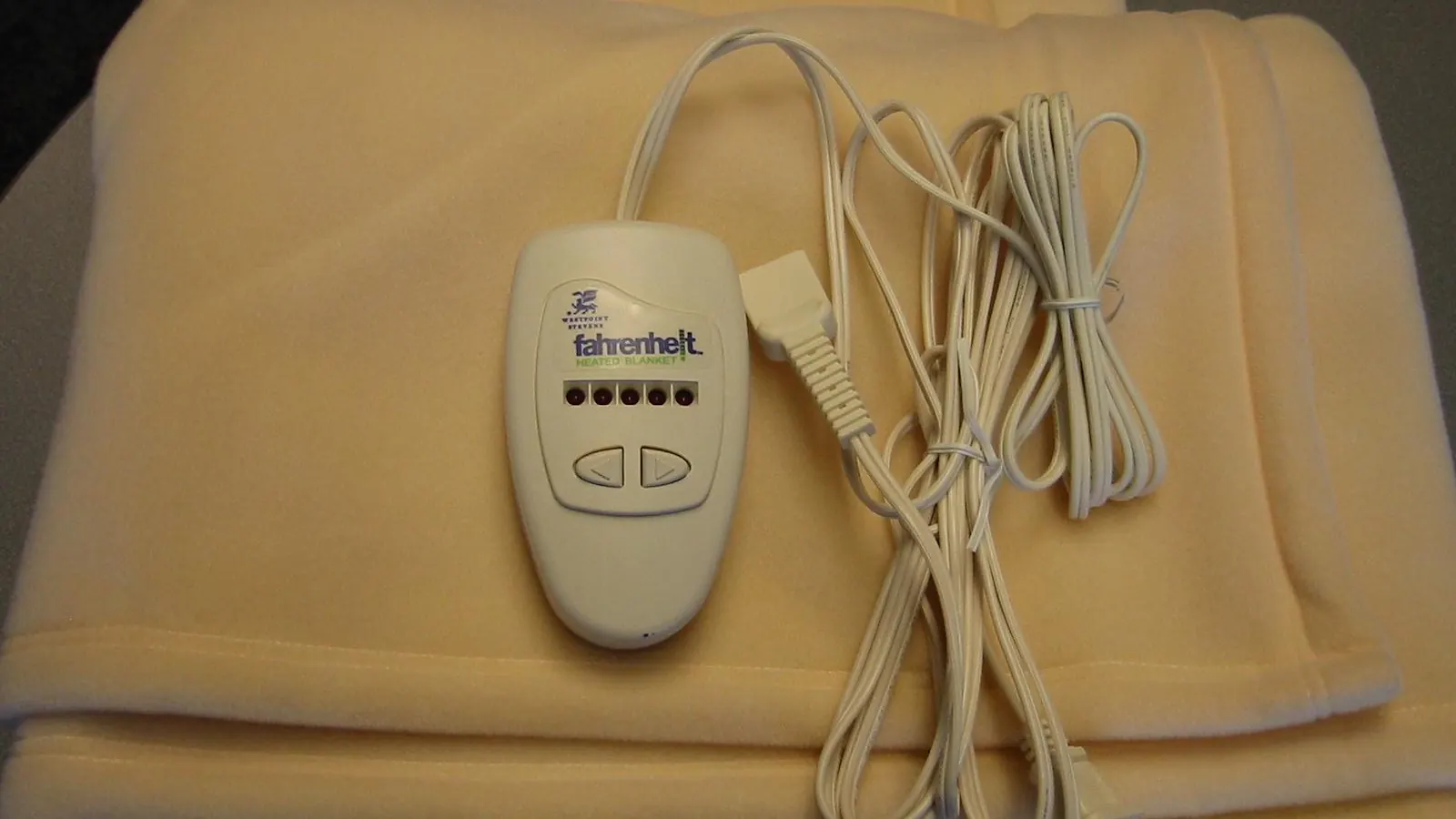
Layering like this is for adult beds. Heated and weighted blankets carry their own safety instructions and suitability limits, so choose them from guides written for them. For babies, CPSC’s safe-sleep guidance says to add no pillows or blankets to the sleep space, which should hold only a tight-fitting sheet in a bare crib, bassinet or play yard, and CPSC also says not to use weighted blankets or weighted swaddles. The American Academy of Pediatrics adds that soft objects and loose bedding raise the risk of entrapment, suffocation or strangulation, and suggests layers of clothing or a wearable blanket for warmth.
Sofa and bed need different sizes
Use the listed width and length in inches, not “throw,” “queen” or “oversized,” which have no fixed meaning. For a bed, subtract the mattress width from the blanket width and halve the result to get the drop on each side, then do the same for the foot. Include a topper if you use one. For a sofa, sit the way you actually sit, legs stretched along the cushions or tucked under you, with an old sheet over you, and see where the edge falls. A throw that covers one person can be too narrow when two share it. Ask whether fringe is included in the dimensions, since it adds length without adding coverage.
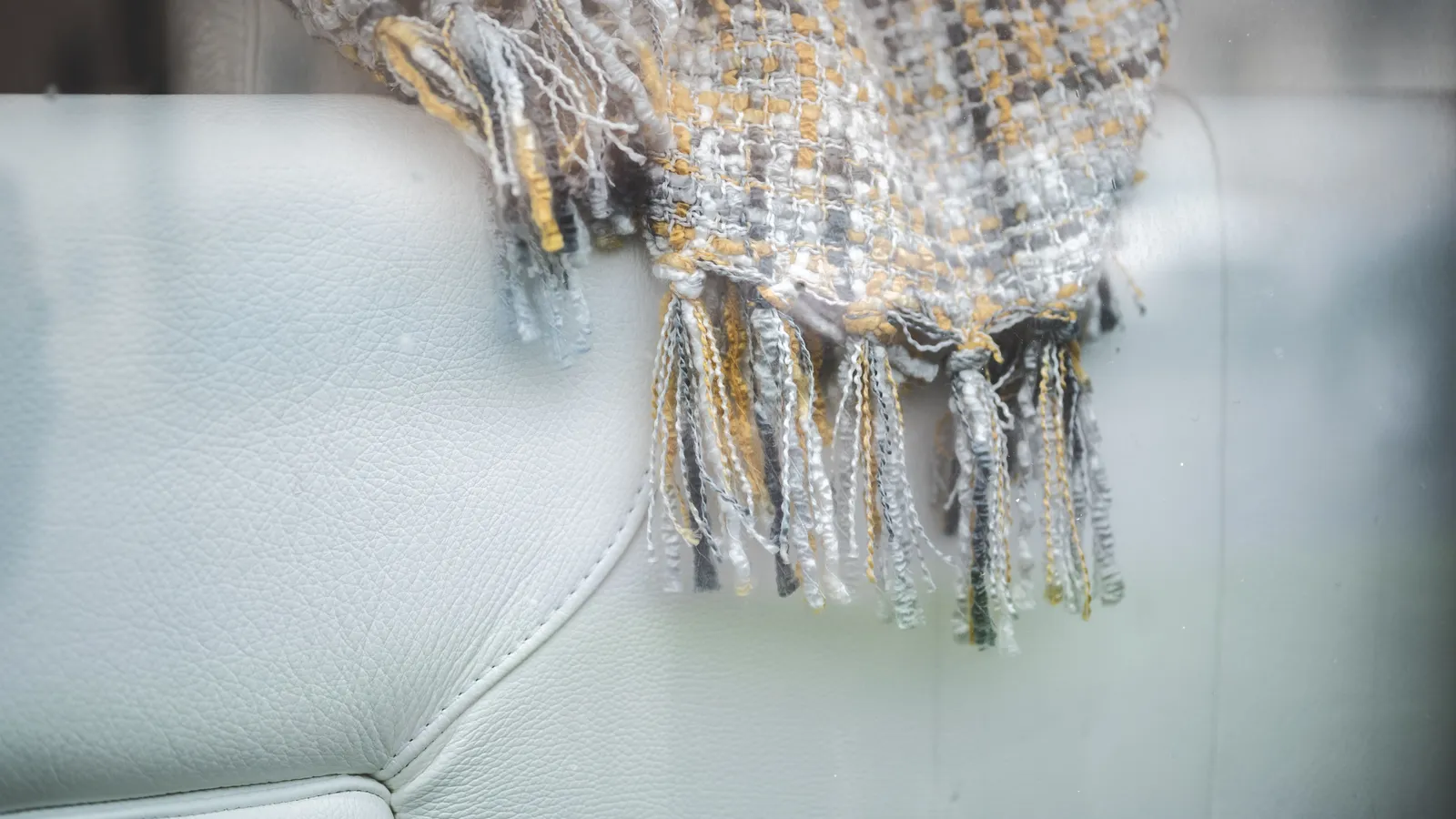
A sofa throw works as part of the room as much as a source of warmth. On a tan leather sofa in a den with dark walls, a rust or brown throw picks up the warmth of the hide, and a loosely folded chunky knit in cream adds a raised texture against the smooth leather. In a living room where the rug already carries pattern, a plain throw in one of its colors gives the eye somewhere to rest. A small pink or orange accent on a neutral sofa stands out because the area is small, though the same color unfolded across a double bed becomes the room’s main note. View the blanket folded and spread out against the upholstery before you decide.
On a bed, a blanket folded in thirds across the foot over white or cream bedding looks like a layer you could reach for, and a single contrast stripe or a fringe becomes the accent. One blanket with a handsome reverse beats two matched ones, since the fold shows both faces.
Two throws for comparison
The blankets and throws collection has more to browse, and the two IKEA throws below show how much a throw can differ. We have not tested either one; the details come from IKEA’s own product pages.
| Throw | Size and fabric | Care label |
|---|---|---|
| IKEA VALLKRASSING, light gray-brown | 59 by 79 inches; 100% cotton | Machine wash warm; tumble dry on medium; shrinkage up to 6% |
| IKEA KLIPPOXEL, orange/bright pink | 51 by 67 inches; 100% recycled polyester | Machine wash cold, delicate; do not tumble dry; shrinkage up to 4% |
See the VALLKRASSING page and the KLIPPOXEL page. The cotton one is larger and can go in the dryer, so it suits a sofa where you stretch out. The polyester one is smaller and has to air dry, which makes it an accent for an armchair, provided you have somewhere to hang it. These are ordinary source links, not affiliate links.
Washing and storing
Wash according to the label, and expect it to differ by cloth. Pendleton’s care guidance says machine-washable wool blankets go in cold on the gentle cycle and hang to dry; otherwise it points to dry cleaning, since washing can shrink wool by 3 to 6 inches and stiffen it. The two IKEA tags above show the same spread in a single store.
For a blanket that lives in a cupboard in summer, clean it first. Pendleton says body oils attract moths, so wool should be clean before it is stored in an airtight bag or container; it rates cedar and herbal products as offering limited protection. For a guest room, a smaller spare layer is easier to wash, dry and swap than a large blanket that is unavailable for a day, and a damp blanket should stay out of storage until it is completely dry.