How to Wash a Heated Blanket Without Damaging It
A heated blanket can only be washed the way its own instructions allow. Find the model and care label, list what can get wet, then follow the drying and reconnection steps exactly.
By DecoraMintPublished 4-minute readMore in Blankets & Throws
In this guide
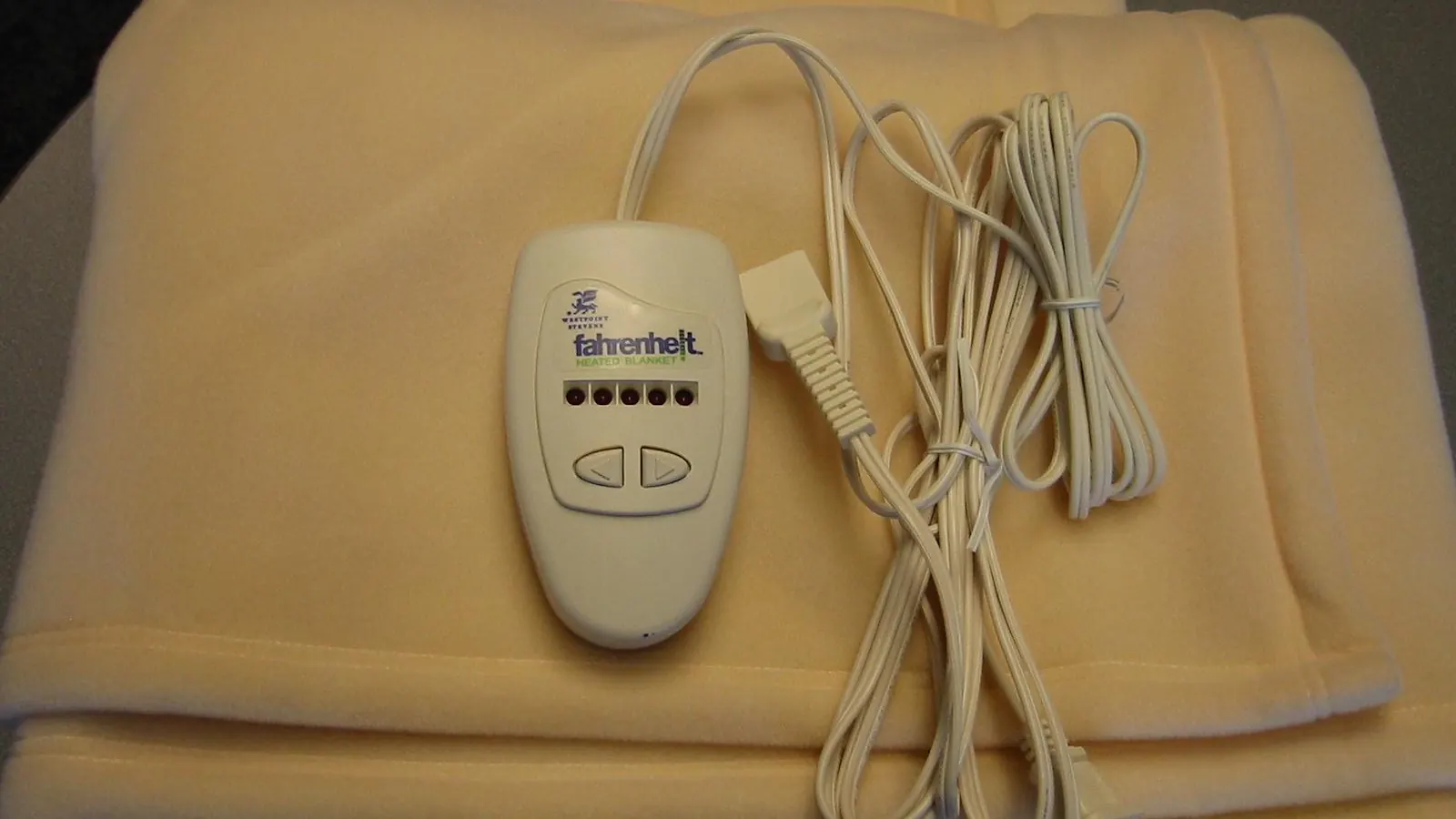
The washing machine is the second step. The first is the wall socket: unplug the blanket, then detach the controller and cord from it. Everything after that follows the care label sewn into your blanket, because heated bedding is a textile with wires running through it, and makers disagree about how much water and heat those wires can take.
If the label is gone, find the model number on the blanket’s tag (the number on the controller may not be the blanket’s) and look up that manual. If you cannot work out the permitted method, contact the maker before washing, and treat hand washing or spot cleaning as options only where the manual names them. Sunbeam’s instructions show what a good manual looks like. Its care page and several of its model manuals describe a gentle or delicate cycle in cold water with no bleach (one Sleep Perfect manual allows lukewarm water instead), a rule never to dry clean (the manuals say the solvents can damage the wires), and a firm rule that the blanket must be completely dry before any plug goes back in. Those are Sunbeam’s products. Your blanket may be hand wash only, spot clean only or, if it is old, not washable at all, and Sunbeam’s manual index shows how quickly the wording changes from one bedding product to the next.
Washing, step by step
- Disconnect. Switch the controller off, unplug the cord from the wall, then detach the controller from the blanket. The controller never goes in water.
- Set the machine to the label. Use the cycle, temperature and detergent the label names. Mild detergent and no bleach is the pattern in the Sunbeam manuals above.
- Wash the blanket alone, with room to move in the drum.
- Spin, do not wring. Sunbeam’s care page describes spinning the water out in the machine and gently reshaping the blanket. We would not twist or wring it by hand, since that tugs on the wires inside; that part is our judgment rather than a quoted maker line.
- Dry it the way the label allows (next section).
- Reconnect only when it is dry all the way through.
Fleece and plush blankets can feel soft and dry at the surface long before the thick seams and corners are, so test those spots with the back of your hand. A blanket that feels airy and springs back when you press it is a better sign than one that is merely cool to the touch.
Drying
Some blankets are marked dryer safe, and a few Sunbeam manuals allow a short low-heat tumble before draping the blanket to finish, while others call for air drying only. Whatever your label says, never use a commercial dryer or a laundromat machine: Sunbeam warns against them because they run hot enough to harm the wiring. For air drying, one Sunbeam throw manual says to drape the blanket over a clothesline or shower rod and not to use clothespins, which could interfere with the wiring.
Leave yourself a day. Washing a heated blanket the afternoon before a cold night is how a damp one ends up plugged in. Never switch it on to speed the drying. If the controller or a connector got wet by accident, stop and contact the maker; a dry-looking outside does not show that the plug is safe to use. Reconnect only the controller made for that blanket, since a plug that looks the same can still be the wrong one.
Inspect it before the first use
The Consumer Product Safety Commission’s home electrical checklist lists what to look for on an electric blanket: cracks or breaks in the wiring, plugs and connectors, and dark, charred or frayed spots on either side of the blanket. Any of those means discard it, since the checklist treats them as damage and a potential fire hazard; washing will not repair them. For a persistent stain, ask the maker instead of scrubbing near the wiring or adding stronger stain removers. Lay it flat on the bed, because the same checklist says a folded blanket can overheat and that the heating wires must never be pinched or bent at tucked-in corners. The checklist also says nothing should lie on top of an operating blanket, because other blankets or a pet can make it overheat, and that if you are unsure what your instructions allow, that includes even a light bedspread.
If the blanket is older or secondhand, look up its brand and model in the CPSC recall database before it goes back on the bed.
Battery models and zip-off covers
A battery blanket adds a pack and connector to the list of parts that stay dry, so remove them before washing and follow the maker’s storage directions. Our cordless heated blanket guide explains how those models differ. A zip-off cover with its own care label is washed on that label’s terms, while the heating element beneath it follows the element’s instructions. For throws with no wires at all, the blankets and throws collection is the place to browse.