How to Choose a Mattress: Compare the Complete Purchase
The mattress, the base under it, the delivery and what happens if it does not suit you are one purchase. Write a short brief, compare complete costs and keep a shortlist you can explain.
By DecoraMintPublished 5-minute readMore in Bedroom
In this guide
Which way do you sleep, how does your build compare with whoever shares the bed, and what can you undo if the first guess is wrong? Answer those three and the field narrows faster than any feature list could manage, before a brand name or a layer diagram enters the picture.
Start with the sleeping position
Where your body presses hardest decides how much give you want. The Sleep Foundation’s side-sleeper guide notes that side sleepers’ shoulders and hips sink deeper into the surface and that most prefer a cushioned, body-hugging feel. Its stomach-sleeper guide points the other way: because the midsection is the heaviest part of the body, stomach sleepers generally do better on a firmer bed that keeps the hips from sinking too far. Back sleepers fall between the two, which makes an in-person lie-down or a trial more useful for them than a rule.
Treat these as starting points for a shortlist. They describe tendencies in those guides’ testing, and personal preference still counts. If you change position through the night, the mattress that feels best for the first ten minutes may not be the one you want at 3 a.m., so spend longer on it than a showroom minute.
Body weight and the shared bed
In the same side-sleeper guide’s product reviews, sleepers under about 130 pounds tend to favor softer models and those over about 230 firmer ones. That is one publisher’s testing, and it shows why “medium” feels different at either end of the weight range.
On a shared bed, write down each person’s position and preference before looking at products. If the answers differ, that is information: a medium surface, a mattress with a firmness option for each side, or two separate mattresses on a split frame are the usual ways to resolve it, and each has its own cost and bedding implications. Better to learn about the disagreement now than after you have chosen a brand together.
What construction tells you
A mattress is a stack of layers, so read the whole description before the headline material. A foam top over coils feels different from foam over foam, and a model that comes in several heights or firmness settings is several products with one name. Write the exact version next to its price so you are comparing like with like.
For a hybrid, compare the whole configuration, not a coil count by itself. For an adjustable setup, find out what is included and what moves. Set the final choice against the base you will use, since a mattress’s height and weight change how the whole bed looks and operates.
Cooling features and particular materials get their own comparison elsewhere and are left unranked here.
The mattress in the room
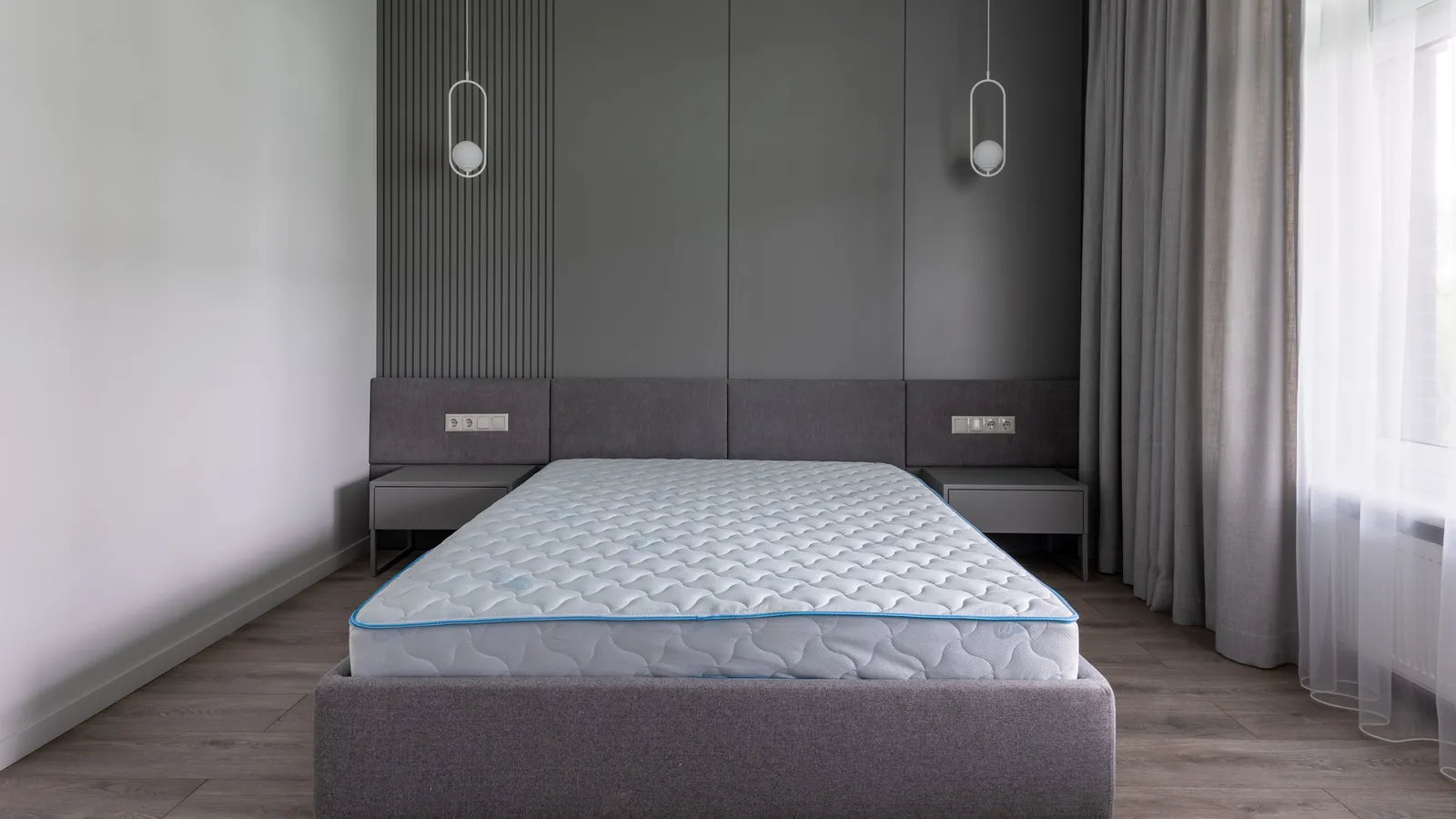
A thick mattress on a high platform frame changes the room. The bed sits well above the nightstands, the headboard shows less, and a low window sill can end up behind the pillows. A slimmer mattress on a lower frame leaves the wall behind the bed open, which suits a bedroom with a good window or a large piece of art above the headboard.
We would choose the sleeping surface first and then adjust the room around it. Raise or swap the nightstands so their tops sit close to the top of the mattress and within easy reach from the pillow, check how the duvet falls over the thicker edge, and look again at how the bed fits with the door swing and drawer fronts. A new mattress is a good time to plan these things, because the finished height is the one number that every other piece in the room relates to.
What the budget has to cover
Put the mattress and everything required in one list: a compatible base if yours is not, delivery to the room, old-mattress removal, sheets that fit a different depth and any service fee. Keep optional extras in a separate column. Pillows in a bundle count for nothing if you would not have bought them.
Compare packages by what you would actually pay to get a usable bed. A cheaper mattress that needs a new base can cost more than a pricier one that works with the frame you own, and the second may still not suit your sleep. The arithmetic only stops the sticker price from hiding the extras.
Trials, exchanges and warranties are different promises
An exchange lets you pick another item under conditions, a refund returns money, and a warranty covers defined defects. Two retailers show how far the structures can differ:
- IKEA says you have up to 90 days to exchange a mattress once, that it cannot be dirty, marked or damaged, and that it goes back to a store with the receipt. If the replacement costs less, the difference is credited to an IKEA refund card, and the policy does not cover bed bases, slats or toppers. See IKEA’s exchange policy.
- Saatva lists a 365-night trial on mattresses, with a $99 fee for pickup on returns and for delivery and pickup on exchanges. Returning part of a bundle refunds only those items, and adjustable bases are excluded. See its trial terms.
These are two policies among many, and the questions they raise suit any seller. Is it a refund or only another model? If the replacement costs less, who holds the credit? Is there a fee for pickup? Can the mattress go back without the base it was bundled with? A 365-night trial with a pickup fee and a 90-day exchange with no fee are different bargains, and the biggest number of trial days is the weakest basis for choosing between them. A brand’s own policy may also change when you buy from a marketplace or local store.
Delivery
Decide before checkout whether the service stops at the doorstep, comes into the room, or includes setup and removal. Measure the route, including doors, stair turns and any elevator booking, and use the furniture-measuring guide to lay it out. A mattress shipped compressed in a box is easier to carry in, though it may not turn the same corners later, and the maker will say whether folding is allowed.
Time the removal of the old mattress with the arrival of the new one so you are not left without a bed because two services were booked separately.
Cut the field to two or three mattresses that fit the frame, suit your sleeping position and stay inside the total. Between those, choose the one whose return route you could live with, since that is the part a showroom lie-down cannot tell you.