How to Measure for Blinds and Shades, Step by Step
How to measure windows for made-to-measure blinds and shades: inside and outside mount, depth, out-of-square frames, rounding to 1/8 inch, deductions and tricky windows.
By DecoraMintPublished 5-minute readMore in Blinds & Shades
In this guide
We may earn a commission from links on this page, at no extra cost to you. Affiliate disclosure
An inside mount asks you to be exact to an eighth of an inch; an outside mount asks you to be generous by several inches. Which one you are doing decides every number you write down, so settle it before the tape comes out. The depth check below often settles it for you. If you are still choosing between blinds, roller shades and cellular shades, how to choose window shades comes first.
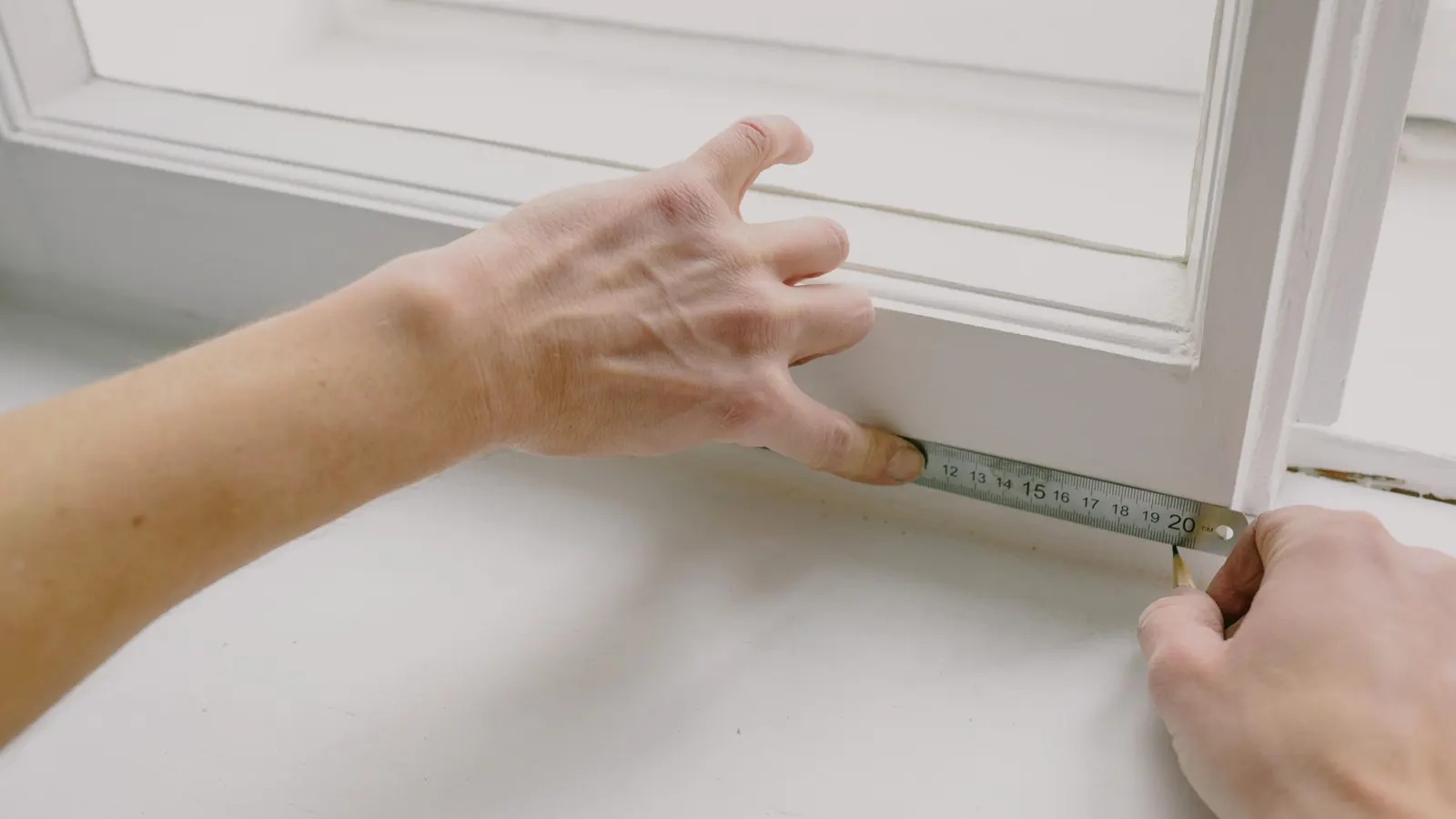
You need a steel tape (cloth and plastic stretch; Blinds.com lists a steel tape first in its measuring guide), a pencil, a note for each window, and a step stool for tall ones. Write every size as width by height and measure each window separately, because windows that look identical are often a fraction apart.
Inside mount: measure the opening
Inside-mounted blinds sit within the frame, so the opening is the whole story.
Width. Measure left to right at the top, middle and bottom and keep all three. Blinds.com says to use the smallest for blinds. Persilux’s measuring page asks for the top width alone. Whichever rule your seller states, a result that differs by more than a hair between top and bottom is worth flagging before you order, because a blind sized to the narrowest point shows a gap everywhere else.
Height. Measure top to bottom at left, center and right. Blinds.com and Persilux both use the largest reading, while Blindster’s wood blind instructions use the shortest for its 2-inch wood blinds. The sellers differ, so use the rule on the page of the product you are actually buying.
Depth. From the front edge of the opening back to the glass, or to the first obstruction such as a crank, lock or alarm sensor. Take it in three places and use the smallest, as Blinds.com does. Then compare it with the product’s minimum. Blindster’s 2-inch wood blinds need 1 5/8 inches at the top for the brackets, and 2 7/8 inches to sit fully recessed without a valance, or 4 1/8 inches with one. When the frame is shallower than the minimum, the blind will sit proud or will not mount, and an outside mount is the better route.
Rounding and deductions. Round to the nearest eighth of an inch; where a reading falls on a sixteenth, Blinds.com rounds width down and height up (24 9/16 becomes 24 1/2 wide and 24 5/8 tall). Enter the true opening size, with no clearance of your own. Blinds.com says its factory applies the deductions, Persilux says “do not make your own deductions,” and Blindster takes about 3/8 inch off the width of its wood blinds. Subtracting as well leaves a gap at the side.
Also note anything that projects into the opening: handles, latches, stops.
Outside mount: measure what you want to cover
Here you decide on a coverage area. The brackets go on the wall or trim above the window and the blind overlaps the opening.
Take the width of the opening, or of the trim if you want to hide it, and add overlap. Blinds.com recommends at least 2 1/2 inches on each side; Persilux recommends adding at least 4 inches to the largest width and height. For height, start at least 3 inches above the frame to leave room for brackets, then run down to the sill if it projects, or at least 2 inches below the frame if it does not (Blinds.com).
Then look at the wall. Blindster’s 2-inch wood blinds need at least 2 1/8 inches of flat vertical space for the brackets, and Blinds.com says spacer blocks or extension brackets can lift a blind past a doorknob or molding. Door frames, cabinets, light switches and curtain rods nearby can all steal that space.
Deciding by look and depth
A shallow frame on a painted sash window usually makes the decision. Fitted outside, a blind hung above the trim and wide enough to cover the casing makes the window read as one block, and the stacked slats sit on the wall rather than across the glass. For a living room with a tall window and a shallow, unremarkable frame, we would go outside and measure generously.
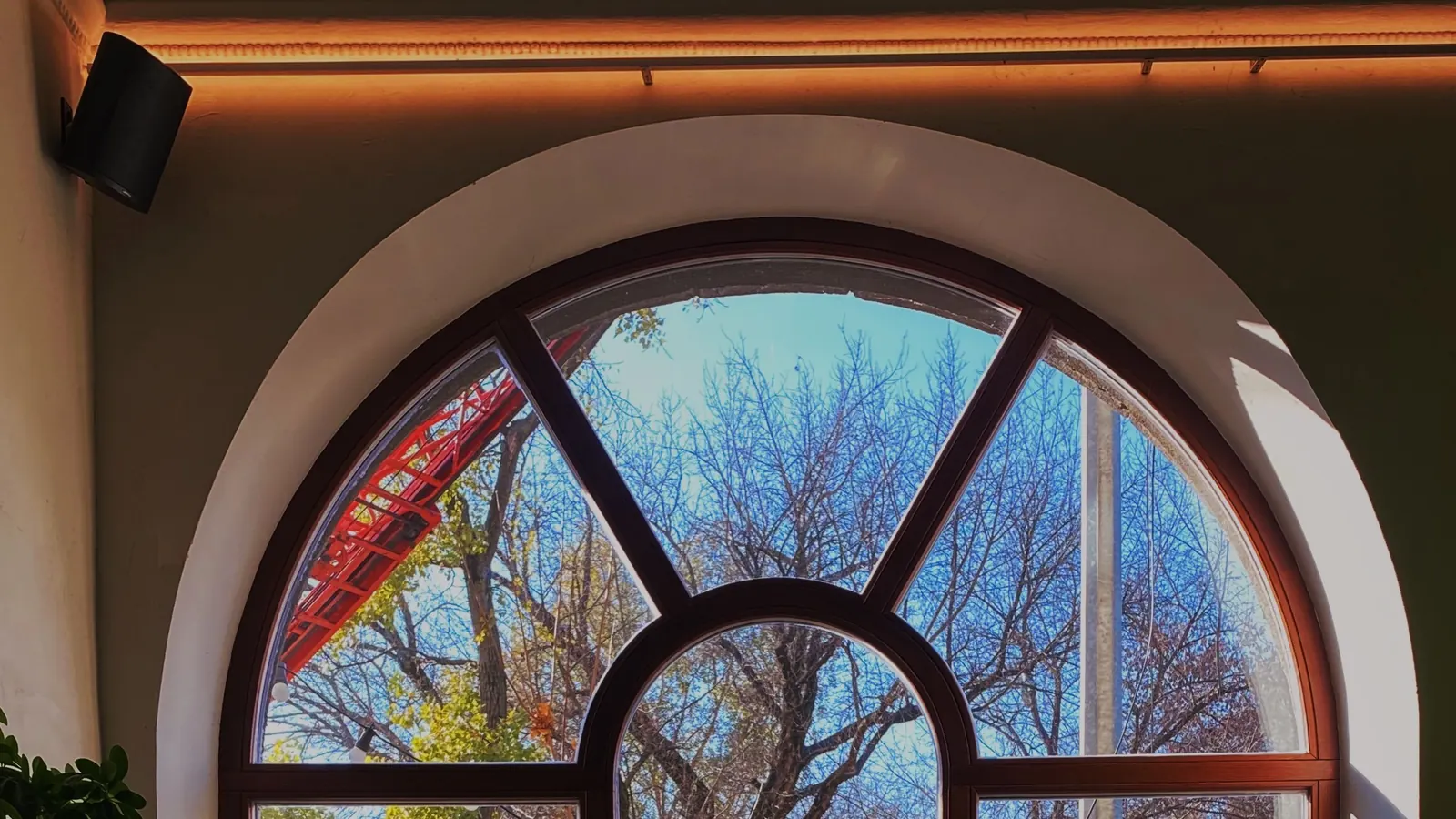
A deep-set window is the opposite. The frame is part of the picture, a painted reveal, or a wood sill that catches light, and a blind tucked inside leaves the architecture visible. A white roller shade set within a plastered, deep-sided opening reads as a smooth plane inside a shadow line; the same shade hung on the wall hides everything that made the opening interesting.
When a window is not square
Old houses especially have openings wider at one end. You will already have the three widths and three heights. For a third check, measure the two diagonals corner to corner; if they differ noticeably the opening is out of square. No single tolerance covers every blind, so send the readings and a photograph to the seller. An outside mount can cover uneven edges but still needs a secure, level spot for the brackets.
Doors, bays and arches
- Doors and French doors. Door frames are usually too shallow for an inside mount, so the blind goes on the door above the glass. Measure the glass plus overlap, then confirm the bottom rail clears the handle and the door still opens fully. Hold-down brackets can keep a blind on a door from swinging.
- Bays and corners. Measure each window of a bay on its own. Where two headrails meet in a corner they can collide, so look at the retailer’s bay guidance first.
- Arches. Blinds.com says an inside-mounted arch needs at least 1 1/2 inches of depth, or 2 1/4 inches to sit fully recessed. Its arch pages give the width and height points to measure for each shape.
Mistakes that cost a blind
Measuring one window and ordering for all of them; swapping width and height; rounding to the nearest inch; deducting clearance that the factory already takes; skipping depth and then finding the crank hits the slats; and measuring the old blind instead of the window. Made-to-measure blinds are often not returnable, so run your numbers past the retailer’s own measuring page before you click.
Cords
Window covering cords can strangle young children. The Window Covering Safety Council recommends cordless coverings in homes with babies and toddlers, and cribs, beds and climbable furniture moved away from windows. Some cordless lifts still have inner cords, so choose a shade with no cord a child could reach.
Made-to-measure shades once you have your numbers
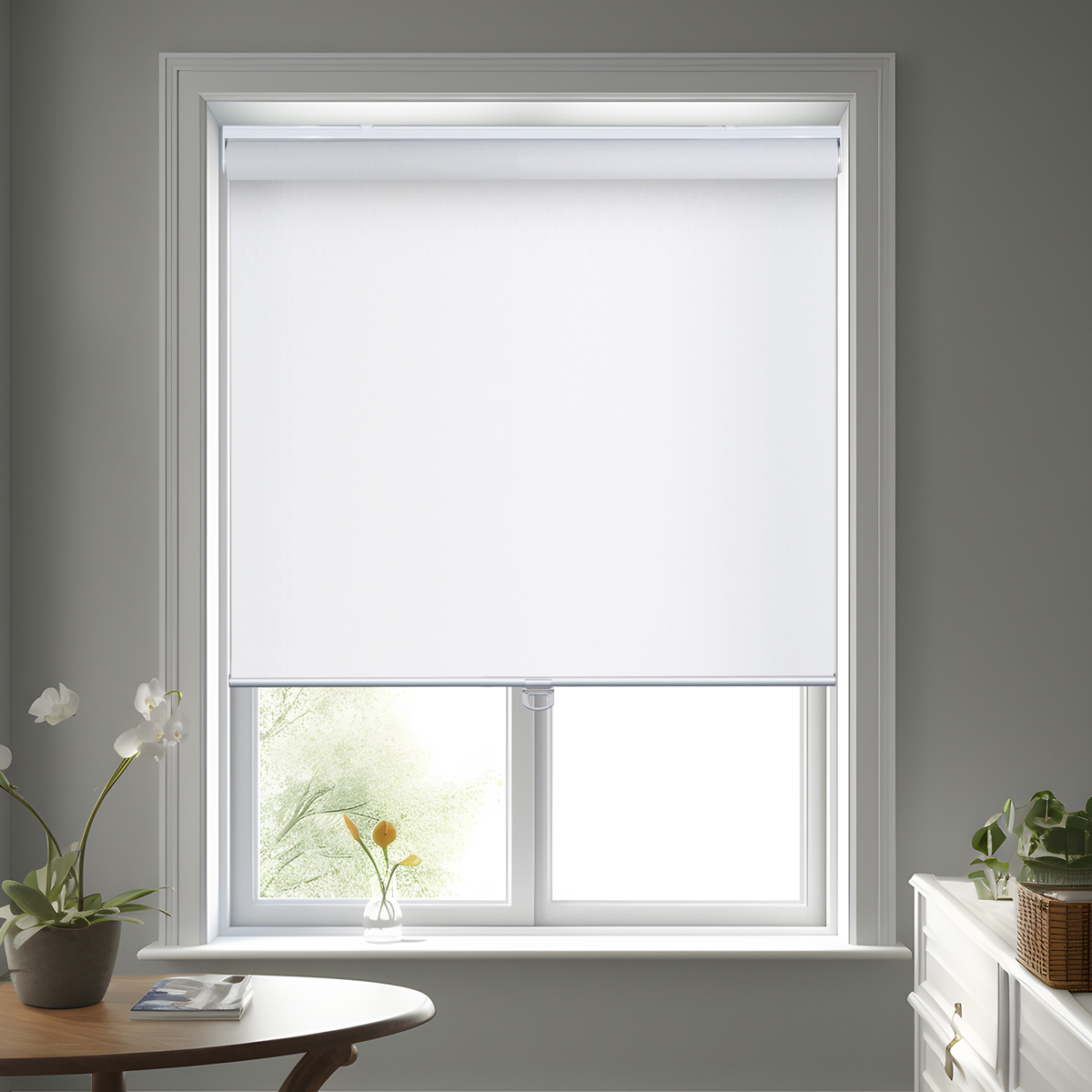
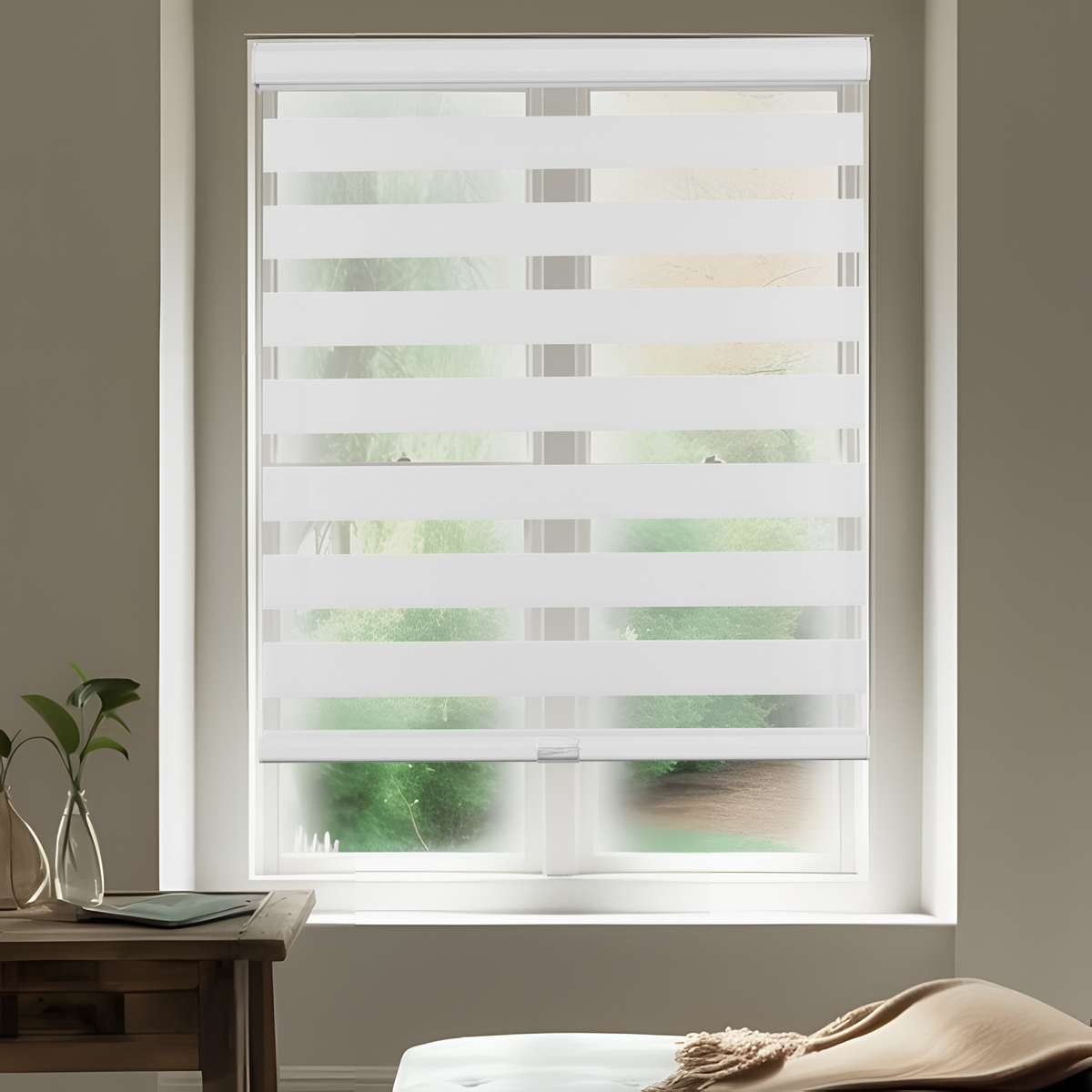
The shades below are made-to-measure Persilux products. Persilux takes width and height at checkout and applies its own inside-mount deductions. For light gaps and how dark different shades get, see blackout cellular shades; if you cannot drill into the frame, read no-drill blinds before you measure, because tension and clamp mounts have their own depth needs. More options are in blinds and shades.
Products are described from the retailer’s information. DecoraMint has not tested them.
Retailers to browse
Compare colors, sizes, materials and return details on the retailer’s current listings.
- Browse blinds and shades at Persilux
Persilux
Opens Persilux’s blinds and shades collection, not a single product.
Options to consider
Selected against the points above, from retailer specifications. Check the retailer for current details.
We may earn a commission from links on this page, at no extra cost to you. Affiliate disclosure
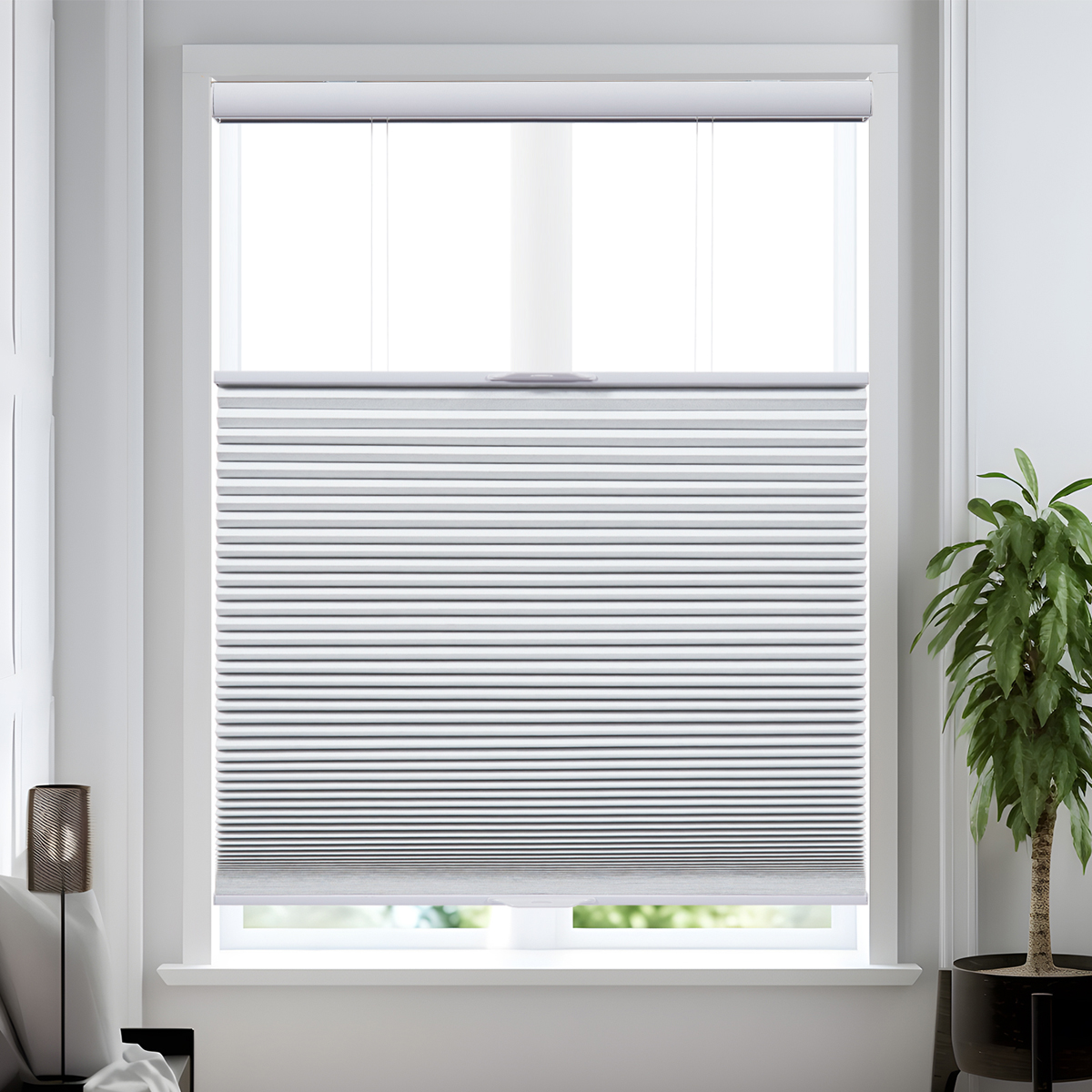
Custom Top Down Bottom Up Cellular Shades (1.5" cell)
See current price on the retailer’s site
at Persilux
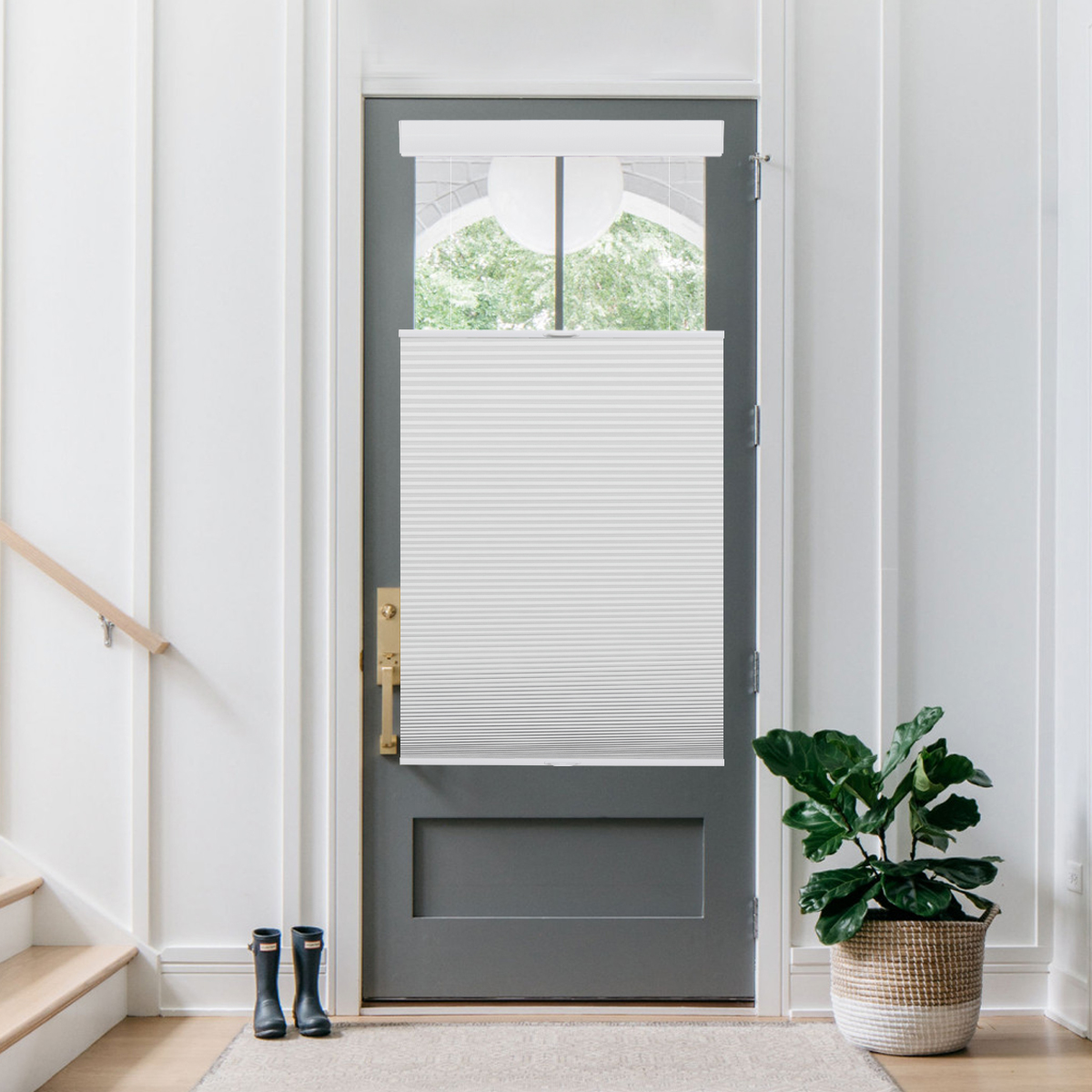
Door Blinds Top Down Bottom Up Cellular Shades (1" cell)
See current price on the retailer’s site
at Persilux