Types of Bed Frames: Compare Support, Storage and Style
Platform describes support, upholstered describes the surface and storage is an extra job. One bed can be all three. Compare them separately, then measure the whole setup.
By DecoraMintPublished 8-minute readMore in Bedroom
In this guide
We may earn a commission from links on this page, at no extra cost to you. Affiliate disclosure
The bed frame sets the tone of a bedroom before anything else does. A low oak platform makes the room feel like a calm, uncluttered retreat. A black iron canopy sketches a room within the room. A tall tufted headboard turns the bed into the softest, most theatrical thing you own. Learning the main types is really learning those effects, plus one useful piece of vocabulary: some names describe how the mattress is held up (platform), some describe the surface (upholstered), and some describe an extra job (storage). One bed can be all three, which is why the look and the support are worth choosing separately.
The main types, and what each does to a room
Platform: low, long and quiet
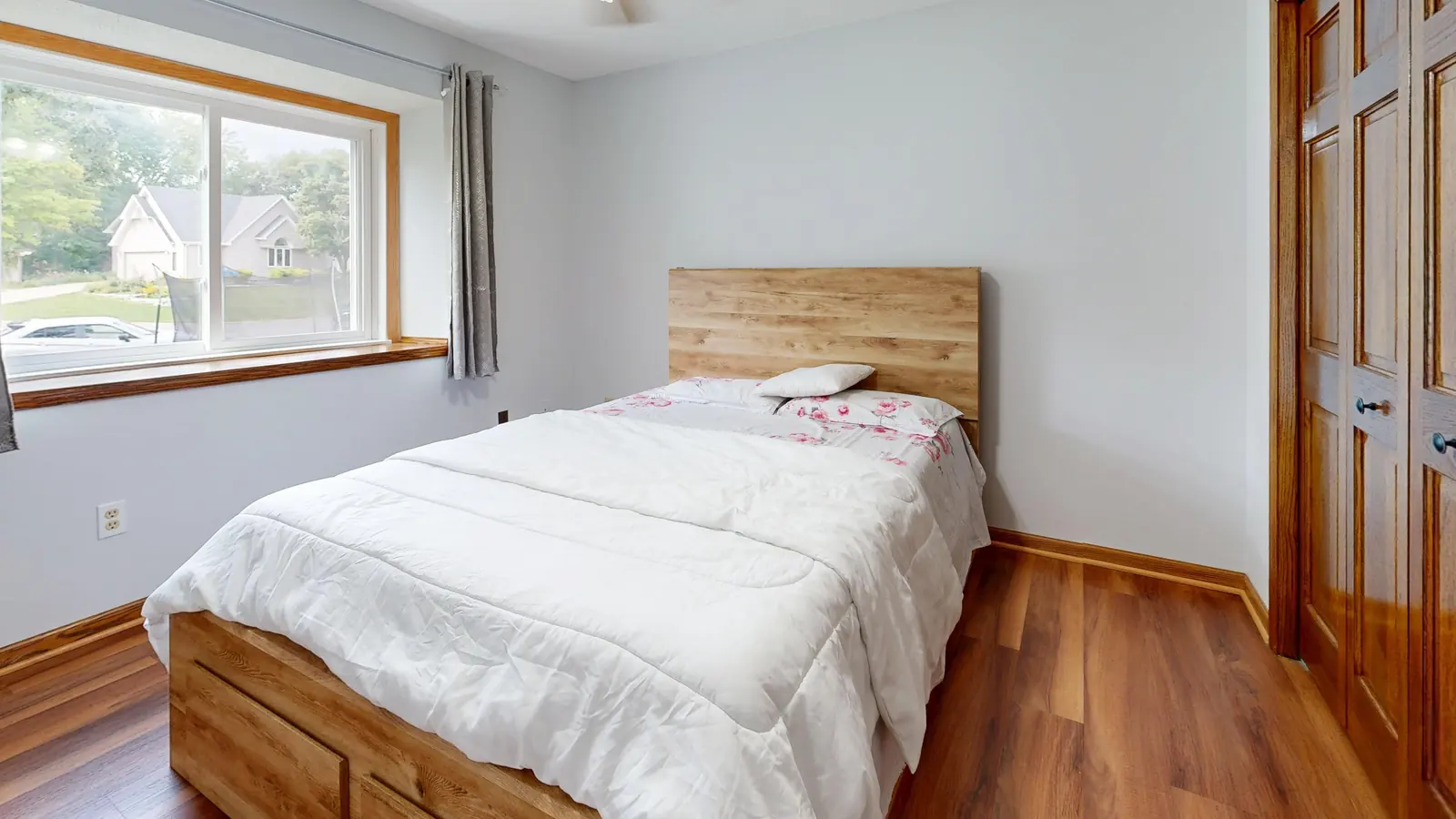
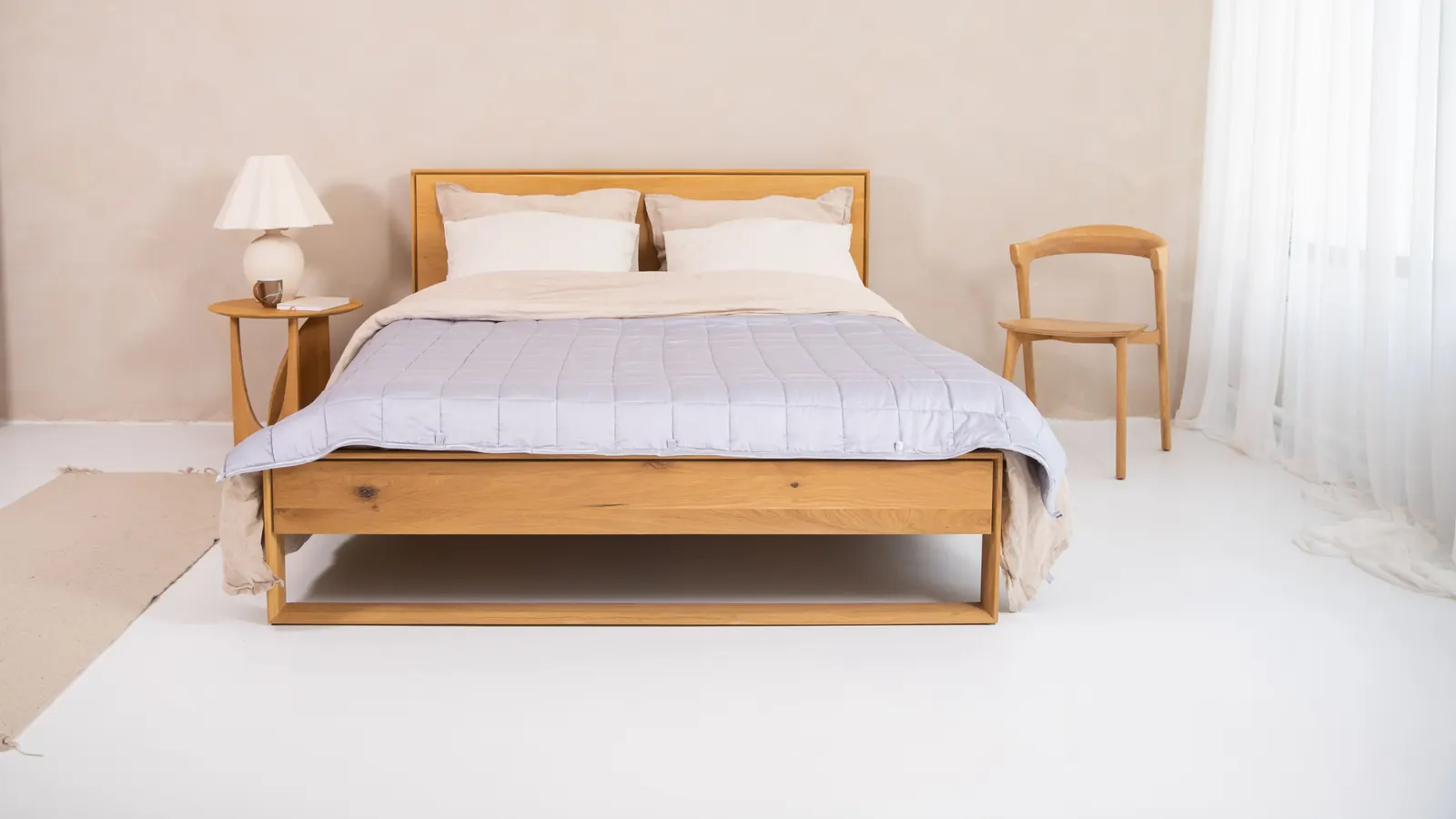
A platform bed carries the mattress on a built-in slatted or solid deck, and Crate & Barrel’s overview of bed types notes that platform beds commonly do without a traditional box spring. The result is a long, low horizontal line, often with a slim headboard or none at all. Low furniture leaves more wall above it, so a small or low-ceilinged room feels taller and calmer, and the shape suits modern, Scandinavian and Japanese-inspired schemes. Pale wood, a tucked-in duvet and very little on the nightstands keep the look crisp.
Low is a style choice, not a comfort guarantee. Think about how easily you sit down and stand up, how your nightstands line up and whether a vacuum fits underneath.
Taken to its limit, the platform becomes a shallow wooden base just above the floor, with a futon or thin mattress on top and no headboard at all. The mattress edge is then the only line in the room, and the base reads as a pale shadow under it. That version suits a sparse bedroom or a studio where the bed should look like part of the floor rather than a piece of furniture.
Check that base’s numbers against who will sleep on it before the look decides for you. ZONLI lists a weight capacity of up to 176 lb for the twin layout, 220 lb for full or queen and 330 lb for king. For two adults on a full or queen, compare those figures with a conventional platform that publishes a higher limit. The listing also gives the same 80-by-60-inch footprint for its Full and Queen options, so confirm the layout with the retailer against your mattress size before ordering.
Panel: the classic that dresses up or down
A panel bed has a flat or framed headboard, usually a footboard, and side rails joining them. It is the bed most people draw when asked to draw a bed, and that familiarity makes it endlessly adaptable: painted white wood feels cottage, dark stained panels feel traditional, a plain slab in pale oak feels contemporary. Some panel beds include slats; others expect a foundation or box spring.
Sleigh: curves and weight
A sleigh bed’s headboard and footboard scroll outward like the front of a sled. It is the most sculptural of the wooden beds, a lovely anchor for a large primary bedroom with a high ceiling, especially in a rich wood against a pale wall. Those curves extend past the mattress at both ends, though, so measure the full length before falling for one in a small room.
Four-poster and canopy: architecture around the bed
Four tall posts mark the corners of a four-poster; join them with rails across the top and you have a canopy bed, ready for sheer fabric or left bare as an open frame. Slender black metal posts draw a room within a room without blocking light or views, which works even in a modest space with decent ceiling height. Heavy turned wood feels grand and historic and needs a big room to breathe. Both add height, so measure the ceiling and check clearance from ceiling fans and pendant lights, following their installation guidance.
Upholstered: soft and tailored
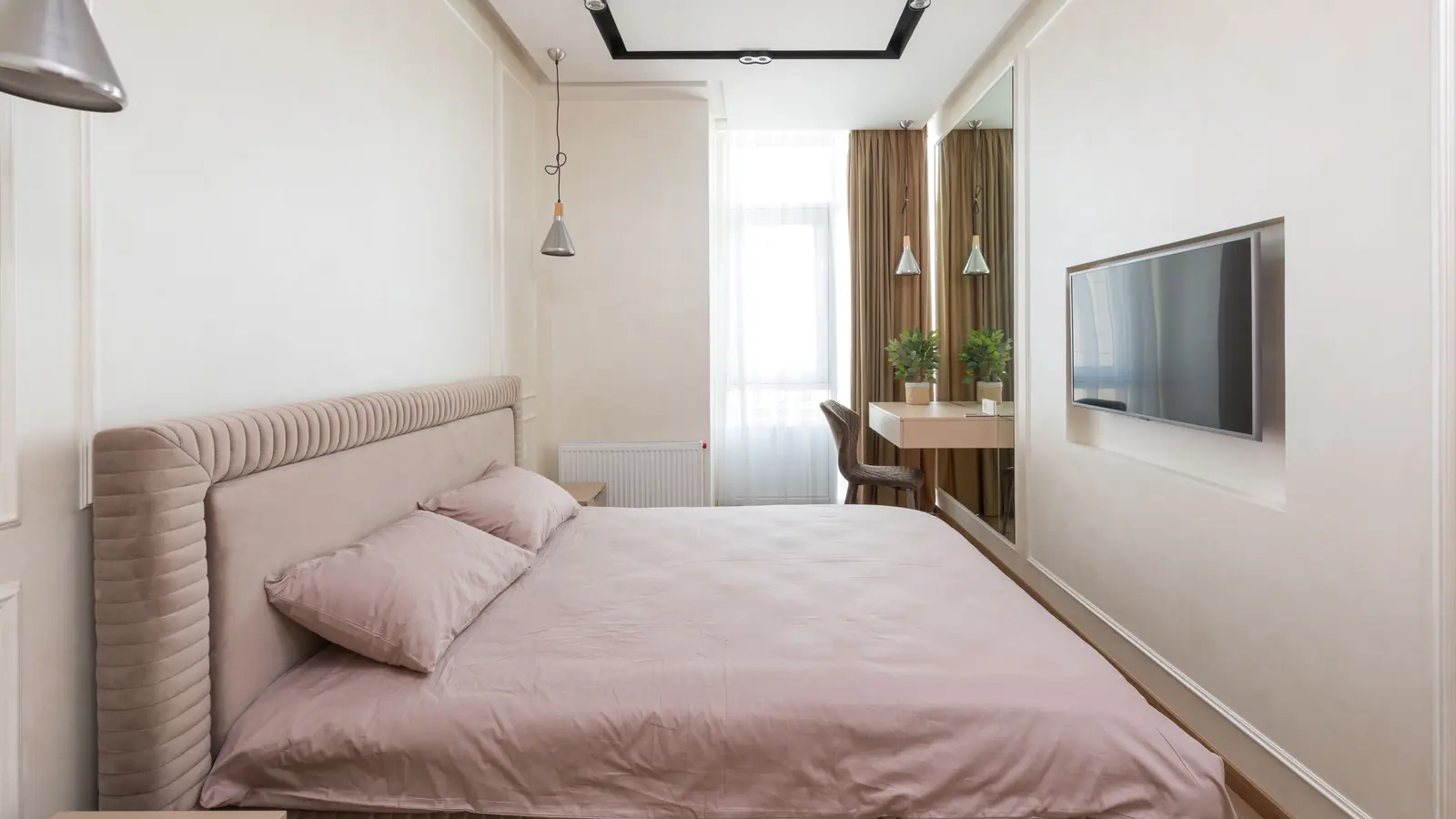
Padding on the headboard, and sometimes all around the frame, makes the bed feel enveloping and visually quiet. A tall channel-tufted headboard in velvet looks glamorous and works as the room’s focal wall; a low, plain linen headboard feels relaxed and lets art above it take the lead. Upholstered describes the surface only, so it can sit on any support system. Removable covers vary in whether they can actually be washed, which matters with pets or children.
Metal: light lines
Metal frames range from simple steel rails hidden under a bed skirt to decorative iron or brass headboards with a vintage, almost Victorian character. Their thin profiles let you see through the bed to the wall and floor, which keeps a small room airy. Some basic metal frames are built to carry a foundation, not a mattress directly, and an existing headboard will only bolt on if the brackets line up.
Beds with a second job
Storage beds add drawers or a lift-up compartment, a gift to a bedroom short on closet space; plan floor space for drawers at full extension, and use the maker’s support for a lift-up lid instead of propping it. Adjustable bases raise the head and foot by motor; your mattress must be approved for one, any decorative frame around it must be compatible, and the power cable needs an outlet. Daybeds read as a sofa by day, which makes a study or guest room work twice as hard, though the back and arms can make the sleeping surface feel narrow. Trundles hide a second mattress underneath for sleepovers and guests; check the mattress thickness limit and the floor space with the trundle pulled out.
Matching the frame to the room
Scale is the quickest filter. In a compact or low-ceilinged room, a platform or a slim metal frame keeps sightlines open and leaves the walls doing the decorating. A generous primary bedroom with height can carry the visual weight of a sleigh bed, a wooden canopy or a tall tufted headboard, and may look underfurnished without one. A room that has to be an office or a guest room by turns is where a daybed or trundle earns its keep, and storage makes the most sense wherever closets run out first. Narrow your choice to two shapes that way, then let support and clearances choose between them.
Support comes first
Behind every one of those looks is a support system: slats, a solid platform, a separate foundation or an adjustable base. The listing photo rarely shows which you are getting. IKEA’s MALM storage-bed listing, for example, separates the frame and storage configuration from components sold on their own, so read the component list for the exact size you select.
Mattress makers set their own rules. Tempur-Pedic publishes specific guidance on compatible bases and foundations and does not treat every traditional box spring as suitable support. That is one brand’s requirement, but it shows why the mattress instructions and the frame’s slat spacing, center support and weight limits need to agree before you order.
Wood tones and upholstered color
Most of these types come in wood, metal or fabric, and the finish shifts the mood as much as the shape. With wood, start from the floor. A dark brown frame on a dark floor tends to merge into one heavy mass, and lighter bedding or a pale rug brings the outline back; on a pale floor the same frame becomes a strong focal point. Watch undertones too: a red-brown bed beside a gray-brown nightstand looks accidental unless the contrast is clearly deliberate, so either repeat the bed’s tone once elsewhere or pair it with painted pieces that are plainly different.
With upholstery, look past the color name to the actual swatch. Blacks and charcoals differ in sheen and in how much blue or brown they carry, and a smooth panel shows lint differently from deep tufting. The four documented listings below show how much look, size and order contents vary; we are going by the product pages, not hands-on use or local stock.
| Example | Look and size | What the order includes |
|---|---|---|
| IKEA SLATTUM 10571259 | Plain upholstered headboard in Vissle dark gray, Twin | Slatted base included; mattress and linens separate |
| IKEA IDANÄS 60458958 | Queen, sloping headboard with button detailing in Gunnared dark gray | Check this ordinary-frame configuration separately from the storage version |
| IKEA TUFJORD 20572507 | Queen, curved headboard in Tallmyra black-blue | Center beam included; slatted base and mattress sold separately |
| Room & Board Wyatt leather bed | Leathers include Laino black, camel and coffee; selectable headboard height and storage | Mattress support included; storage is a separate configuration choice |
SLATTUM suits a twin room that wants a simple soft headboard with the slats already in the box. IDANÄS’s buttons add a classic tufted rhythm next to SLATTUM’s smooth face and TUFJORD’s curve. If you need true black, TUFJORD’s black-blue will read bluer beside a brown floor. Wyatt offers black and brown leathers, a different material with its own care.
Height, footprint and the route in
Add the support height, any foundation and the mattress thickness to find where you will actually sit, and compare that with your nightstands, which look best close to mattress height. Tape the full outside footprint on the floor, including headboard thickness, footboard curves and open drawers or trundles, and check access to closets and windows. Then make sure the largest piece, often a tall headboard or long side rail, can travel to the bedroom; our furniture-measuring checklist walks through doorways, stairs and turns.
One last thing to measure is the headboard against what is behind it. A tall headboard can cut across a window sill, a switch or the art you planned to hang, while a low one under a window keeps the light; deciding which wall the bed faces often settles the headboard height for you.