Wall Mirrors: Choose the Size, Shape and Position for Your Room
A last look before leaving, help with dressing or a better view across the room? Give the mirror one job, mark its outline on the wall and check the mounting before buying.
By DecoraMintPublished 5-minute readMore in Decor
In this guide
Hang a mirror opposite a window and it can carry daylight deeper into the room; hang it opposite a bare bulb and it repeats the glare. What the glass shows matters as much as the frame around it, so give the mirror one job before you pick a size: a last look at the door, help with dressing, a view across the room, or the focus above a console or sofa. Decorative placement above a mantel may never help with an outfit, and that is fine when the choice is deliberate.
Outline it on the wall
Cut paper to the full outside size, frame included, and tape it up with something that suits your paint. Compare two or three sizes from the places you enter and sit. Look at the blank space around the outline: is it crowded against a door casing, a picture group or the objects on the furniture below? No single proportion works over every console or sofa, so keep the mirror visibly related to what is beneath it and judge the pair from across the room.
Height depends on who uses it. This Old House’s guide to hanging a heavy mirror says to place a mirror at eye level for most users so it works for everyone, and notes that this matters especially in bathrooms and bedrooms. A mirror over furniture follows the furniture; one for dressing or an entry follows the people who stand in front of it. Check the frame’s depth too, because a deep profile that projects several inches is awkward in a hallway. Our guide to measuring before buying furniture covers the clearances around it.
Round, rectangular or irregular
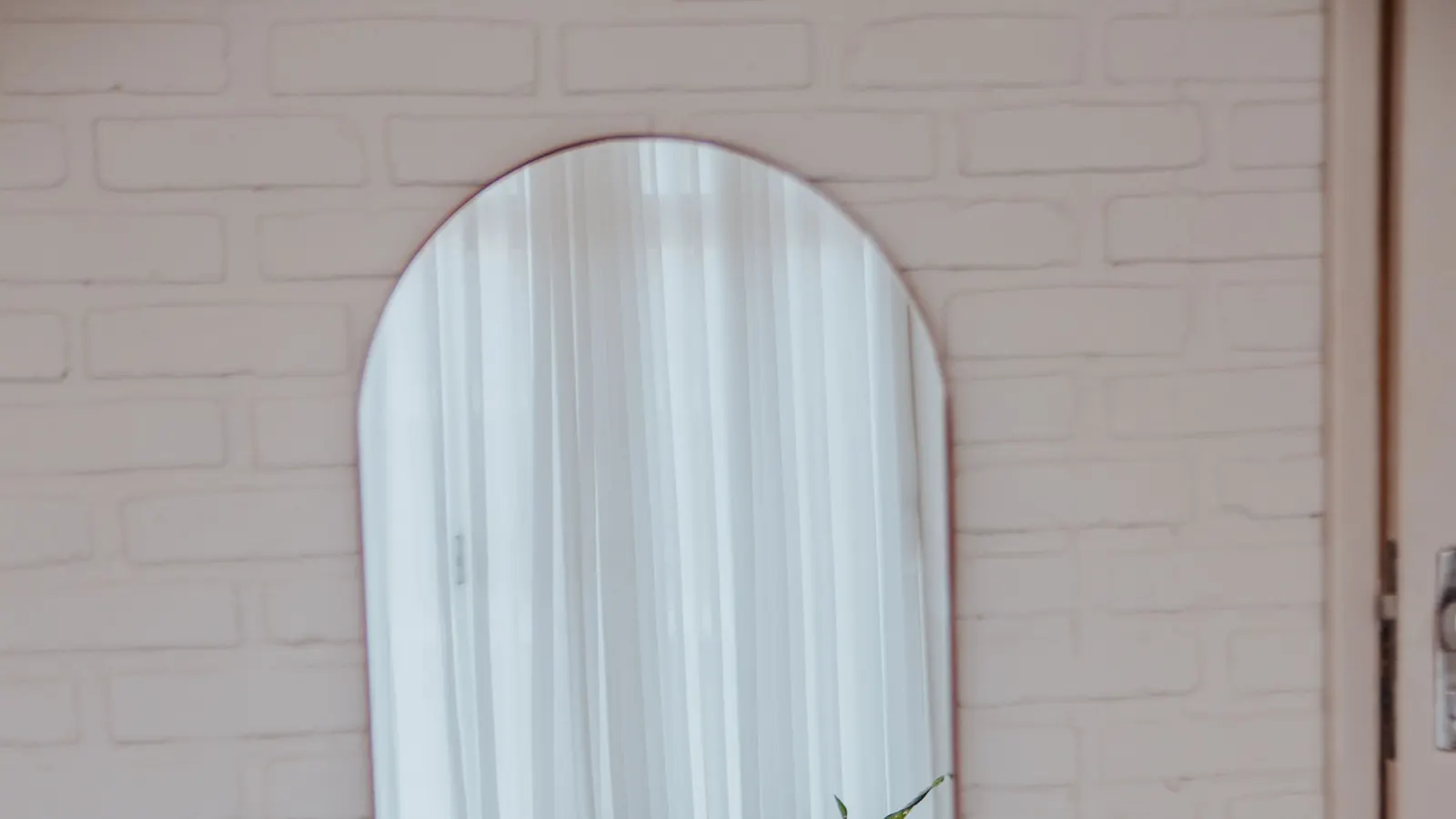
A round mirror brings one curve into a room of door frames and rectangular furniture, and works best alone as a focal point. Compare usable glass, since a circle loses the corners of a rectangular reflection. An oval gives a taller view with the same softness.
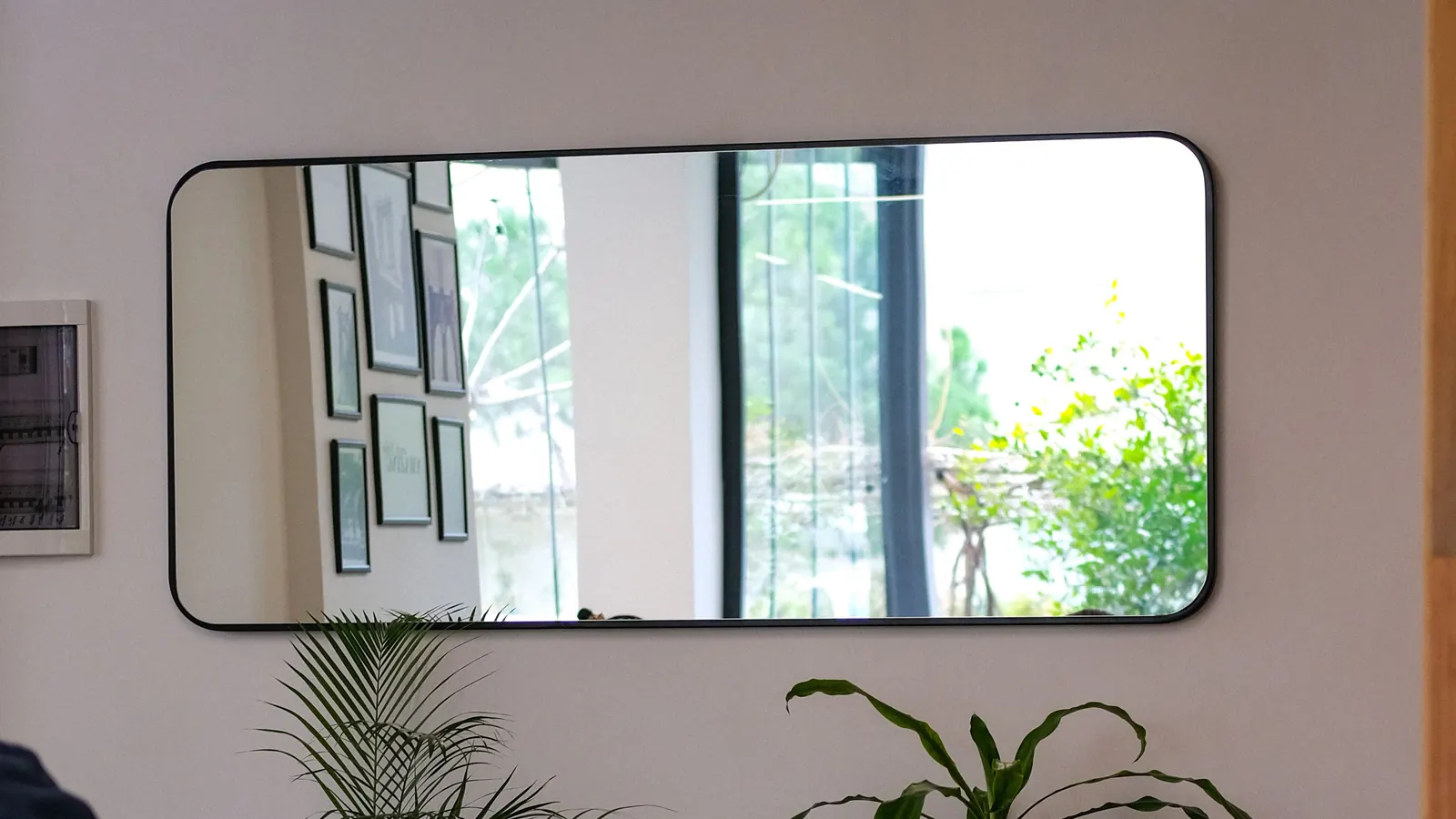
A wide rectangle sits well over a long console or sideboard; a tall one suits a dressing corner or a narrow wall. Orientation depends on the mirror’s rear fittings, and a pivoting design such as West Elm’s metal-frame pivot wall mirror adds a mechanism to the listing’s orientation line, both worth reading before you pick the wall. For an irregular shape, outline the actual contour and see where the usable glass sits inside it, and leave it room, since a crowd of small objects around a sculptural edge hides the outline.
What the glass will show
Hold a small mirror in the proposed spot, with a helper, and look from the doorway, the main seat and the usual standing place. Never lean a heavy mirror on furniture to try it. Daylight and evening differ: a reflected window can be lovely at noon while a bare bulb or bright ceiling fixture takes over after dark. Opposite a window is an option to test, and a side wall sometimes gives a more comfortable view.
In a living room, look at the television and task lamps. In an entry, see what is visible when the front door opens. In a dining area, check the view from a seat. A mirror reflects the light that exists and cannot replace a lighting plan; our cozy living-room lighting guide covers that bigger decision.
In a hallway with a dim, gray-painted wall, a tall rectangle with a slim black frame lights the end of the corridor by catching a window, while a wide, pale-framed mirror above a walnut console reflects the lamps back and widens the wall. In a living room with a linen sofa and a stone fireplace, a large round mirror in a brass-colored frame takes the place of a painting and shows the ceiling light and the room’s far window. We would pair the mirror with the brightest, calmest part of the room, and keep it clear of a television and of a cluttered shelf.
The frame
A slim dark frame gives a crisp outline; wood links to furniture or floors; a pale or frameless edge lets the glass dominate. Names like brass, gold and walnut describe very different colors and finishes, so look at photographs in several lights and see whether the listing refers to a solid frame, a veneer or a coating. Inspect the back as well as the front: the weight, the permitted hanging orientation, the hardware supplied and the care instructions. A bathroom needs a mirror the maker states is suitable for that humidity, since a frame made for a dry room can warp or corrode.
Weight and mounting
Decide whether the wall can take the installation before buying a heavy or large mirror. This Old House advises weighing the mirror with a bathroom scale, checking the rating on every fastener, and using two fasteners for a heavy mirror even if one is rated for the full weight. On drywall it lists toggle bolts for the heaviest mirrors, molly bolts for medium ones and plastic anchors for lighter loads; for plaster, it suggests toggle bolts with picture-hanging hooks. A larger mirror often takes two people to lift.
Look at what carries the load. West Elm’s modern hanging mirror instructions say the mirror hangs from a pair of D-rings on the back at about 10 and 2 o’clock, warn against hanging it at a single attachment point, and state that the wooden peg on the front will not carry its weight. They also supply fixings meant for drywall or stud mounting only, and tell you to use a stud finder and a level, and to use a screw directly in a stud where one lines up with a mark. Other wall types need hardware chosen with a hardware store. That is guidance for one mirror, and the general lesson is to find the hanging points on the back, not the decorative detail on the front.
Before installing, check the product weight (shipping weight is not mirror weight), the approved orientation, which hardware is included and what must be bought for your wall, and whether there are pipes or wires behind the chosen spot. Do not substitute adhesive strips, picture wire or a single hook unless both the mirror and the fixing manufacturer approve it. A mirror made to lean and one made to hang need different securing, and a leaning mirror that falls forward can injure a child or a pet. If you rent, confirm the permitted fixing method before ordering.
After it arrives
Inspect the glass, frame and rear fittings while the mirror is supported safely, and check parts against the instructions before you throw away packaging. Report damage or wrong hanging parts to the seller before installing, and never repair load-bearing fittings yourself. For cleaning, West Elm’s instructions for that mirror say to dust with a soft dry cloth and to spray glass cleaner on a cloth first, not directly on the glass or frame. Glass and finish may need different care, and liquid should not pool at frame joints.