Shades vs Blinds: The Real Differences and Which to Choose
Shades are fabric panels; blinds are slats that tilt. How they compare on light, privacy, insulation, cleaning, safety and cost, plus cellular and Roman shades vs blinds.
By DecoraMintPublished 7-minute readMore in Blinds & Shades
In this guide
We may earn a commission from links on this page, at no extra cost to you. Affiliate disclosure
Slats give you a dial; fabric gives you a surface. That is the whole argument. A blind lets you stay behind a covered window and tilt daylight up toward the ceiling, while a shade turns the glass into one uninterrupted plane, from gauzy to fully dark. Pick blinds if you adjust light several times a day or the room gets steamy. Pick shades if you want a darker bedroom, a softer look or some insulation. The rest of this page is about the edge cases.
What each one does to the light
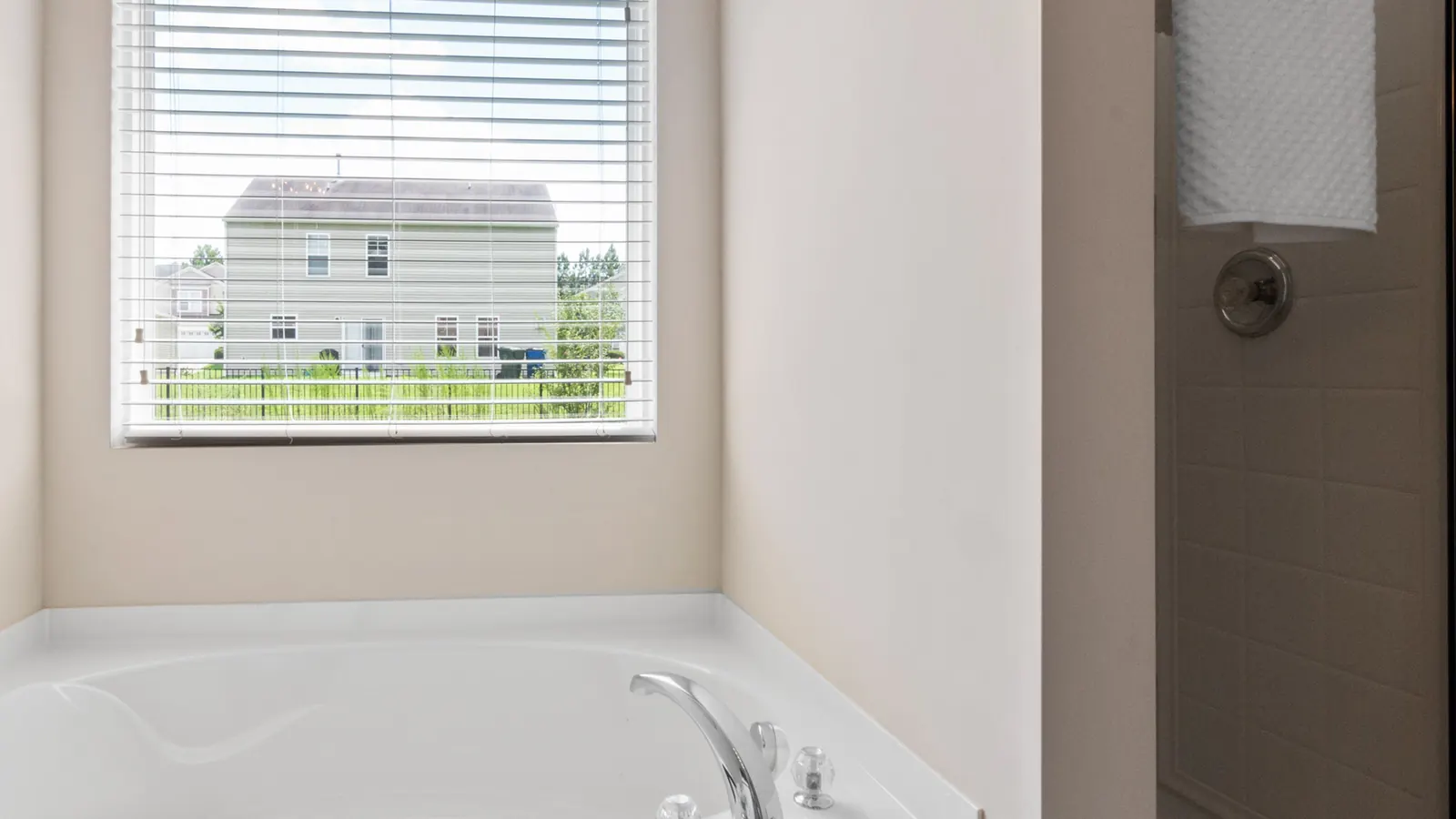
With blinds, a window can stay fully covered and still be bright. Tilt the slats up and sun bounces onto the ceiling; tilt them down and a low evening glare disappears while nobody on the pavement can see straight in. That is why blinds suit a desk facing a west window. Check the view from outside, though: a slat angle that hides you from the street can leave you visible from an upstairs window across the way.
A shade has two positions, up or down, so the fabric does all the work:
- Sheer and solar fabrics keep some view during the day and show the room after dark.
- Light-filtering fabrics diffuse the sun and blur the view, though silhouettes appear when the lamps are on.
- Blackout fabrics stop light passing through the panel itself.
Zebra shades (alternating sheer and solid bands) and top-down bottom-up shades borrow a little of the blind’s flexibility, because you can open part of the window without lifting the whole covering. A zebra is the closest fabric gets to a slat: sliding the bands works like tilting, but the light arrives as horizontal stripes across the floor instead of bouncing off the ceiling, and closed it is not fully dark. Persilux describes its Light Control Zebra Blinds as offering over 90% blackout, which suits a living room better than a bedroom.
Neither type seals a window. Slats leave light at the overlaps and cord holes, and an inside-mounted shade leaves a thin strip at each side. For a nursery or a night-shift sleeper, start with blackout fabric on an outside mount, or a model with side channels. Our guide to blackout cellular shades covers the darkest option in detail.
Warmth and glare
Only one construction here is built around insulation. The Department of Energy’s cellular-shade fact sheet explains that the cells trap air, and it sets that against vinyl or metal blinds, which give relatively little insulation. A single layer of roller fabric or a Roman shade sits somewhere in between depending on the cloth and lining.
Any covering works only if you use it. A cellular shade closed on winter evenings beats a better one left raised all day.
Rooms, decided
A bedroom does best with a blackout roller or cellular shade in a color close to the wall, so the window disappears at night and no stripe of slats interrupts the plane behind the bed. An outside mount, with the fabric overlapping the trim, keeps the edges darkest. Between the two shades, width can settle it. Persilux’s custom-size blackout roller gives the flatter, plainer panel, but its size table stops the cordless version at 82 inches wide; its bottom-up blackout cellular is listed cordless to 104 inches and adds the trapped-air layer described above. On a wide bedroom window that has to stay cordless, that leaves the cellular.
In a kitchen or bath, faux wood or vinyl slats are the practical answer: wipe them down, tilt them for privacy, and they will not hold on to cooking grease or steam. Solid wood warps in high humidity, and a fabric shade beside the stove picks up stains, so choose one the maker describes as moisture resistant if you must. None of the Persilux picks on this page is a faux wood or vinyl blind, and the product page for its aluminum mini blinds does not mention moisture, so for a steamy room look for faux wood from another retailer.
A living room can go either way, and the deciding factor is the style around it. Linen-look Roman shades or light-filtering rollers sit well beside curtains and upholstered furniture, with soft folds that echo the sofa. Persilux’s Linen Fabric Roman Shades are a polyester and linen blend in light beige, beige, brown or bluish grey, each also sold with a blackout backing. The page sets a minimum height of 20 inches, and its size table asks for 1.8 inches of frame depth for an inside mount (the measuring notes give smaller figures, so plan on the larger), so a window shorter than that needs a roller, and a shallower frame an outside mount. Wide slats in white or pale wood read as architectural, which suits a sunny home office with hard surfaces and a monitor to protect from glare.
| Situation | Better fit | Why |
|---|---|---|
| Bedroom or nursery | Blackout shade | Darkest option; cellular adds insulation |
| Kitchen or bathroom | Faux wood or vinyl blinds | Wipeable, tolerate moisture |
| Home office with screen glare | Blinds or solar shade | Slats angle the sun; solar fabric keeps the view |
| Drafty window in a cold climate | Cellular shade | Trapped air layer |
| Rental where drilling is banned | Either type in a no-drill version | See no-drill blinds |
The shade types, briefly
Roman shades are flat fabric that folds into pleats as it rises, so they look like curtains and suit dining rooms and bedrooms, but the folded stack covers some glass at the top when raised. They also need gentler cleaning than blinds: a vacuum brush or spot-cleaning, and dry cleaning only if the maker says so. Cellular shades are pleated cells that trap air, with a plain, tidy face. Rollers are the simplest and flattest, and pleated shades are a single folded layer without cells. Fabric shades show less dust than slats and vacuum quickly, but most cannot be washed.
On the blind side, one-inch aluminum mini blinds are light and inexpensive, faux wood has wider slats and tolerates humidity, solid wood is warm but heavy, and vertical blinds slide sideways across patio doors. Thin aluminum slats can bend; cellular fabric dents and stains if pets or children pull at it.
Cords
CPSC says cordless coverings are the only way to remove the strangulation hazard, and the Window Covering Safety Council recommends them in homes with infants and young children, with cribs, beds and climbable furniture kept away from windows (CPSC’s cordless guidance). The federal rule for custom products was vacated in September 2023, but the industry standard ANSI/WCMA A100.1-2022 covers custom products made from June 1, 2024 and removes free-hanging operating cords. Cordless on the label still leaves inner lift cords in some blinds, so confirm the model has none that a child could reach.
What moves the price
Made-to-measure covering is priced by size and options, so a quote for your window beats any general claim about which type is cheaper. Width and height matter first, since very large windows may need two units. After that come fabric or slat material, lining, cordless or top-down bottom-up operation, and motors, which add the most. Stock sizes can be economical when your opening matches; custom sizing gives a closer fit.
To see both sides in one place, the picks below include one set of Persilux mini blinds and four shades: a blackout roller, a blackout cellular, a Roman and a zebra. They are described from the retailer’s listings, not tested by us, and the links are affiliate links that may earn us a commission. For help narrowing the shade side, read how to choose window shades, and browse window treatments for the rest.
Choose slats if the window must be adjustable all day or wiped clean; choose fabric if the room needs darkness, warmth or a softer edge.
The picks
Availability updates from the retailer feed. Where our copy of a price is out of date, the retailer’s site shows the current one.

Mini blinds with tilting slats
No Drill No Tools 1" Mini Blinds
One-inch aluminum mini blinds with UV protection, described as cordless and installed without drilling or tools. They are the slat option to set against the four fabric shades, since slats tilt to angle the light.

Plain roller shade that blocks light
Blackout Roller Shades (Custom Size)
A made-to-measure roller shade with a cordless lift, sold as blocking unwanted sunlight, in white, beige and light grey. The simplest fabric option: one flat panel with no slats or folds.

Honeycomb shade with layered cells
Bottom Up Only Blackout Cellular Blinds (1.5" cell)
A bottom-up blackout cellular shade with 1.5-inch cells and a cordless lift, listed with insulation, noise reduction and UV protection as features. The cells separate it from a flat roller.

Roman shade for a softer, folded look
Linen Fabric Roman Shades
A polyester and linen blend with a cordless lift, folding into soft pleats as it rises. The product page lists four colors, each in a standard and a blackout version.

Zebra shade between roller and blind
Light Control Zebra Blinds
Alternating sheer and solid bands that you line up to let light in or block the view, with aluminum rods and UV protection listed. Sold in three light-control colors and three blackout colors, with a cordless option.
Retailers to browse
Compare colors, sizes, materials and return details on the retailer’s current listings.
- Browse blinds and shades at Persilux
Persilux
Opens Persilux’s blinds and shades collection, not a single product.